Kirjojen hintavertailu. Mukana 12 304 600 kirjaa ja 12 kauppaa.

Kirjailija

David H Rosen

Kirjat ja teokset yhdessä paikassa: 53 kirjaa, julkaisuja vuosilta 2002-2026, suosituimpien joukossa The Archetypal Imagination. Vertaile teosten hintoja ja tarkista saatavuus suomalaisista kirjakaupoista.

Mukana myös kirjoitusasut: David H. Rosen

53 kirjaa

Kirjojen julkaisuhaarukka 2002-2026.

The Archetypal Imagination

The Archetypal Imagination

James Hollis; David H. Rosen

Texas A M University Press
2002
nidottu
What we wish to know, and most desire, remains unknowable and lies beyond our grasp. With these words, James Hollis leads readers to consider the nature of our human need for meaning in life and for connection to a world less limiting than our own. In The Archetypal Imagination, Hollis offers a lyrical Jungian appreciation of the archetypal imagination. He argues that without the human mind's ability to form energy-filled images that link us to worlds beyond our rational and emotional capacities, we would have neither culture nor spirituality. Drawing upon the work of poets and philosophers. Hollis shows the importance of depth experience, meaning, and connection to an ""other"" world. The author draws upon the work of the poet Rainer Maria Rilke, particularly his Duino Elegies, to elucidate the archetypal imagination in literary forms. To underscore the importance of incarnating depth experience, he also examines a series of paintings by Nancy Witt. With the power of the archetypal imagination available to all of us, we are invited to summon courage to take on the world anew and to risk a radical re-imagining of the larger possibilities of the world and of the self.
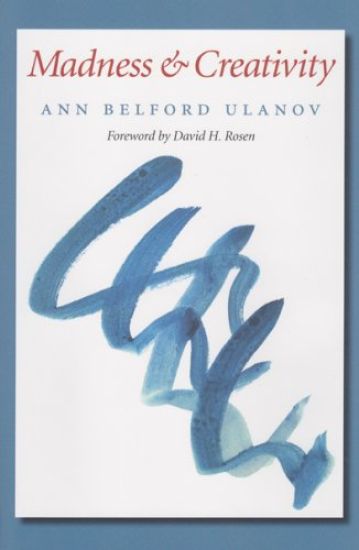
Madness and Creativity (Volume 18)

Madness and Creativity (Volume 18)

Ann Belford Ulanov; David H. Rosen

TEXAS A M UNIVERSITY PRESS
2026
pokkari
Analyst and author Ann Belford Ulanov draws on her years of clinical work and reflection to make the point that madness and creativity share a kinship, an insight that shakes both analysand and analyst to the core, reminding us as it does that the suffering places of the human psyche are inextricably—and, often inexplicably—related to the fountains of creativity, service, and even genius. She poses disturbing questions: How do we depend on order, when chaos is a necessary part of existence? What are we to make of evil—both that surrounding us and that within us? Is there a myth of meaning that can contain all the differences that threaten to shatter us? Ulanov’s insights unfold in conversation with themes in Jung’s Red Book which, according to Jung, present the most important experiences of his life, themes he explicated in his subsequent theories. In words and paintings Jung displays his psychic encounters from1913–1928, describing them as inner images that “burst forth from the unconscious and flooded me like an enigmatic stream and threatened to break me.” Responding to some of Jung’s more fantastic encounters as he illustrated them, Ulanov suggests that our problems and compulsions may show us the path our creativity should take. With Jung she asserts that the multiplicities within and around us are, paradoxically, pieces of a greater whole that can provide healing and unity as, in her words, “every part of us and of our world gets a seat at the table.” Taken from Ulanov’s addresses at the 2012 Fay Lectures in Analytical Psychology, Madness and Creativity stands as a carefully crafted presentation, with many clinical examples of human courage and fulfillment.
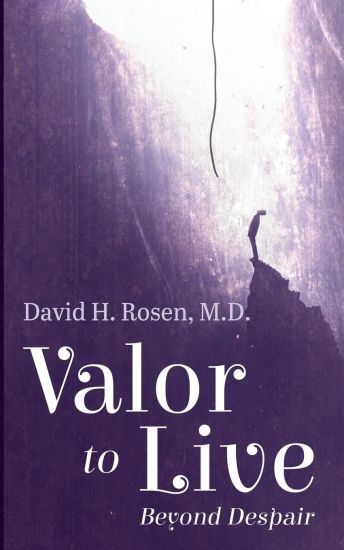
Valor to Live

Valor to Live

David H Rosen

Resource Publications (CA)
2023
pokkari
This book concerns transforming despair and its powerful pull toward suicide into a meaningful alternative: discovering the courage to live and finding meaning in life. This work applies Carl Jung's method of active imagination and its artistic products showing that when people learn to confront the rich images and symbols that emerge from their struggles, they can turn their turmoil into a fountain of creativity. He details the paths of himself and five patients whose work in painting, pottery, and dance in conjunction with psychotherapy--led them from dark nights of the soul to full and meaningful lives. Their dramatic artwork illustrates the text.
Synchronicity and Individuation

Synchronicity and Individuation

David H Rosen; Frank N McMillan

Resource Publications (CA)
2023
sidottu
Historically there were more male therapists and more female patients. Just as society has changed, so has therapy. Jung's psychology includes the feminine aspects of a man and the masculine parts of a woman. Of course, today it is a complete psyche or an inner marriage. In the background would be a mandala, which also represents wholeness and individuation. Synchronicity is an acausal but meaningful relationship, which therapy honors. Jung's psychology also includes the shadow, which represents what has been left out. The ego in analytical psychology stands for the center of consciousness in the personal self, whereas the Self is the center of the psyche and totality and links one to spiritual wholeness. Hence the individuated person has confession, conscious and unconscious, archetypes, complexes, anima and animus or syzygy, numinous, gnosis, typology, symbols, dreams, the shadow, and active imagination. These aspects of analytical psychology are then discussed and illustrated with a case history. In sum, the ego is secondary to the Self in an individuated person. Both a mandala and Jungian therapy and analysis are associated with wholeness.
Synchronicity and Individuation

Synchronicity and Individuation

David H Rosen; Frank N McMillan

Resource Publications (CA)
2023
pokkari
Historically there were more male therapists and more female patients. Just as society has changed, so has therapy. Jung's psychology includes the feminine aspects of a man and the masculine parts of a woman. Of course, today it is a complete psyche or an inner marriage. In the background would be a mandala, which also represents wholeness and individuation. Synchronicity is an acausal but meaningful relationship, which therapy honors. Jung's psychology also includes the shadow, which represents what has been left out. The ego in analytical psychology stands for the center of consciousness in the personal self, whereas the Self is the center of the psyche and totality and links one to spiritual wholeness. Hence the individuated person has confession, conscious and unconscious, archetypes, complexes, anima and animus or syzygy, numinous, gnosis, typology, symbols, dreams, the shadow, and active imagination. These aspects of analytical psychology are then discussed and illustrated with a case history. In sum, the ego is secondary to the Self in an individuated person. Both a mandala and Jungian therapy and analysis are associated with wholeness.
Opening Our Hearts

Opening Our Hearts

David H Rosen

Resource Publications (CA)
2022
sidottu
""Opening Our Hearts"" is the author's eleventh collection of haiku. These tiny poems are healing moments. Love is real in solitude & relationship Darkness . . . every haiku a shooting star Soul symbol . . . this sphere of light
Opening Our Hearts

Opening Our Hearts

David H Rosen

Resource Publications (CA)
2022
pokkari
Opening Our Hearts is the author's eleventh collection of haiku. These tiny poems are healing moments. Love is real in solitude & relationship Darkness . . . every haiku a shooting star Soul symbol . . . this sphere of light
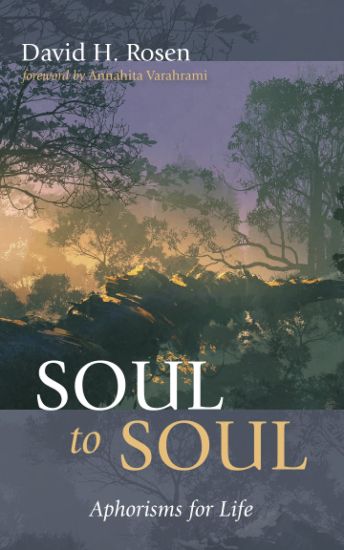
Soul to Soul

Soul to Soul

David H Rosen; Annahita Varahrami

Resource Publications (CA)
2021
pokkari
Soul to Soul: Aphorisms for Life is about maxims that guide the growth and development of individuals. These principles gave direction as one proceeds along life's pathways. Hopefully the guideposts that are outlined will enable others to walk down their caminos in ways that feel sure and playful.
Soul to Soul

Soul to Soul

David H Rosen; Annahita Varahrami

Resource Publications (CA)
2021
sidottu
Soul to Soul: Aphorisms for Life is about maxims that guide the growth and development of individuals. These principles gave direction as one proceeds along life's pathways. Hopefully the guideposts that are outlined will enable others to walk down their caminos in ways that feel sure and playful.
Lesbianism: A Study in Female Homosexuality

Lesbianism: A Study in Female Homosexuality

David H Rosen; Rachel Rosen; Evelyn Hooker

Resource Publications (CA)
2020
sidottu
This new edition of Lesbianism allows one to understand lesbianism as a way of life. The original 1965-1966 research study is included in its entirety. Unlike Freud, who based his view that lesbianism was a mental disorder on a single case study, this breakthrough and innovative research project concerns interviews and psychological testing of 26 lesbians who were not psychiatric patients. And, as one would predict, these lesbians were not disturbed, as far as mental health was concerned. The original research was done before homosexuality was removed as a mental disorder. It seems odd today to even consider Freud's view as accurate. We have come a long way in recognizing that one's sexual preference is just that. This study was a pioneering one that disproved a false idea that lesbianism was evidence of an emotional disorder. And this 2020 edition includes a conversation about the book with Rachel Rosen, who is a lesbian. The dialogue between the author and his daughter provides insightful questions and a true understanding of lesbianism.
Every Day Is a Good Day

Every Day Is a Good Day

David H Rosen

Resource Publications (CA)
2020
pokkari
This is the ninth collection of haiku by David H. Rosen. Haiku are brief poems, but they are long-lived. Haiku leave you with meaning . . . often jolting or surprising. For example: Walk through olive groves a peaceful silence . . . wildflowers everywhere
Every Day Is a Good Day

Every Day Is a Good Day

David H Rosen

Resource Publications (CA)
2020
sidottu
This is the ninth collection of haiku by David H. Rosen. Haiku are brief poems, but they are long-lived. Haiku leave you with meaning . . . often jolting or surprising. For example: Walk through olive groves a peaceful silence . . . wildflowers everywhere