Kirjojen hintavertailu. Mukana 12 595 353 kirjaa ja 12 kauppaa.

Kirjailija

David H. Ucko

Kirjat ja teokset yhdessä paikassa: 6 kirjaa, julkaisuja vuosilta 2009-2022, suosituimpien joukossa Counterinsurgency in Crisis. Vertaile teosten hintoja ja tarkista saatavuus suomalaisista kirjakaupoista.

6 kirjaa

Kirjojen julkaisuhaarukka 2009-2022.

The Insurgent's Dilemma: A Struggle to Prevail

The Insurgent's Dilemma: A Struggle to Prevail

David H. Ucko

Oxford University Press
2022
sidottu
Despite attracting headlines and hype, insurgents rarely win. Even when they claim territory and threaten governmental writ, they typically face a military backlash too powerful to withstand. States struggle with addressing the political roots of such movements, and their military efforts mostly just "mow the grass," yet, for the insurgent, the grass is nonetheless mowed-and the armed project must start over. This is the insurgent's dilemma: the difficulty of asserting oneself, of violently challenging authority, and of establishing sustainable power. In the face of this dilemma, some insurgents are learning new ways to ply their trade. With subversion, spin and disinformation claiming centre stage, insurgency is being reinvented, to exploit the vulnerabilities of our times and gain new strategic salience for tomorrow. As the most promising approaches are refined and repurposed, what we think of as counterinsurgency will also need to change. The Insurgent's Dilemma explores three particularly adaptive strategies and their implications for response. These emerging strategies target the state where it is weak and sap its power, sometimes without it noticing. There are options for response, but fresh thinking is urgently needed-about society, legitimacy and political violence itself.
Counterinsurgency in Crisis

Counterinsurgency in Crisis

David H. Ucko; Robert Egnell; Colin Gray

Columbia University Press
2013
sidottu
Long considered the masters of counterinsurgency, the British military encountered significant problems in Iraq and Afghanistan when confronted with insurgent violence. In their effort to apply the principles and doctrines of past campaigns, they failed to prevent Basra and Helmand from descending into lawlessness, criminality, and violence. By juxtaposing the deterioration of these situations against Britain's celebrated legacy of counterinsurgency, this investigation identifies both the contributions and limitations of traditional tactics in such settings, exposing a disconcerting gap between ambitions and resources, intent and commitment. Building upon this detailed account of the Basra and Helmand campaigns, this volume conducts an unprecedented assessment of British military institutional adaptation in response to operations gone awry. In calling attention to the enduring effectiveness of insurgent methods and the threat posed by undergoverned spaces, David H. Ucko and Robert Egnell underscore the need for military organizations to meet the irregular challenges of future wars in new ways.
The Insurgent's Dilemma

The Insurgent's Dilemma

David H. Ucko

C Hurst Co Publishers Ltd
2022
sidottu
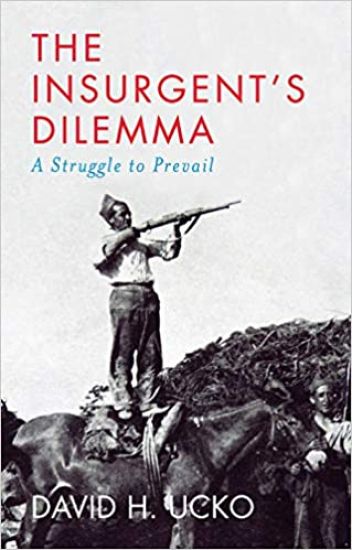
Despite attracting headlines and hype, insurgents rarely win. Even when they claim territory and threaten governmental writ, they typically face a military backlash too powerful to withstand. States struggle with addressing the political roots of such movements, and their military efforts mostly just 'mow the grass'; yet, for the insurgent, the grass is nonetheless mowed--and the armed project must start over. This is the insurgent's dilemma: the difficulty of asserting oneself, of violently challenging authority, and of establishing sustainable power. In the face of this dilemma, some insurgents are learning new ways to ply their trade. With subversion, spin and disinformation claiming centre stage, insurgency is being reinvented, to exploit the vulnerabilities of our times and gain new strategic salience for tomorrow. As the most promising approaches are refined and repurposed, what we think of as counterinsurgency will also need to change. The Insurgent's Dilemma explores three particularly adaptive strategies and their implications for response. These emerging strategies target the state where it is weak and sap its power, sometimes without it noticing. There are options for response, but fresh thinking is urgently needed--about society, legitimacy and political violence itself.
Counterinsurgency in Crisis

Counterinsurgency in Crisis

David H. Ucko; Robert Egnell; Colin Gray

Columbia University Press
2015
pokkari
Long considered the masters of counterinsurgency, the British military encountered significant problems in Iraq and Afghanistan when confronted with insurgent violence. In their effort to apply the principles and doctrines of past campaigns, they failed to prevent Basra and Helmand from descending into lawlessness, criminality, and violence. By juxtaposing the deterioration of these situations against Britain's celebrated legacy of counterinsurgency, this investigation identifies both the contributions and limitations of traditional tactics in such settings, exposing a disconcerting gap between ambitions and resources, intent and commitment. Building upon this detailed account of the Basra and Helmand campaigns, this volume conducts an unprecedented assessment of British military institutional adaptation in response to operations gone awry. In calling attention to the enduring effectiveness of insurgent methods and the threat posed by undergoverned spaces, David H. Ucko and Robert Egnell underscore the need for military organizations to meet the irregular challenges of future wars in new ways.
Galula in Algeria

Galula in Algeria

Grégor Mathias; David H. Ucko

Praeger Publishers Inc
2011
sidottu
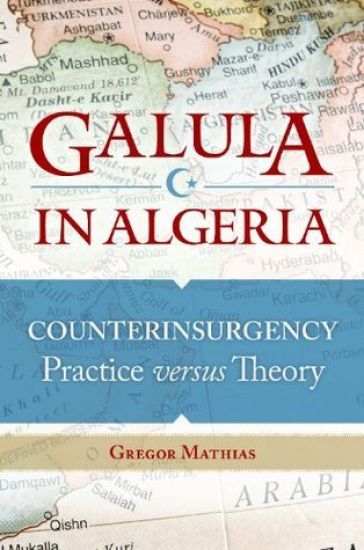
This groundbreaking investigation uncovers serious mismatches between David Galula's counterinsurgency practice in Algeria and his counterinsurgency theory—the foundation of current U.S. counterinsurgency doctrine in Iraq and Afghanistan.Given the centrality of David Galula's theory to U.S. Counterinsurgency (COIN) doctrine in Iraq and Afghanistan, it is striking that there has been no independent evaluation of Galula's recollection of his COIN operations in Algeria. Galula in Algeria: Counterinsurgency Practice versus Theory delivers just such an analysis, exploring the colonial French counter-insurrectionary theoretical milieu of which Galula's COIN theory was a part, the influence of Galula's theory on U.S. COIN doctrine, and the current views of Galula's theory in France and other NATO countries. French defense researcher Grégor Mathias compares each of the eight steps of Galula's theory set out in Counterinsurgency Warfare against his practice of them as described in his writings and now, for the first time, against the SAS archives and those of Galula's infantry company and battalion. The study shows that Galula systematically inflated his operational successes to match his theoretical scheme and that he left problems unresolved, causing his work to unravel quickly after he left his command. Mathias concludes that, however heuristically fruitful Galula's theory might prove for U.S. COIN doctrine, it must be interpreted and implemented under the caveat that it was not successfully field-tested by its author..
The New Counterinsurgency Era

The New Counterinsurgency Era

David H. Ucko; John A. Nagl

Georgetown University Press
2009
pokkari
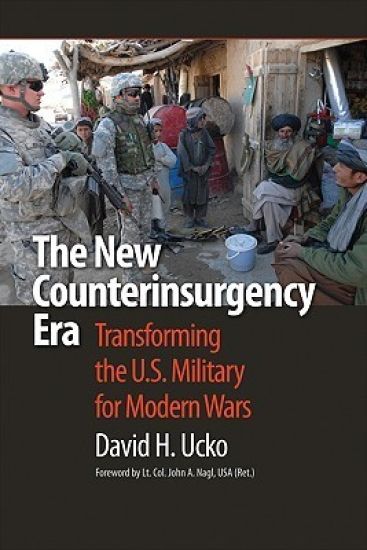
Confronting insurgent violence in Iraq and Afghanistan, the U.S. military has recognized the need to "re-learn" counterinsurgency. But how has the Department of Defense with its mixed efforts responded to this new strategic environment? Has it learned anything from past failures? In "The New Counterinsurgency Era", David Ucko examines DoD's institutional obstacles and initially slow response to a changing strategic reality. Ucko also suggests how the military can better prepare for the unique challenges of modern warfare, where it is charged with everything from providing security to supporting reconstruction to establishing basic governance - all while stabilizing conquered territory and engaging with local populations. After briefly surveying the history of American counterinsurgency operations, Ucko focuses on measures the military has taken since 2001 to relearn old lessons about counterinsurgency, to improve its ability to conduct stability operations, to change the institutional bias against counterinsurgency, and to account for successes gained from the learning process. Given the effectiveness of insurgent tactics, the frequency of operations aimed at building local capacity, and the danger of ungoverned spaces acting as havens for hostile groups, the military must acquire new skills to confront irregular threats in future wars. Ucko clearly shows that the opportunity to come to grips with counterinsurgency is matched in magnitude only by the cost of failing to do so.