Kirjojen hintavertailu. Mukana 12 595 353 kirjaa ja 12 kauppaa.

Kirjailija

David Harsent

Kirjat ja teokset yhdessä paikassa: 14 kirjaa, julkaisuja vuosilta 2002-2024, suosituimpien joukossa A Broken Man in Flower. Vertaile teosten hintoja ja tarkista saatavuus suomalaisista kirjakaupoista.

14 kirjaa

Kirjojen julkaisuhaarukka 2002-2024.

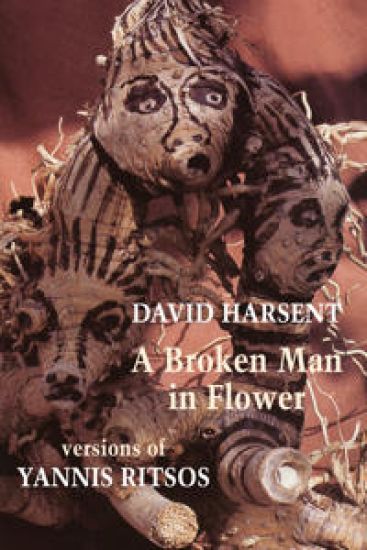
A Broken Man in Flower

A Broken Man in Flower

David Harsent; Yannis Ritsos

Bloodaxe Books Ltd
2023
pokkari
Yannis Ritsos (1909–90) is generally considered to be – along with Cavafy, Seferis and Elytis – one of the most significant Greek poets of the last century. His life was, to say the least, troubled. From an early age, he was dogged by the tuberculosis that killed his mother and brother. His father and sister suffered breakdowns and spent time in institutions. His poem Epitaphios (1936), a lament for a young man shot dead by the police during a tobacco workers’ strike, was publicly burned by the Metaxas regime and his books banned. During the post-World War Two civil war – because he sided with the left – Ritsos was arrested and sent to prison camps. Then, in 1967, when the Papadopoulos military junta took control of the country, he was again arrested, again his books were banned, again he spent time in prison camps, before being confined to house arrest on the island of Samos. The violence and tyranny of dictatorship is often fractured by the surreal. In the poems collected here, written by Ritsos while in prison and under house arrest, that fracture in perception is a wound. A Broken Man in Flower has an introduction by John Kittmer and includes the text of an illuminating and vivid letter sent by Ritsos to his publisher in 1969 while under house arrest on Samos describing his life – and the lives of Greeks – under the repressive rule of the Colonels. David Harsent’s thirteen collections have won a number of awards, including the Forward Prize, the T.S. Eliot Prize and the Griffin International Prize. He is also a librettist: his collaborations with composers, chiefly with Harrison Birtwistle, have been performed at major venues worldwide.
A Bird's Idea of Flight

A Bird's Idea of Flight

David Harsent

Faber Faber
2017
nidottu
A Bird's Idea of Flight describes a circular journey in a sequence of 25 poems. Twelve poems chart the outward journey, the thirteenth is pivotal, and twelve poems bring the traveler back. The subject of his quest is thanatology; in particular, he is deeply curious about the business of his own death. It is an adventure of discovery and disillusionment, during which the figure of death, as companion, mentor and guide, appears along the way, and in various guises.
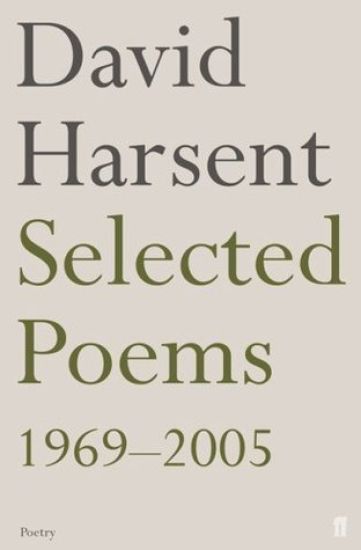
Selected Poems David Harsent

Selected Poems David Harsent

David Harsent

Faber Faber
2007
nidottu
In an illustrious career, David Harsent has published eight collections of poetry, from A Violent County in 1969, to Legion, winner of the Forward Prize in 2005. This selection, made by the author himself, draws upon the full arc of his career and offers an outstanding concentration of, and introduction to, the full range and powers of this distinguished poet.
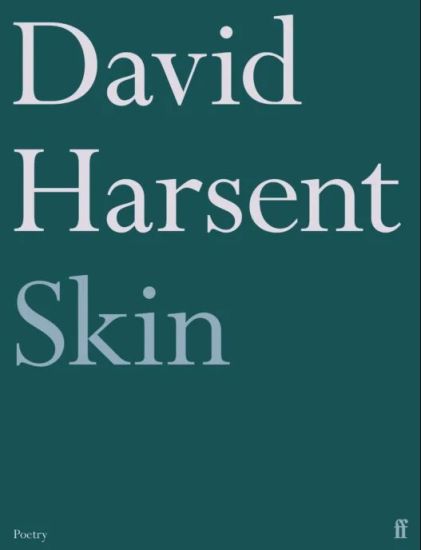
Skin

Skin

David Harsent

FABER FABER
2024
nidottu
The ten visionary sequences that make up David Harsent's new collection operate on one another like a planetary system.As elsewhere in Harsent's work, there are 'touchstones' - words, phrases, images and scenes - that reappear as versions of themselves, bringing a compositional depth and dramatic intensity to poems that confront raw and unpacified areas of human experience. His characters carry narratives that charge the whole with an erotic, sometimes hallucinatory energy; his staging is stark and minimal: attentive, always, to what lies beneath the skin.
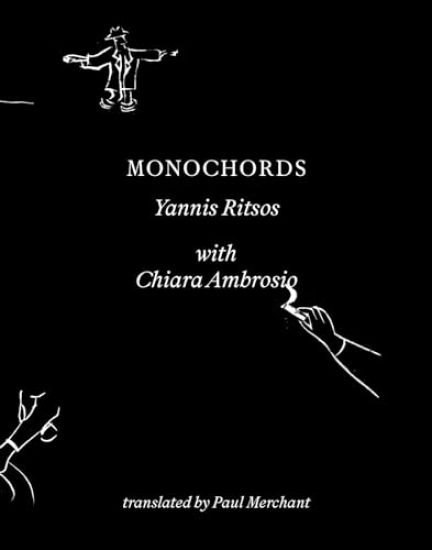
Monochords

Monochords

Yannis Ritsos; David Harsent; Gareth Evans

Prototype Publishing Ltd.
2023
nidottu
Returning to the island of Samos during the summer of 1979, where he had spent long periods of exile throughout his life, Greek poet Yannis Ritsos composed a remarkable collection of 336 single-line poems, written at a rate of about 10 a day: the Monochords, each line an essential observation of a moment; a personal archive of time past, present and future.In London in 2020, during a period of Covid confinement, artist and filmmaker Chiara Ambrosio began responding to Ritsos’ words through linocut images: an experiment in entering the space opened by each poem, rendering it in line and shape; a daily ritual that accompanied her along a strange year of exile from life.'Yannis Ritsos composed monochorda, single-line poems, as antidotes to the concocted complexities silencing truth. Chiara Ambrosio’s linocuts, beautifully intermingled with Ritsos' words, add their own ascetic harmony to his monochorda thus boosting their pertinence to our dissonant age.' – Yanis Varoufakis'This meditative book is an inspiring act of repair twice over, for ordeals of seclusion, threat, and tedium past and present.' – Marina Warner'A major poem by one of the greatest European poets of the past 100 years, in an exemplary translation & with a further superb expansion into a year's journey of linocuts make this book a vessel that holds urgently needed communal life-force.' - Stephen Watts
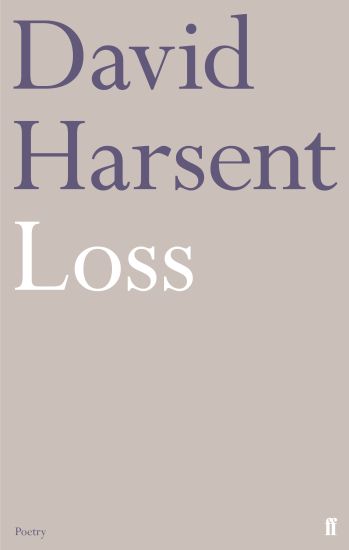
Loss

Loss

David Harsent

FABER FABER
2022
nidottu
The city never sleeps silence would weaken itwhen all else fails it talks to itself seamless thrum ofmachinery dark undertone.It is 00:00 and the full of the night yet to come.A man sits at a window through the dead hours of night, his sleep broken by troubling dreams of a figure in a white landscape. This fragmentary vigil anchors a series of narrative sections in which a dramatic voice gives, first, an account of the man, then addresses him directly. We learn of a conflicted childhood, of love lost to circumstance, of the press of death on the protagonist's waking thoughts. He is a man afflicted by personal loss, but also a man of his time, all too aware of the troubled world in which he lives. In this powerful sequence, Harsent's breathtaking formal skills are always in evidence. Intense, lyrical and passionate, Loss makes for enthralling reading.
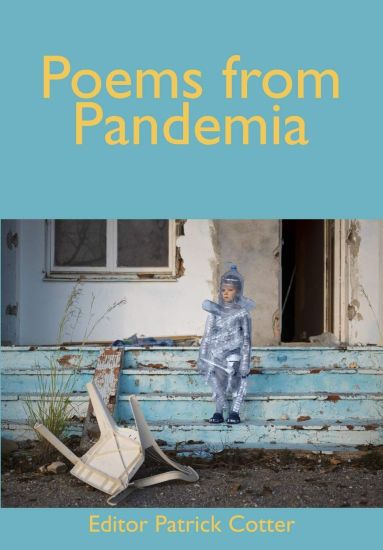
Poems from Pandemia

Poems from Pandemia

Martin Espada; Eilean Ni Chuilleanain; David Harsent

SOUTHWORD EDITIONS
2020
pokkari
Pandemia being a land or planet whose name derives from the word pandemic. This is an anthology of brilliant work by both established and emerging poets from across the English-speaking world, from Australia to India, Europe to North America. With its accounts of life changed utterly, lives abruptly finished, testimonies of the poignancy, the loneliness and sometimes madness of lockdown, this book is an essential statement of record on the dark times we are living through.
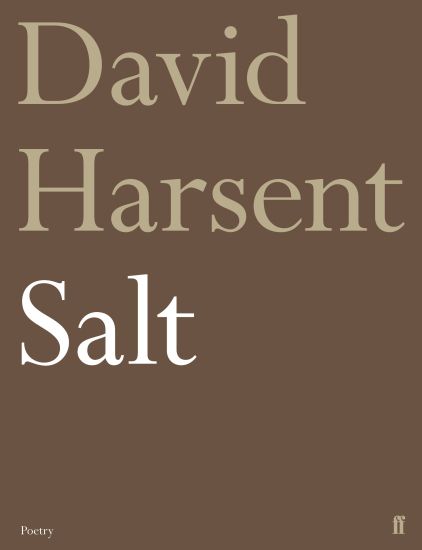
Salt

Salt

David Harsent

Faber Faber
2019
pokkari
Salt is a distinctive assembly of poems by the multi-award winning David Harsent. Resting somewhere between fragment and exposition, these intense and primal pieces stretch out across the measure of the page in the form of brief utterances. One extends to sonnet-length, one consists of a single line; but each piece uniquely completes its own world, and at the same time shades on to the next as a succession of frames and stills and imaginings that lends light and colour in the round. 'The poems in this book are a series, not a sequence,' the author explains. 'They belong to each other in mood, in tone and by way of certain images and words that form a ricochet of echoes - not least the word "salt".' Mineral, eerie, sensory, the poems in the collection are experienced as encounters - some with the surety of daylight, others in dream-life - that refresh with the turning of each page. Like little fictions passed through space from hand to hand, the writings build powerfully to make Salt an unforgettable volume from this most visionary of writers.
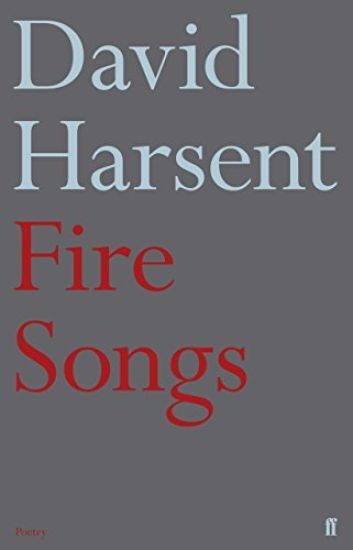
Fire Songs

Fire Songs

David Harsent

Faber Faber
2015
nidottu
Winner of the 2014 T S Eliot Prize for Poetry'A writer we should treasure.' Charlotte Runcie, Daily Telegraph'With every book [Harsent's] stature as a truly significant writer becomes more undeniable.' Fiona Sampson, IndependentThe poems in David Harsent's new collection, whether single poems, dramatic sequences, or poems that 'belong to one another', share a dark territory and a sometimes haunting, sometimes steely, lyrical tone. Throughout the book - in the stark biography of 'Songs from the Same Earth', the troubling fractured narrative of 'A Dream Book', the harrowing lines of connection in four poems each titled 'Fire', or the cheek-by-jowl shudder of 'Sang the Rat' - Harsent writes, as always, with passion and a sureness of touch.
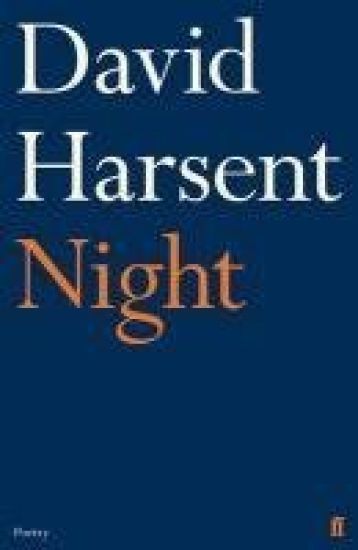
Night

Night

David Harsent

Faber Faber
2011
nidottu
Among the poems that open Night, David Harsent's follow-up to his Forward Prize-winning collection Legion, is a startling sequence about a garden - but a garden unlike any other. It sets the tone for a book in which the sureties of daylight become uncertain: dark, unsettling narratives about what wakes in us when we escape our day-lit selves to visit a place where the dream-like and the nightmarish are never far apart. The book culminates in the seductive and brilliantly sustained 'Elsewhere', a noirish, labyrinthine quest-poem in which the protagonist is drawn ever onward through a series of encounters and reflections like an after-hours Orpheus, hard-bitten and harried by memory.
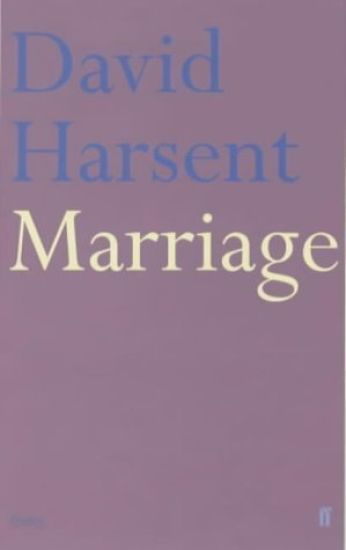
Marriage

Marriage

David Harsent

Faber Faber
2002
nidottu
Marriage consists of two sequences of poems. The first is loosely based on the relationship between Pierre Bonnard and his muse and model, who was also his wife. It is a rich pattern for the study of the mysteries of domesticity, the unspoken privacies and intimacies that can exist between two people. For the painter, problems of seeing become, for the husband, problems of knowing. 'Marriage' is an inspired portrait of conjugality, exact, watchful and understated. The second sequence, 'Lepus', extends an interest in the hare as trickster, traceable elsewhere in David Harsent's work, and most recently in 'The Woman and the Hare', a piece commissioned by the Nashe Ensemble, set to music by Harrison Birtwistle, and first performed at the South Bank Centre in 1999.