Kirjojen hintavertailu. Mukana 12 595 353 kirjaa ja 12 kauppaa.

Kirjailija

David Harvey

Kirjat ja teokset yhdessä paikassa: 93 kirjaa, julkaisuja vuosilta 1989-2027, suosituimpien joukossa Accounting. Vertaile teosten hintoja ja tarkista saatavuus suomalaisista kirjakaupoista.

93 kirjaa

Kirjojen julkaisuhaarukka 1989-2027.

Accounting

Accounting

Peter Atrill; Eddie McLaney; David Harvey; Ling Mei Cong

PEARSON EDUCATION (US)
2022
nidottu
An introductory text for students new to accounting Accounting: An Introduction, 8th Edition engages students using cases, reflective questions and real-world examples to support them in developing critical thinking skills useful across disciplines and needed for starting a financial business. The 8th edition includes communication and decision-making skills to help prepare students for employability. The Accounting and You feature helps students understand how the content is relevant to everyday life. Samples Download the detailed table of contents > Preview sample pages from Accounting: An Introduction, 8th Edition >

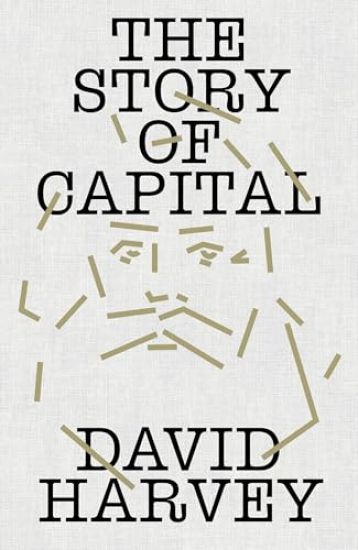
The Story of Capital

The Story of Capital

David Harvey

Verso Books
2027
nidottu
For decades, David Harvey has been teaching Marx's work, particularly Capital, to great acclaim. He has analysed chapter by chapter - sometimes line-by-line - Marx's three volumes and the Grundrisse. This new book opens up the mental universe of that work for a general reader. In The Story of Capital, Harvey takes a synoptic approach to the conceptual architecture as a whole and guides us through the key moments, from labour and technology to the state and geopolitics, via the profit rate, social reproduction, the relationship to nature, fictitious capital and the return of the rentiers. In doing so, Harvey has produced a work which will become a key reference for all those trying to grasp the nature of contemporary capitalism.
Cohabitation Strategies

Cohabitation Strategies

Emiliano Gandolfi; Gabriela Rendón; Miguel Robles-Durán; David Harvey; ; Lucia Babina; Jeanne Heeswijk; Ruedi Baur

Oro Editions
2026
sidottu
Cohabitation Strategies: Challenging Neoliberal Urbanization Between Crisis presents 12 years of urban theories, projects, and interventions developed by Cohabitation Strategies, a Rotterdam- and New York City-based non-profit cooperative committed to radical socio-spatial research, design, and development. Centering on the development of new action-research methodologies, neighbourhood-based initiatives, and the facilitation of community-driven transformative interventions, the book offers critical insights and progressive visions on the dramatic impact that neoliberal spatial-restructuring had in communities of colour and low-income neighbourhoods in the Netherlands, Italy, France, Canada, and the United States. The book proposes new transdisciplinary methodologies, practices, tools, and strategies to challenge for-profit-driven urban development and the advancement of the right to the city.
The Story of Capital

The Story of Capital

David Harvey

Verso Books
2026
sidottu
For decades, David Harvey has been teaching Marx's work, particularly Capital, to great acclaim. He has analysed chapter by chapter - sometimes line-by-line - Marx's three volumes and the Grundrisse. This new book opens up the mental universe of that work for a general reader. In The Story of Capital, Harvey takes a synoptic approach to the conceptual architecture as a whole and guides us through the key moments, from labour and technology to the state and geopolitics, via the profit rate, social reproduction, the relationship to nature, fictitious capital and the return of the rentiers. In doing so, Harvey has produced a work which will become a key reference for all those trying to grasp the nature of contemporary capitalism.
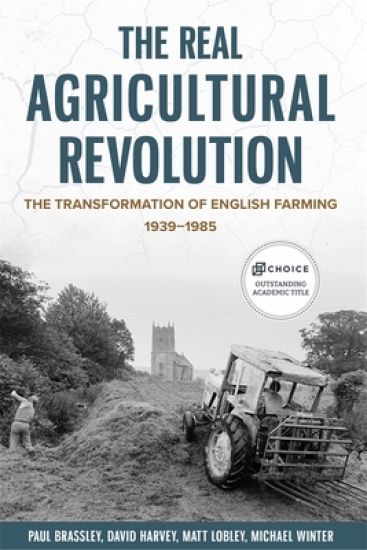
The Real Agricultural Revolution

The Real Agricultural Revolution

Paul Brassley; Michael Winter; Matt Lobley; David Harvey

BOYDELL BREWER LTD
2023
pokkari
An investigation into farming practices throughout a period of seismic change. WINNER of the British Agricultural History Society's 2022 Thirsk Prize WINNER of the 2022 CHOICE Outstanding Academic Title Award "This meticulously researched book gives a detailed and authoritative history of agricultural change in the second half of the twentieth century. The book skilfully weaves together the hitherto underexplored individual returns of the Farm Management Survey with oral histories of the farmers who enacted change on the ground to offer an incisive account of the complex technological, political and cultural developments which gave rise to some of the greatest changes in English farming history. It will stand as the key reference point for those with an interest in the history of agricultural change in Britain." Professor Mark Riley, University of Liverpool At the outbreak of the Second World War in 1939 British agriculture was largely powered by the muscles of men, women, and horses, and used mostly nineteenth-century technology to produce less than half of the country's temperate food. By 1985, less land and far fewer people were involved in farming, the power sources and technologies had been completely transformed, and the output of the country's agriculture had more than doubled. This is the story of the national farm, reflecting the efforts and experiences of 200,000 or so farmers and their families, together with the people they employed. But it is not the story of any individual one of them. We know too little about change at the individual farm level, although what happened varied considerably between farms and between different technologies. Based on an improbably-surviving archive of Farm Management Survey accounts, supported by oral histories from some of the farmers involved, this book explores the links between the production of new technologies, their transmission through knowledge networks, and their reception on individual farms. It contests the idea that rapid adoption of technology was inevitable, and reveals the unevenness, variability and complexity that lay beneath the smooth surface of the official statistics.
A Companion to Marx's Grundrisse

A Companion to Marx's Grundrisse

David Harvey

Verso Books
2023
nidottu
When leading scholar of Marx, Roman Rosdolsky, first encountered the virtually unknown text of Marx's Grundrisse - his preparatory work for his masterpiece Das Capital - in the 1950s in New York Public Library, he recognized it as "a work of fundamental importance," but declared "its unusual form" and "obscure manner of expression, made it far from suitable for reaching a wide circle of readers." David Harvey's Companion to Marx's Grundrisse builds upon his widely acclaimed companions to the first and second volumes of Capital in a way that will reach as wide an audience as possible. Marx's stated ambition for this text - where he was thinking aloud about some of possible metamorphoses of capitalism - is to reveal "the exact development of the concept of capital as the fundamental concept of modern economics, just as capital itself is the foundation of bourgeois society." While respecting Marx's desire to "bring out all the contradictions of bourgeois production, as well as the boundary where it drives beyond itself," David Harvey also pithily illustrates the relevance of Marx's text to understanding the troubled state of contemporary capitalism.
Where Paths Meet

Where Paths Meet

Paul Ellenberger; David Harvey

Xulon Press
2022
pokkari
Through a series of stories and memories, this book presents a firsthand account of the author's family experiences as missionaries in West Africa, dating back to the early 1900's. The stories give a unique view of history from the perspective of an American growing up in colonial Guinea, who returns to follow God's call following his service in WWII. Some of Paul's stories will make you laugh about language faux pas, crossing borders with snakes and chickens, pursuing a criminal in a commandeered car, or pretending to have a wife upon the return from service in the US Navy. However, there are also recollections of personal hardship due to serious injury, illness in a country with limited medical resources and providing aid and assistance to Liberian refugees who fled their own country during the civil war in the early 90's. The book speaks about the impact of the two World Wars in West Africa, a taste of French colonialism followed by independence, and living everyday life in a country that effectively functioned as a Soviet Satellite. Throughout the collection of memories, we see how God's hand guides the lives of His servants in the big things, like marriage, enlistment in the Navy and the building of a Bible school. God also demonstrated his providence in the day-to-day travels on unimproved highways, obtaining visas, and air travel through West African airports. These accounts show how God used unlikely people to carry his message to individuals and tribes, and how the work transitioned from relationship evangelism and translation, to public evangelism and then to Bible and pastoral education at just the right time in history. Paul and Florine served in Guinea for 36 years, with The Christian & Missionary Alliance. Early on they were involved in church planting and for the rest of their career they taught at the Telekoro Bible Institute, training men and women to be pastors, leaders and church workers.
Birmingham's Crossley Buses

Birmingham's Crossley Buses

David Harvey

Amberley Publishing
2022
nidottu
Birmingham City Transport’s association with Crossley Motors came about after 1945, when BCT required a large number of buses to be delivered quickly, with many manufacturers unable to fulfil orders in the aftermath of the war. There was a pressing need for additional vehicles, and 1,760 buses were acquired between 1947 and 1954. Crossley Motors had the spare capacity at their Errwood Park factory to build a complete bus, chassis, engine and bodywork and to quickly supply large numbers of a product designed to BCT’s stringent specification. This book reveals their pioneering status, exploring the six major variations in the Crossley order, as well as the takeover of Crossley Motors by ACV and its impact on the Birmingham order. It also looks at the Crossley bodywork built for BCT on Daimler CVG6 chassis between 1952 and 1954.
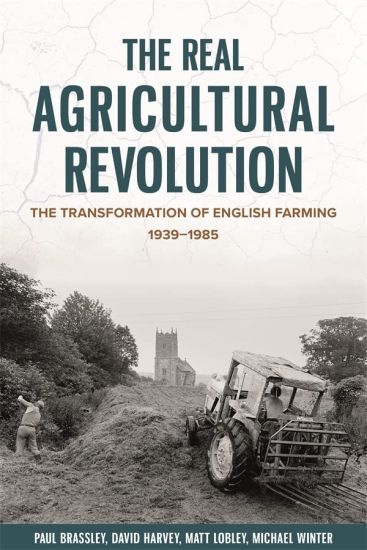
The Real Agricultural Revolution

The Real Agricultural Revolution

Paul Brassley; Michael Winter; Matt Lobley; David Harvey

The Boydell Press
2021
sidottu
An investigation into farming practices throughout a period of seismic change. WINNER of the British Agricultural History Society's 2022 Thirsk Prize WINNER of the 2022 CHOICE Outstanding Academic Title Award "This meticulously researched book gives a detailed and authoritative history of agricultural change in the second half of the twentieth century. The book skilfully weaves together the hitherto underexplored individual returns of the Farm Management Survey with oral histories of the farmers who enacted change on the ground to offer an incisive account of the complex technological, political and cultural developments which gave rise to some of the greatest changes in English farming history. It will stand as the key reference point for those with an interest in the history of agricultural change in Britain." Professor Mark Riley, University of Liverpool At the outbreak of the Second World War in 1939 British agriculture was largely powered by the muscles of men, women, and horses, and used mostly nineteenth-century technology to produce less than half of the country's temperate food. By 1985, less land and far fewer people were involved in farming, the power sources and technologies had been completely transformed, and the output of the country's agriculture had more than doubled. This is the story of the national farm, reflecting the efforts and experiences of 200,000 or so farmers and their families, together with the people they employed. But it is not the story of any individual one of them. We know too little about change at the individual farm level, although what happened varied considerably between farms and between different technologies. Based on an improbably-surviving archive of Farm Management Survey accounts, supported by oral histories from some of the farmers involved, this book explores the links between the production of new technologies, their transmission through knowledge networks, and their reception on individual farms. It contests the idea that rapid adoption of technology was inevitable, and reveals the unevenness, variability and complexity that lay beneath the smooth surface of the official statistics.
Birmingham City Transport Demonstrators

Birmingham City Transport Demonstrators

David Harvey

AMBERLEY PUBLISHING
2021
nidottu
From 1914 until 1969, when it was absorbed into WMPTE, Birmingham City Transport had various periods when they hired buses for evaluation. These demonstrators were tried out for a variety of reasons such as tramway feeder route development, expansion of the bus fleet to meet increasing passenger numbers, abandonment of tramcar services and expansion into the newly built municipal housing estates in the interwar and post-war periods. It tried out a wide variety of vehicles provided by both chassis and body manufacturers. This was to compare different manufacturers products, with a view to purchasing a substantial number of buses. BCT was the largest municipal operator in the UK, so this was a potentially lucrative opportunity for manufacturers. There were years when Birmingham had a large number of buses on hire in order to assess their performance, fuel economy and durability. 1923/4, 1929–1934, 1937, 1946/7,1955–1958 and 1960–1967 were the peak years for vehicle trials, of which very few were successful due to BCT's exacting requirements as well as their wish, where possible, to support local industry. A fascinating selection of buses were tested over the years.
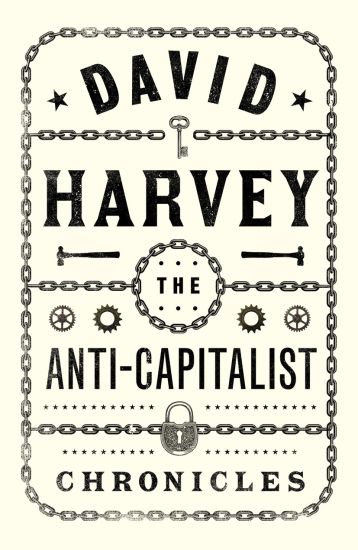
The Anti-Capitalist Chronicles

The Anti-Capitalist Chronicles

David Harvey

Pluto Press
2020
pokkari
Amidst waves of economic crises, health crises, class struggle and neo-fascist reaction, few possess the clarity and foresight of world-renowned theorist, David Harvey. Since the publication of his bestselling A Brief History of Neoliberalism, Harvey has been tracking the evolution of the capitalist system as well as tides of radical opposition rising against it. In The Anti-Capitalist Chronicles, Harvey introduces new ways of understanding the crisis of global capitalism and the struggles for a better world. While accounting for violence and disaster, Harvey also chronicles hope and possibility. By way of conversations about neoliberalism, capitalism, globalization, the environment, technology, social movements and crises like COVID-19, he outlines, with characteristic brilliance, how socialist alternatives are being imagined under very difficult circumstances. In understanding the economic, political and social dimensions of the crisis, Harvey’s analysis in The Anti-Capitalist Chronicles will be of strategic importance to anyone wanting to both understand and change the world.
The Anti-Capitalist Chronicles

The Anti-Capitalist Chronicles

David Harvey

Pluto Press
2020
sidottu
Amidst waves of economic crises, health crises, class struggle and neo-fascist reaction, few possess the clarity and foresight of world-renowned theorist, David Harvey. Since the publication of his bestselling A Brief History of Neoliberalism, Harvey has been tracking the evolution of the capitalist system as well as tides of radical opposition rising against it. In The Anti-Capitalist Chronicles, Harvey introduces new ways of understanding the crisis of global capitalism and the struggles for a better world. While accounting for violence and disaster, Harvey also chronicles hope and possibility. By way of conversations about neoliberalism, capitalism, globalization, the environment, technology, social movements and crises like COVID-19, he outlines, with characteristic brilliance, how socialist alternatives are being imagined under very difficult circumstances. In understanding the economic, political and social dimensions of the crisis, Harvey’s analysis in The Anti-Capitalist Chronicles will be of strategic importance to anyone wanting to both understand and change the world.
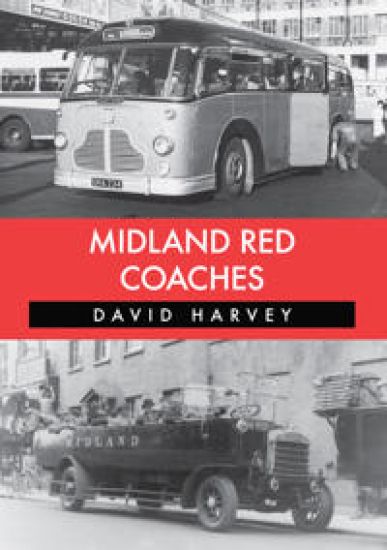
Midland Red Coaches

Midland Red Coaches

David Harvey

Amberley Publishing
2020
nidottu
Throughout their existence from 1904 until 1981, the Birmingham & Midland Motor Omnibus Company were an idiosyncratic operator whose area of operations ranged from the Welsh Marches and Shropshire in the West to Northamptonshire and Rutland in the East and from Oxfordshire and Gloucestershire in the South to Staffordshire and Derbyshire in the North. Much of their area was distinctly rural but in Birmingham and the Black Country, Worcester and Hereford, Stafford and Leicester, intense urban services were operated mainly by double-decker buses and it is these buses that this volume examines. Looking at the coaches that formed a part of this iconic fleet, David Harvey utilises his collection of rare and unpublished images to explore the fascinating world of Midland Red coaches.
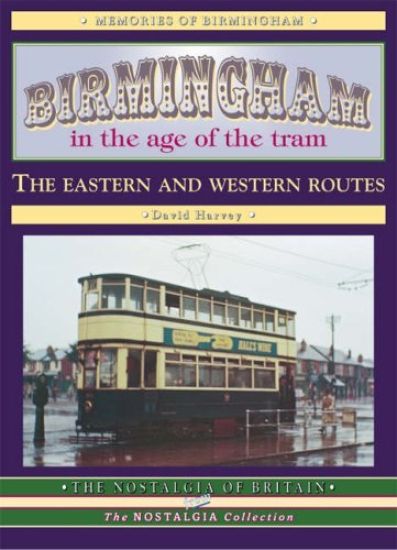
Birmingham in the Age of the  Tram

Birmingham in the Age of the Tram

David Harvey

Silver Link Publishing Ltd
2020
pokkari
During 1990-94, many locomotive classes became extinct, but new builds helped to redress the balance. Speedlink ended, but the first Eurostars appeared. In 1994, the Channel Tunnel opened. This book chronicles these developments. It also uses pictures to record the end of an important railway era.
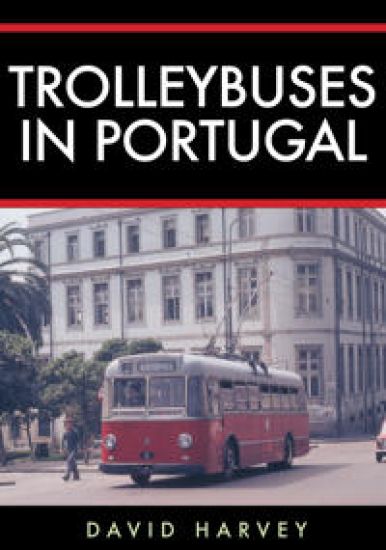
Trolleybuses in Portugal

Trolleybuses in Portugal

David Harvey

Amberley Publishing
2019
nidottu
Trolleybuses were first introduced in Portugal by SMC in Coimbra in February 1947 and used Saurer, Sunbeam and BUT single-deckers that were all in service by 1954. Further deliveries from the UK consisted of ten BUTs and six Sunbeams. The fleet was largely rebodied, but in 1984 another twenty Efacec-Caetano thirty-seven seater trolleybuses began to be delivered. The second Portuguese trolleybus operator was SMB in Braga, which opened in May 1964, and the final trolleybus system to open in Portugal was Oporto. This was opened by STCP with twenty single-deckers in 959, augmented by a further six BUTs four years later. With a fleet renewal including fifty Lancia double-deckers, at its largest, the Oporto trolleybus fleet reached a total of 126 vehicles. With a wealth of previously unpublished photographs, David Harvey tells the story of Portugal’s trolleybuses.
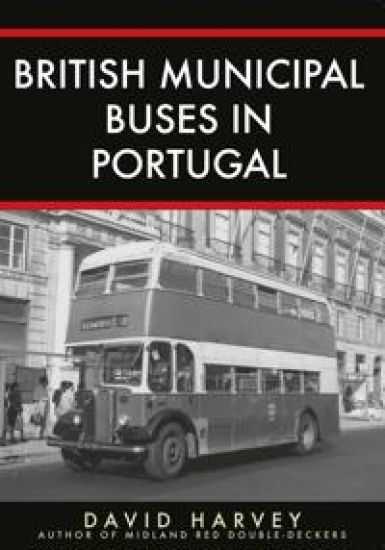
British Municipal Buses in Portugal

British Municipal Buses in Portugal

David Harvey

Amberley Publishing
2019
nidottu
From 1940 until the mid-1970s Britain supplied Portugal with many of its bus chassis. In the capital city of Lisbon, the local operator was CCFL, which was the first buyer of heavyweight British-built bus chassis. Between 1947 and 1949 some 141 single-deckers were placed in service. The first double-deckers were two Leyland Titan PD1As arriving in 1947, but from 1950 a large fleet of AEC Regent IIIs and Vs was purchased, with the last ones arriving in 1967. The development of public transport in Oporto began when the municipal authorities wished to encourage mule-hauled trams. The criticism of the slow speed of tram travel began to pick up pace and between 1954 and 1957 batches of Daimler under-floor single-deckers were delivered to Oporto, followed by ten Leyland Worldmaster LERT1/1s in 1959 and then ten AEC Regent V D2LA double-deckers in July 1960. British motorbuses were obtained in small numbers in Coimbra, with only twenty-three ever being purchased. In 1949, a pair of Daimler CVD6s was bought new while in February 1964 two AEC Regent Vs were purchased, becoming the only double-deckers to ever operate in that university city. With a wonderful array of photographs, David Harvey tells the story of British buses in Lisbon, Oporto and Coimbra, among other locations in Portugal, documenting a period where the public transport of Portugal would have seemed familiar to any British tourist.
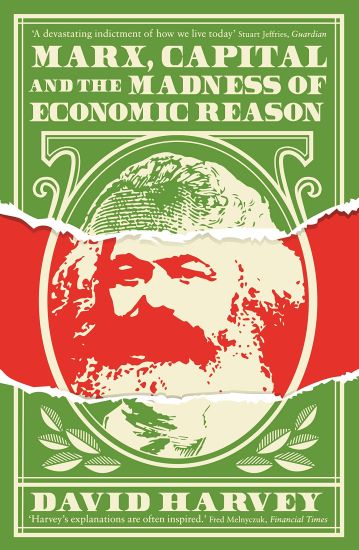
Marx, Capital, and the Madness of Economic Reason

Marx, Capital, and the Madness of Economic Reason

David Harvey

Oxford University Press
2019
nidottu
Karl Marx's Capital is one of the most important texts written in the modern era. Since 1867, when the first of its three volumes was published, it has had a profound effect on politics and economics in theory and practice throughout the world. But Marx wrote in the context of capitalism in the second half of the nineteenth century, and his assumptions and analysis need to be updated in order to address to the technological, economic, and industrial change that has followed Capital's initial publication. In Marx, Capital, and the Madness of Economic Reason, David Harvey not only provides a concise distillation of his famous course on Capital, but also makes the text relevant to the twenty-first century's continuing processes of globalization. This book serves as an accessible window into Harvey's unique approach to Marxism and takes readers on a riveting roller coaster ride through recent global history. It demonstrates how and why Capital remains a living, breathing document with an outsized influence on contemporary social thought.
Marx, Capital and the Madness of Economic Reason
Marx's Capital is one of the most important texts of the modern era. The three volumes, published between 1867 and 1883, changed the destiny of countries, politics and people across the world - and continue to resonate today. In this book, David Harvey lays out their key arguments. In clear and concise language, Harvey describes the architecture of capital according to Marx, placing his observations in the context of capitalism in the second half of the nineteenth century. He considers the degree to which technological, economic and industrial change during the last 150 years means Marx's analysis and its application may need to be modified. Marx's trilogy concerns the circulation of capital: volume I, how labour increases the value of capital, which he called valorisation; volume II, on the realisation of this value, by selling it and turning it into money or credit; volume III, on what happens to the value next in processes of distribution. The three volumes contain the core of Marx's thinking on the workings and history of capital and capitalism. David Harvey explains and illustrates the profound insights and enormous analytical power they continue to offer in terms that, without compromising their depth and complexity, will appeal to a wide range of readers, including those coming to the work for the first time.