
Kirjailija
David Herman
Kirjat ja teokset yhdessä paikassa: 12 kirjaa, julkaisuja vuosilta 1995-2026, suosituimpien joukossa Animal Crossings. Vertaile teosten hintoja ja tarkista saatavuus suomalaisista kirjakaupoista.
12 kirjaa
Kirjojen julkaisuhaarukka 1995-2026.
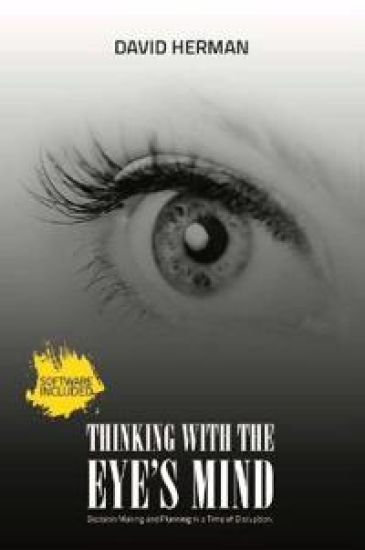
Thinking with The Eye's Mind demonstrates how to successfully review and develop ideas and plans that have yet to fulfil their original promise. It does so by way of a 14-chapter text and two free online applications designed for business and personal planning.After reading this book you'll come to realize that there is no excuse for letting your best ideas and plans fall by the wayside for lack of an easily employable testing procedure. Not until they have been tested in a special visually-oriented project-planning system called the Universal Template (U-Template(TM)).Once you learn how to let your eyes do the work they're intended to do, you'll never abandon a worthwhile idea again.
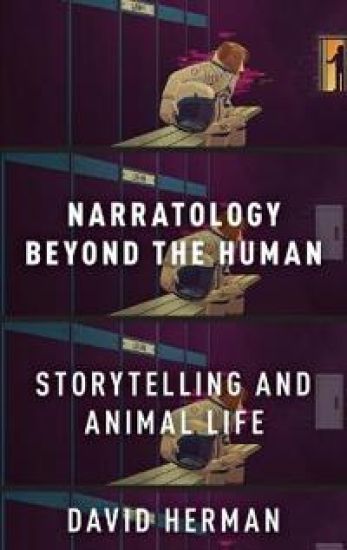
To what extent, and in what manner, do storytelling practices accomodate nonhuman subjects and their modalities of experience, and how can contemporary narrative study shed light on interspecies interactions and entanglements? In Narratology beyond the Human, David Herman addresses these questions through a cross-disciplinary approach to post-Darwinian narratives concerned with animals and human-animal relationships. Herman considers the enabling and constraining effects of different narrative media, examining a range of fictional and nonfictional texts disseminated in print, comics and graphic novels, and film. In focusing on techniques such as the use of animal narrators, alternation between human and nonhuman perspectives, the embedding of stories within stories, and others, the book explores how specific strategies for portraying nonhuman agents both emerge from and contributes to broader attitudes toward animal life. Herman argues that existing frameworks for narrative inquiry must be modified to take into account how stories are interwoven with cultural ontologies, or understandings of what sorts of beings populate the world and how they relate to humans. Showing how questions of narrative bear on ideas of species difference and assumptions about animal minds, Narratology beyond the Human underscores our inextricable interconnectedness with other forms of creatural life and suggests that stories can be used to resituate imaginaries of human action in a more-than-human world.
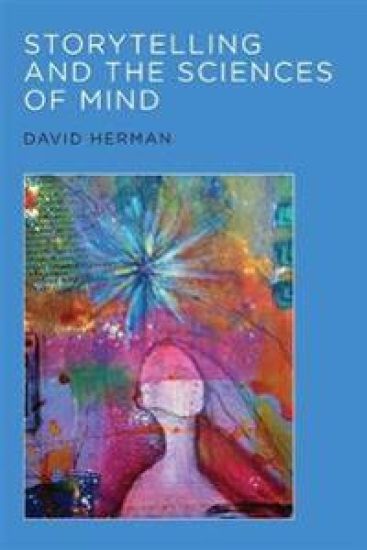
An transdisciplinary exploration of narrative not just as a target for interpretation but also as a means for making sense of experience itself.With Storytelling and the Sciences of Mind, David Herman proposes a cross-fertilization between the study of narrative and research on intelligent behavior. This cross-fertilization goes beyond the simple importing of ideas from the sciences of mind into scholarship on narrative and instead aims for convergence between work in narrative studies and research in the cognitive sciences. The book as a whole centers on two questions: How do people make sense of stories? And: How do people use stories to make sense of the world? Examining narratives from different periods and across multiple media and genres, Herman shows how traditions of narrative research can help shape ways of formulating and addressing questions about intelligent activity, and vice versa.Using case studies that range from Robert Louis Stevenson's Dr Jekyll and Mr Hyde to sequences from The Incredible Hulk comics to narratives told in everyday interaction, Herman considers storytelling both as a target for interpretation and as a resource for making sense of experience itself. In doing so, he puts ideas from narrative scholarship into dialogue with such fields as psycholinguistics, philosophy of mind, and cognitive, social, and ecological psychology. After exploring ways in which interpreters of stories can use textual cues to build narrative worlds, or storyworlds, Herman investigates how this process of narrative worldmaking in turn supports efforts to understand-and engage with-the conduct of persons, among other aspects of lived experience.
This volume explores how twentieth- and twenty-first-century literary texts engage with relationships between humans and other animals. Written by forward-thinking early-career scholars, as well as established experts in the field, the chapters discuss key texts in the emergent canon of animal narratives, including Franz Kafka's animal stories, Yann Martel's The Life of Pi, Zakes Mda's The Whale Caller, and others. The volume is divided into four main sections. Two period-focused sections center on modernism and on late-twentieth- and twenty-first-century fiction, while two further sections foreground the more general project of theory building in literary animal studies, examining interconnections among concepts of species, sexuality, gender, and genre. The volume also raises issues that extend beyond the academic community, including ethical dimensions of human-animal relationships and the problems of species loss and diminishing biodiversity.
This volume explores how twentieth- and twenty-first-century literary texts engage with relationships between humans and other animals. Written by forward-thinking early-career scholars, as well as established experts in the field, the chapters discuss key texts in the emergent canon of animal narratives, including Franz Kafka's animal stories, Yann Martel's The Life of Pi, Zakes Mda's The Whale Caller, and others. The volume is divided into four main sections. Two period-focused sections center on modernism and on late-twentieth- and twenty-first-century fiction, while two further sections foreground the more general project of theory building in literary animal studies, examining interconnections among concepts of species, sexuality, gender, and genre. The volume also raises issues that extend beyond the academic community, including ethical dimensions of human-animal relationships and the problems of species loss and diminishing biodiversity.
Narrative Theory
David Herman; James Phelan; Peter J Rabinowitz; Brian Richardson; Robyn R Warhol
OHIO STATE UNIVERSITY PRESS
2012
pokkari
Narrative Theory: Core Concepts and Critical Debates addresses two frequently asked questions about narrative studies: "what is narrative theory?" and "how do different approaches to narrative relate to each other?" In engaging with these questions, the book demonstrates the diversity and vitality of the field and promotes a broader dialogue about its assumptions, methods, and purposes. In Part One, the co-authors explore the scope and aims of narrative from four distinct perspectives: rhetorical (Phelan and Rabinowitz), feminist (Warhol), mind-oriented (Herman), and unnatural (Richardson). Using case studies (Huckleberry Finn, Persuasion, On Chesil Beach, and Midnight's Children, respectively), the co-authors explain their different takes on the same core concepts: authors, narrators, narration; plot, time, and progression; space, setting, and perspective; character; reception and the reader; and narrative values. In Part Two, the co-authors respond to one another's views. As they discuss the relation of the approaches to each other, they highlight significant current debates and map out key developments in the field. Accessibly written, Narrative Theory can serve as the basis for a wide range of courses, even as its incisive presentation of four major approaches and its lively give-and-take about the powers and limitations of each make the book an indispensable resource for specialists.

Basic Elements of Narrative
David Herman
Wiley-Blackwell (an imprint of John Wiley Sons Ltd)
2009
sidottu
Basic Elements of Narrative outlines a way of thinking about what narrative is and how to identify its basic elements across various media, introducing key concepts developed by previous theorists and contributing original ideas to the growing body of scholarship on stories. Includes an overview of recent developments in narrative scholarshipProvides an accessible introduction to key concepts in the fieldViews narrative as a cognitive structure, type of text, and resource for interpersonal communicationUses examples from literature, face to face interaction, graphic novels, and film to explore the core features of narrativeIncludes a glossary of key terms, full bibliography, and comprehensive indexAppropriate for multiple audiences, including students, non-specialists, and experts in the field
Basic Elements of Narrative
David Herman
Wiley-Blackwell (an imprint of John Wiley Sons Ltd)
2009
nidottu
Basic Elements of Narrative outlines a way of thinking about what narrative is and how to identify its basic elements across various media, introducing key concepts developed by previous theorists and contributing original ideas to the growing body of scholarship on stories. Includes an overview of recent developments in narrative scholarshipProvides an accessible introduction to key concepts in the fieldViews narrative as a cognitive structure, type of text, and resource for interpersonal communicationUses examples from literature, face to face interaction, graphic novels, and film to explore the core features of narrativeIncludes a glossary of key terms, full bibliography, and comprehensive indexAppropriate for multiple audiences, including students, non-specialists, and experts in the field
Featuring a major synthesis and critique of interdisciplinary narrative theory, Story Logic marks a watershed moment in the study of narrative. David Herman argues that narrative is simultaneously a cognitive style, a discourse genre, and a resource for writing. Because stories are strategies that help humans make sense of their world, narratives not only have a logic but also are a logic in their own right, providing an irreplaceable resource for structuring and comprehending experience. Story Logic brings together and pointedly examines key concepts of narrative in literary criticism, linguistics, and cognitive science, supplementing them with a battery of additional concepts that enable many different kinds of narratives to be analyzed and understood. By thoroughly tracing and synthesizing the development of different strands of narrative theory and provocatively critiquing what narratives are and how they work, Story Logic provides a powerful interpretive tool kit that broadens the applicability of narrative theory to more complex forms of stories, however and wherever they appear. Story Logic offers a fresh and incisive way to appreciate more fully the power and significance of narratives.
In a major rethinking of the functions, methods, and aims of narrative poetics, David Herman exposes important links between modernist and postmodernist literary experimentation and contemporary language theory. Ultimately a search for new tools for narrative theory, his work clarifies complex connections between science and art, theory and culture, and philosophical analysis and narrative discourse.Following an extensive historical overview of theories about universal grammar, Herman examines Joyce’s Ulysses, Kafka’s The Trial, and Woolf’s Between the Acts as case studies of modernist literary narratives that encode grammatical principles which were (re)fashioned in logic, linguistics, and philosophy during the same period. Herman then uses the interpretation of universal grammar developed via these modernist texts to explore later twentieth-century cultural phenomena. The problem of citation in the discourses of postmodernism, for example, is discussed with reference to syntactic theory. An analysis of Peter Greenaway’s The Cook, The Thief, His Wife, and Her Lover raises the question of cinematic meaning and draws on semantic theory. In each case, Herman shows how postmodern narratives encode ideas at work in current theories about the nature and function of language.Outlining new directions for the study of language in literature, Universal Grammar and Narrative Form provides a wealth of information about key literary, linguistic, and philosophical trends in the twentieth century.
In a major rethinking of the functions, methods, and aims of narrative poetics, David Herman exposes important links between modernist and postmodernist literary experimentation and contemporary language theory. Ultimately a search for new tools for narrative theory, his work clarifies complex connections between science and art, theory and culture, and philosophical analysis and narrative discourse.Following an extensive historical overview of theories about universal grammar, Herman examines Joyce’s Ulysses, Kafka’s The Trial, and Woolf’s Between the Acts as case studies of modernist literary narratives that encode grammatical principles which were (re)fashioned in logic, linguistics, and philosophy during the same period. Herman then uses the interpretation of universal grammar developed via these modernist texts to explore later twentieth-century cultural phenomena. The problem of citation in the discourses of postmodernism, for example, is discussed with reference to syntactic theory. An analysis of Peter Greenaway’s The Cook, The Thief, His Wife, and Her Lover raises the question of cinematic meaning and draws on semantic theory. In each case, Herman shows how postmodern narratives encode ideas at work in current theories about the nature and function of language.Outlining new directions for the study of language in literature, Universal Grammar and Narrative Form provides a wealth of information about key literary, linguistic, and philosophical trends in the twentieth century.