Kirjailija
David Hillson
Kirjat ja teokset yhdessä paikassa: 20 kirjaa, julkaisuja vuosilta 2003-2024, suosituimpien joukossa Taming the Risk Hurricane. Vertaile teosten hintoja ja tarkista saatavuus suomalaisista kirjakaupoista.
20 kirjaa
Kirjojen julkaisuhaarukka 2003-2024.
Projects are risky undertakings, and risk management is recognised as an integral part of managing the project. Managing Risk in Projects places risk management in its proper context in the world of project management and beyond, emphasising the central concepts essential to understanding why and how risk management matters, and presenting proven practical approaches to addressing risk in any project.The risk management world has changed significantly since the first edition, with advances in risk management practice reflected by changes in international standards and guidelines, as well as significant developments in their implementation. This second edition reflects these changes, and has been completely updated to address progress in the practical application of risk management to projects. Two new chapters have been added, the first discussing how to manage risk in complex projects, and the second considering the role and influence of risk leaders outside the project arena in setting the context and environment for successful risk management. New material also addresses enterprise risk management and risky decision-making.Throughout, the book offers a concise description of current best practice in project risk management whilst introducing the latest developments, to enable project managers, project sponsors and others responsible for managing risk on projects to do just that – effectively.
This book builds on the authors' previous title Understanding and Managing Risk Attitude but this time looks exclusively at the challenges of understanding and managing those attitudes adopted by groups of people when faced with making decisions that they perceive as risky and important. The book makes the link between risk management and decision-making explicit, building on existing work from the economic and risk psychology schools but taking a pragmatic, practitioner-focused approach that is relevant to all decision-making groups in any situation. The insights in Managing Group Risk Attitude are derived from the authors' own applied research. Details of the research methods and findings are included in the book in support of a practical model and steps to manage risk attitude using applied emotional literacy. Ruth Murray-Webster and David Hillson have written a practical book for all decision-makers, supported by actual research by practitioners and underpinned by the seminal research of leading academics.
With more than three decades of experience as a thought-leader and expert practitioner, PMI Fellow Dr. David Hillson shares practical insight into how upside risks can be identified, assessed, and managed as opportunities. After reviewing the benefits of identifying opportunities, the book steps through the opportunity identification and management process in detail, describing proven tools and techniques as well as specific tips to make them work in practice. The book places opportunity management in the context of traditional risk management, providing a familiar pathway that leads project managers to discover new benefits and successes. David Hillson is one of the foremost authorities on risk management. With his latest book he presents a strong case for managing opportunities. As with all of David’s books, the style of writing is engaging and easy to understand. There are many nuggets of wisdom in this book, as well as a hands-on approach to leveraging opportunity management as a way of improving project performance. — Cyndi Snyder Dionisio, PMI Fellow, Coronado CA, USA. (Chair of the PMBOK® Guide, Sixth Edition) I enjoyed reading this book, which is precise, clear, logical, and persuasive. The clarity of thought and expression explains why David is such a sought-after speaker. This book is a must-read for project risk practitioners, as well as for project professionals who are serious about addressing all the risks on their project, including the good ones. — Dr Dale Cooper, Cammeray NSW, Australia. (Director, Broadleaf Capital International)At last, a clear and valuable book linking both sides of the coin in risk management: threats and opportunities. David Hillson truly engages the reader on how to deal with these two types of risk in projects, sharing his wisdom and extensive experience in creating value from risk management. Anyone who has to manage risk in real-world projects should read this book to enhance their opportunity management skills. — Professor Salim Al-Harthi, Muscat, Oman. (Director of Risk Management Office, Sultan Qaboos University) It is vital for value creation in business and in life that we consider uncertainties that would have upside impacts on our objectives (opportunities), as well as downside impacts (threats). Business gets confused between opportunities where there is a binary choice to take or not, and true uncertain opportunities that can be seized, or left to chance. David has persevered in helping us understand this and this important book is a must-read for all leaders who want to create value through the proactive management of risk. — Dr Ruth Murray-Webster, Wakefield, UK. (Partner, Beyond the Deal LLP and Editor, APM Body of Knowledge, 7th Edition)As project managers, we always seem to focus on threats, negative risks. David Hillson, one of the foremost thought-leaders on risk management, explains approaches to identify and manage opportunities, positive risks and how this will help achieve project success. As with his previous books, David provides a structured approach with examples, tools, and techniques. An excellent resource for all project managers in today’s world. — Peter Monkhouse, Toronto ON, Canada. (Past Chair PMI Board of Directors)
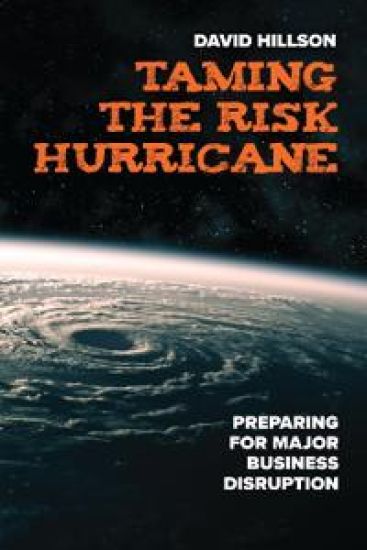
A leading expert on risk management describes how to steer your company through a "risk hurricane"--the extreme risk exposure that can lead to major disruption for your business. Risk management has become a standard part of the strategic tool kit, providing senior leaders with a forward-looking radar to scan the future and give early warnings of approaching threats and opportunities. However, even best-in-class organizations can falter in the face of extreme risk exposure. Special circumstances demand special responses, and extreme risk exposure needs very careful handling. Routine risk management approaches will fall short, but businesses that demonstrate a high degree of flexibility and resilience will have the competitive advantage and the ability to thrive where others fail. The causes and consequences of meteorological hurricanes have parallels in the way uncontrolled risk exposure can develop in organizations. Both are caused largely by predictable factors, but both are characterized by sustained uncertainty and severe impact once they develop. If we can learn to predict a risk hurricane, prepare for it effectively, and survive its effects, then our organizations will be well placed to address the challenge of extreme risk exposure, if and when we are unfortunate enough to face it.
Making Risky and Important Decisions
Ruth Murray-Webster; David Hillson
Taylor Francis Ltd
2021
sidottu
This book offers a practical insight to leaders who need to make good decisions in risky and important situations. The authors describe a process for making risk-intelligent decisions, explaining complex ideas simply, and mapping a route through the myriad interrelated influences when groups make decisions that matter. The approach puts the decision maker—you—at the center and explains how you can think and act differently to make better decisions more of the time. The book shows how to Determine the appropriate level of risk Make decisions in uncertain and turbulent conditions Understand how risks are perceived to identify them accurately Develop new behaviors to improve decision-makingMaking Risky and Important Decisions: A Leader’s Guide builds on earlier ground-breaking publications from these two recognized thought leaders. Their first book together, Understanding and Managing Risk Attitude, brought together the language of risk and risk-taking with the language of emotional intelligence and emotional literacy. Managing Group Risk Attitude followed, and focused on decision-making groups, creating new insights and frameworks. Both books are positioned as specialist textbooks, despite their relevance to real-world situations. A Short Guide to Risk Appetite brought together the concepts of risk appetite and risk attitude into one place for the first time, cutting through confusing terminology and confused thinking to create a practical way of understanding "how much risk is too much risk." This latest installment from Ruth Murray-Webster and David Hillson takes the breadth of their previous work, adds new insights and thinking, and distills it into a highly usable guide for hard-pressed leaders.
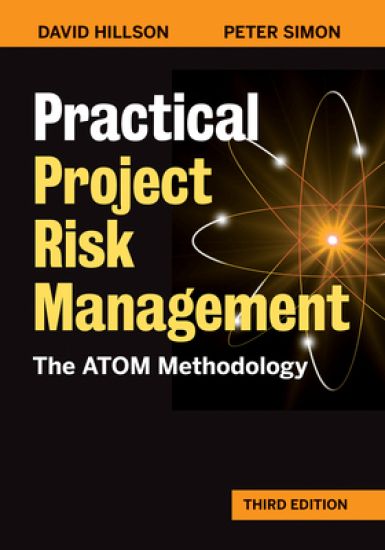
Practical Project Risk Management, Third Edition
David Hillson; Peter Simon
Readhowyouwant
2020
pokkari
Practical Project Risk Management
David Hillson; Peter Simon
Berrett-Koehler Publishers
2020
nidottu
This second edition of the book reflects the authors' work to continually improve upon the model and to apply the methodology to a broader range of issues. The book includes: - An entirely new chapter on managing risk in programs, which is an important dimension in today's world of ever more complex initiatives - Updated material and methodology more closely aligned with relevant international standards - Emphasis on minimizing the threats and maximizing the opportunities to optimize achievement of your project goals Based on sound principles and best practices, this book guides any member of the project management team in conducting risk management in a real-world environment.
With more than three decades of experience as a thought-leader and expert practitioner, PMI Fellow Dr. David Hillson shares practical insight into how upside risks can be identified, assessed, and managed as opportunities. After reviewing the benefits of identifying opportunities, the book steps through the opportunity identification and management process in detail, describing proven tools and techniques as well as specific tips to make them work in practice. The book places opportunity management in the context of traditional risk management, providing a familiar pathway that leads project managers to discover new benefits and successes. David Hillson is one of the foremost authorities on risk management. With his latest book he presents a strong case for managing opportunities. As with all of David’s books, the style of writing is engaging and easy to understand. There are many nuggets of wisdom in this book, as well as a hands-on approach to leveraging opportunity management as a way of improving project performance. — Cyndi Snyder Dionisio, PMI Fellow, Coronado CA, USA. (Chair of the PMBOK® Guide, Sixth Edition) I enjoyed reading this book, which is precise, clear, logical, and persuasive. The clarity of thought and expression explains why David is such a sought-after speaker. This book is a must-read for project risk practitioners, as well as for project professionals who are serious about addressing all the risks on their project, including the good ones. — Dr Dale Cooper, Cammeray NSW, Australia. (Director, Broadleaf Capital International)At last, a clear and valuable book linking both sides of the coin in risk management: threats and opportunities. David Hillson truly engages the reader on how to deal with these two types of risk in projects, sharing his wisdom and extensive experience in creating value from risk management. Anyone who has to manage risk in real-world projects should read this book to enhance their opportunity management skills. — Professor Salim Al-Harthi, Muscat, Oman. (Director of Risk Management Office, Sultan Qaboos University) It is vital for value creation in business and in life that we consider uncertainties that would have upside impacts on our objectives (opportunities), as well as downside impacts (threats). Business gets confused between opportunities where there is a binary choice to take or not, and true uncertain opportunities that can be seized, or left to chance. David has persevered in helping us understand this and this important book is a must-read for all leaders who want to create value through the proactive management of risk. — Dr Ruth Murray-Webster, Wakefield, UK. (Partner, Beyond the Deal LLP and Editor, APM Body of Knowledge, 7th Edition)As project managers, we always seem to focus on threats, negative risks. David Hillson, one of the foremost thought-leaders on risk management, explains approaches to identify and manage opportunities, positive risks and how this will help achieve project success. As with his previous books, David provides a structured approach with examples, tools, and techniques. An excellent resource for all project managers in today’s world. — Peter Monkhouse, Toronto ON, Canada. (Past Chair PMI Board of Directors)
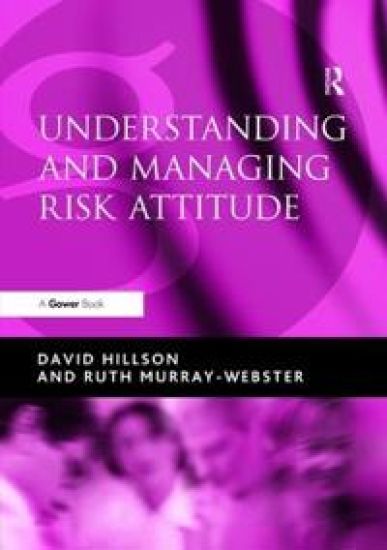
Despite many years of development, risk management remains problematic for the majority of organizations. One common challenge is the human dimension, in other words, the way people perceive risk and risk management. Risk management processes and techniques are operated by people, each of whom is a complex individual, influenced by many different factors. And the problem is compounded by the fact that most risk management involves people working in groups. This introduces further layers of complexity through relationships and group dynamics. David Hillson's and Ruth Murray-Webster's Understanding and Managing Risk Attitude will help you understand the human aspects of risk management and to manage proactively the influence of human behaviour on the risk process. The authors introduce a range of models, perspectives and examples to define and detail the range of possible risk attitudes; looking both at individuals and groups. Using leading-edge thinking on self-awareness and emotional literacy, they develop a powerful approach to address the most common shortfall in current risk management: the failure to manage the human aspects of the process. All this is presented in a practical and applied framework, rather than as a theoretical or academic treatise, based on the authors' shared experiences and expertise, rather than empirical research. Anyone involved in implementing risk management will benefit from this book, including risk practitioners, senior managers and directors responsible for corporate governance, project managers and their teams. It is also essential reading for HR professionals and others interested in organizational or behavioural psychology. This second edition is updated to strengthen the understanding of individual risk attitudes and reinforce what individuals can do to manage those risk attitudes that are leading them away from their objectives. For people who want to embrace this subject, the book highlights ways forward that are proven and
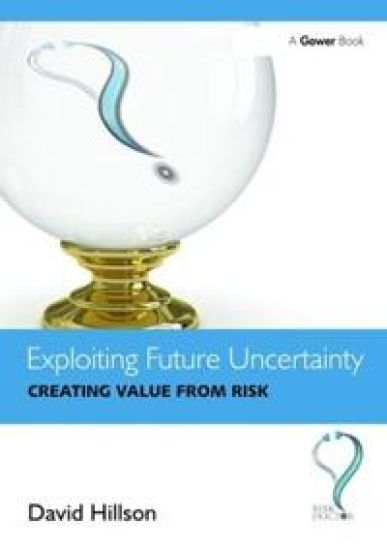
Whatever the future holds, one thing is sure: nothing is certain except uncertainty. Prediction is always hard, especially about the future, but the biggest risk is not taking any risk at all. All businesses face significant levels of uncertainty these days. To succeed you need to exploit future uncertainty, turning it to your advantage by managing risk effectively. This book shows you how. In his role as The Risk Doctor, international risk consultant Dr David Hillson has advised many major organisations across the globe, showing them how to create value from risk. Now you can benefit from his unique approach and insights. Exploiting Future Uncertainty contains more than sixty focused briefings, each addressing a key part of the risk challenge. Using five themes, David covers the links between better business and risk-taking, basic risk concepts, making risk management work in practice, people aspects, and managing risk in the wider world. Each section is packed with clear practical advice with specific how-to tips and guidance. David Hillson is one of the most influential writers and consultants on risk and in Exploiting Future Uncertainty he offers his prescription for effective risk management in 21st Century businesses.
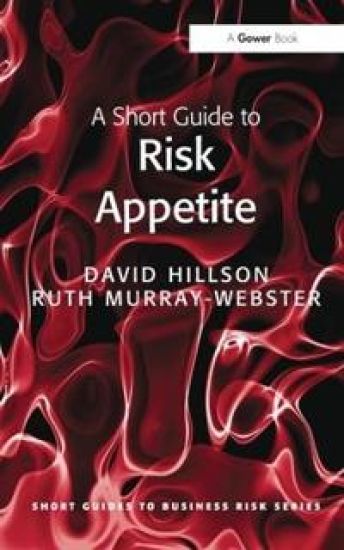
How much risk should we take? A Short Guide to Risk Appetite sets out to help all those who need to decide how much risk can be taken in a particular risky and important situation. David Hillson and Ruth Murray-Webster introduce the RARA Model to explain the complementary and central roles of Risk Appetite and Risk Attitude, and along the way they show how other risk-related concepts fit in. Risk thresholds are the external expression of inherent risk appetite, and the challenge is how to set the right thresholds. By progressively deconstructing the RARA Model, the authors show that the essential control step is our ability to choose an appropriate risk attitude. The book contains practical guidance to setting risk thresholds that take proper account of the influences of organisational risk culture and the individual risk preferences of key stakeholders. Alongside this, individuals and organisations need to choose the risk attitude that will optimise their chances of achieving the desired objectives.
A Short Guide to Risk Appetite
David Hillson; Ruth Murray-Webster
Ashgate Publishing Limited
2012
nidottu
How much risk should we take? A Short Guide to Risk Appetite sets out to help all those who need to decide how much risk can be taken in a particular risky and important situation. David Hillson and Ruth Murray-Webster introduce the RARA Model to explain the complementary and central roles of Risk Appetite and Risk Attitude, and along the way they show how other risk-related concepts fit in. Risk thresholds are the external expression of inherent risk appetite, and the challenge is how to set the right thresholds. By progressively deconstructing the RARA Model, the authors show that the essential control step is our ability to choose an appropriate risk attitude. The book contains practical guidance to setting risk thresholds that take proper account of the influences of organisational risk culture and the individual risk preferences of key stakeholders. Alongside this, individuals and organisations need to choose the risk attitude that will optimise their chances of achieving the desired objectives.
Whatever the future holds, one thing is sure: nothing is certain except uncertainty. Prediction is always hard, especially about the future, but the biggest risk is not taking any risk at all. All businesses face significant levels of uncertainty these days. To succeed you need to exploit future uncertainty, turning it to your advantage by managing risk effectively. This book shows you how. In his role as The Risk Doctor, international risk consultant Dr David Hillson has advised many major organisations across the globe, showing them how to create value from risk. Now you can benefit from his unique approach and insights. Exploiting Future Uncertainty contains more than sixty focused briefings, each addressing a key part of the risk challenge. Using five themes, David covers the links between better business and risk-taking, basic risk concepts, making risk management work in practice, people aspects, and managing risk in the wider world. Each section is packed with clear practical advice with specific how-to tips and guidance. David Hillson is one of the most influential writers and consultants on risk and in Exploiting Future Uncertainty he offers his prescription for effective risk management in 21st Century businesses.
Projects are risky undertakings, and modern approaches to managing projects recognise the central need to manage the risk as an integral part of the project management discipline. Managing Risk in Projects places risk management in its proper context in the world of project management and beyond, and emphasises the central concepts that are essential in order to understand why and how risk management should be implemented on all projects of all types and sizes, in all industries and in all countries. The generic approach detailed by David Hillson is consistent with current international best practice and guidelines (including 'A Guide to the Project Management Body of Knowledge' (PMBoK) and the 'Project Risk Management Practice Standard' from PMI, the 'APM Body of Knowledge' and 'Project Risk Analysis & Management (PRAM) Guide' from APM, 'Management of Risk: Guidance for Practitioners' from OGC, and the forthcoming risk standard from ISO) but David also introduces key developments in the risk management field, ensuring readers are aware of recent thinking, focusing on their relevance to practical application. Throughout, the goal is to offer a concise description of current best practice in project risk management whilst introducing the latest relevant developments, to enable project managers, project sponsors and others responsible for managing risk in projects to do just that - effectively.
This book builds on the authors' previous title Understanding and Managing Risk Attitude but this time looks exclusively at the challenges of understanding and managing those attitudes adopted by groups of people when faced with making decisions that they perceive as risky and important. The book makes the link between risk management and decision-making explicit, building on existing work from the economic and risk psychology schools but taking a pragmatic, practitioner-focused approach that is relevant to all decision-making groups in any situation. The insights in Managing Group Risk Attitude are derived from the authors' own applied research. Details of the research methods and findings are included in the book in support of a practical model and steps to manage risk attitude using applied emotional literacy. Ruth Murray-Webster and David Hillson have written a practical book for all decision-makers, supported by actual research by practitioners and underpinned by the seminal research of leading academics.
Understanding and Managing Risk Attitude
David Hillson; Ruth Murray-Webster
Gower Publishing Ltd
2007
nidottu
Despite many years of development, risk management remains problematic for the majority of organizations. One common challenge is the human dimension, in other words, the way people perceive risk and risk management. Risk management processes and techniques are operated by people, each of whom is a complex individual, influenced by many different factors. And the problem is compounded by the fact that most risk management involves people working in groups. This introduces further layers of complexity through relationships and group dynamics. David Hillson's and Ruth Murray-Webster's Understanding and Managing Risk Attitude will help you understand the human aspects of risk management and to manage proactively the influence of human behaviour on the risk process. The authors introduce a range of models, perspectives and examples to define and detail the range of possible risk attitudes; looking both at individuals and groups. Using leading-edge thinking on self-awareness and emotional literacy, they develop a powerful approach to address the most common shortfall in current risk management: the failure to manage the human aspects of the process. All this is presented in a practical and applied framework, rather than as a theoretical or academic treatise, based on the authors' shared experiences and expertise, rather than empirical research. Anyone involved in implementing risk management will benefit from this book, including risk practitioners, senior managers and directors responsible for corporate governance, project managers and their teams. It is also essential reading for HR professionals and others interested in organizational or behavioural psychology. This second edition is updated to strengthen the understanding of individual risk attitudes and reinforce what individuals can do to manage those risk attitudes that are leading them away from their objectives. For people who want to embrace this subject, the book highlights ways forward that are proven and practical.
With step-by-step guidelines, this bestselling reference discusses the management of project opportunities by expanding the traditional risk management process to address opportunities alongside threats. It offers valuable tools and techniques that expose and capture opportunities, minimize threats, and deal with all types of uncertainty in your business and projects. Written by an experienced consultant and risk management specialist, this guide emphasizes that risk processes must cover both opportunities and threats if they are to assist in accomplishing project objectives and maximizing business benefits.