

Kirjailija
David Howe
Kirjat ja teokset yhdessä paikassa: 29 kirjaa, julkaisuja vuosilta 1987-2026, suosituimpien joukossa Zena the Zombie. Vertaile teosten hintoja ja tarkista saatavuus suomalaisista kirjakaupoista.
29 kirjaa
Kirjojen julkaisuhaarukka 1987-2026.
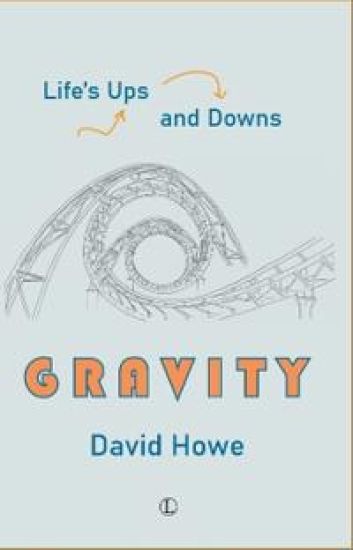
Gravity by David Howe offers a playful look at one of nature's fundamental forcers as it governs so much of everyday life, from apples falling to skiers descending, from water clocks trickling to sewage flowing. Head on a journey of discovery down rivers and by water wheels. Explore the part that gravity plays in the world of roller coasters, the ocean's tides, and plate tectonics. In the second half of the book, Howe considers ways in which nature and humanity have attempted to overcome the pull of gravity. Bats, birds and bees, aeroplanes, rockets and balloons have all achieved the wonder of flight. Gravity's story is rounded off by considering the science that explains it and the literature it has inspired. Writing with enthusiasm and flair, the author draws out the exciting and unexpected affects of gravity, making a heavy subject seem light as air. Through gravity's lens, see the everyday world in a whole new, surprising light!
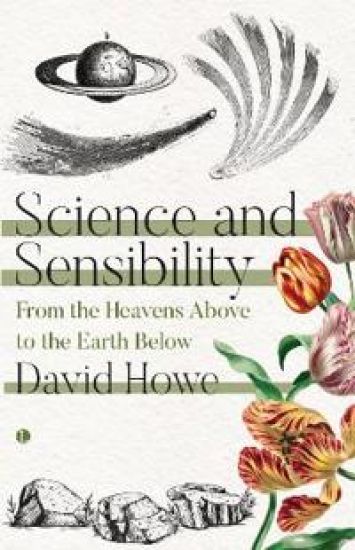
In an outer arm of the spiralling Milky Way galaxy can be seen an insignificant speck. This is our home, planet Earth. Its skies, clouds, lands and seas, and indeed life itself have long drawn the interest of scientists and artists alike. Our cultural and scientific history is evidence enough that curiosity and wonder are the twin drivers of both scientific and artistic imaginations. In Science and Sensibility, David Howe unveils the stories of the scientists who helped to make sense of the stars, clouds, life, rocks, and the elements, and weaves their tales with the thoughts and feelings of artists who found meaning as they experienced nature's beauty, grandeur and mystery. Scientific greats such as James Hutton, Charles Darwin, Dmitri Mendeleev, Gregor Mendel and Annie Jump Cannon all the way up to today's leading scientists are complemented by the literary insights of people such as William Wordsworth, Jorge Luis Borges and Iris Murdoch. Readers are encouraged to embrace what the sciences and the arts can reveal together. In doing so, the earth below and the heavens above become brighter and richer. The wonder and curiosity embodied in Science and Sensibility could perhaps take us a step closer to holding 'Infinity in the palm of your hand / and Eternity in an hour'.
A Brief Introduction to Social Work Theory
David Howe; Darren Hill
BLOOMSBURY PUBLISHING PLC
2024
nidottu
As a social worker, you must make sense of complex situations and determine the needs of various individuals. As star constellations offer a guide by which to navigate, social work theories offer ways to make sense of practice. Tackling the major theories used within social work, this book gives a concise and engaging overview of how practice is influenced by each approach described. The book outlines the origins and historical context of social work, which allows the reader to see how theoretical fashions have changed and adapted to certain times, and offers advice on the best way forward for the modern-day social worker. Packed with thought-provoking case studies and reflective questions on each topic, readers will be encouraged to question the theories outlined – a skill crucial to being a truly effective social work practitioner. The book is ideal for quick reference in lectures, on placement or in practice. Whether you’re a student, a newly qualified social worker or a ‘seasoned’ professional, you will return to this indispensable text time and time again.A Brief Introduction to Social Work Theory is also available in audiobook format from audiobook retailers.
A Brief Introduction to Social Work Theory
David Howe; Darren Hill
BLOOMSBURY PUBLISHING PLC
2024
sidottu
As a social worker, you must make sense of complex situations and determine the needs of various individuals. As star constellations offer a guide by which to navigate, social work theories offer ways to make sense of practice. Tackling the major theories used within social work, this book gives a concise and engaging overview of how practice is influenced by each approach described. The book outlines the origins and historical context of social work, which allows the reader to see how theoretical fashions have changed and adapted to certain times, and offers advice on the best way forward for the modern-day social worker. Packed with thought-provoking case studies and reflective questions on each topic, readers will be encouraged to question the theories outlined – a skill crucial to being a truly effective social work practitioner. The book is ideal for quick reference in lectures, on placement or in practice. Whether you’re a student, a newly qualified social worker or a ‘seasoned’ professional, you will return to this indispensable text time and time again.A Brief Introduction to Social Work Theory is also available in audiobook format from audiobook retailers.

This thought-provoking and illuminating guide will be a helpful companion for students and professionals across the fields of psychology, counselling, social work, and health.It explains the key concepts and describes how the main attachment types play out both in childhood and later life, and it identifies some of the intriguing questions being explored by research, such as: 'What part do individuals' attachment histories play in adult relationships?' and 'What scope is there for attachment styles established in infancy to change later in life?'Part I introduces the reader to the key conceptual components of modern attachment theory. Part II then covers the four main attachment patterns (secure, avoidant, ambivalent, and disorganised) that have been identified by attachment researchers. Each pattern is explored and examined as it plays out across the life course. The mental health, physical health and relationship issues associated with each pattern are also considered. Part III takes a step back and acknowledges some of the unresolved questions and controversies that continue to stimulate the theory.The second edition features a brand new chapter which considers the application of attachment theory across various settings, including forensic settings, child protection practice, and parenting interventions.

This thought-provoking and illuminating guide will be a helpful companion for students and professionals across the fields of psychology, counselling, social work, and health.It explains the key concepts and describes how the main attachment types play out both in childhood and later life, and it identifies some of the intriguing questions being explored by research, such as: 'What part do individuals' attachment histories play in adult relationships?' and 'What scope is there for attachment styles established in infancy to change later in life?'Part I introduces the reader to the key conceptual components of modern attachment theory. Part II then covers the four main attachment patterns (secure, avoidant, ambivalent, and disorganised) that have been identified by attachment researchers. Each pattern is explored and examined as it plays out across the life course. The mental health, physical health and relationship issues associated with each pattern are also considered. Part III takes a step back and acknowledges some of the unresolved questions and controversies that continue to stimulate the theory.The second edition features a brand new chapter which considers the application of attachment theory across various settings, including forensic settings, child protection practice, and parenting interventions.

Everything we use started life in the earth, as a rock or a mineral vein, a layer of an ancient seabed, or the remains of a long-extinct volcano. Humanity’s ability to fashion nature to its own ends is by no means a new phenomenon. Silica-rich rocks have been flint-knapped by Stone Age people, transformed into stained glass in medieval times, and made into silicon chips for computers in the Digital Age. Our trick of turning rocks rich in malachite and chalcopyrite into copper has taken us from Bronze Age Minoan vases to the wiring that powers modern-day machinery. Today, we mine, quarry, pump, cut, blast and crush the Earth’s resources at an unprecedented rate. We shift many times more rock, soil and sediment each year than the world’s rivers and glaciers, wind and rain combined. Plastics alone now weigh twice as much as all the marine and terrestrial animals around the globe. We have become a dominant, even dangerous, force on the planet. In EXTRACTION TO EXTINCTION, David Howe traces our environmental impact through time to unearth how our obsession with endlessly producing and throwing away more and more stuff has pushed the planet to its limit. And he considers the question: what does the future look like for our depleted world?


David Howe tells the story of the Lake District, England's most dramatic landscape. Home to vistas of stunning beauty and a rich heritage, it is an area of England that fascinates, inspires - and has bewitched David for a lifetime. With passion and an endless curiosity, he reveals how half a billion years of shifting ice, violent volcanoes and (of course) falling rain have shaped the lakes and fells that have fired the imaginations of the great sons and daughters of the area, the poets and the scientists. He shows that Lakeland is a seamless web where lives and landscape weave together, where the ancient countryside has created a unique local history: of farming and mining, of tightknit communities, of a resilient and proud people. The Lake District is a place of rocks and rain, reason and romance, wonder and curiosity. And this book celebrates it all: the very character of Cumbria.
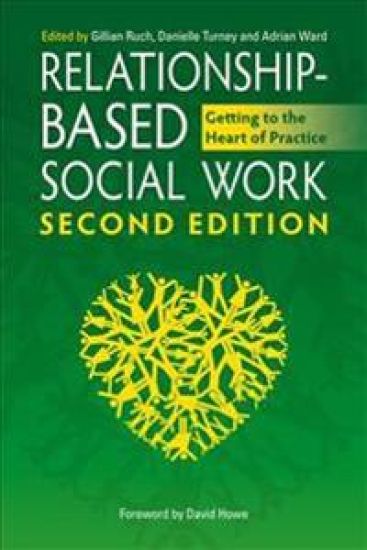
This comprehensive guide to relationship-based practice in social work communicates the theory using illustrative case studies and offers a model for practice. Updated and expanded, it now includes increased coverage of anti-oppressive and diversity issues, service user perspectives and systemic approaches in social work.The book explores the ranges of emotions that practitioners may encounter with service users, and covers working in both short-term and long-term professional relationships. It also outlines key skills, such as how to establish rapport, and explores systemic issues, such as building appropriate support systems for practice, management and leadership.

With contributions from internationally recognized experts, this edited volume presents original thinking on the theory, research and practice surrounding child neglect.Comprehensive and current, the book takes an expansive look at how we can better address this prevalent issue. It explores the effects of neglect on the developing child and makes recommendations on how to identify neglect at the earliest opportunity. It considers common causal and contributing factors in neglect cases and the impact of these on children. The book details effective intervention techniques alongside case vignettes and shows how change can be achieved. It highlights the importance of supporting parental care and developing parental responsibility in families where children are neglected. Chapters provide in-depth descriptive examples and include a summary of learning points. Including practical suggestions for combating child neglect, this is an essential guide to best practice for students and practitioners working with children and families. The book also contains useful insights relevant to researchers and policy makers.

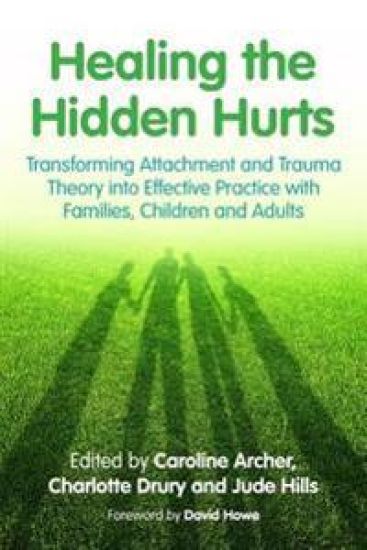
Healing the Hidden Hurts: Transforming Attachment and Trauma Theory into Effective Practice with Families, Children and Adults provides a unique collection of professional and personal responses to the challenges that arise in dealing with attachment difficulties.With contributions from social workers, adoptive parents, adoptees, psychologists, therapists, counsellors and other related professionals, this book provides a varied and expansive approach to explaining attachment theory. The authors speak from personal experience to deliver explanations of theory, how they relate to practice and to provide practical guidance on how to improve the physical, emotional and psychological development of children in care across a broad range of professional settings. This book provides valuable insights relevant to practitioners within the fields of social work, health, education, the criminal justice system and any independent and voluntary sectors working with children and families.
The role of the social worker is to be found lying interestingly between society and the individuals they work with. As a result, social workers often feel pulled between the demands and challenges that each presents. The Compleat Social Worker explores the many debates the profession enjoys, including those between nature and nurture, care and control, thought and feeling, art and science, facts and values. In examining these ideas and the discussions they sponsor it celebrates social work's rich heritage of scientific thought and human relationships. It is out of these many divisions and disagreements and their resolution that the idea of the well-rounded, compleat social worker emerges. For those wishing to explore and enjoy, argue and acknowledge what it is to be a good social worker, this elegant book will prompt lively interest and debate.

Empathy is profoundly important for understanding people's feelings and behaviour. It is not only an essential skill in conducting successful personal and working relationships, it also helps us understand what makes people moral and societies decent.With this compelling book, David Howe invites the reader on an illuminating journey of discovery into how empathy was first conceptualised and how its influence has steadily risen and spread. He captures the growing significance of empathy to many fields, from evolutionary psychology and brain science to moral philosophy and mental health. In doing so, he eloquently explains its importance to child development, intimate relationships, therapy, the creative arts, neurology and ethics.Written with light touch, this is an authoritative and insightful guide to empathy, its importance, why we have it and how it develops. It offers an invaluable introduction for readers everywhere, including those studying or working in psychology, counselling, psychotherapy, social work, health, nursing and education.
Winner of the CHOICE Outstanding Academic Titles, this key textbook offers an insight on the theory of emotional intelligence and its vital practical value. Elegantly and succinctly written, it makes a powerful case for the importance of understanding and managing emotions for effective professional practice. Written for students and practitioners alike across a range of human services and caring professions, Howe’s work on attachment theory has been hugely influential. With a highly regarded reputation for setting the agenda in social work teaching, the author’s skills in communicating important theory in an engaging language make of this essential textbook a must-have for all current and future practitioners of the field.

Big Steps for Little People
Daniel Hughes; Celia Foster; David Howe
Jessica Kingsley Publishers
2008
pokkari
This book is full of the techniques that we have used successfully over the years. Many we have adapted to suit their needs and many we have made up ourselves. What we have become particularly good at is not giving up!'A mother of two adopted children, Celia Foster wrote Big Steps for Little People as a personal `insider's guide' to parenting adopted children.Drawing on the hard-won wisdom gained in her own family life, the book offers a thoughtful account of life with adopted children and examines the issues that many adoptive families encounter, including the development of children with attachment problems and how to tackle behavioural difficulties. It combines real-life anecdotes with suggestions and strategies that other parents can put to use.This book will be a great comfort and help to all adoptive families and offers insights for the professionals who work with them.
This clear and compelling textbook provides a complete survey of the field of child abuse and neglect from the perspective of modern developmental attachment theory. It starts by describing the ways in which attachment difficulties manifest themselves in children's behaviour, and goes on looking at abuse, neglect, and compound cases of abuse and neglect, backing it all up with empirical research evidence and vivid case material. In its final section, it provides a comprehensive review of attachment-based interventions. Written by an extremely respected and successful author, this book, anchored in research evidence, places its emphasis on practice implementation and aims at answering all the kinds of questions practitioners and student practitioners specialising in child welfare are most likely to ask.
This clear and compelling textbook provides a complete survey of the field of child abuse and neglect from the perspective of modern developmental attachment theory. It starts by describing the ways in which attachment difficulties manifest themselves in children's behaviour, and goes on looking at abuse, neglect, and compound cases of abuse and neglect, backing it all up with empirical research evidence and vivid case material. In its final section, it provides a comprehensive review of attachment-based interventions. Written by an extremely respected and successful author, this book, anchored in research evidence, places its emphasis on practice implementation and aims at answering all the kinds of questions practitioners and student practitioners specialising in child welfare are most likely to ask.