Kirjojen hintavertailu. Mukana 12 595 353 kirjaa ja 12 kauppaa.

Kirjailija

David J. A. Clines

Kirjat ja teokset yhdessä paikassa: 20 kirjaa, julkaisuja vuosilta 1990-2025, suosituimpien joukossa On the Way to the Postmodern. Volume II.. Vertaile teosten hintoja ja tarkista saatavuus suomalaisista kirjakaupoista.

Mukana myös kirjoitusasut: David J a Clines

20 kirjaa

Kirjojen julkaisuhaarukka 1990-2025.

On the Way to the Postmodern. Volume II.

On the Way to the Postmodern. Volume II.

David J a Clines

Sheffield Phoenix Press Ltd
2025
sidottu
In the 50 chapters of these two volumes, David J. A. Clines presents a series of discourses, spanning three decades, from an increasingly postmodern perspective. Rather than using only methods of deconstruction, he combines traditional methods with postmodern ideas of analysis, resulting in a substantial reading of the Hebrew Bible. Clines's selected sequence of articles and papers-ten of them not previously published-displays a golden thread of a scholar's journey in biblical interpretation. Some of the papers, like 'The Evidence for an Autumnal New Year in Pre-exilic Israel Reconsidered', are far from postmodern in their outlook, and sit in intriguing juxtaposition with others such as 'The Postmodern Adventure in Biblical Studies'. The essays are organized in eight sections; - Method, Literature, History (Vol. I.), - Theology, Language, Psalms, Job, and, entertainingly, Divertimenti (Vol. II). They include 'Reading Esther from Left to Right', 'Beyond Synchronic Diachronic', 'Story and Poem: The Old Testament as Literature and as Scripture', 'In Search of the Indian Job', and 'Philology and Power'. Further items in this second volume to highlight are: Sacred Space, Holy Places and Suchlike The Dictionary of Classical Hebrew Universal Dominion in Psalm 2? False Naivety in the Prologue to Job New Directions in Pooh Studies. This volume is a reprint of the original 1998 edition.
On the Way to the Postmodern. Volume I.

On the Way to the Postmodern. Volume I.

David J a Clines

Sheffield Phoenix Press Ltd
2025
sidottu
In the 50 chapters of these two volumes, David J. A. Clines presents a series of discourses, spanning three decades, from an increasingly postmodern perspective. Rather than using only methods of deconstruction, he combines traditional methods with postmodern ideas of analysis, resulting in a substantial reading of the Hebrew Bible. Clines's selected sequence of articles and papers-ten of them not previously published-displays a golden thread of a scholar's journey in biblical interpretation. Some of the papers, like 'The Evidence for an Autumnal New Year in Pre-exilic Israel Reconsidered', are far from postmodern in their outlook, and sit in intriguing juxtaposition with others such as 'The Postmodern Adventure in Biblical Studies'. The essays are organized in eight sections; - Method, Literature, History (Vol. I.), - Theology, Language, Psalms, Job, and, entertainingly, Divertimenti (Vol. II). They include 'Reading Esther from Left to Right', 'Beyond Synchronic Diachronic', 'Story and Poem: The Old Testament as Literature and as Scripture', 'In Search of the Indian Job', and 'Philology and Power'. Further items in this first volume to highlight are: Possibilities and Priorities of Biblical Interpretation in an International Perspective What Has (and Has Not) Happened at SBL International Meetings The Force of the Text: A Response to Tamara C. Eskenazi In Quest of the Historical Mordecai This volume is a reprint of the original 1998 edition.
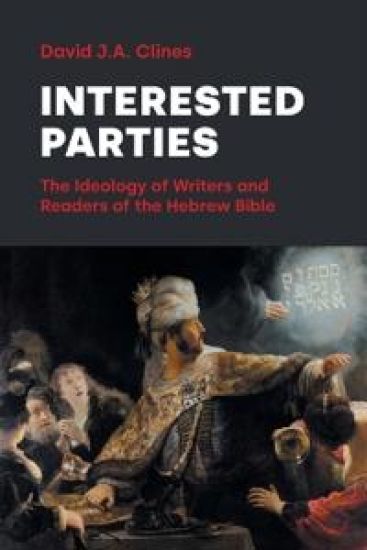
Interested Parties

Interested Parties

David J a Clines

Sheffield Phoenix Press Ltd
2025
sidottu
There is a twin focus in this volume. The title of a keynote essay-'Why Is There a Song of Songs, and What Does It Do to You If You Read It'-hints at it. The focus is equally on the ideologies of the writers of the Hebrew Bible, who brought the text into being, and on the ideologies of its readers, who are being shaped by the text at the same moment that they are shaping it in their own image. Uncovering the ideologies of writers are readers is the project of this book, calling for a step beyond the usual scholarly goal of understanding-to a practice of the art of critique. Among the other chapters in this challenging book are: - The Ten Commandments: Reading from Left to Right - Metacommentating Amos - Haggai's Temple, Constructed, Deconstructed and Reconstructed - David the Man: The Construction of Masculinity in the Hebrew Bible - Psalm 2 and the MLF (Moabite Liberation Front) - God in the Pentateuch: Reading against the Grain This is a reprint of the original 1995 edition, with a new cover only.
Interested Parties

Interested Parties

David J a Clines

Sheffield Phoenix Press Ltd
2025
pokkari
There is a twin focus in this volume. The title of a keynote essay-'Why Is There a Song of Songs, and What Does It Do to You If You Read It'-hints at it. The focus is equally on the ideologies of the writers of the Hebrew Bible, who brought the text into being, and on the ideologies of its readers, who are being shaped by the text at the same moment that they are shaping it in their own image. Uncovering the ideologies of writers are readers is the project of this book, calling for a step beyond the usual scholarly goal of understanding-to a practice of the art of critique. Among the other chapters in this challenging book are: - The Ten Commandments: Reading from Left to Right - Metacommentating Amos - Haggai's Temple, Constructed, Deconstructed and Reconstructed - David the Man: The Construction of Masculinity in the Hebrew Bible - Psalm 2 and the MLF (Moabite Liberation Front) - God in the Pentateuch: Reading against the Grain This is a reprint of the original 1995 edition, with a new cover only.
Joban Papers

Joban Papers

David J a Clines

Sheffield Phoenix Press Ltd
2023
sidottu
In this volume, David J.A. Clines-known for his magisterial three-volume commentary on Job in the Word Biblical Commentary series (1989-2011)-brings together a sequence of 27 of his papers on his favourite biblical book from a variety of publications.In two sections, the wide-ranging Syntheses and the more focused Probes on particular chapters, this collection is a necessary adjunct to his commentary.Among the titles in the Syntheses are: - On the Poetic Achievement of the Book of Job- Why Is There a Book of Job, and What Does It Do to You If You Read It?- Job's Fifth Friend: An Ethical Critique of the Book of Job- Deconstructing the Book of JobAmong the Probes the reader will find: - False Naivety in the Prologue to Job- In Search of the Indian Job- Quarter Days Gone: Job 24 and the Absence of God- Those Golden Days: Job and the Perils of Nostalgia- Putting Elihu in his Place: A Proposal for the Relocation of Job 32-37- One or Two Things You May Not Know about the Universe- The Worth of Animals in the Book of Job- Job's Crafty Conclusion, and Seven Interesting Things about the Epilogue to Job
Play the Man!

Play the Man!

David J a Clines

Sheffield Phoenix Press Ltd
2023
sidottu
David J.A. Clines argues in Play the Man that masculinity is a script, written for men by their societies, a script that men in their various cultures act out their whole lives long: 'no one is born a man'. He has been quick to deploy the insights of sociologists, historians, educationists, health professionals, psychologists and other scholars investigating masculinity in the contemporary and ancient worlds.The book's title is a recognition of masculinity as performance, and the Bible's depictions of males in action as far more than information or entertainment; they function as demands on the men who read them or have them read to them. Hence the subtitle, Biblical Imperatives to Masculinity, presumes that every biblical reference to the masculine is some kind of authoritative command.Clines-in this collection of writings prepared across three decades-has seen biblical texts as an excellent test bed for research into masculinity in one ancient culture as well as being an indubitable influence upon views and practices of masculinity in our own time. The bulk of the book consists of studies of individual characters and texts of the Bible, analysing and profiling the masculinity that is there attested, assumed and encouraged. In conclusion, Clines reflects on the continuing impact of the biblical imperatives to masculinity, their effect on men, women and religion, in our own time.
The Dictionary of Classical Hebrew Revised. II. Beth-Waw

The Dictionary of Classical Hebrew Revised. II. Beth-Waw

David J a Clines

Sheffield Phoenix Press
2019
sidottu
The Dictionary of Classical Hebrew Revised (DCHR) is a complete revision in nine volumes, with over 100,000 improvements, of the original Dictionary of Classical Hebrew (DCH) (1993-2016). This second Volume contains some 2,071 words (lemmas), of which 838 are 'new words' (i.e. not in the standard lexicon of BDB); DCHR II thus adds c. 60% to the number of words for Beth-Waw that are to be found in other Hebrew dictionaries. This revised volume is 40% longer than DCH II (1995), which it replaces. The Dictionary of Classical Hebrew Revised, when completed, will contain more than 6,420 Hebrew words not in BDB, and will refer to many newly published texts, including 540 Dead Sea Scrolls and 4,000 ancient Hebrew inscriptions. New features in DCHR include: a notation of 4,285 byforms (words with the same meaning and similar form) identified for the first time; 717 verbal nouns (nouns derived from a verb) with their own articles (not previously shown in Hebrew lexica), 345 denominative verbs (verbs derived from a noun), and the semantic field to which every word belongs (a totally new feature for Hebrew dictionaries). Data on synonyms have been greatly expanded, and loanwords from other languages included. Articles on personal names show (for the first time) all short forms, long forms, and alternative forms of each name, the Bibliography has been updated and expanded, and 35,000 emendations of biblical texts noted. Every occurrence of each word in Classical Hebrew is noted. All the subjects and objects of verbs are listed, and the verbs used with each noun, as well as all nouns used in a construct (genitive) relation with another noun. As with DCH, every Hebrew word in the Dictionary (except for the variant forms of a word, the byforms and the sections on synonyms) is followed immediately by an English translation, so that the Dictionary can be easily understood by a person with little or no Hebrew. When completed, DCHR will be 5 million words in length (equivalent to 50 standard-size books), 25% longer than DCH, and 4 times the length of BDB and HALOT.
Job (3-Volume Set---17, 18A, and 18B)

Job (3-Volume Set---17, 18A, and 18B)

David J. A. Clines

Zondervan Academic
2017
sidottu
The Word Biblical Commentary delivers the best in biblical scholarship, from the leading scholars of our day who share a commitment to Scripture as divine revelation. This series emphasizes a thorough analysis of textual, linguistic, structural, and theological evidence. The result is judicious and balanced insight into the meanings of the text in the framework of biblical theology. These widely acclaimed commentaries serve as exceptional resources for the professional theologian and instructor, the seminary or university student, the working minister, and everyone concerned with building theological understanding from a solid base of biblical scholarship. Overview of Commentary Organization Introduction—covers issues pertaining to the whole book, including context, date, authorship, composition, interpretive issues, purpose, and theology. Each section of the commentary includes: Pericope Bibliography—a helpful resource containing the most important works that pertain to each particular pericope. Translation—the author’s own translation of the biblical text, reflecting the end result of exegesis and attending to Hebrew and Greek idiomatic usage of words, phrases, and tenses, yet in reasonably good English. Notes—the author’s notes to the translation that address any textual variants, grammatical forms, syntactical constructions, basic meanings of words, and problems of translation. Form/Structure/Setting—a discussion of redaction, genre, sources, and tradition as they concern the origin of the pericope, its canonical form, and its relation to the biblical and extra-biblical contexts in order to illuminate the structure and character of the pericope. Rhetorical or compositional features important to understanding the passage are also introduced here. Comment—verse-by-verse interpretation of the text and dialogue with other interpreters, engaging with current opinion and scholarly research. Explanation—brings together all the results of the discussion in previous sections to expose the meaning and intention of the text at several levels: (1) within the context of the book itself; (2) its meaning in the OT or NT; (3) its place in the entire canon; (4) theological relevance to broader OT or NT issues. General Bibliography—occurring at the end of each volume, this extensive bibliographycontains all sources used anywhere in the commentary.
Job 38-42, Volume 18B

Job 38-42, Volume 18B

David J. A. Clines

Zondervan
2015
sidottu
The Word Biblical Commentary delivers the best in biblical scholarship, from the leading scholars of our day who share a commitment to Scripture as divine revelation. This series emphasizes a thorough analysis of textual, linguistic, structural, and theological evidence. The result is judicious and balanced insight into the meanings of the text in the framework of biblical theology. These widely acclaimed commentaries serve as exceptional resources for the professional theologian and instructor, the seminary or university student, the working minister, and everyone concerned with building theological understanding from a solid base of biblical scholarship.Overview of Commentary OrganizationIntroduction—covers issues pertaining to the whole book, including context, date, authorship, composition, interpretive issues, purpose, and theology.Each section of the commentary includes:Pericope Bibliography—a helpful resource containing the most important works that pertain to each particular pericope.Translation—the author’s own translation of the biblical text, reflecting the end result of exegesis and attending to Hebrew and Greek idiomatic usage of words, phrases, and tenses, yet in reasonably good English.Notes—the author’s notes to the translation that address any textual variants, grammatical forms, syntactical constructions, basic meanings of words, and problems of translation.Form/Structure/Setting—a discussion of redaction, genre, sources, and tradition as they concern the origin of the pericope, its canonical form, and its relation to the biblical and extra-biblical contexts in order to illuminate the structure and character of the pericope. Rhetorical or compositional features important to understanding the passage are also introduced here.Comment—verse-by-verse interpretation of the text and dialogue with other interpreters, engaging with current opinion and scholarly research.Explanation—brings together all the results of the discussion in previous sections to expose the meaning and intention of the text at several levels: (1) within the context of the book itself; (2) its meaning in the OT or NT; (3) its place in the entire canon; (4) theological relevance to broader OT or NT issues.General Bibliography—occurring at the end of each volume, this extensive bibliographycontains all sources used anywhere in the commentary.
Job 21-37, Volume 18A

Job 21-37, Volume 18A

David J. A. Clines

Zondervan
2015
sidottu
The Word Biblical Commentary delivers the best in biblical scholarship, from the leading scholars of our day who share a commitment to Scripture as divine revelation. This series emphasizes a thorough analysis of textual, linguistic, structural, and theological evidence. The result is judicious and balanced insight into the meanings of the text in the framework of biblical theology. These widely acclaimed commentaries serve as exceptional resources for the professional theologian and instructor, the seminary or university student, the working minister, and everyone concerned with building theological understanding from a solid base of biblical scholarship.Overview of Commentary OrganizationIntroduction—covers issues pertaining to the whole book, including context, date, authorship, composition, interpretive issues, purpose, and theology.Each section of the commentary includes:Pericope Bibliography—a helpful resource containing the most important works that pertain to each particular pericope.Translation—the author’s own translation of the biblical text, reflecting the end result of exegesis and attending to Hebrew and Greek idiomatic usage of words, phrases, and tenses, yet in reasonably good English.Notes—the author’s notes to the translation that address any textual variants, grammatical forms, syntactical constructions, basic meanings of words, and problems of translation.Form/Structure/Setting—a discussion of redaction, genre, sources, and tradition as they concern the origin of the pericope, its canonical form, and its relation to the biblical and extra-biblical contexts in order to illuminate the structure and character of the pericope. Rhetorical or compositional features important to understanding the passage are also introduced here.Comment—verse-by-verse interpretation of the text and dialogue with other interpreters, engaging with current opinion and scholarly research.Explanation—brings together all the results of the discussion in previous sections to expose the meaning and intention of the text at several levels: (1) within the context of the book itself; (2) its meaning in the OT or NT; (3) its place in the entire canon; (4) theological relevance to broader OT or NT issues.General Bibliography—occurring at the end of each volume, this extensive bibliographycontains all sources used anywhere in the commentary.
Job 1-20, Volume 17

Job 1-20, Volume 17

David J. A. Clines

Zondervan
2015
sidottu
The Word Biblical Commentary delivers the best in biblical scholarship, from the leading scholars of our day who share a commitment to Scripture as divine revelation. This series emphasizes a thorough analysis of textual, linguistic, structural, and theological evidence. The result is judicious and balanced insight into the meanings of the text in the framework of biblical theology. These widely acclaimed commentaries serve as exceptional resources for the professional theologian and instructor, the seminary or university student, the working minister, and everyone concerned with building theological understanding from a solid base of biblical scholarship.Overview of Commentary OrganizationIntroduction—covers issues pertaining to the whole book, including context, date, authorship, composition, interpretive issues, purpose, and theology.Each section of the commentary includes:Pericope Bibliography—a helpful resource containing the most important works that pertain to each particular pericope.Translation—the author’s own translation of the biblical text, reflecting the end result of exegesis and attending to Hebrew and Greek idiomatic usage of words, phrases, and tenses, yet in reasonably good English.Notes—the author’s notes to the translation that address any textual variants, grammatical forms, syntactical constructions, basic meanings of words, and problems of translation.Form/Structure/Setting—a discussion of redaction, genre, sources, and tradition as they concern the origin of the pericope, its canonical form, and its relation to the biblical and extra-biblical contexts in order to illuminate the structure and character of the pericope. Rhetorical or compositional features important to understanding the passage are also introduced here.Comment—verse-by-verse interpretation of the text and dialogue with other interpreters, engaging with current opinion and scholarly research.Explanation—brings together all the results of the discussion in previous sections to expose the meaning and intention of the text at several levels: (1) within the context of the book itself; (2) its meaning in the OT or NT; (3) its place in the entire canon; (4) theological relevance to broader OT or NT issues.General Bibliography—occurring at the end of each volume, this extensive bibliographycontains all sources used anywhere in the commentary.
On the Way to the Postmodern

On the Way to the Postmodern

David J. A. Clines

Sheffield Academic Press
1998
sidottu
For these two volumes, the author has selected 50 articles and papers, ten of them not previously published, from his work as an Old Testament scholar over the last 30 years. Some of the papers, like 'The Evidence for an Autumnal New Year in Pre-exilic Israel Reconsidered', are far from postmodern in their outlook. But there is ample evidence here that the postmodern is indeed the direction in which his mind has been moving. The essays are organized in eight sections (Method, Literature, History, Theology, Language, Psalms, Job-and, for entertainment, Divertimenti). They include 'Reading Esther from Left to Right', 'Beyond Synchronic Diachronic', 'Story and Poem: The Old Testament as Literature and as Scripture', 'In Search of the Indian Job', and 'Philology and Power'-as well as 'The Postmodern Adventure in Biblical Studies'.
On the Way to the Postmodern

On the Way to the Postmodern

David J. A. Clines

Sheffield Academic Press
1998
sidottu
For these volumes, the author has selected 50 articles and papers, ten of them not previously published, from his work as an Old Testament scholar over the last 30 years. Some of the papers, like 'The Evidence for an Autumnal New Year in Pre-exilic Israel Reconsidered', are far from postmodern in their outlook. But there is ample evidence here that the postmodern is indeed the direction in which his mind has been moving. The essays are organized in eight sections (Method, Literature, History, Theology, Language, Psalms, Job-and, for entertainment, Divertimenti). They include 'Reading Esther from Left to Right', 'Beyond Synchronic Diachronic', 'Story and Poem: The Old Testament as Literature and as Scripture', 'In Search of the Indian Job', and 'Philology and Power'-as well as 'The Postmodern Adventure in Biblical Studies'.
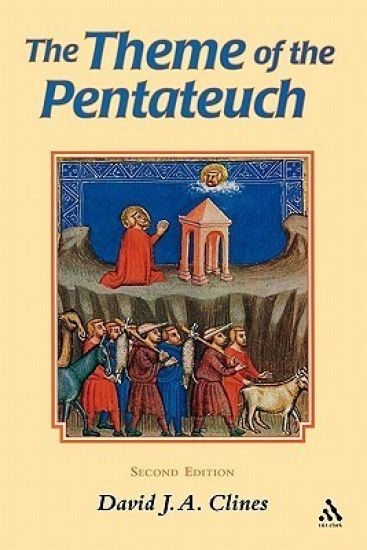
Theme of the Pentateuch

Theme of the Pentateuch

David J. A. Clines

Sheffield Academic Press
1997
nidottu
This popular textbook regards the Pentateuch as a literary whole, with a single theme that binds it together. The overarching theme is the partial fulfilment of the promises to the patriarchs. Though the method of the book is holistic, the origin and growth of the theme is also explored using the methods of traditional source analysis. An important chapter explores the theological function of the Pentateuch both in the community for which the Pentateuch was first composed and in our own time. For this second, enlarged edition, the author has written an Epilogue reassessing the theme of the Pentateuch from a more current postmodern perspective.
What Does Eve Do To Help?

What Does Eve Do To Help?

David J. A. Clines

Sheffield Academic Press
1990
nidottu
Readerly questions are raised when readers are explicitly and programmatically brought into the process of interpreting texts. Traditionally, the reader and readerly interest and identities have been screened out when we have set about interpreting texts, and we have set our sights on attaining an interpretation that shouldbe as "objective " as possible. Things are rather different now. Not only is quest for objective interpretation seen as chiaera, but the rewards of unabashed "readerly" interpretations that foreground the process of reading and the context of the reader have now been shown to be very well worth seeking. That reader-response approach characterizes this collection of six essays, prefaces by an introduction to reader-response criticism. The essays for the most part read in their original form to meetings of the Society of Biblical Literature, are: "What Does Eve Do To Help? and other Irredeemably Androcentric Orienations in Genesis 1-3"; What Happens in Genesis"; "The Ancestor in Danger: But Not the Same Danger"; " The Old Testament Histories: A Reader's Guide"; "Deconstructing the Book of Job"; and "Nehemiah Memoir: The perils of Autobigraphy". ".....one of the livliest writers on the Old Testament. " What Does Eve Do To Help ?" does not disappoint and at times is hailariously funny" C S Rodd Expository Times