Kirjojen hintavertailu. Mukana 12 590 726 kirjaa ja 12 kauppaa.

Kirjailija

David J. Breeze

Kirjat ja teokset yhdessä paikassa: 30 kirjaa, julkaisuja vuosilta 2000-2024, suosituimpien joukossa A History of the Congress of Roman Frontier Studies 1949-2024. Vertaile teosten hintoja ja tarkista saatavuus suomalaisista kirjakaupoista.

Mukana myös kirjoitusasut: David J Breeze

30 kirjaa

Kirjojen julkaisuhaarukka 2000-2024.

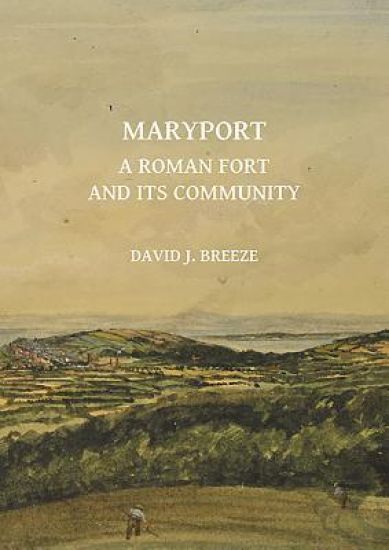
Maryport: A Roman Fort and Its Community

Maryport: A Roman Fort and Its Community

David J. Breeze

Archaeopress
2018
nidottu
The collection of Roman inscribed stones and sculpture, together with other Roman objects found at Maryport in Cumbria, is the oldest archaeological collection in Britain still in private hands. Today, it is housed in the Senhouse Roman Museum on Sea Brows to the north of the modern town of Maryport. Beside the museum the earthworks of the Roman fort may still be seen, and beyond it, though not visible, lies a large civil settlement revealed through geophysical survey and the scene of two recent excavations. 'Maryport: A Roman Fort and its community' places the collection in context and describes the history of research at the site. Maryport, although at the north-western edge of the Roman Empire, provides material of international importance for our understanding of the Roman state.
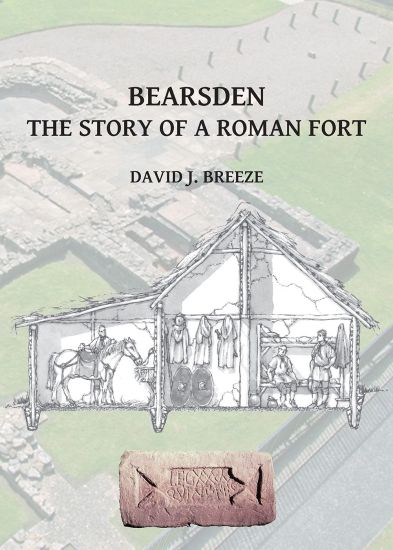
Bearsden: The Story of a Roman Fort

Bearsden: The Story of a Roman Fort

David J. Breeze

Archaeopress Archaeology
2016
pokkari
The Roman fort at Bearsden and its annexe, together with areas beyond its defences, were extensively excavated from 1973 to 1982. The report on these excavations was published in 2016. This ‘popular’ account of the discoveries looks at the material recovered from the site in a different way, examining the process of archaeological excavation, the life of the soldiers at the fort based on the results of the excavation as well as material from elsewhere in the Roman Empire, the presentation and interpretation of the bath-house and latrine, and a discussion of possible future work arising out of the excavation. The excavation report was well illustrated with reconstruction drawings and the process of creating these is also discussed.
Hadrian's Wall

Hadrian's Wall

David J. Breeze

John Donald Short Run Press
2016
sidottu
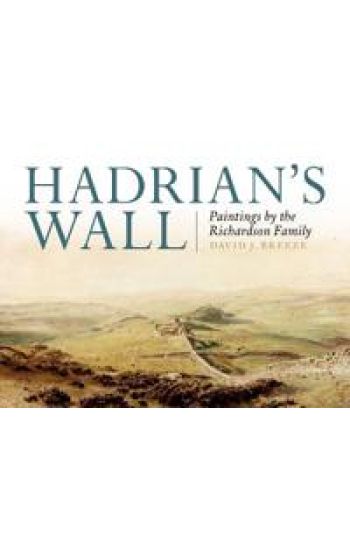
Brothers Henry, Charles and Thomas Richardson painted nearly 80 views of Hadrian's Wall between 1838 and the 1880s. Most were created by Henry Burdon Richardson, who accompanied author John Collingwood Bruce on his tour of Hadrian's Wall in 1848. Only 17 were reproduced as engravings in Bruce's books; very few have ever been published as paintings. They form a valuable record of the Roman frontier as it was during an important stage in its history, before the advent of the modern world. New theories and interpretations were coming to light, as described in Bruce's first book The Roman Wall, published in 1851. John Clayton, town clerk of Newcastle upon Tyne, had begun buying land along the Wall, aiming to preserve the remains, creating in effect an archaeological park. The production of the Richardson paintings, Bruce's contribution to Wall studies and the achievement of John Clayton in conserving the Wall, are all explored, providing a fascinating background story. Over 70 of the Richardsons' paintings are published in the book, most with Bruce's original description and a commentary by the author.
The Roman Army

The Roman Army

David J. Breeze

Bloomsbury Academic
2016
nidottu
This authoritative short volume introduces readers to the Roman army, its structure, tactics, duties and development. One of the most successful fighting forces that the world has seen, the Roman army was inherited by the emperor Augustus who re-organized it and established its legions in military bases, many of which survived to the end of the empire. He and subsequent emperors used it as a formidable tool for expansion. Soon, however, the army became fossilized on its frontiers and changed from a mobile fighting force to a primarily defensive body. Written by a leading authority on the Roman army and the frontiers it defended and expanded, this is an invaluable book for students at school and university level, as well as a handy guide for general readers with an interest in military history, the rise and development and fall of the Roman legions, and the ancient world.
Frontiers of the Roman Empire: The African Frontiers

Frontiers of the Roman Empire: The African Frontiers

David J. Breeze; Sonja Jilek; David Mattingly; Alan Rushworth; Martin Sterry; Victoria Leitch

Archaeopress
2013
nidottu
The frontiers of the Roman empire together form the largest monument of one of the world’s greatest states. They stretch for some 7,500km through 20 countries which encircle the Mediterranean Sea. The remains of these frontiers have been studied by visitors and later by archaeologists for several centuries. Many of the inscriptions and sculpture, weapons, pottery and artefacts created and used by the soldiers and civilians who lived on the frontier can be seen in museums. Equally evocative of the lost might of Rome are the physical remains of the frontiers themselves. The aim of this series of books is not only to inform the interested visitor about the history of the frontiers but to act as a guidebook as well. The Roman military remains in North Africa are remarkable in their variety and in their state of preservation: they deserve to be better known. They include towers and forts, stretches of defensive lines of stone and earth with ditches broken by gates, and roads, sitting in the most amazing scenery. It is hoped that each reader of this book will enjoy learning more about North Africa’s remarkable Roman inheritance.
Roman Frontiers in Britain

Roman Frontiers in Britain

David J. Breeze

Bristol Classical Press
2007
nidottu
Designed for students and teachers of Ancient History or Classical Civilisation at school and in early university years, this series provides a valuable collection of guides to the history, art, literature, values and social institutions of the ancient world."Hadrian's Wall and the Antonine Wall" defined the edge of the Roman Empire in Britain. Today, the spectacular remains of these great frontier works stand as mute testimony to one of the greatest empires the world has ever seen. This new accessible account, illustrated with numerous photographs, maps and plans, places the frontiers into their context both in Britain and Europe, examining the development of frontier installations over four centuries.
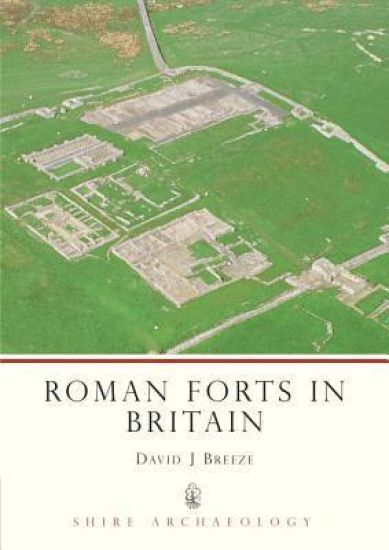
Roman Forts in Britain

Roman Forts in Britain

David J. Breeze

Shire Publications
2002
nidottu
This book examines Roman forts in Britain from the first to the fourth century. It describes the layout of a fort and how forts developed from the marching camps thrown up each night by the army on campaign to the strongholds of the Saxon Shore. Forts, fortresses, watch-towers and signal stations are in turn examined, and the defences of the fort and its annex analysed. Other chapters deal with how the Roman soldiers built the fort and the life of the men stationed there. A gazetteer of forts worth visiting is included and there is also a select bibliography.
Hadrian's Wall

Hadrian's Wall

Brian Dobson; David J Breeze

Penguin Books Ltd
2000
pokkari
A penetrating and lucid history of the best-known and most spectacular monument to the Roman Empire in Britain. Taking into account new research findings about the building of the Wall, Breeze and Dobson include fascinating details about the Roman army, its religion and daily bureaucratic life. A selection of photos, maps and diagrams help make this a book for both the expert and the layman, being simultaneously erudite and unusually accessible.