Kirjojen hintavertailu. Mukana 12 390 323 kirjaa ja 12 kauppaa.

Kirjailija

David J. Cox

Kirjat ja teokset yhdessä paikassa: 12 kirjaa, julkaisuja vuosilta 2000-2023, suosituimpien joukossa Practical Ethics for Effective Treatment of Autism Spectrum Disorder. Vertaile teosten hintoja ja tarkista saatavuus suomalaisista kirjakaupoista.

12 kirjaa

Kirjojen julkaisuhaarukka 2000-2023.

Practical Ethics for Effective Treatment of Autism Spectrum Disorder

Practical Ethics for Effective Treatment of Autism Spectrum Disorder

Matthew T. Brodhead; David J. Cox; Shawn P Quigley

ELSEVIER SCIENCE PUBLISHING CO INC
2022
nidottu
Practical Ethics for Effective Treatment of Autism Spectrum Disorder, Second Edition is for behavior analysts working directly with, or supervising those who work with, individuals with autism. The book addresses the principles and values that underlie the Behavior Analyst Certification Board’s® Professional and Ethical Compliance Code for Behavior Analysts and factors that affect ethical decision-making. In addition, the book addresses critical and under-discussed topics, including scope of competence, evidence-based practice in behavior analysis, how to collaborate with professionals within and outside one’s discipline, and how to design systems of ethical supervision and training customized to unique treatment settings. Across many of the topics, the authors also discuss errors students and professionals may make during analyses of ethical dilemmas and misapplications of ethical codes within their practice. New to this revision are chapters on Quality Control in ABA Service Delivery, Ethical Issues in ABA Business Management and Standardizing Decision-making in ABA Service Delivery.
Penal Servitude

Penal Servitude

Helen Johnston; Barry Godfrey; David J. Cox

McGill-Queen's University Press
2022
nidottu
Established in 1853, after the end of penal transportation to Australia, the convict prison system and the sentence of penal servitude offered the most severe form of punishment – short of death – in the criminal justice system, and they remained in place for nearly a century.Penal Servitude is the first comprehensive study to examine the convict prison system that housed all those who were sentenced to penal servitude during this time. Helen Johnston, Barry Godfrey, and David Cox detail the administration and evolution of the system, from its creation in the 1850s and the building of the prison estate to the classification of prisoners within it. Exploring life in the convict prison through the experiences of the people who were subjected to it, the authors shed light on various details such as prison diet, education, and labour. What they find reveals the internal regimes; the everyday endurances, conformity, resistance, and rule breaking of convicts; and the interactions with the warders, medical officers, and governors that shaped daily life in the system.Reconstructing the life histories of hundreds of convict prisoners from detailed prison records, criminal registers, census data, and personal correspondence, Penal Servitude illuminates the lives of those who experienced long-term imprisonment in the nineteenth and twentieth centuries.
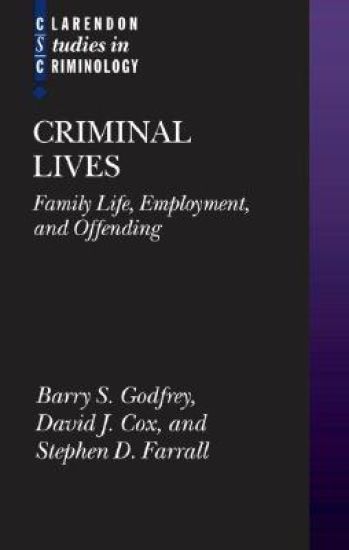
Criminal Lives

Criminal Lives

Barry S. Godfrey; David J. Cox; Stephen Farrall

Oxford University Press
2007
sidottu
This book uses historical data to directly address modern criminological debates. There is currently a huge growth of interest in histories of crime, and intellectual conversations and connections between historians and criminologists are becoming much more frequent. However, published work which uses historical data to this extent is rare. This book's aim is to draw a wide audience from the worlds of criminology, history, and social policy and engage in a genuinely interdisciplinary debate. This book addresses a number of important questions about offenders' persistence in, or desistance from, crime and questions the current theoretical frameworks that are given to explain why some people stop, or slow down, their offending, and why offenders' children become involved in crime. By using criminal registers, census material, and newspaper reports from 1880 -1940 for one industrial town in North-West England, this book asks how and why did some people stop offending, and what part did employment, relationship formation, and family responsibility play in that process; was criminality passed on from parent to child, and if so, how; and to what extent were persistent offenders also persistent victims?
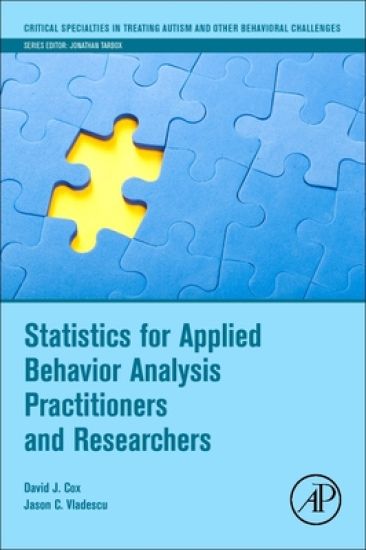
Statistics for Applied Behavior Analysis Practitioners and Researchers

Statistics for Applied Behavior Analysis Practitioners and Researchers

David J. Cox; Jason C. Vladescu

ELSEVIER SCIENCE TECHNOLOGY
2023
nidottu
Professionals who provide services based on the principles of behavior are required to use evidence-based practices and to make data-based decisions regarding assessments and interventions. Doing so requires statistical literacy: competence in collecting, analyzing, interpreting and presenting aggregate quantitative data within or between subjects. Without statistical literacy, behavior analysts cannot take advantage of, or intelligently discuss, ongoing scientific developments around interventions for autism spectrum disorders (ASD). Statistics for Applied Behavior Analysis Practitioners and Researchers provides practical and useful content for individuals who work directly with, or supervise those who work directly with, individuals with ASD. This book introduces core concepts and principles of modern statistical analysis that behavior analysts will need to deliver and consume the larger scientific literature. The organization of the book follows the common sequence of decisions for collecting, describing and analyzing data associated with behavior analytic service delivery and research. By the end of the book, readers should be able to understand and accurately incorporate statistics in their assessment and intervention effects using statistics.
Penal Servitude

Penal Servitude

Helen Johnston; Barry Godfrey; David J. Cox

McGill-Queen's University Press
2022
sidottu
Established in 1853, after the end of penal transportation to Australia, the convict prison system and the sentence of penal servitude offered the most severe form of punishment – short of death – in the criminal justice system, and they remained in place for nearly a century.Penal Servitude is the first comprehensive study to examine the convict prison system that housed all those who were sentenced to penal servitude during this time. Helen Johnston, Barry Godfrey, and David Cox detail the administration and evolution of the system, from its creation in the 1850s and the building of the prison estate to the classification of prisoners within it. Exploring life in the convict prison through the experiences of the people who were subjected to it, the authors shed light on various details such as prison diet, education, and labour. What they find reveals the internal regimes; the everyday endurances, conformity, resistance, and rule breaking of convicts; and the interactions with the warders, medical officers, and governors that shaped daily life in the system.Reconstructing the life histories of hundreds of convict prisoners from detailed prison records, criminal registers, census data, and personal correspondence, Penal Servitude illuminates the lives of those who experienced long-term imprisonment in the nineteenth and twentieth centuries.
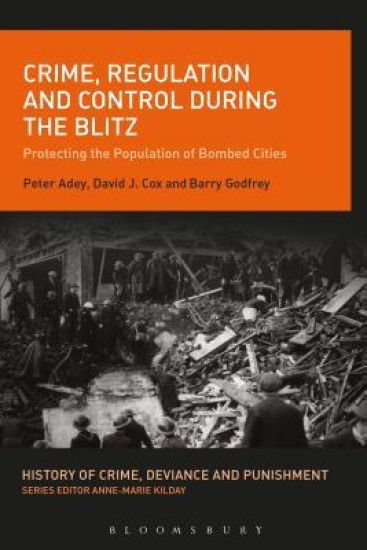
Crime, Regulation and Control During the Blitz

Crime, Regulation and Control During the Blitz

Peter Adey; David J. Cox; Barry Godfrey

Bloomsbury Academic
2017
nidottu
Crime, Regulation and Control during the Blitz looks at the social effect of bombing on urban centres like Liverpool, Coventry and London, critically examining how the wartime authorities struggled to regulate and control crime and offending during the Blitz. Focusing predominantly on Liverpool, it investigates how the authorities and citizens anticipated the aerial war, and how the State and local authorities proposed to contain and protect a population made unruly, potentially deviant and drawn into a new landscape of criminal regulation.Drawing on a range of contemporary sources, the book throws into relief today's experiences of war and terror, the response in crime and deviancy, and the experience and practices of preparedness in anticipation of terrible threats. The authors reveal how everyday activities became criminalised through wartime regulations and explore how other forms of crime such as looting, theft and drunkenness took on a new and frightening aspect. Crime, Regulation and Control during the Blitz offers a critical contribution to how we understand crime, security, and regulation in both the past and the present.
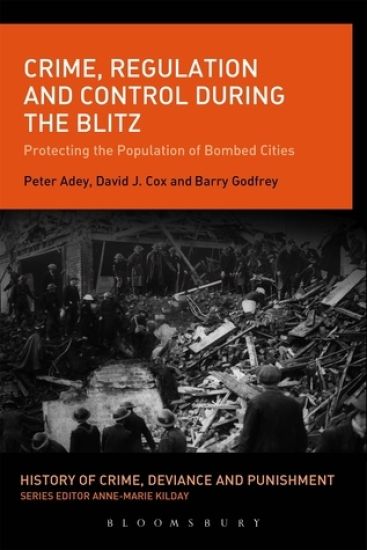
Crime, Regulation and Control During the Blitz

Crime, Regulation and Control During the Blitz

Peter Adey; David J. Cox; Barry Godfrey

Bloomsbury Academic USA
2016
sidottu
Crime, Regulation and Control during the Blitz looks at the social effect of bombing on urban centres like Liverpool, Coventry and London, critically examining how the wartime authorities struggled to regulate and control crime and offending during the Blitz. Focusing predominantly on Liverpool, it investigates how the authorities and citizens anticipated the aerial war, and how the State and local authorities proposed to contain and protect a population made unruly, potentially deviant and drawn into a new landscape of criminal regulation.Drawing on a range of contemporary sources, the book throws into relief today's experiences of war and terror, the response in crime and deviancy, and the experience and practices of preparedness in anticipation of terrible threats. The authors reveal how everyday activities became criminalised through wartime regulations and explore how other forms of crime such as looting, theft and drunkenness took on a new and frightening aspect. Crime, Regulation and Control during the Blitz offers a critical contribution to how we understand crime, security, and regulation in both the past and the present.
Policing the Factory

Policing the Factory

Barry Godfrey; David J. Cox

Bloomsbury Academic
2014
nidottu
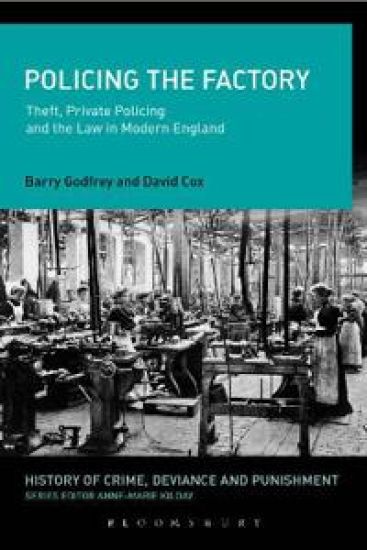
Policing the Factory describes the operation of various private policing agencies, employed to track down and prosecute workplace offenders. The authors focus in particular on the Worsted Committee and their Inspectors, who, between 1777 and 1968, prosecuted thousands of workers in the north of England for taking home workplace scraps, or wasting their employer's time. Most of the workers prosecuted spent a month in prison upon conviction, and many more were dismissed from employment without any formal legal action taking place. This book explores how, and under what legislative basis, the criminal law could be brought into private spaces in this period and goes on suggest that the activities of the Inspectorate inhibited the development of public policing in Yorkshire. The book presents case studies, newspaper comment, memoirs, and statistics based on detailed archival analysis of court records, to create a richly textured story which will inform and challenge contemporary debates on policing and police history.
Policing the Factory

Policing the Factory

Barry Godfrey; David J. Cox

Bloomsbury Academic USA
2013
sidottu
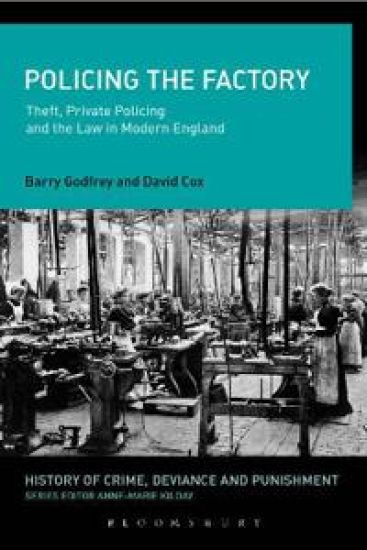
Policing the Factory describes the operation of various private policing agencies, employed to track down and prosecute workplace offenders. The authors focus in particular on the Worsted Committee and their Inspectors, who, between 1777 and 1968, prosecuted thousands of workers in the north of England for taking home workplace scraps, or wasting their employer's time. Most of the workers prosecuted spent a month in prison upon conviction, and many more were dismissed from employment without any formal legal action taking place. This book explores how, and under what legislative basis, the criminal law could be brought into private spaces in this period and goes on suggest that the activities of the Inspectorate inhibited the development of public policing in Yorkshire. The book presents case studies, newspaper comment, memoirs, and statistics based on detailed archival analysis of court records, to create a richly textured story which will inform and challenge contemporary debates on policing and police history.
A Certain Share of Low Cunning

A Certain Share of Low Cunning

David J. Cox

Routledge
2012
nidottu
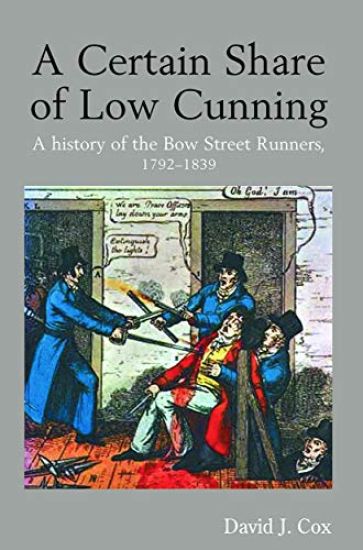
This book provides an account and analysis of the history of the Bow Street Runners, precursors of today's police force. Through a detailed analysis of a wide range of both qualitative and quantitative research data, this book provides a fresh insight into their history, arguing that the use of Bow Street personnel in provincially instigated cases was much more common than has been assumed by many historians. It also demonstrates that the range of activities carried out by Bow Street personnel whilst employed on such cases was far more complex than can be gleaned from the majority of books and articles concerning early nineteenth-century provincial policing, which often do little more than touch on the role of Bow Street. By describing the various roles and activities of the Bow Street Principal Officers with specific regard to cases originating in the provinces it also places them firmly within the wider contexts of provincial law-enforcement and policing history. The book investigates the types of case in which the 'Runners' were involved, who employed them and why, how they operated, including their interaction with local law-enforcement bodies, and how they were perceived by those who utilized their services. It also discusses the legacy of the Principal Officers with regard to subsequent developments within policing. Bow Street Police Office and its personnel have long been regarded by many historians as little more than a discrete and often inconsequential footnote to the history of policing, leading to a partial and incomplete understanding of their work. This viewpoint is challenged in this book, which argues that in several ways the utilization of Principal Officers in provincially instigated cases paved the way for important subsequent developments in policing, especially with regard to detective practices. It is also the first work to provide a clear distinction between the Principal Officers and their less senior colleagues.
A Certain Share of Low Cunning

A Certain Share of Low Cunning

David J. Cox

Willan Publishing
2010
sidottu
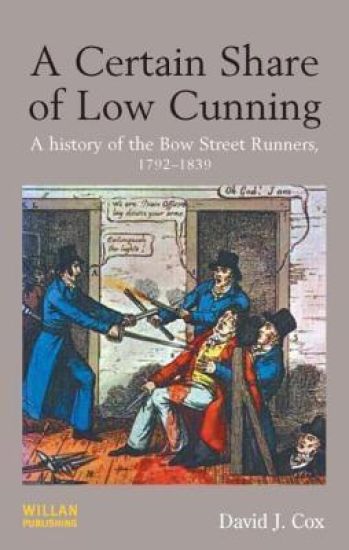
This book provides an account and analysis of the history of the Bow Street Runners, precursors of today's police force. Through a detailed analysis of a wide range of both qualitative and quantitative research data, this book provides a fresh insight into their history, arguing that the use of Bow Street personnel in provincially instigated cases was much more common than has been assumed by many historians. It also demonstrates that the range of activities carried out by Bow Street personnel whilst employed on such cases was far more complex than can be gleaned from the majority of books and articles concerning early nineteenth-century provincial policing, which often do little more than touch on the role of Bow Street. By describing the various roles and activities of the Bow Street Principal Officers with specific regard to cases originating in the provinces it also places them firmly within the wider contexts of provincial law-enforcement and policing history. The book investigates the types of case in which the 'Runners' were involved, who employed them and why, how they operated, including their interaction with local law-enforcement bodies, and how they were perceived by those who utilized their services. It also discusses the legacy of the Principal Officers with regard to subsequent developments within policing. Bow Street Police Office and its personnel have long been regarded by many historians as little more than a discrete and often inconsequential footnote to the history of policing, leading to a partial and incomplete understanding of their work. This viewpoint is challenged in this book, which argues that in several ways the utilization of Principal Officers in provincially instigated cases paved the way for important subsequent developments in policing, especially with regard to detective practices. It is also the first work to provide a clear distinction between the Principal Officers and their less senior colleagues.
Close Protection

Close Protection

David J. Cox

Praeger Publishers Inc
2000
sidottu
The evolution of elite personal protection units—also known as close protection units—within the former Soviet Union is one of the least examined, yet crucial political developments in this region. Due to the often-violent environment in which the political leaders of this region now operate, the need for these special military units is obvious. This study examines the similarities between these the current units and those of the Soviet past and finds that, in spite of the highly unstable nature of politics in post-communist Russia, these elite units have not intervened to the degree that many might have expected. They have, however, played a significant political role throughout the region. These close protection forces may very well determine the success or failure of the democratization process now underway. On the other hand, establishing a Praetorian Guard within the very walls of the Kremlin may in itself portend an end to democracy. Ultimately, a complete understanding of future politics in the former Soviet Union is impossible without acknowledging the role that these modern Praetorians play in the civil-military balance.