Kirjailija
David J. Gunkel
Kirjat ja teokset yhdessä paikassa: 21 kirjaa, julkaisuja vuosilta 2001-2025, suosituimpien joukossa Viestivä tekoäly. Vertaile teosten hintoja ja tarkista saatavuus suomalaisista kirjakaupoista.
Mukana myös kirjoitusasut: David J Gunkel
21 kirjaa
Kirjojen julkaisuhaarukka 2001-2025.
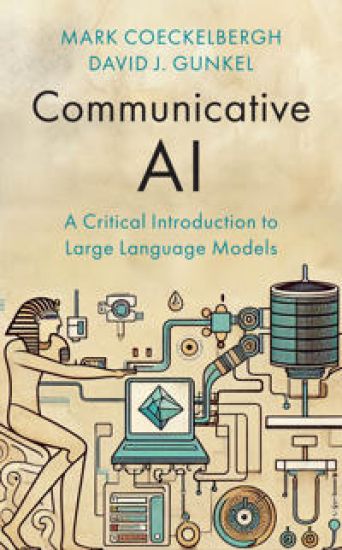
Tekoälyn voi ajatella viestivän, kun ihminen voi olla sen kanssa keskustelua muistuttavassa vuorovaikutuksessa. Esimerkiksi OpenAI:n ChatGPT ja Googlen LaMDA ovat viestiviä tekoälyjä.Tässä uraa uurtavassa teoksessa esitellään, miten tällaiset suuret kielimallit toimivat, ja tarkastellaan niitä kriittisesti ja havainnollisesti lähtien länsimaisen filosofian peruskivistä ja päätyen moderniin kielen, tiedon ja viestinnän filosofiaan.Kielimallit eivät tiedä eivätkä ymmärrä mitään. Niiden viestintä ei perustu merkitysten välittämiseen, vaan opetusaineistossa esiintyviin tilastollisiin hahmoihin. Tällä erolla ihmisten viestintään on syvällinen vaikutus elämiimme, yhteiskuntiimme, käsitykseemme tiedosta ja siihen, mitä pidämme kirjoittamisena ja kirjoittajuutena.Tekijät osoittavat selkein esimerkein, että tämä aikamme kenties hajottavin teknologia on samalla ainutlaatuinen uusi mahdollisuus tutkia ihmisen kognitiota ja pohtia, mitä kieli, viestintä ja älykkyys pohjimmiltaan ovat.Mark Coeckelbergh on Wienin yliopiston teknologian ja median filosofian professori. Häneltä on ilmestynyt aiemmin suomeksi teokset Tekoälyn etiikka ja Miksi tekoäly nakertaa demokratiaa. David J. Gunkel on viestinnän professori Northern Illinois Universityssa.
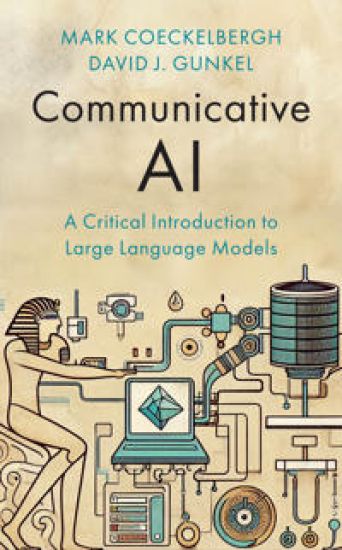
Large Language Models (LLMs), like OpenAI’s ChatGPT and Google’s LaMDA, are not only the most disruptive and controversial technologies of our time, but also offer an unprecedented opportunity to examine human cognition and philosophically question the very nature of language, communication, and intelligence. What is consciousness? What is language? Are LLMs authors? Are LLMs the end of writing as we know it?In Communicative AI, Mark Coeckelbergh and David J. Gunkel offer a critical introduction to LLMs, investigating the philosophical significance of this technology and its practical ramifications. Mobilizing resources from contemporary philosophy, history of ideas, linguistics, and communication theory, the book invites us to re-think some long-standing philosophical issues concerning language, consciousness, truth, authorship, and writing. Through a blend of theoretical analysis, accessible explanations, and practical examples, the book provides readers with a comprehensive overview of the role that this powerful new technology is already playing in our lives.This is a must-read for students and scholars across the humanities and the social sciences, as well as for anyone intrigued by the intersection of technology, language, and human thought.
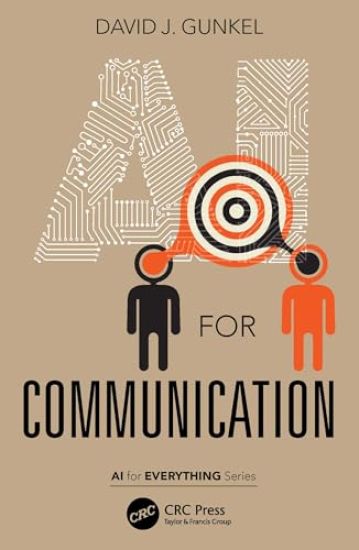
AI for Communication offers an engaging exploration into the diverse applications of artificial intelligence (AI) within the realm of communication. By bridging the gap between the scientific and engineering realms of AI and communication, this book reveals how AI, since its inception during the Dartmouth Summer workshop of 1956, has inherently been a science of communication. Exploring key advancements such as machine translation, natural language processing, large language models, computational creativity, and social robotics, this book shows how these innovations not only disrupt but also actively transform human communication.The book is designed for students, teachers, and general readers who want to know how the field of communication impacts and influences the theory and practice of AI and how recent developments in AI will affect all aspects of human social interaction.
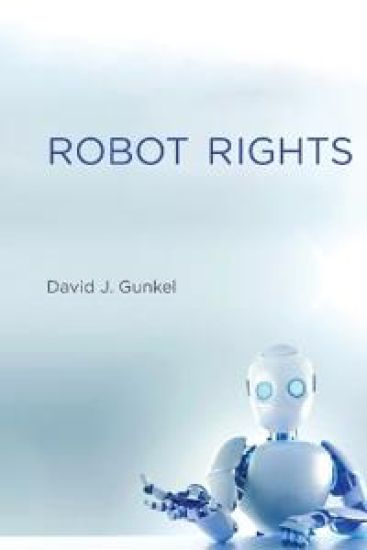
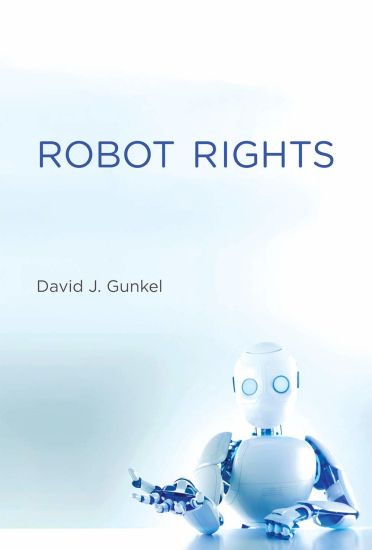
A provocative attempt to think about what was previously considered unthinkable: a serious philosophical case for the rights of robots. We are in the midst of a robot invasion, as devices of different configurations and capabilities slowly but surely come to take up increasingly important positions in everyday social reality--self-driving vehicles, recommendation algorithms, machine learning decision making systems, and social robots of various forms and functions. Although considerable attention has already been devoted to the subject of robots and responsibility, the question concerning the social status of these artifacts has been largely overlooked. In this book, David Gunkel offers a provocative attempt to think about what has been previously regarded as unthinkable: whether and to what extent robots and other technological artifacts of our own making can and should have any claim to moral and legal standing. In his analysis, Gunkel invokes the philosophical distinction (developed by David Hume) between "is" and "ought" in order to evaluate and analyze the different arguments regarding the question of robot rights. In the course of his examination, Gunkel finds that none of the existing positions or proposals hold up under scrutiny. In response to this, he then offers an innovative alternative proposal that effectively flips the script on the is/ought problem by introducing another, altogether different way to conceptualize the social situation of robots and the opportunities and challenges they present to existing moral and legal systems.
An accessible introduction to a concept often considered impossibly abstruse, demonstrating its power as a conceptual tool in the twenty-first century. This volume in the MIT Press Essential Knowledge series offers a clear and concise introduction to a topic often considered difficult and abstruse: deconstruction. David Gunkel sorts out the concept, terminology, and practices of deconstruction, not to defend academic orthodoxy, or to disseminate the thought of Jacques Derrida--the fabricator of the neologism and progenitor of the concept--but to provide readers with a powerful conceptual tool for the twenty-first century. Gunkel explains that deconstruction is not simply the opposite of construction--the deconstructed jacket hanging in your closet is not, strictly speaking, accurately named--or synonymous with destruction. It is a way to think beyond the construction/destruction dichotomy and all other conceptual dichotomies and logical oppositions. After describing what deconstruction is not, and developing an abstract and schematic characterization derived from Derrida, Gunkel offers examples in (rather than of) deconstruction, including logocentrism (the speech/writing dichotomy) and virtuality (the ruling philosophical binary of real/appearance), remix (the original/copy distinction), and the posthuman figure of the cyborg (the human/machine conceptual pairing). Finally, Gunkel discusses the costs and benefits of deconstruction, considering the many things deconstruction is good for and identifying potential problems, including Eurocentrism, relativism, difficulties in communicating the concept, and reappropriation.
In this short introduction, David J. Gunkel examines the shifting world of artificial intelligence, mapping it onto everyday twenty-first century life and probing the consequences of this ever-growing industry and movement.The book investigates the significance and consequences of the robot invasion in an effort to map the increasingly complicated social terrain of the twenty-first century. Whether we recognize it as such or not, we are in the midst of a robot invasion. What matters most in the face of this machine incursion is not resistance, but how we decide to make sense of and respond to the social opportunities and challenges that autonomous machines make available. How to Survive a Robot Invasion is a fascinating and accessible volume for students and researchers of new media, philosophy of technology, and their many related fields. It aims both to assist readers’ efforts to understand a changing world and to provide readers with the critical insight necessary for grappling with our science fiction-like future.
An Introduction to Communication and Artificial Intelligence
David J. Gunkel
Polity Press
2019
nidottu
Communication and artificial intelligence (AI) are closely related. It is communication – particularly interpersonal conversational interaction – that provides AI with its defining test case and experimental evidence. Likewise, recent developments in AI introduce new challenges and opportunities for communication studies. Technologies such as machine translation of human languages, spoken dialogue systems like Siri, algorithms capable of producing publishable journalistic content, and social robots are all designed to communicate with users in a human-like way. This timely and original textbook provides educators and students with a much-needed resource, connecting the dots between the science of AI and the discipline of communication studies. Clearly outlining the topic's scope, content and future, the text introduces key issues and debates, highlighting the importance and relevance of AI to communication studies. In lively and accessible prose, David Gunkel provides a new generation with the information, knowledge, and skills necessary to working and living in a world where social interaction is no longer restricted to humans. The first work of its kind, An Introduction to Communication and Artificial Intelligence is the go-to textbook for students and scholars getting to grips with this crucial interdisciplinary topic.
An Introduction to Communication and Artificial Intelligence
David J. Gunkel
Polity Press
2019
sidottu
Communication and artificial intelligence (AI) are closely related. It is communication – particularly interpersonal conversational interaction – that provides AI with its defining test case and experimental evidence. Likewise, recent developments in AI introduce new challenges and opportunities for communication studies. Technologies such as machine translation of human languages, spoken dialogue systems like Siri, algorithms capable of producing publishable journalistic content, and social robots are all designed to communicate with users in a human-like way. This timely and original textbook provides educators and students with a much-needed resource, connecting the dots between the science of AI and the discipline of communication studies. Clearly outlining the topic's scope, content and future, the text introduces key issues and debates, highlighting the importance and relevance of AI to communication studies. In lively and accessible prose, David Gunkel provides a new generation with the information, knowledge, and skills necessary to working and living in a world where social interaction is no longer restricted to humans. The first work of its kind, An Introduction to Communication and Artificial Intelligence is the go-to textbook for students and scholars getting to grips with this crucial interdisciplinary topic.
In this short introduction, David J. Gunkel examines the shifting world of artificial intelligence, mapping it onto everyday twenty-first century life and probing the consequences of this ever-growing industry and movement.The book investigates the significance and consequences of the robot invasion in an effort to map the increasingly complicated social terrain of the twenty-first century. Whether we recognize it as such or not, we are in the midst of a robot invasion. What matters most in the face of this machine incursion is not resistance, but how we decide to make sense of and respond to the social opportunities and challenges that autonomous machines make available. How to Survive a Robot Invasion is a fascinating and accessible volume for students and researchers of new media, philosophy of technology, and their many related fields. It aims both to assist readers’ efforts to understand a changing world and to provide readers with the critical insight necessary for grappling with our science fiction-like future.
In Hacking Cyberspace David J. Gunkel examines the metaphors applied to new technologies, and how those metaphors inform, shape, and drive the implementation of the technology in question. The author explores the metaphorical tropes that have been employed to describe and evaluate recent advances in computer technology, telecommunications systems, and interactive media. Taking the stance that no speech is value-neutral, Gunkel examines such metaphors as "the information superhighway" and "the electronic frontier" for their political and social content, and he develops a critical investigation that not only traces the metaphors' conceptual history, but explicates their implications and consequences for technological development. Through Hacking Cyberspace, David J. Gunkel develops a sophisticated understanding of new technology that takes into account the effect of technoculture's own discursive techniques and maneuvers on the actual form of technological development.
A provocative attempt to think about what was previously considered unthinkable: a serious philosophical case for the rights of robots.We are in the midst of a robot invasion, as devices of different configurations and capabilities slowly but surely come to take up increasingly important positions in everyday social reality-self-driving vehicles, recommendation algorithms, machine learning decision making systems, and social robots of various forms and functions. Although considerable attention has already been devoted to the subject of robots and responsibility, the question concerning the social status of these artifacts has been largely overlooked. In this book, David Gunkel offers a provocative attempt to think about what has been previously regarded as unthinkable: whether and to what extent robots and other technological artifacts of our own making can and should have any claim to moral and legal standing.In his analysis, Gunkel invokes the philosophical distinction (developed by David Hume) between "is" and "ought" in order to evaluate and analyze the different arguments regarding the question of robot rights. In the course of his examination, Gunkel finds that none of the existing positions or proposals hold up under scrutiny. In response to this, he then offers an innovative alternative proposal that effectively flips the script on the is/ought problem by introducing another, altogether different way to conceptualize the social situation of robots and the opportunities and challenges they present to existing moral and legal systems.
Gaming the System takes philosophical traditions out of the ivory tower and into the virtual worlds of video games. In this book, author David J. Gunkel explores how philosophical traditions—put forth by noted thinkers such as Plato, Descartes, Kant, Heidegger, and Žižek—can help us explore and conceptualize recent developments in video games, game studies, and virtual worlds. Furthermore, Gunkel interprets computer games as doing philosophy, arguing that the game world is a medium that provides opportunities to model and explore fundamental questions about the nature of reality, personal identity, social organization, and moral conduct. By using games to investigate and innovate in the area of philosophical thinking, Gunkel shows how areas such as game governance and manufacturers' terms of service agreements actually grapple with the social contract and produce new postmodern forms of social organization that challenge existing modernist notions of politics and the nation state. In this critically engaging study, Gunkel considers virtual worlds and video games as more than just "fun and games," presenting them as sites for new and original thinking about some of the deepest questions concerning the human experience.
An investigation into the assignment of moral responsibilities and rights to intelligent and autonomous machines of our own making.One of the enduring concerns of moral philosophy is deciding who or what is deserving of ethical consideration. Much recent attention has been devoted to the "animal question"-consideration of the moral status of nonhuman animals. In this book, David Gunkel takes up the "machine question": whether and to what extent intelligent and autonomous machines of our own making can be considered to have legitimate moral responsibilities and any legitimate claim to moral consideration.The machine question poses a fundamental challenge to moral thinking, questioning the traditional philosophical conceptualization of technology as a tool or instrument to be used by human agents. Gunkel begins by addressing the question of machine moral agency: whether a machine might be considered a legitimate moral agent that could be held responsible for decisions and actions. He then approaches the machine question from the other side, considering whether a machine might be a moral patient due legitimate moral consideration. Finally, Gunkel considers some recent innovations in moral philosophy and critical theory that complicate the machine question, deconstructing the binary agent-patient opposition itself.Technological advances may prompt us to wonder if the science fiction of computers and robots whose actions affect their human companions (think of HAL in 2001: A Space Odyssey) could become science fact. Gunkel's argument promises to influence future considerations of ethics, ourselves, and the other entities who inhabit this world.
The most significant philosopher of Being, Martin Heidegger has nevertheless largely been ignored within communications studies. This book sets the record straight by demonstrating the profound implications of his unique philosophical project for our understanding of today’s mediascape. The full range of Heidegger’s writing from Being and Time to his later essays is drawn upon. Topics covered include: - an analysis of Heidegger's theory of language and its relevance to communications studies - a critical interpretation of mass media and digital culture that draws upon Heidegger's key concept of Dasein - a discussion of mediated being and its objectifying tendencies - an assessment of Heidegger's legacy for future developments in media theory Clear explanations and accessible commentary are used to guide the reader through the work of a thinker whose notorious reputation belies the highly topical nature of his key insights. In a world full of digital networks and new social media, but little critical insight, Heidegger and the Mediashows how a true understanding of the media requires familiarity with Heidegger’s unique brand of thinking.