Kirjojen hintavertailu. Mukana 12 241 722 kirjaa ja 12 kauppaa.

Kirjailija

David J. Kupfer

Kirjat ja teokset yhdessä paikassa: 4 kirjaa, julkaisuja vuosilta 2005-2019, suosituimpien joukossa The American Psychiatric Association Publishing Textbook of Psychiatry. Vertaile teosten hintoja ja tarkista saatavuus suomalaisista kirjakaupoista.

4 kirjaa

Kirjojen julkaisuhaarukka 2005-2019.

The American Psychiatric Association Publishing Textbook of Psychiatry

The American Psychiatric Association Publishing Textbook of Psychiatry

David J. Kupfer

American Psychiatric Association Publishing
2019
sidottu
The American Psychiatric Association Publishing Textbook of Psychiatry, first published more than 30 years ago, is a landmark text with a legacy of sound scholarship, expert knowledge, and effective pedagogy. Thoroughly revised and featuring new authors and content, the seventh edition raises the bar, adding age-related, cultural, societal, and population considerations in the practice of psychiatry to the authoritative text that generations of students, residents, and clinicians have heretofore relied upon. The book first focuses on foundational knowledge, with chapters on psychiatric interviewing, diagnostic formulation, developmental assessment, laboratory testing and neuroimaging, and ethical and legal aspects of clinical psychiatry, and then proceeds to a full presentation of psychiatric disorders in alignment with DSM-5. The third section offers an overview of treatment strategies and methods in present-day psychiatry, a combination of evidence-based biological interventions and psychotherapies, and gives a clear sense of exciting new directions in psychiatric therapeutics. The final section of the textbook is focused on the care of special patient populations, including women, children and adolescents, lesbian, gay, bisexual, and transgender individuals, older adults, and culturally diverse individuals.Many topics are new to this volume, including the following:Suicide risk assessment, a critically important subject, is addressed in a new chapter that provides the reader with up-to-date knowledge needed to conduct a thorough, attuned, and accurate psychiatric interview in line with best practices.A new chapter on the social determinants of mental health has been added, reflecting an increased emphasis on populations whose specific concerns have been historically underappreciated in American psychiatry, and illuminating factors that influence mental health needs and barriers to care in specific patient populations.Precision psychiatry, an integrative approach that pulls together the scientific foundation of the discipline and recent technological advances and directs them toward closing the gap between discovery and clinical translation, is explored in a new chapter.E-health strategies in mental health have become increasingly available to psychiatrists and other health professionals, especially in the mobile and monitoring spheres. A new chapter offers insights into these intriguing new options for delivering treatment.A chapter on complementary and integrative therapies explores the integration of conventional medicine with alternative treatments for which there is an evidence base, providing an overview of nutrients, phytomedicines, hormones, mind–body practices, and electromagnetic treatments.With features such as key clinical points and recommended readings for further study, The American Psychiatric Association Publishing Textbook of Psychiatry is a comprehensive course book, an indispensable reference, and the ultimate resource for clinical care.
The Conceptual Evolution of DSM-5

The Conceptual Evolution of DSM-5

Darrel A. Regier; William E. Narrow; Emily A. Kuhl; David J. Kupfer

American Psychiatric Association Publishing
2011
pokkari
There is a need to refine our current psychiatric nosology to produce diagnostic criteria and disorder categories that keep pace with advances in neuroscience while at the same time enhance clinical utility. Furthermore, dimensional aspects of psychiatric disorders require greater recognition so as to improve our understanding of boundaries between disorders and underscore the heterogeneous nature of psychopathology. The Conceptual Evolution of DSM-5 provides a framework for the evolution of the forthcoming diagnostic system in the fifth edition of Diagnostic and Statistical Manual of Mental Disorders (DSM-5), which will help advance clinical practice and facilitate ongoing development of diagnostic criteria. This manual: • Highlights recent progress in our understanding of cross-cutting factors relevant to psychiatric diagnosis and symptom presentation• Includes detailed discussions on the role of factors such as age, gender, culture, and disability in the expression of mental disorders• Provides a review of genetic evidence supporting a cross-cutting approach to nosology• Offers suggestions for integrating cross-cutting factors with DSM-5. The Conceptual Evolution of DSM-5 was written to impart a theoretical context for understanding potential revisions to DSM-5. The authors reevaluate the structure of the current manual and discuss cross-cutting approaches to facilitate clinical practice and refine research approaches that will guide clinical trials, genetics, imaging, and treatment guidelines. The authors provide the following insights: • Detailed descriptions of age-, gender-, and culture-specific aspects relevant to psychiatric diagnosis and the need for sensitivity to these factors when making diagnoses• Discussions on the dimensional aspects of mental disorders, including overlapping symptoms relevant to many or most diagnoses• Consideration of alternative classifications of disorders that recognize disorders sharing validating features• Presentation of neuroscientific and epidemiologic evidence to expand understanding of disorders beyond that of the categorical organization presented in DSM-IV• A review of clinical implications, including how clinicians may shift their conceptualization of previously reified diagnostic criteria and their consequences. As presented to the 99th Annual Meeting of the American Psychopathological Association, The Conceptual Evolution of DSM-5 explores the rapidly changing research base for the understanding of neurodevelopmental, neurocognitive, addictive, and other psychiatric disorders. The contributions in this volume confirm that DSM-5 is intended to be a living document that can accommodate revisions to specific diagnostic areas based on new evidence that is replicable and subject to review. This efficient updating process will help researchers and clinicians keep abreast of the latest protocols for the research, diagnosis, and treatment of mental illness.
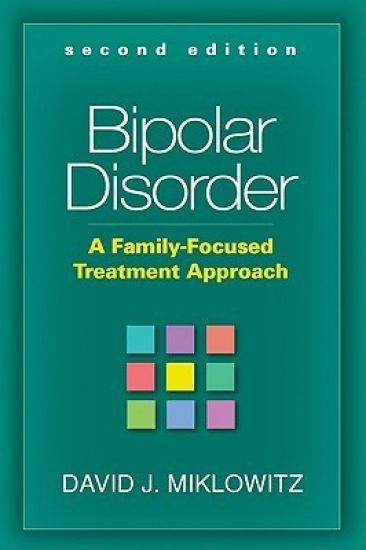
Bipolar Disorder

Bipolar Disorder

David J. Miklowitz; Ellen Frank; Kay Redfield Jamison; David J. Kupfer

Guilford Publications
2010
nidottu
Family-focused psychoeducational treatment (FFT) is among a very small number of psychosocial treatments that have been found to be effective in multiple studies to improve the course of bipolar disorder. This indispensable guide describes how to implement FFT with adult and adolescent patients and their family members. Provided are practical procedures for helping families understand the nature of bipolar disorder, strengthen their communication skills, solve day-to-day problems, and reduce the risk and severity of relapse. The book incorporates state-of-the-art knowledge on the illness and its biological and psychosocial management. More than a dozen reproducible handouts are included.
To Your Health

To Your Health

Helena C. Kraemer; Karen Kraemer Lowe; David J. Kupfer

Oxford University Press Inc
2005
sidottu
The public is bombarded daily with reports about risk factors, many conflicting with each other, other accepted as "scientific truth" for awhile, then scientifically disproved, yet others questionable that later prove to be true. Physicians are faced with trying to make sense of those conflicting or questionable results in the scientific literature in order to guide their patients to the best possible decisions. The situation is not much easier for scientists whom ay waste yers of their productive life, and considerable resources, basing their research efforts on what prove to be misleading earlier research findings. What this book does is to present, in non "academese" and with many examples from the general media and scientific journals, a guide to a critical reading of research reports, which, in turn, serves as a guide to researchers as to which approaches are likely to be regarded with raised eyebrows, and what they need to do to generate results that will be take seriously. This stimulating and helpful book was written for informed consumers and physicians as well as for scientists evaluating the risk research literature or contemplating projects on risk research.