Kirjojen hintavertailu. Mukana 12 390 323 kirjaa ja 12 kauppaa.

Kirjailija

David J. Mattingly

Kirjat ja teokset yhdessä paikassa: 5 kirjaa, julkaisuja vuosilta 1995-2023, suosituimpien joukossa Frontiers of the Roman Empire. Vertaile teosten hintoja ja tarkista saatavuus suomalaisista kirjakaupoista.

5 kirjaa

Kirjojen julkaisuhaarukka 1995-2023.

Between Sahara and Sea

Between Sahara and Sea

David J. Mattingly

THE UNIVERSITY OF MICHIGAN PRESS
2023
sidottu
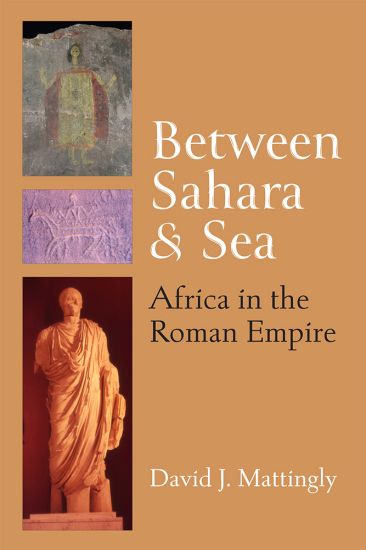
Between Sahara and Sea: Africa in the Roman Empire challenges orthodox views of the story of Africa under Roman domination. It presents a new framework for understanding this and other territories incorporated in the Roman Empire. Based on decades of research in North Africa, David Mattingly’s book is a cleverly constructed and innovative account of the history and archaeology of ancient North Africa (roughly equivalent to Morocco, Algeria, Tunisia, and Libya) from the first century BCE to the third century CE. He charts a new path toward a bottom-up understanding of North African archaeology, exploring in turn the differing material cultures and experiences of the Roman communities of the military and the urban and rural areas. Regional and societal differences emerge as significant and of long duration in the fascinating story of one of the most important sectors of the Roman Empire. This important book is the most comprehensive in English on Roman North Africa. It is remarkably rich, with up-to-date references and a host of new ideas and perspectives. Well written and illustrated, with a plethora of maps, it will be required reading for anyone interested in the subject. Rather than emphasizing the role of external actors, as studies of “Roman Africa” have traditionally done, Between Sahara and Sea focuses on local contributions to the making of Africa in the Roman Empire. The author demonstrates that the multiple populations encountered by Rome were not an indistinct bloc, but had different identities and cultures.
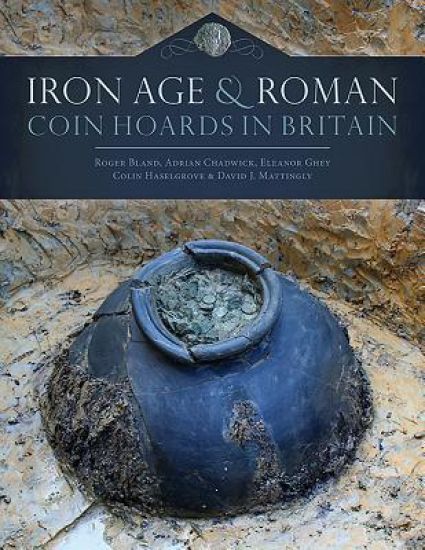
Iron Age and Roman Coin Hoards in Britain

Iron Age and Roman Coin Hoards in Britain

Roger Bland; Adrian Chadwick; Eleanor Ghey; Colin Haselgrove; David J. Mattingly

Oxbow Books
2020
sidottu
More coin hoards have been recorded from Roman Britain than from any other province of the Empire. This comprehensive and lavishly illustrated volume provides a survey of over 3260 hoards of Iron Age and Roman coins found in England and Wales with a detailed analysis and discussion.Theories of hoarding and deposition and examined, national and regional patterns in the landscape settings of coin hoards presented, together with an analysis of those hoards whose findspots were surveyed and of those hoards found in archaeological excavations. It also includes an unprecedented examination of the containers in which coin hoards were buried and the objects found with them. The patterns of hoarding in Britain from the late 2nd century BC to the 5th century AD are discussed. The volume also provides a survey of Britain in the 3rd century AD, as a peak of over 700 hoards are known from the period from AD 253–296. This has been a particular focus of the project which has been a collaborative research project between the University of Leicester and the British Museum funded by the AHRC. The aim has been to understand the reasons behind the burial and non-recovery of these finds. A comprehensive online database (https://finds.org.uk/database) underpins the project, which also undertook a comprehensive GIS analysis of all the hoards and field surveys of a sample of them.
Imperialism, Power, and Identity

Imperialism, Power, and Identity

David J. Mattingly

Princeton University Press
2013
pokkari
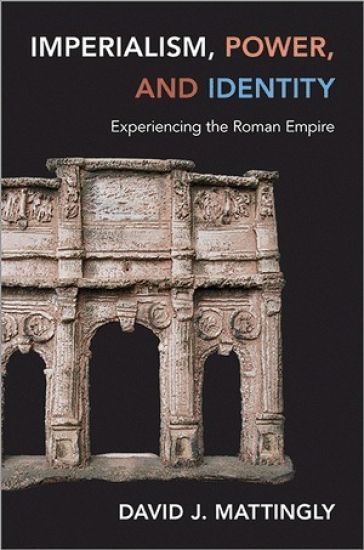
Despite what history has taught us about imperialism's destructive effects on colonial societies, many classicists continue to emphasize disproportionately the civilizing and assimilative nature of the Roman Empire and to hold a generally favorable view of Rome's impact on its subject peoples. Imperialism, Power, and Identity boldly challenges this view using insights from postcolonial studies of modern empires to offer a more nuanced understanding of Roman imperialism. Rejecting outdated notions about Romanization, David Mattingly focuses instead on the concept of identity to reveal a Roman society made up of far-flung populations whose experience of empire varied enormously. He examines the nature of power in Rome and the means by which the Roman state exploited the natural, mercantile, and human resources within its frontiers. Mattingly draws on his own archaeological work in Britain, Jordan, and North Africa and covers a broad range of topics, including sexual relations and violence; census-taking and taxation; mining and pollution; land and labor; and art and iconography. He shows how the lives of those under Rome's dominion were challenged, enhanced, or destroyed by the empire's power, and in doing so he redefines the meaning and significance of Rome in today's debates about globalization, power, and empire. Imperialism, Power, and Identity advances a new agenda for classical studies, one that views Roman rule from the perspective of the ruled and not just the rulers. In a new preface, Mattingly reflects on some of the reactions prompted by the initial publication of the book.
Frontiers of the Roman Empire

Frontiers of the Roman Empire

David J. Mattingly; Alan Rushworth; Martin Sterry; Victoria Leitch

Society for Libyan Studies
2013
nidottu
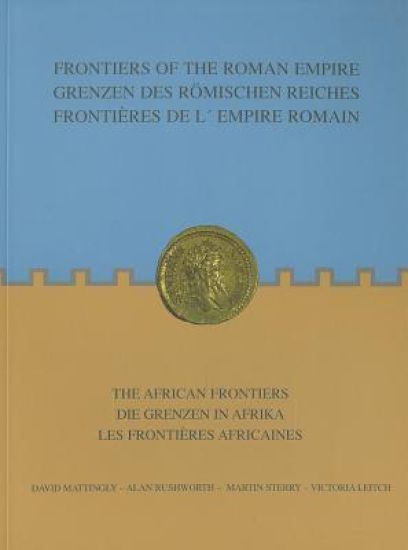
The frontiers of the Roman Empire form the largest surviving monument of one of the world's greatest states, and stretch for around 7500 km through 20 countries. The remains of these have been studied for many centuries. Inscriptions, sculpture, weapons, pottery and artefacts created and used by the soldiers and civilians who lived on the frontier form the basis for this history and are outlined in this book. The physical remains of the frontiers are also visible in many parts of Africa, including towers and forts, stretches of defensive lines of stone and earth with ditches broken by gates, and roads. The aim of this book is to inform the interested visitor about the history of the frontiers and to act as a guidebook as well. Multi-language edition: English, French, German & Arabic
Tripolitania

Tripolitania

David J. Mattingly

Batsford Ltd
1995
sidottu
"Lepcis Magna", one of the greatest of the Roman cities of North Africa and one of the most famous archaeological sites in the Mediterranean, was situated in the region of Tripolitania. Birthplace of the Emperor Septimius Severus, the city has yielded many well-preserved monuments from its Roman past. Mattingly presents valuable information on the pre-Roman tribal background, the urban centres, the military frontier and the regional economy. He reinterprets many aspects of the settlement history of this marginal arid zone that was once made prosperous, and considers the wider themes of Romanization, frontier military strategy, and economic links between provinces and sources of elite wealth.