Kirjojen hintavertailu. Mukana 12 207 344 kirjaa ja 12 kauppaa.

Kirjailija

David J Rothman

Kirjat ja teokset yhdessä paikassa: 11 kirjaa, julkaisuja vuosilta 1966-2022, suosituimpien joukossa Beginnings Count. Vertaile teosten hintoja ja tarkista saatavuus suomalaisista kirjakaupoista.

Mukana myös kirjoitusasut: David J. Rothman

11 kirjaa

Kirjojen julkaisuhaarukka 1966-2022.

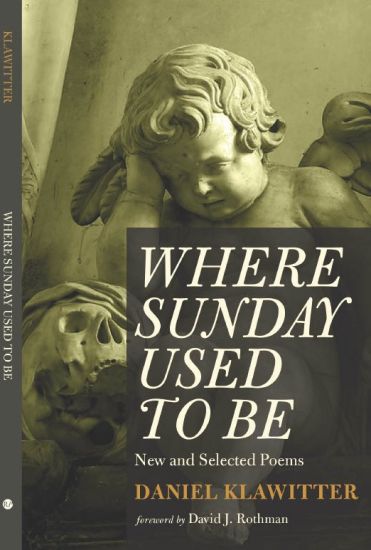
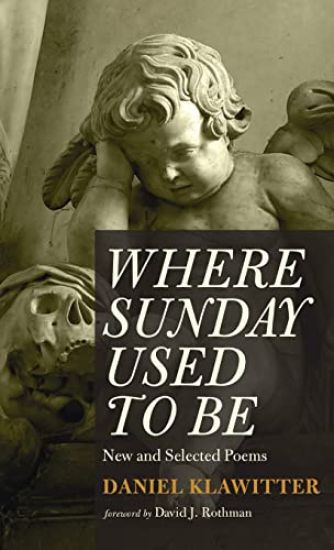
Where Sunday Used to Be

Where Sunday Used to Be

Daniel Klawitter; David J Rothman

Resource Publications (CA)
2022
sidottu
These poems display a masterful and contemporary twist on a beloved poetic tradition that carefully employs the tools of meter, rhyme, and rhythm. Readers will find these poems to be both accessible and thought provoking. It is rare to encounter a poet capable of such range in tone and subject matter: from the humorous to the tragic, the divine to the devilish, the author expertly blurs the lines between our notions of the sacred and the secular.
Where Sunday Used to Be

Where Sunday Used to Be

Daniel Klawitter; David J Rothman

Resource Publications (CA)
2022
pokkari
These poems display a masterful and contemporary twist on a beloved poetic tradition that carefully employs the tools of meter, rhyme, and rhythm. Readers will find these poems to be both accessible and thought provoking. It is rare to encounter a poet capable of such range in tone and subject matter: from the humorous to the tragic, the divine to the devilish, the author expertly blurs the lines between our notions of the sacred and the secular.
Learning the Secrets of English Verse

Learning the Secrets of English Verse

David J. Rothman; Susan Delaney Spear

Springer Nature Switzerland AG
2022
nidottu
This textbook teaches the writing of poetry by examining all the major verse forms and repeating stanza forms in English. It provides students with the tools to compose successful lines of poetry and focuses on meter (including free verse), rhythm, rhyme, and the many other tools a poet needs to create both music and meaningfulness in an artful poem. Presenting copious examples from strong poets of the past and present along with many recent student examples, all of which are scanned, each chapter offers lessons in poetic history and the practice of writing verse, along with giving students a structured opportunity to experiment writing in all the forms discussed. In Part 1, Rothman and Spear begin at the beginning, with Anglo-Saxon Strong Stress Alliterative Meter and examine every major meter in English, up to and including the free verse forms of modern and contemporary poetry. Part 2 presents a close examination of stanza forms that moves fromthe simple to the complex, beginning with couplets and ending with the 14-line Eugene Onegin stanza. The goal of the book is to give students the essential skills to understand how any line of poetry in English may have been composed, the better to enjoy them and then also write their own: the keys to the treasure chest. Rothman and Spear present a rigorous curriculum that teaches the craft of poetry through a systematic examination and practice of the major English meters and verse forms. Under their guidance, students hone their craft while studying the rich traditions and innovations of poets writing in English. Suitable for high school students and beyond. I studied with Rothman in graduate school and went through this course with additional scholarly material. This book will help students develop a keen ear for the music of the English language.—Teow Lim Goh, author of Islanders
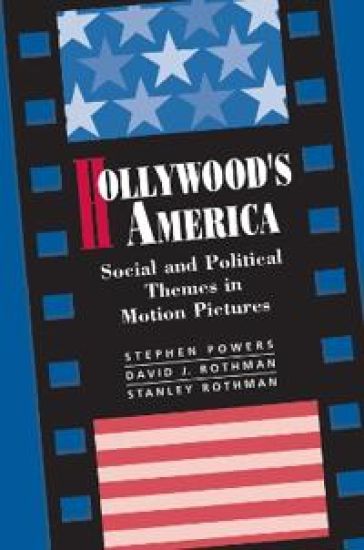
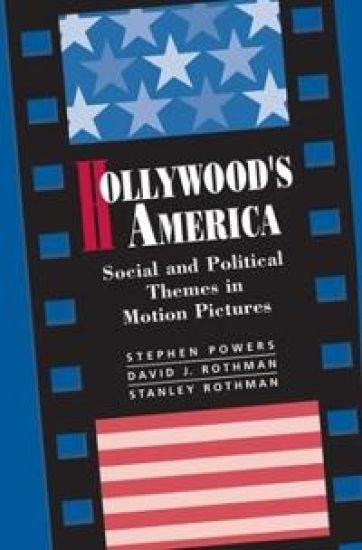
Hollywood's America

Hollywood's America

Stephen P Powers; David J Rothman; Stanley Rothman

Routledge
2019
sidottu
American motion pictures still dominate the world market with an impact that is difficult to measure. Their role in American culture has been a powerful one since the 1930s and is a hallmark of our culture today. Though much has been written about the film industry, there has been very little systematic attention paid to the ideology of its creativ
The Discovery of the Asylum

The Discovery of the Asylum

David J Rothman

Routledge
2017
sidottu
This is a masterful effort to recognize and place the prison and asylums in their social contexts. Rothman shows that the complexity of their history can be unraveled and usefully interpreted. By identifying the salient influences that converged in the tumultuous 1820s and 1830s that led to a particular ideology in the development of prisons and asylums, Rothman provides a compelling argument that is historically informed and socially instructive. He weaves a comprehensive story that sets forth and portrays a series of interrelated events, influences, and circumstances that are shown to be connected to the development of prisons and asylums. Rothman demonstrates that meaningful historical interpretation must be based upon not one but a series of historical events and circumstances, their connections and ultimate consequences. Thus, the history of prisons and asylums in the youthful United States is revealed to be complex but not so complex that it cannot be disentangled, described, understood, and applied.This reissue of a classic study addresses a core concern of social historians and criminal justice professionals: Why in the early nineteenth century did a single generation of Americans resort for the first time to institutional care for its convicts, mentally ill, juvenile delinquents, orphans, and adult poor? Rothman's compelling analysis links this phenomenon to a desperate effort by democratic society to instill a new social order as it perceived the loosening of family, church, and community bonds. As debate persists on the wisdom and effectiveness of these inherited solutions, The Discovery of the Asylum offers a fascinating reflection on our past as well as a source of inspiration for a new century of students and professionals in criminal justice, corrections, social history, and law enforcement.
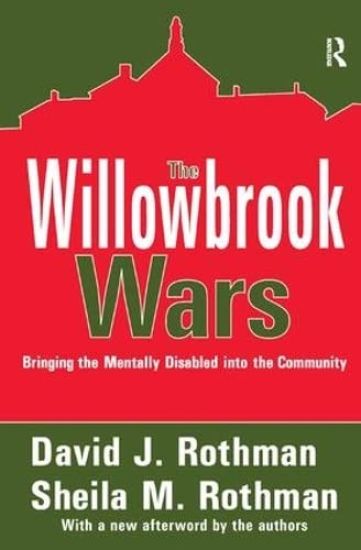
The Willowbrook Wars

The Willowbrook Wars

David J. Rothman

Routledge
2017
sidottu
The Willowbrook Wars is a dramatic and illuminating account of the effort to close down a scandal-ridden institution and return its 5,400 handicapped residents to communities in New York. The wars began in 1972 with Geraldo Rivera's televised raid on the Willowbrook State School. They continued for three years in a federal courtroom, with civil libertarian lawyers persuading a conservative and conscience-stricken judge to expand the rights of the disabled, and they culminated in a 1975 consent decree, with the state of New York pledging to accomplish the unprecedented assignment in six years.From 1975 to 1982, David and Sheila Rothman observed this remarkable chapter in American reform of mental disabilities care. Would the state live up to its agreement without "dumping" residents into other nightmarish institutions? Would the lawyers prove as interested in meeting client needs as in securing client rights? Could a tradition-bound bureaucracy create a new network of community services? And finally, would a governor and a legislature tolerate such outside intervention, and if so, for how long? In answering these questions,The Willowbrook Wars takes us behind the scenes to clarify the role of the judiciary, the fate of the underprivileged, and the potential for social justice. In their new afterword, the authors bring the story up to date, describing the results of the closing of the institution in 1987 from the experiences of integrating the former residents into communities to the legal battles between the state of New York and advocates for the mentally handicapped.
The Willowbrook Wars

The Willowbrook Wars

David J. Rothman

AldineTransaction
2004
nidottu
The Willowbrook Wars is a dramatic and illuminating account of the effort to close down a scandal-ridden institution and return its 5,400 handicapped residents to communities in New York. The wars began in 1972 with Geraldo Rivera's televised raid on the Willowbrook State School. They continued for three years in a federal courtroom, with civil libertarian lawyers persuading a conservative and conscience-stricken judge to expand the rights of the disabled, and they culminated in a 1975 consent decree, with the state of New York pledging to accomplish the unprecedented assignment in six years.From 1975 to 1982, David and Sheila Rothman observed this remarkable chapter in American reform of mental disabilities care. Would the state live up to its agreement without "dumping" residents into other nightmarish institutions? Would the lawyers prove as interested in meeting client needs as in securing client rights? Could a tradition-bound bureaucracy create a new network of community services? And finally, would a governor and a legislature tolerate such outside intervention, and if so, for how long? In answering these questions,The Willowbrook Wars takes us behind the scenes to clarify the role of the judiciary, the fate of the underprivileged, and the potential for social justice. In their new afterword, the authors bring the story up to date, describing the results of the closing of the institution in 1987 from the experiences of integrating the former residents into communities to the legal battles between the state of New York and advocates for the mentally handicapped.
The Discovery of the Asylum

The Discovery of the Asylum

David J Rothman

AldineTransaction
2002
nidottu
This is a masterful effort to recognize and place the prison and asylums in their social contexts. Rothman shows that the complexity of their history can be unraveled and usefully interpreted. By identifying the salient influences that converged in the tumultuous 1820s and 1830s that led to a particular ideology in the development of prisons and asylums, Rothman provides a compelling argument that is historically informed and socially instructive. He weaves a comprehensive story that sets forth and portrays a series of interrelated events, influences, and circumstances that are shown to be connected to the development of prisons and asylums. Rothman demonstrates that meaningful historical interpretation must be based upon not one but a series of historical events and circumstances, their connections and ultimate consequences. Thus, the history of prisons and asylums in the youthful United States is revealed to be complex but not so complex that it cannot be disentangled, described, understood, and applied.This reissue of a classic study addresses a core concern of social historians and criminal justice professionals: Why in the early nineteenth century did a single generation of Americans resort for the first time to institutional care for its convicts, mentally ill, juvenile delinquents, orphans, and adult poor? Rothman's compelling analysis links this phenomenon to a desperate effort by democratic society to instill a new social order as it perceived the loosening of family, church, and community bonds. As debate persists on the wisdom and effectiveness of these inherited solutions, The Discovery of the Asylum offers a fascinating reflection on our past as well as a source of inspiration for a new century of students and professionals in criminal justice, corrections, social history, and law enforcement.
Beginnings Count

Beginnings Count

David J. Rothman

Oxford University Press Inc
1997
sidottu
In the wake of the recent unsuccessful drive for health care reform, many people have been asking themselves what brought about the failure of this as well as past attempts to make health care accessible to all Americans. The author of this original exploration of U.S. health policy supplies an answer that is bound to raise some eyebrows. After a careful analysis of the history and issues of health care, David Rothman concludes that it is the average employed, insured "middle class"--the vaguely defined majority of American citizens--who deny health care to the poor. The author advances his argument through the examination of two distinctive characteristics of American health care and the intricate links between them: the ubiquitous presence of technology in medicine, and the fact that the U.S. lacks a national health insurance program. Technology bears the heaviest responsibility for the costliness of American medicine. Rothman traces the histories of the "iron lung" and kidney dialysis machines in order to provide vivid evidence for his claim that the American middle class is fascinated by technology and is willing to pay the price to see the most recent advances in physics, biology, and biomedical engineering incorporated immediately in medical care. On the other hand, the lack of a universal health insurance program in the U.S. is rooted in the fact that, starting in the 1930's, government health policy has been a reflection of the needs and concerns of the middle class. Playing up to middle class sensibilities, the American presidents, Senate and Congress based their policy upon the private rather than the public sector, whenever possible. They encouraged the purchase of insurance based on the laws of the marketplace, not provided by the government. Private health insurance and high-tech medicine came with a hefty price, with the end result that about 40 million Americans could not afford medical care and were left to fend for themselves. The author investigates the moral values underpinning these decisions, and goes to the bottom of the problem of why the United States remain the only developed country which continually proves unable to provide adequate health care to all its citizens.
Hollywood's America

Hollywood's America

Stephen P Powers; David J Rothman; Stanley Rothman

Westview Press Inc
1996
nidottu
American motion pictures still dominate the world market with an impact that is difficult to measure. Their role in American culture has been a powerful one since the 1930s and is a hallmark of our culture today. Though much has been written about the film industry, there has been very little systematic attention paid to the ideology of its creative elite. How does the outlook of that elite impact on the portrayals of America that appear on the screen? How do their views interact with the demands of the market and the structure of the industry to determine the product that is seen by mass audiences?Hollywood's America is a marvelously rich and careful discussion of these questions. It combines a meticulous systematic content analysis of fifty years of top-grossing films with a history of the changing structure of the industry. To that mixture it adds an in-depth survey of Hollywood's creative elite, comparing them to other leadership groups. The result is a balanced discussion of unique breadth and depth on a subject of national importance.Placing the film industry in the context of American society as a whole, the authors point out that Hollywood's creative leadership impacts the larger society even as it is influenced by that society. The creators of films cannot remove themselves too far from the values of the audiences that they serve. However, the fact that films are made by a relatively small number of people, who, as the authors demonstrate, tend to share a common outlook, means that, over time, motion pictures have had an undeniable impact on the beliefs, lifestyles, and action of Americans.This study contributes to the debate over the role and influence of those who create and distribute the products of mass culture in the United States.The book also contains a devastating critique of the poststructuralist theories that currently dominate academic film criticism, demonstrating how they fail in their attempt to explain the political significance of motion pictures.