Kirjojen hintavertailu. Mukana 12 595 353 kirjaa ja 12 kauppaa.
Kirjailija
David J. Wilson
Kirjat ja teokset yhdessä paikassa: 7 kirjaa, julkaisuja vuosilta 1993-2019, suosituimpien joukossa Pipeline. Vertaile teosten hintoja ja tarkista saatavuus suomalaisista kirjakaupoista.
What would it look like if your church really took the last words of Jesus seriously? The Great Commission was not just a suggestion by our Lord, but an imperative mandate given to his followers. Missionary sending agencies are deploying workers to the field, but many of them come from disengaged churches that are not producing well-equipped disciples. We need a fully integrated global supply chain--a pipeline--that has disciples as the precious commodity, as well as an effective infrastructure to distribute and replicate them around the globe. Pipeline seeks to re-engage the church in mobilizing the next generation of workers for the harvest. This is a collaboration of forty different authors from churches, agencies, and cross-cultural servants. As people in distant places wait for a messenger of hope and salvation, will your church venture into the pipeline?
Utilizing ethnographic and archaeological data and an updated paradigm derived from the best features of cultural ecology and ecological anthropology, this extensively illustrated book addresses over fifteen South American adaptive systems representing a broad cross section of band, village, chiefdom, and state societies throughout the continent ov
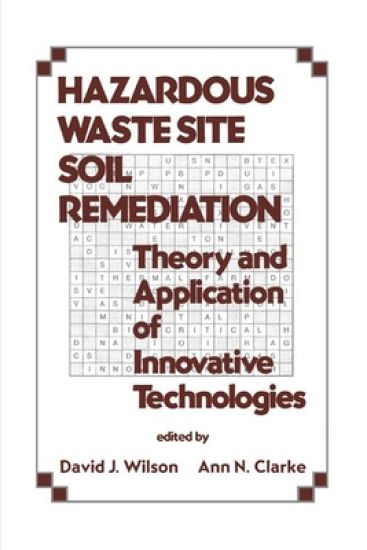
Introduces the most up-to-date techniques for soil remediation, including chemical fixation/stabilization, soil vapor extraction, thermally enhanced vapor stripping, biodegradation, and air spargingwritten in a style accessible to nonspecialists. Desc4ibes the ex shu technique of thermal desorption of soil contaminants-a low-cost aftemative to incineration for the removal of organics.
Growing Your Own Tomatoes is Easy, You Don't Even Need a Garden When it comes to what fruit or vegetable plants to grow, there can be little doubt that tomatoes are one of the easiest and most popular out there. In fact, it's perfect even for beginners, and it is all thanks to the way in which they will effectively be able to grow themselves with little input from the grower It's no wonder that many first time fruit and vegetable growers choose to start with Tomatoes. Having very little outside space or even none at all is no barrier to growing these wonderful little red fruits. From those of us in city centre apartments to those of us lucky enough to have allotments or large gardens can all easily start their first foray into growing Tomatoes. And the goods news doesn't just stop there either. Alongside being able to grow with limited space, tomato growing also requires very little in the way of costly gardening equipment If Your Looking To Start Growing Your Own Vegetables Then Tomatoes Are The Perfect Choice For The Beginner This book contains proven steps and strategies on how to grow tomatoes successfully and is aimed at beginners and those with some experience but who'd like to know more and improve their yield. So what are you waiting for, get this handy quick start guide now and start your wonderful journey into growing your own tomatoes at home Here's A Preview Of What's Inside... Essential Information To Get You StartedTips On Finding The Perfect Space To Grow At HomeThe Best Varieties To GrowEssential EquipmentTips on Growing From Seed and SeedlingHints On Providing The Perfect Growing ConditionsAdvice On Knowing When To HarvestHow To Deal With Pest And DiseasesAnd Much More Get your copy today to receive all of this information Tags: Growing Tomatoes, Growing Vegetables, Tomatoes, Gardening, Horticulture, Growing Tomatoes For Beginners, Growing Tomatoes For Dummies, Growing Your Own Vegetables, Gardening Books, Tomato Sauce, Recipes, Tomato Plant, Tomato Seeds, Vegetable Patch, Vegetarian, Vegan.
Utilizing ethnographic and archaeological data and an updated paradigm derived from the best features of cultural ecology and ecological anthropology, this extensively illustrated book addresses over fifteen South American adaptive systems representing a broad cross section of band, village, chiefdom, and state societies throughout the continent over the past 13,000 years.Indigenous South Americans of the Past and Present presents data on both prehistoric and recent indigenous groups across the entire continent within an explicit theoretical framework. Introductory chapters provide a brief overview of the variability that has characterized these groups over the long period of indigenous adaptation to the continent and examine the historical background of the ecological and cultural evolutionary paradigm. The book then presents a detailed overview of the principal environmental contexts within which indigenous adaptive systems have survived and evolved over thousands of years. It discusses the relationship between environmental types and subsistence productivity, on the one hand, and between these two variables and sociopolitical complexity, on the other. Subsequent chapters proceed in sequential order that is at once evolutionary (from the least to the most complex groups) and geographical (from the least to the most productive environments)?around the continent in counterclockwise fashion from the hunter-gatherers of Tierra del Fuego in the far south; to the villagers of the Amazonian lowlands; to the chiefdoms of the Amazon v ea and the far northern Andes; and, finally, to the chiefdoms and states of the Peruvian Andes. Along the way, detailed presentations and critiques are made of a number of theories based on the South American data that have worldwide implications for our understanding of prehistoric and recent adaptive systems.
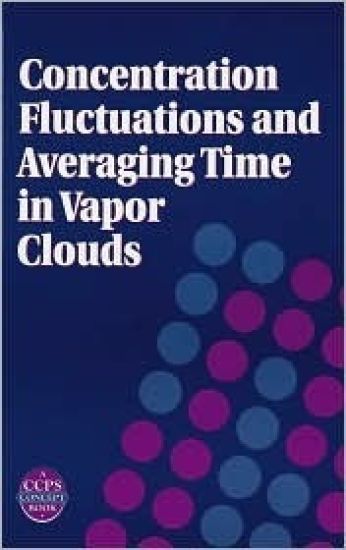
This book contributes to more reliable and realistic predictions by focusing on sampling times from a few seconds to a few hours. Its objectives include developing clear definitions of statistical terms, such as plume sampling time, concentration averaging time, receptor exposure time, and other terms often confused with each other or incorrectly specified in hazard assessments; identifying and quantifying situations for which there is no adequate knowledge to predict concentration fluctuations in the near-field, close to sources, and far downwind where dispersion is dominated by atmospheric turbulence; identifying areas where further information is required to define concentration variability statistics; and formulating an operation model for concentration fluctuations based on the current state of knowledge of dispersion processes.
Introduces the most up-to-date techniques for soil remediation, including chemical fixation/stabilization, soil vapor extraction, thermally enhanced vapor stripping, biodegradation, and air spargingwritten in a style accessible to nonspecialists. Desc4ibes the ex shu technique of thermal desorption of soil contaminants-a low-cost aftemative to incineration for the removal of organics.