Kirjojen hintavertailu. Mukana 12 564 307 kirjaa ja 12 kauppaa.
Kirjailija
David Janzen
Kirjat ja teokset yhdessä paikassa: 21 kirjaa, julkaisuja vuosilta 2002-2025, suosituimpien joukossa Called to Community. Vertaile teosten hintoja ja tarkista saatavuus suomalaisista kirjakaupoista.
Eberhard Arnold; Dietrich Bonhoeffer; Joan Chittister; Dorothy Day; Fyodor Dostoyevsky; Richard J. Foster; Jonathan Wilson-Hartgrove; David Janzen; Søren Kierkegaard; C. S. Lewis; Chiara Lubich; Thomas Merton; Henri J. M. Nouwen; John M. Perkins; Eugene H. Peterson; Christine D. Pohl; Howard A. Snyder; Mother Teresa; Saint Benedict; Jeremiah Barker; Amy Carmichael; Hans Denck; Andreas Ehrenpreis; Thomas R Kelly; Penelope Lawson; Juan Mateos; Kathleen Norris; Thomas E Powers; Peter Riedemann; Christopher C Smith; Ulrich Stadler
Fifty-two readings on living in intentional Christian community to spark group discussion.Gold Medal Winner, 2017 Illumination Book Awards, Christian LivingSilver Medal Winner, 2017 Benjamin Franklin Award in Religion, Independent Book Publishers AssociationWhy, in an age of connectivity, are our lives more isolated and fragmented than ever? And what can be done about it? The answer lies in the hands of God’s people. Increasingly, today’s Christians want to be the church, to follow Christ together in daily life. From every corner of society, they are daring to step away from the status quo and respond to Christ’s call to share their lives more fully with one another and with others. As they take the plunge, they are discovering the rich, meaningful life that Jesus has in mind for all people, and pointing the church back to its original calling: to be a gathered, united community that demonstrates the transforming love of God.Of course, such a life together with others isn’t easy. The selections in this volume are, by and large, written by practitioners—people who have pioneered life in intentional community and have discovered in the nitty-gritty of daily life what it takes to establish, nurture, and sustain a Christian community over the long haul.Whether you have just begun thinking about communal living, are already embarking on sharing life with others, or have been part of a community for many years, the pieces in this collection will encourage, challenge, and strengthen you. The book’s fifty-two chapters can be read one a week to ignite meaningful group discussion.Contributors include: John F. Alexander, Eberhard Arnold, J. Heinrich Arnold, Johann Christoph Arnold, Alden Bass, Benedict of Nursia, Christoph Friedrich Blumhardt, Leonardo Boff, Dietrich Bonhoeffer, Joan Chittister, Stephen B. Clark, Andy Crouch, Dorothy Day, Anthony de Mello, Elizabeth Dede, Catherine de Hueck Doherty, Fyodor Dostoyevsky, Jenny Duckworth, Friedrich Foerster, Richard J. Foster, Jodi Garbison, Arthur G. Gish, Helmut Gollwitzer, Adele J Gonzalez, Stanley Hauerwas, Joseph H. Hellerman, Roy Hession, David Janzen, Rufus Jones, Emmanuel Katongole, Arthur Katz, Søren Kierkegaard, C. Norman Kraus, C.S. Lewis, Gerhard Lohfink, Ed Loring, Chiara Lubich, George MacDonald, Thomas Merton, Hal Miller, José P. Miranda, Jürgen Moltmann, Charles E. Moore, Henri J. M. Nouwen, Elizabeth O’Connor, John M. Perkins, Eugene H.Peterson, Christine D. Pohl, Chris Rice, Basilea Schlink, Howard A. Snyder, Mother Teresa, Thomas à Kempis, Elton Trueblood, and Jonathan Wilson-Hartgrove.
This book examines community identity in the post-exilic temple community in Ezra-Nehemiah, and explores the possible influences that the Achaemenids, the ruling Persian dynasty, might have had on its construction. In the book, David Janzen reads Ezra-Nehemiah in dialogue with the Achaemenids’ Old Persian inscriptions, as well as with other media the dynasty used, such as reliefs, seals, coins, architecture, and imperial parks. In addition, he discusses the cultural and religious background of Achaemenid thought, especially its intersections with Zoroastrian beliefs. Ezra-Nehemiah, Janzen argues, accepts Achaemenid claims for the necessity and beneficence of their hegemony. The result is that Ezra-Nehemiah, like the imperial ideology it mimics, claims that divine and royal wills are entirely aligned. Ezra-Nehemiah reflects the Achaemenid assertion that the peoples they have colonized are incapable of living in peace and happiness without the Persian rule that God established to benefit humanity, and that the dynasty rewards the peoples who do what they desire, since that reflects divine desire. The final chapter of the book argues that Ezra-Nehemiah was produced by an elite group within the Persian-period temple assembly, and shows that Ezra-Nehemiah’s pro-Achaemenid worldview was not widely accepted within that community.
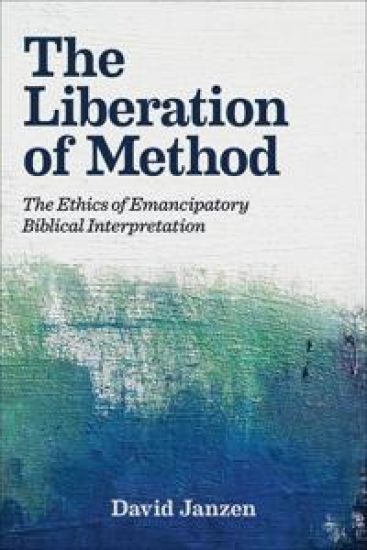
The field of biblical studies has championed the historical-critical method as the only way to guarantee objective interpretation. But in recent decades, women, people of color, scholars from the Two-Thirds World, and members of the the LGBTQIA+ community have pursued hermeneutical approaches that provide interpretations useful for marginalized communities who see the Bible as a resource in their struggles against oppression. Such liberative strategies remain at the margins of the field. The Liberation of Method argues that this marginality must end, and that liberative methods should become the central methods of biblical studies. The first part of the book draws upon the hermeneutics of philosophical pragmatism to argue that, because readers are responsible for the interpretation, there is no necessary connection between the meanings they produce and the ones ancient authors may have intended. As a result, the historical-critical method, which prioritizes the study of the ancient contexts of biblical writings, becomes an optional rather than a necessary aspect of interpretation. The second part of The Liberation of Method argues that if we truly hope to create an ethical academic field, more privileged scholars and students must see their minoritized colleagues as the leaders in the field, as models of the ethical liberative standards of interpretation.
This book examines community identity in the post-exilic temple community in Ezra-Nehemiah, and explores the possible influences that the Achaemenids, the ruling Persian dynasty, might have had on its construction. In the book, David Janzen reads Ezra-Nehemiah in dialogue with the Achaemenids’ Old Persian inscriptions, as well as with other media the dynasty used, such as reliefs, seals, coins, architecture, and imperial parks. In addition, he discusses the cultural and religious background of Achaemenid thought, especially its intersections with Zoroastrian beliefs. Ezra-Nehemiah, Janzen argues, accepts Achaemenid claims for the necessity and beneficence of their hegemony. The result is that Ezra-Nehemiah, like the imperial ideology it mimics, claims that divine and royal wills are entirely aligned. Ezra-Nehemiah reflects the Achaemenid assertion that the peoples they have colonized are incapable of living in peace and happiness without the Persian rule that God established to benefit humanity, and that the dynasty rewards the peoples who do what they desire, since that reflects divine desire. The final chapter of the book argues that Ezra-Nehemiah was produced by an elite group within the Persian-period temple assembly, and shows that Ezra-Nehemiah’s pro-Achaemenid worldview was not widely accepted within that community.
Many young idealists, after a few failures, burn out and return to status quo lives. Not so with the seven radicals in this book, who met in an interracial house church and intentional community on Chicago's West Side during the civil rights era. Here you will make the acquaintance of a Church of the Brethren pastoral couple who tried to bring communal life to the black ghetto; a fashionable socialite who trashed her curlers and joined the simple life; an elite Stanford graduate who cast his lot with a bus full of black teens on an epic ride to Washington, DC, to hear MLK's "I Have a Dream" speech; two ethnic-Mennonite women who became community leaders and elders during a male-dominated era; and a painfully shy "geek" awakened to the traumas of racism by five days in the Albany, Georgia, jail. Now, in their seventies, eighties, and nineties, these veterans of community witness to the possibility of radical life conversions, engagement with the hard, slow work of racial reconciliation that learns from mistakes and does not quit. This book concludes with the invitation to the joyful path of becoming who God made us to be-saints.
Many young idealists, after a few failures, burn out and return to status quo lives. Not so with the seven radicals in this book, who met in an interracial house church and intentional community on Chicago's West Side during the civil rights era. Here you will make the acquaintance of a Church of the Brethren pastoral couple who tried to bring communal life to the black ghetto; a fashionable socialite who trashed her curlers and joined the simple life; an elite Stanford graduate who cast his lot with a bus full of black teens on an epic ride to Washington, DC, to hear MLK's "I Have a Dream" speech; two ethnic-Mennonite women who became community leaders and elders during a male-dominated era; and a painfully shy "geek" awakened to the traumas of racism by five days in the Albany, Georgia, jail. Now, in their seventies, eighties, and nineties, these veterans of community witness to the possibility of radical life conversions, engagement with the hard, slow work of racial reconciliation that learns from mistakes and does not quit. This book concludes with the invitation to the joyful path of becoming who God made us to be--saints.
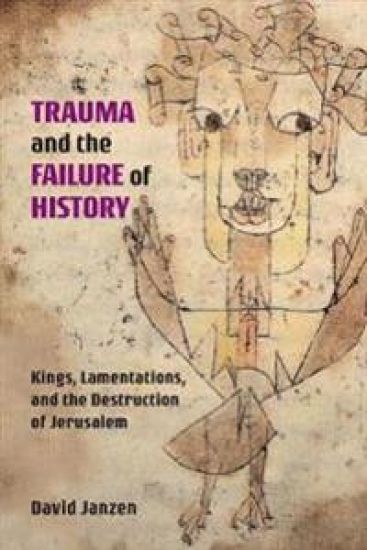
David Janzen blends history theory and trauma theory to apply them to the books of Kings and Lamentations. Janzen argues that Kings tells a story that explains the horrific events of the Babylonian destruction of Jerusalem, but Lamentations reflects the perspective of trauma survivors and rejects any explanatory narrative refusing to let the trauma be part of a past. Interpreters of the Bible and historians of ancient Israel should take this trauma into account, even though it can never be a part of the biblical histories they write.
David Janzen argues that the Book of Chronicles is a document with a political message as well as a theological one and moreover, that the book’s politics explain its theology. The author of Chronicles was part of a 4th century B.C.E. group within the post-exilic Judean community that hoped to see the Davidides restored to power, and he or she composed this work to promote a restoration of this house to the position of a client monarchy within the Persian Empire. Once this is understood as the political motivation for the work’s composition, the reasons behind the Chronicler's particular alterations to source material and emphasis of certain issues becomes clear. The doctrine of immediate retribution, the role of ‘all Israel’ at important junctures in Judah’s past, the promotion of Levitical status and authority, the virtual joint reign of David and Solomon, and the decision to begin the narrative with Saul’s death can all be explained as ways in which the Chronicler tries to assure the 4th century assembly that a change in local government to Davidic client rule would benefit them. It is not necessary to argue that Chronicles is either pro-Davidic or pro-Levitical; it is both, and the attention Chronicles pays to the Levites is done in the service of winning over a group within the temple personnel to the pro-Davidic cause, just as many of its other features were designed to appeal to other interest groups within the assembly.
The Violent Gift traces the narrative of the exilic author of the Deuteronomistic History, a narrative that provides an explanation for the trauma that the Judean community in Babylon suffered. As the book follows this explanation through the History, however, it also reads Dtr through the lens of trauma theory. Massive psychic trauma is not something that can be captured within narrative explanation, and trauma intrudes into the narrative's explanation of the exiles' trauma. Trauma challenges the claims upon which the narrative's explanation is based, thus subverting this attempt to make sense of the exile. The author argues that we can trace a single, coherent narrative throughout the Deuteronomistic History that is an attempt to explain to its original readers why the exile occurred. The narrative offers two reasons for the exile, and these form the two main themes of Dtr's narrative: the people failed in their covenantal loyalty to God; and their leadership also failed to enforce this loyalty. These themes can be traced consistently through all of the component books of the History.
This work uses anthropological theory and field studies to investigate the social function and meaning of sacrifice. All rituals, including sacrifice, communicate social beliefs and morality, but these cannot be determined outside of a study of the social context. Thus, there is no single explanation for sacrifice - such as those advanced by René Girard or Walter Burkert or late-19th and early-20th century scholars. The book then examines four different writings in the Hebrew Bible - the Priestly Writing, the Deuteronomistic History, Ezra-Nehemiah, and Chronicles - to demonstrate how different social origins result in different social meanings of sacrifice.