Kirjojen hintavertailu. Mukana 12 451 337 kirjaa ja 12 kauppaa.

Kirjailija

David Jary

Kirjat ja teokset yhdessä paikassa: 3 kirjaa, julkaisuja vuosilta 2000-2010, suosituimpien joukossa Improving What is Learned at University. Vertaile teosten hintoja ja tarkista saatavuus suomalaisista kirjakaupoista.

3 kirjaa

Kirjojen julkaisuhaarukka 2000-2010.

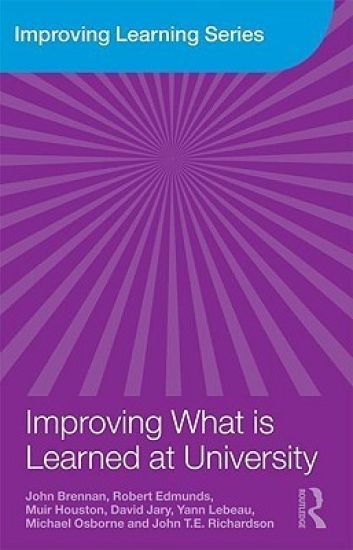
Improving What is Learned at University

Improving What is Learned at University

John Brennan; Robert Edmunds; Muir Houston; David Jary; Yann Lebeau; Michael Osborne; John T.E. Richardson

Routledge
2010
sidottu
Received the ‘highly commended’ award by the Society for Educational Studies for books published in 2010.What is learned in universities today? Is it what students expect to learn? Is it what universities say they learn? How far do the answers to questions such as these differ according to what, where and how one studies?As higher education has expanded, it has diversified both in terms of its institutional forms and the characteristics of its students. However, what we do not know is the extent to which it has also diversified in terms of ‘what is learned’. In this book, the authors explore this question through the voices of higher education students, using empirical data from students taking 15 different courses at different universities across three subject areas – bioscience, business studies and sociology. The study concentrates on the students’ experiences, lives, hopes and aspirations while at university through data from interviews and questionnaires, and this is collated and assessed alongside the perspectives of their teachers and official data from the universities they attend.Through this study the authors provide insights into ‘what is really learned at university’ and how much it differs between individual students and the universities they attend. Notions of ‘best’ or ‘top’ universities are challenged throughout, and both diversities and commonalities of being a student are demonstrated. Posing important questions for higher education institutions about the experiences of their students and the consequences for graduates and society, this book is compelling reading for all those involved in higher education, providing conclusions which do not always follow conventional lines of thought about diversity and difference in UK higher education.
Improving What is Learned at University

Improving What is Learned at University

John Brennan; Robert Edmunds; Muir Houston; David Jary; Yann Lebeau; Michael Osborne; John T.E. Richardson

Routledge
2009
nidottu
Received the ‘highly commended’ award by the Society for Educational Studies for books published in 2010.What is learned in universities today? Is it what students expect to learn? Is it what universities say they learn? How far do the answers to questions such as these differ according to what, where and how one studies?As higher education has expanded, it has diversified both in terms of its institutional forms and the characteristics of its students. However, what we do not know is the extent to which it has also diversified in terms of ‘what is learned’. In this book, the authors explore this question through the voices of higher education students, using empirical data from students taking 15 different courses at different universities across three subject areas – bioscience, business studies and sociology. The study concentrates on the students’ experiences, lives, hopes and aspirations while at university through data from interviews and questionnaires, and this is collated and assessed alongside the perspectives of their teachers and official data from the universities they attend.Through this study the authors provide insights into ‘what is really learned at university’ and how much it differs between individual students and the universities they attend. Notions of ‘best’ or ‘top’ universities are challenged throughout, and both diversities and commonalities of being a student are demonstrated. Posing important questions for higher education institutions about the experiences of their students and the consequences for graduates and society, this book is compelling reading for all those involved in higher education, providing conclusions which do not always follow conventional lines of thought about diversity and difference in UK higher education.
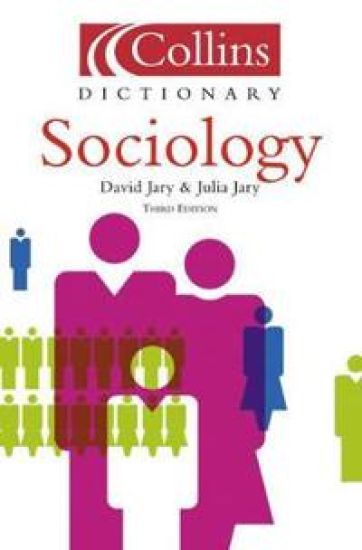
Collins Dictionary of - Sociology

Collins Dictionary of - Sociology

DAVID JARY; JULIA JARY

HARPERCOLLINS PUBLISHERS
2000
nidottu
Explains a wide range of terms and concepts from every area of sociology, and a selection of those most likely to be met from associated disciplines such as psychology, economics, anthropology and political science. It also provides coverage of methodological terms and research techniques.