Kirjojen hintavertailu. Mukana 12 558 085 kirjaa ja 12 kauppaa.

Kirjailija

David K. Hamilton

Kirjat ja teokset yhdessä paikassa: 4 kirjaa, julkaisuja vuosilta 2012-2014, suosituimpien joukossa Measuring the Effectiveness of Regional Governing Systems. Vertaile teosten hintoja ja tarkista saatavuus suomalaisista kirjakaupoista.

4 kirjaa

Kirjojen julkaisuhaarukka 2012-2014.

Measuring the Effectiveness of Regional Governing Systems

Measuring the Effectiveness of Regional Governing Systems

David K. Hamilton

Springer-Verlag New York Inc.
2014
nidottu
Regional governance is a topical public policy issue and is receiving increased attention from scholars, government officials and civic leaders. As countries continue to urbanize and centralize economic functions and population in metropolitan regions, the traditional governing system is not equipped to handle policy issues that spill over local government boundaries. Governments have utilized four basic approaches to address the regional governing problem: consolidating governments, adding a regional tier, creating regional special districts, and functional cooperative approaches. The first two are structural approaches that require major (radical) changes to the governing system. The latter two are governance approaches that contemplate marginal changes to the existing governance structure and rely generally on cooperation with other governments and collaboration with the nongovernmental sector. Canada and the United States have experimented with these basic forms of regional governance. This book is a systematic analysis of these basic forms as they have been experienced by North American cities. Utilizing cases from Canada and the United States, the book provides an in-depth analysis of the pros and cons of each approach to regional governance. This research provides an additional perspective on Canadian and U.S. regional governance and adds to the knowledge of Canadian and United States governing systems. This study contributes to the literature on the various approaches to regional governance as well as bringing together the most current literature on regional governance. The author develops a framework of the values that a regional governing system should provide and measures to assess how well each basic approach achieves these values. Based on this assessment, he suggests an approach to regional governance for North American metropolitan areas that best achieves these values.
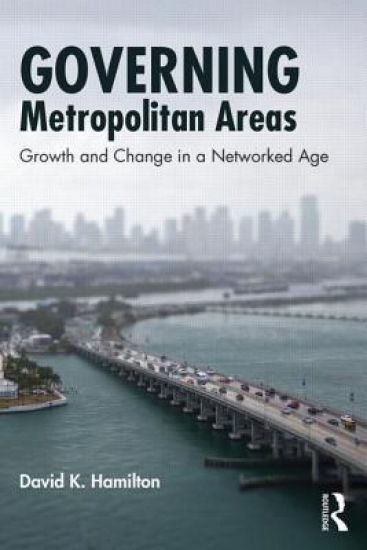
Governing Metropolitan Areas

Governing Metropolitan Areas

David K. Hamilton

Routledge
2014
nidottu
Interest and research on regionalism has soared in the last decade. Local governments in metropolitan areas and civic organizations are increasingly engaged in cooperative and collaborative public policy efforts to solve problems that stretch across urban centers and their surrounding suburbs. Yet there remains scant attention in textbooks to the issues that arise in trying to address metropolitan governance. Governing Metropolitan Areas describes and analyzes structure to understand the how and why of regionalism in our global age. The book covers governmental institutions and their evolution to governance, but with a continual focus on institutions. David Hamilton provides the necessary comprehensive, in-depth description and analysis of how metropolitan areas and governments within metropolitan areas developed, efforts to restructure and combine local governments, and governance within the polycentric urban region.This second edition is a major revision to update the scholarship and current thinking on regional governance. While the text still provides background on the historical development and growth of urban areas and governments' efforts to accommodate the growth of metropolitan areas, this edition also focuses on current efforts to provide governance through cooperative and collaborative solutions. There is also now extended treatment of how regional governance outside the United States has evolved and how other countries are approaching regional governance.
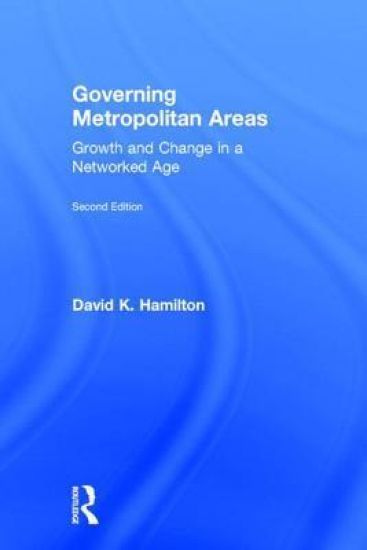
Governing Metropolitan Areas

Governing Metropolitan Areas

David K. Hamilton

Routledge
2014
sidottu
Interest and research on regionalism has soared in the last decade. Local governments in metropolitan areas and civic organizations are increasingly engaged in cooperative and collaborative public policy efforts to solve problems that stretch across urban centers and their surrounding suburbs. Yet there remains scant attention in textbooks to the issues that arise in trying to address metropolitan governance. Governing Metropolitan Areas describes and analyzes structure to understand the how and why of regionalism in our global age. The book covers governmental institutions and their evolution to governance, but with a continual focus on institutions. David Hamilton provides the necessary comprehensive, in-depth description and analysis of how metropolitan areas and governments within metropolitan areas developed, efforts to restructure and combine local governments, and governance within the polycentric urban region.This second edition is a major revision to update the scholarship and current thinking on regional governance. While the text still provides background on the historical development and growth of urban areas and governments' efforts to accommodate the growth of metropolitan areas, this edition also focuses on current efforts to provide governance through cooperative and collaborative solutions. There is also now extended treatment of how regional governance outside the United States has evolved and how other countries are approaching regional governance.
Measuring the Effectiveness of Regional Governing Systems

Measuring the Effectiveness of Regional Governing Systems

David K. Hamilton

Springer-Verlag New York Inc.
2012
sidottu
Regional governance is a topical public policy issue and is receiving increased attention from scholars, government officials and civic leaders. As countries continue to urbanize and centralize economic functions and population in metropolitan regions, the traditional governing system is not equipped to handle policy issues that spill over local government boundaries. Governments have utilized four basic approaches to address the regional governing problem: consolidating governments, adding a regional tier, creating regional special districts, and functional cooperative approaches. The first two are structural approaches that require major (radical) changes to the governing system. The latter two are governance approaches that contemplate marginal changes to the existing governance structure and rely generally on cooperation with other governments and collaboration with the nongovernmental sector. Canada and the United States have experimented with these basic forms of regional governance. This book is a systematic analysis of these basic forms as they have been experienced by North American cities. Utilizing cases from Canada and the United States, the book provides an in-depth analysis of the pros and cons of each approach to regional governance. This research provides an additional perspective on Canadian and U.S. regional governance and adds to the knowledge of Canadian and United States governing systems. This study contributes to the literature on the various approaches to regional governance as well as bringing together the most current literature on regional governance. The author develops a framework of the values that a regional governing system should provide and measures to assess how well each basic approach achieves these values. Based on this assessment, he suggests an approach to regional governance for North American metropolitan areas that best achieves these values.