Kirjojen hintavertailu. Mukana 12 595 353 kirjaa ja 12 kauppaa.

Kirjailija

David K. Stewart

Kirjat ja teokset yhdessä paikassa: 5 kirjaa, julkaisuja vuosilta 2000-2026, suosituimpien joukossa The Dawn of Competitive Party Politics in Alberta. Vertaile teosten hintoja ja tarkista saatavuus suomalaisista kirjakaupoista.

5 kirjaa

Kirjojen julkaisuhaarukka 2000-2026.

The Dawn of Competitive Party Politics in Alberta

The Dawn of Competitive Party Politics in Alberta

Anthony M. Sayers; Royce Koop; David K. Stewart

University of British Columbia Press
2026
sidottu
Alberta is an economic powerhouse but a misunderstood and overlooked political force. The Dawn of Competitive Party Politics in Alberta examines the province's distinctive party politics, reaching back to before the birth of the province and then focusing on a political evolution over the past two decades. Spurred by populism and alienation, Albertans united behind a centre-right provincial party for much of the twentieth century, while excluding themselves from Liberal-dominated federal politics. In 2006, this dynamic began to shift as the provincial right faltered, fractured, and then re-formed, while the left gained and then lost power but remained united in opposition. The historic pattern of a dynastic conservative bloc surrounded by minor parties was interrupted. The authors convincingly argue that the recent change in provincial party politics may signal the imminent arrival of real competition in both provincial and federal politics, ending Alberta's solitude and shaping the future of Canada.
Conventional Choices?

Conventional Choices?

Ian Stewart; David K. Stewart

University of British Columbia Press
2008
pokkari
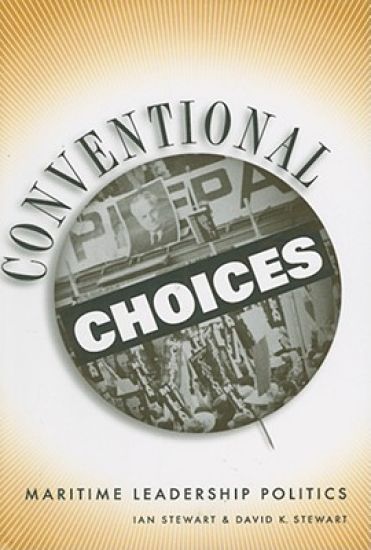
Selecting a leader is a momentous and defining choice for a politicalparty. Leaders symbolize their party and are a primary factor inelection outcomes. While much is known about the selection of nationalparty leaders, less is known about the provincial selection process,particularly in the Maritimes. Breaking new ground, ConventionalChoices examines twenty-five different leadership elections inthree maritime provinces. The analysis draws on an extraordinarily richdata set spanning thirty-two years to explore the backgrounds,attitudes, and motivations of those who select party leaders. It is animpressive study that offers fresh insights into leadership selectionand Maritime party politics.
Conventional Choices?

Conventional Choices?

Ian Stewart; David K. Stewart

University of British Columbia Press
2007
sidottu
Selecting a leader is a momentous and defining choice for a politicalparty. Leaders symbolize their party and are a primary factor inelection outcomes. While much is known about the selection of nationalparty leaders, less is known about the provincial selection process,particularly in the Maritimes. Breaking new ground, ConventionalChoices examines twenty-five different leadership elections inthree maritime provinces. The analysis draws on an extraordinarily richdata set spanning thirty-two years to explore the backgrounds,attitudes, and motivations of those who select party leaders. It is animpressive study that offers fresh insights into leadership selectionand Maritime party politics.
Quasi-Democracy?

Quasi-Democracy?

David K. Stewart; Keith Archer

University of British Columbia Press
2001
pokkari
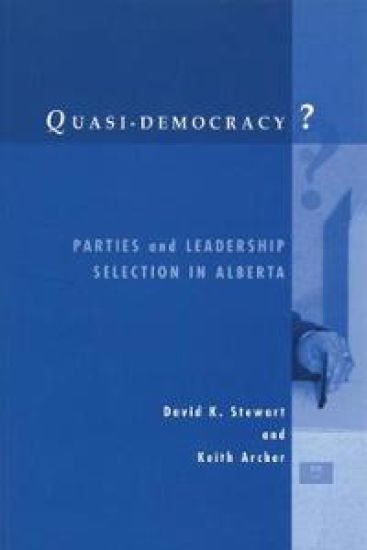
Many Canadian parties are shifting their process for selectingleaders from delegate conventions to methods that -- at least in theory-- allow all members to vote for the leader. In the leadershipselections of the 1990s, Alberta's governing Conservatives used aprimary balloting system, the opposition Liberal Party allowed membersto vote by phone, and the NDP held a traditional leadershipconvention. In Quasi-Democracy? David Stewart and Keith Archer examinepolitical parties and leadership selection in Alberta using mail-backsurveys administered to voters who participated in the Conservative,Liberal, and NDP leadership conventions elections of the 1990s.Leadership selection events, they contend, provide rare opportunitiesfor observing the internal workings of the parties and people who"stand between the politicians and the electorate." Usingparticipant accounts and material from the press media, the authorsanalyze the factors that influence leadership selection in each party,develop attitudinal profiles of the supporters of the parties, andexamine the party activists with respect to their backgrounds inprovincial and federal politics. Quasi-Democracy? will beinvaluable reading for students and scholars of party democracy andrepresentation, and for those interested in the intricate machinationsof the political process in Alberta.
Quasi-Democracy?

Quasi-Democracy?

David K. Stewart; Keith Archer

University of British Columbia Press
2000
sidottu
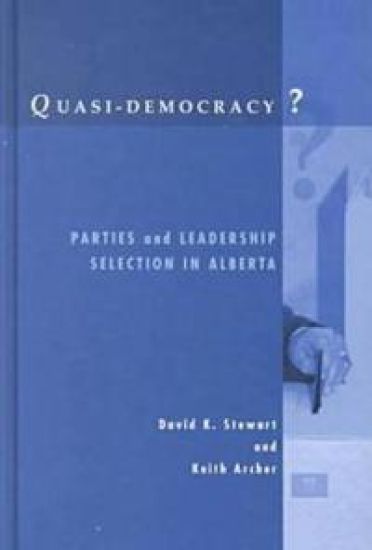
Many Canadian parties are shifting their process for selectingleaders from delegate conventions to methods that -- at least in theory-- allow all members to vote for the leader. In the leadershipselections of the 1990s, Alberta's governing Conservatives used aprimary balloting system, the opposition Liberal Party allowed membersto vote by phone, and the NDP held a traditional leadershipconvention. In Quasi-Democracy? David Stewart and Keith Archer examinepolitical parties and leadership selection in Alberta using mail-backsurveys administered to voters who participated in the Conservative,Liberal, and NDP leadership conventions elections of the 1990s.Leadership selection events, they contend, provide rare opportunitiesfor observing the internal workings of the parties and people who"stand between the politicians and the electorate." Usingparticipant accounts and material from the press media, the authorsanalyze the factors that influence leadership selection in each party,develop attitudinal profiles of the supporters of the parties, andexamine the party activists with respect to their backgrounds inprovincial and federal politics. Quasi-Democracy? will beinvaluable reading for students and scholars of party democracy andrepresentation, and for those interested in the intricate machinationsof the political process in Alberta.