Kirjojen hintavertailu. Mukana 12 595 353 kirjaa ja 12 kauppaa.

Kirjailija

David Kamens

Kirjat ja teokset yhdessä paikassa: 2 kirjaa, julkaisuja vuosilta 2017-2018, suosituimpien joukossa School Knowledge for the Masses. Vertaile teosten hintoja ja tarkista saatavuus suomalaisista kirjakaupoista.

2 kirjaa

Kirjojen julkaisuhaarukka 2017-2018.

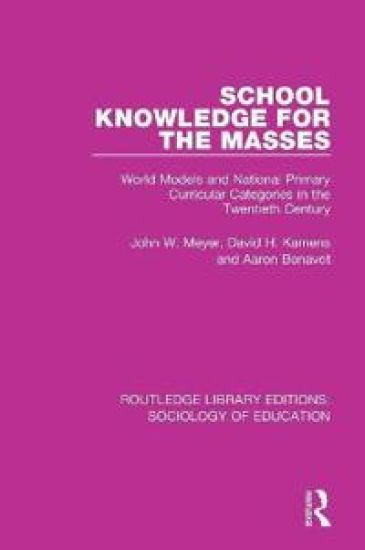
School Knowledge for the Masses

School Knowledge for the Masses

John Meyer; David Kamens; Aaron Benavot

Routledge
2018
nidottu
First published in 1992, this book presents unique quantitative data on the content coverage of primary education in a large number of countries since 1920. It demonstrates that these curricular outlines tend to be surprisingly similar across very disparate countries, and suggests the world processes that produced this result. Specifically, the study shows that the contemporary primary curriculum dates from changes in the late nineteenth century; that there has been a general shift towards a ‘social studies’ subject; that instruction in mathematics and sciences has tended to expand; that there have been substantial increases in foreign language instruction (and changes in the languages taught); and that instruction in the arts and physical education come to the standard world education model much later than other subjects. This work will be of particular interest to those studying primary curriculum, international education and the sociology of education.
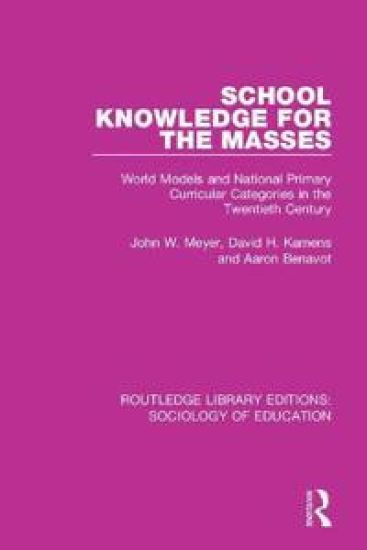
School Knowledge for the Masses

School Knowledge for the Masses

John Meyer; David Kamens; Aaron Benavot

Routledge
2017
sidottu
First published in 1992, this book presents unique quantitative data on the content coverage of primary education in a large number of countries since 1920. It demonstrates that these curricular outlines tend to be surprisingly similar across very disparate countries, and suggests the world processes that produced this result. Specifically, the study shows that the contemporary primary curriculum dates from changes in the late nineteenth century; that there has been a general shift towards a ‘social studies’ subject; that instruction in mathematics and sciences has tended to expand; that there have been substantial increases in foreign language instruction (and changes in the languages taught); and that instruction in the arts and physical education come to the standard world education model much later than other subjects. This work will be of particular interest to those studying primary curriculum, international education and the sociology of education.