Kirjojen hintavertailu. Mukana 12 519 918 kirjaa ja 12 kauppaa.

Kirjailija

David Knight

Kirjat ja teokset yhdessä paikassa: 38 kirjaa, julkaisuja vuosilta 1984-2025, suosituimpien joukossa Soulful Poems. Vertaile teosten hintoja ja tarkista saatavuus suomalaisista kirjakaupoista.

38 kirjaa

Kirjojen julkaisuhaarukka 1984-2025.

Science in the Romantic Era

Science in the Romantic Era

David Knight

Routledge
2016
sidottu
First published in 1998. The Romantic Era was a time when society, religion and other beliefs, and science were all in flux. The idea that the universe was a great clock, and that men were little clocks, all built by a divine watchmaker, was giving way to a more dynamic and pantheistic way of thinking. A new language was invented for chemistry, replacing metaphor with algebra; and scientific illustration came to play the role of a visual language, deeply involved with theory. A scientific community came gradually into being as the 19th century wore on. The papers which compose this book have appeared in a wide range of books and journals; together with the new introduction they illuminate science and its context in the Romantic Era and follow its effects in the 19th century.
A Companion to the Physical Sciences
First published in 1989, this dictionary of the whole field of the physical sciences is an invaluable guide through the changing terminology and practices of scientific research. Arranged alphabetically, it traces how the meaning of scientific terms have changed over time. It covers a wide range of topics including voyages, observations, magnetism and pendulums, and central subjects such as atom, valency and energy. There are also entries on more abstract terms such as hypothesis, theory, induction, deduction, falsification and paradigm, emphasizing that while science is more than ‘organized common sense’ it is not completely different from other activities. Science’s lack of innocence is also recognized in headings like pollution and weapons.This book will be a useful resource to students interested in the history of science.
Voyaging in Strange Seas

Voyaging in Strange Seas

David Knight

Yale University Press
2015
nidottu
An ambitious, landmark history of the Scientific Revolution, from the age of Columbus to the age of Cook In 1492 Columbus set out across the Atlantic; in 1776 American colonists declared their independence. Between these two events old authorities collapsed-Luther's Reformation divided churches, and various discoveries revealed the ignorance of the ancient Greeks and Romans. A new, empirical worldview had arrived, focusing now on observation, experiment, and mathematical reasoning. This engaging book takes us along on the great voyage of discovery that ushered in the modern age. David Knight, a distinguished historian of science, locates the Scientific Revolution in the great era of global oceanic voyages, which became both a spur to and a metaphor for scientific discovery. He introduces the well-known heroes of the story (Galileo, Newton, Linnaeus) as well as lesser-recognized officers of scientific societies, printers and booksellers who turned scientific discovery into public knowledge, and editors who invented the scientific journal. Knight looks at a striking array of topics, from better maps to more accurate clocks, from a boom in printing to medical advancements. He portrays science and religion as engaged with each other rather than in constant conflict; in fact, science was often perceived as a way to uncover and celebrate God's mysteries and laws. Populated with interesting characters, enriched with fascinating anecdotes, and built upon an acute understanding of the era, this book tells a story as thrilling as any in human history.
Public Understanding of Science

Public Understanding of Science

David Knight

Routledge
2011
nidottu
Answering questions such as whether the interesting parts of science be conveyed in sermons, poems, pictures and journalism, Knight explores the history of science to show how the successes and failures of our ancestors can help us understand the position science comes to occupy now.
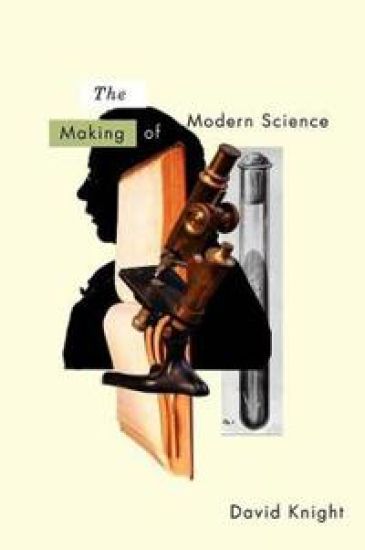
The Making of Modern Science

The Making of Modern Science

David Knight

Polity Press
2009
sidottu
Of all the inventions of the nineteenth century, the scientist is one of the most striking. In revolutionary France the science student, taught by men active in research, was born; and a generation later, the graduate student doing a PhD emerged in Germany. In 1833 the word ‘scientist’ was coined; forty years later science (increasingly specialised) was a becoming a profession. Men of science rivalled clerics and critics as sages; they were honoured as national treasures, and buried in state funerals. Their new ideas invigorated the life of the mind. Peripatetic congresses, great exhibitions, museums, technical colleges and laboratories blossomed; and new industries based on chemistry and electricity brought prosperity and power, economic and military. Eighteenth-century steam engines preceded understanding of the physics underlying them; but electric telegraphs and motors were applied science, based upon painstaking interpretation of nature. The ideas, discoveries and inventions of scientists transformed the world: lives were longer and healthier, cities and empires grew, societies became urban rather than agrarian, the local became global. And by the opening years of the twentieth century, science was spreading beyond Europe and North America, and women were beginning to be visible in the ranks of scientists. Bringing together the people, events, and discoveries of this exciting period into a lively narrative, this book will be essential reading both for students of the history of science and for anyone interested in the foundations of the world as we know it today.
The Making of Modern Science

The Making of Modern Science

David Knight

Polity Press
2009
nidottu
Of all the inventions of the nineteenth century, the scientist is one of the most striking. In revolutionary France the science student, taught by men active in research, was born; and a generation later, the graduate student doing a PhD emerged in Germany. In 1833 the word 'scientist' was coined; forty years later science (increasingly specialised) was a becoming a profession. Men of science rivalled clerics and critics as sages; they were honoured as national treasures, and buried in state funerals. Their new ideas invigorated the life of the mind. Peripatetic congresses, great exhibitions, museums, technical colleges and laboratories blossomed; and new industries based on chemistry and electricity brought prosperity and power, economic and military. Eighteenth-century steam engines preceded understanding of the physics underlying them; but electric telegraphs and motors were applied science, based upon painstaking interpretation of nature. The ideas, discoveries and inventions of scientists transformed the world: lives were longer and healthier, cities and empires grew, societies became urban rather than agrarian, the local became global. And by the opening years of the twentieth century, science was spreading beyond Europe and North America, and women were beginning to be visible in the ranks of scientists. Bringing together the people, events, and discoveries of this exciting period into a lively narrative, this book will be essential reading both for students of the history of science and for anyone interested in the foundations of the world as we know it today.
Yes! You Can Start Your Own Business
Nine out of ten businesses do not survive the five year milestone! What are the secrets that contribute to entrepreneurial success? David Knight (CEO the Executive Solution and award winning entrepreneur) is the author of the hit book YES! YOU CAN START YOUR OWN BUSINESS and delivers time and time again in taking the reader through an easy to read guide through the process of starting up your own business. Knights unique guide is written in a way which feels like the reader embarks on a business journey with a friend guiding you through each step in a down to earth fun filled read of a book. "I certainly think this will be a valuable guide to business start up and congratulate David Knight on it" Vincent Cable MP Shadow Chancellor of the Exchequer www.yesyoucanstartyourownbusiness.com www.theexecutivesolution.co.uk
Public Understanding of Science

Public Understanding of Science

David Knight

Routledge
2006
sidottu
Answering questions such as whether the interesting parts of science be conveyed in sermons, poems, pictures and journalism, Knight explores the history of science to show how the successes and failures of our ancestors can help us understand the position science comes to occupy now.
Trent Valley Landscapes

Trent Valley Landscapes

David Knight

Heritage Marketing Publications Ltd
2004
nidottu
This synthesis of landscape change and human occupation in the Trent Valley is based on more than twenty years of research and includes much previously unpublished material. Each chapter focuses on a different period from the Pleistocene landscape, Mesolithic hunter-gatherers, Neolithic and the Early Bronze Age, Late Bronze Age and Iron Age, to the Roman and medieval periods. Subjects such as changes in the local vegetation and fauna, geomorphology, agriculture, burials, domestic settlements and industries are discussed with examples taken from archaeological investigations in the valley.
Health Food Junkies

Health Food Junkies

Bratman Steven; David Knight

RANDOM HOUSE USA INC
2004
pokkari
The first book to identify the eating disorder orthorexia nervosa-an obsession with eating healthfully-and offer expert advice on how to treat it. As Americans become better informed about health, more and more people have turned to diet as a way to lose weight and keep themselves in peak condition. Anorexia nervosa and bulimia nervosa-disorders in which the sufferer focuses on the quantity of food eaten-have been highly documented over the past decade. But as Dr. Steven Bratman asserts in this breakthrough book, for many people, eating "correctly" has become an equally harmful obsession, one that causes them to adopt progressively more rigid diets that not only eliminate crucial nutrients and food groups, but ultimately cost them their overall health, personal relationships, and emotional well-being. Health Food Junkies is the first book to identify this new eating disorder, orthorexia nervosa, and to offer detailed, practical advice on how to cope with and overcome it. Orthorexia nervosa occurs when the victim becomes obsessed, not with the quantity of food eaten, but the quality of the food. What starts as a devotion to healthy eating can evolve into a pattern of incredibly strict diets; victims become so focused on eating a "pure" diet (usually raw vegetables and grains) that the planning and preparation of food come to play the dominant role in their lives. Health Food Junkies provides an expert analysis of some of today's most popular diets-from The Zone to macrobiotics, raw-foodism to food allergy elimination-and shows not only how they can lead to orthorexia, but how they are often built on faulty logic rather than sound medical advice. Offering expert insight gleaned from his work with orthorexia patients, Dr. Bratman outlines the symptoms of orthorexia, describes its progression, and shows readers how to diagnose the condition. Finally, Dr. Bratman offers practical suggestions for intervention and treatment, giving readers the tools they need to conquer this painful disorder, rediscover the joys of eating, and reclaim their lives.
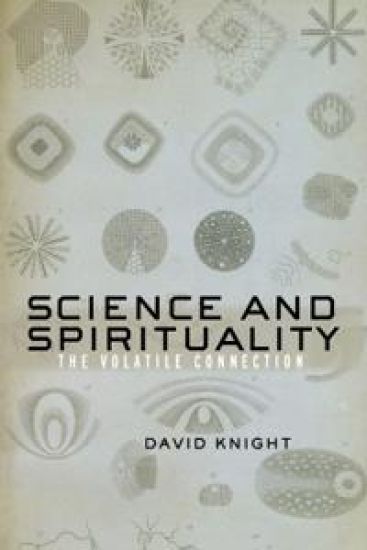
Science and Spirituality

Science and Spirituality

David Knight

Routledge
2003
sidottu
Until the end of the eighteenth century, almost everyone believed that the empirical world of science could produce evidence for a wise and loving God. By the twenty-first century this comforting certainty has almost vanished. What caused such a cataclysmic change in attitudes to science and to the world?Science and Spirituality offers a new history of the interaction between Western science and faith, which explores their volatile connection, and challenges the myth of their being locked in inevitable conflict.Journeying from the French Revolution to the present day, and taking in such figures as Francis Bacon, René Descartes, Charles Darwin, Immanuel Kant, Albert Einstein, Mary Shelley and Stephen Hawking, David Knight shows how science evolved from medieval and Renaissance forms of natural theology into the empirical discipline we know today. Focusing on the overthrow of Church and State in revolutionary France, and on the crucial nineteenth century period when a newly emerging scientific community rendered science culturally accessible, Science and Spirituality shows how scientific disenchantment has provided some of our most flexible and powerful metaphors for God, such as the hidden puppet-master and the blind watchmaker, and illustrates how questions of moral and spiritual value continue to intervene in scientific endeavour.
Science and Spirituality

Science and Spirituality

David Knight

Routledge
2003
nidottu
Until the end of the eighteenth century, almost everyone believed that the empirical world of science could produce evidence for a wise and loving God. By the twenty-first century this comforting certainty has almost vanished. What caused such a cataclysmic change in attitudes to science and to the world?Science and Spirituality offers a new history of the interaction between Western science and faith, which explores their volatile connection, and challenges the myth of their being locked in inevitable conflict.Journeying from the French Revolution to the present day, and taking in such figures as Francis Bacon, René Descartes, Charles Darwin, Immanuel Kant, Albert Einstein, Mary Shelley and Stephen Hawking, David Knight shows how science evolved from medieval and Renaissance forms of natural theology into the empirical discipline we know today. Focusing on the overthrow of Church and State in revolutionary France, and on the crucial nineteenth century period when a newly emerging scientific community rendered science culturally accessible, Science and Spirituality shows how scientific disenchantment has provided some of our most flexible and powerful metaphors for God, such as the hidden puppet-master and the blind watchmaker, and illustrates how questions of moral and spiritual value continue to intervene in scientific endeavour.
Humphry Davy

Humphry Davy

David Knight

Cambridge University Press
1998
pokkari
In this illuminating and entertaining biography David Knight draws upon Humphry Davy's poetry, notebooks, and informal writings to introduce us to one of the first professional scientists. Davy is best remembered for his work on laughing gas, for the arc lamp, for isolating sodium and potassium, for his theory that chemical affinity is electrical, and, of course, for his safety lamp. His lectures on science made the fortunes of the Royal Institution in London, and he taught chemistry to the young Faraday. He is also recognized for his poetry and was the friend of Coleridge, Wordsworth, and Byron. By investigating Davy's life Knight shows what it was like to be a creative scientist in Regency Britain, demonstrating the development of science and its institutions during this crucial period in history.