Kirjojen hintavertailu. Mukana 12 595 353 kirjaa ja 12 kauppaa.

Kirjailija

David Kunzle

Kirjat ja teokset yhdessä paikassa: 7 kirjaa, julkaisuja vuosilta 2004-2021, suosituimpien joukossa Gustave Doré (1832–1883). Vertaile teosten hintoja ja tarkista saatavuus suomalaisista kirjakaupoista.

7 kirjaa

Kirjojen julkaisuhaarukka 2004-2021.

Gustave Doré (1832–1883)

Gustave Doré (1832–1883)

Erika Dolphin; C ôme; David Kunzle; Paul Lang; Anna Markova; Édouart Papet; Valentine Robert; Baldine Saint Girons; Isabelle Saint-Martin; David Skilton; Valérie Sueur-Hermel; Bertrand Tillier; Eric Zafran

Flammarion
2014
sidottu
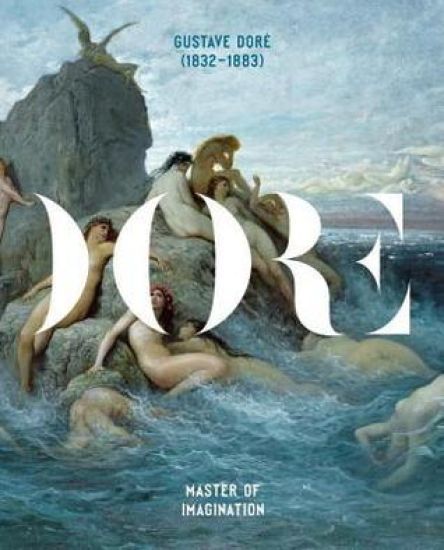
Proclaimed the most illustrious of illustrators, Gustave Dore is best known for his engravings, which appeared in editions of the Bible, Dantes Inferno, Poes The Raven, The Adventures of Don Quixote, and even in Hollywood, from King Kong to Seven. Yet the extent of his genius remains largely unknown. Here, along with his renowned illustrations, his paintings and sculptures are also examined, bringing to light the rich diversity of his talent. Using watercolor, vivid oil paint, or sculpture, he demonstrated mastery in a vast scope of media, and in treatments ranging from monumental historical tableaux to landscapes to modest compositions. His work transcended techniques and eras, covering an inexhaustible range of subjects from Europe to the United States to Russia and revealing his insatiable curiosity. This comprehensive monograph accompanies an exhibition at the Musee dOrsay in Paris from February 18May 11, 2014 and at the National Gallery of Canada in Ottawa from June 12September 14, 2014.
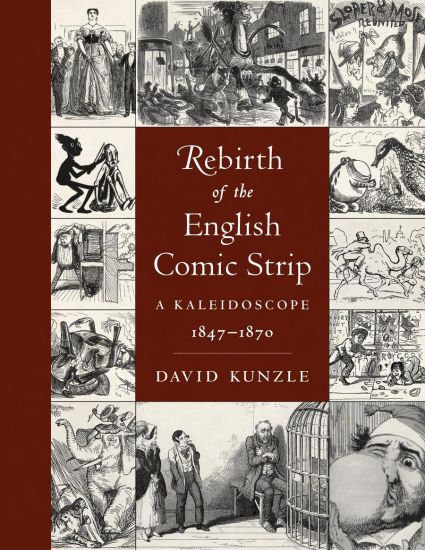
Rebirth of the English Comic Strip

Rebirth of the English Comic Strip

David Kunzle

University Press of Mississippi
2021
sidottu
Rebirth of the English Comic Strip: A Kaleidoscope, 1847-1870 enters deep into an era of comic history that has been entirely neglected. This buried cache of mid-Victorian graphic humor is marvelously rich in pictorial narratives of all kinds. Author David Kunzle calls this period a ""rebirth"" because of the preceding long hiatus in use of the new genre, since the Great Age of Caricature (c.1780-c.1820) when the comic strip was practiced as a sideline. Suddenly in 1847, a new, post-Töpffer comic strip sparks to life in Britain,, mostly in periodicals, and especially in Punch, where all the best artists of the period participated, if only sporadically: Richard Doyle, John Tenniel, John Leech, Charles Keene, and George Du Maurier. Until now, this aspect of the extensive oeuvre of the well-known masters of the new journal cartoon in Punch has been almost completely ignored. Exceptionally, George Cruikshank revived just once, in The Bottle, independently, the whole serious, contrasting Hogarthian picture story. Numerous comic strips and picture stories appeared in periodicals other than Punch by artists who were likewise largely ignored. Like the Punch luminaries, they adopt in semirealistic style sociopolitical subject matter easily accessible to their (lower-)middle-class readership. The topics covered in and out of Punch by these strips and graphic novels range from French enemies King Louis-Philippe and Emperor Napoleon III to farcical treatment of major historical events: the Bayeux tapestry (1848), the Great Exhibition of 1851, and the Franco-Prussian War 1870. Artists explore a great variety of social types, occupations, and situations such as the emigrant, the tourist, fox hunting and Indian big game hunting, dueling, the forlorn lover, the student, the artist, the toothache, the burglar, the paramilitary volunteer, Darwinian animal metamorphoses, and even nightmares. In Rebirth of the English Comic Strip, Kunzle analyzes these much neglected works down to the precocious modernist and absurdist scribbles of Marie Duval, Europe's first female professional cartoonist.
Cham

Cham

David Kunzle

University Press of Mississippi
2019
sidottu
Cham, real name Count Amédée de Noé and a serious rival to Daumier, may have been the epitome of a célèbre inconnu, a famous unknown. He is one much deserving, at last, of this first account of his huge oeuvre as a caricaturist. This book concentrates on his mastery of the important newcomer to the field of caricature, which we call comic strip, picture story, and graphic novel. The volume features facsimiles of nearly twenty of these from 1839 to 1863 and ranging from one page to forty (this last a parody of Victor Hugo's Les Misérables). In addition, summaries and sample illustrations of twenty-seven ""minor works"" demonstrate that Cham is by far the most important specialist of what was then a new genre in Europe. Born to an ancient aristocratic family, Cham was from early on wholly dedicated to an art considered far beneath his class. Starting as a disciple of the father of the modern comic strip, Swiss Rodolphe Töpffer, Cham soon launched out on his own, evolving an original form of comedy, his own comédie humaine, farcical, absurd, and parodic. His productivity was legendary and comprised all the known genres of caricature, the full-page cartoon lithograph, the thematic seasonal group, weekly and monthly humorous comment (much like the daily newspaper cartoonist today), and a feature called the Revue Comique, which made him the supreme graphic journalist of his day. Hitherto unknown correspondence reveals an attractive personality who was fond of animals and who honored a low-class woman he eventually made his countess. Vaunted comics scholar David Kunzle has created a fitting tribute to Cham's impact and genius.
Chesucristo

Chesucristo

David Kunzle

De Gruyter
2015
isokokoinen pokkari
Auf den ersten Blick mag es überraschen, den Revolutionär Che Guevara als Heiligen und Jesus Christus, den Sohn Gottes, als Revolutionär zu sehen. David Kunzle zeigt auf, wie Che Guevara nach seinem Tod zum theomorphen Idol verklärt wurde. Zahlreiche Bilder, Gedichte, Theaterstücke und Filme bezeugen diesen Prozess, der sich fleißig traditioneller Motive der christlichen Ikonographie bediente. - Um zu verdeutlichen, wie nahe sich beide tatsächlich sind, betrachtet der Autor im Gegenzug zur Verklärung Che Guevaras den historischen Jesus und deckt viele Parallelen auf.
Father of the Comic Strip

Father of the Comic Strip

David Kunzle

University Press of Mississippi
2007
nidottu
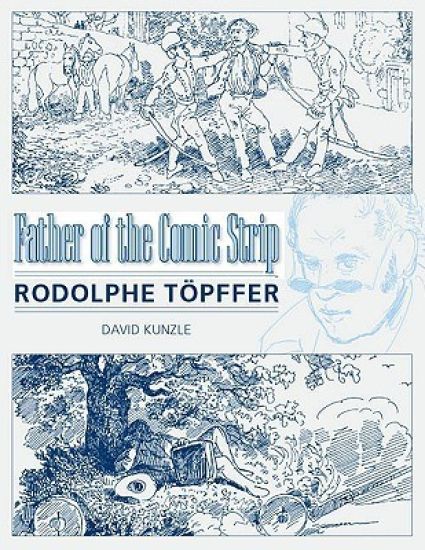
Sixty years before the comics entered the American newspaper press, Rodolphe Töpffer of Geneva (1799-1846), schoolmaster, university professor, polemical journalist, art critic, landscape draftsman, and writer of fiction, travel tales, and social criticism, invented a new art form: the comic strip, or ""picture story,"" that is now the graphic novel. At first he resisted publishing what he called his ""little follies."" When he did, they became instantly popular, plagiarized, and imitated throughout Europe and the United States. Töpffer developed a graphic style suited to his poor eyesight: the doodle, which he systematized and also theorized. The drawings, with their ""modernist"" spontaneous, flickering, broken lines, forming figures in mad hyperactivity, run above deft, ironic captions and propel narratives of surreal absurdity. The artist's maniacal protagonists mix social satire with myth. By the mid-nineteenth century, Messrs. Jabot, Festus, Cryptogame, and other members of the crazy family, comprising eight picture stories in all, were instant folk heroes. In a biographical framework, Kunzle situates the comic strips in the Genevan and European culture of the time as well as in relation to Töpffer's other work, notably his hilarious travel tales, and recounts their curious genesis (with an initial imprimatur from Goethe, no less) and their controversial success. Kunzle's study, the first in English on the writer-artist, accompanies Rodolphe Töpffer: The Complete Comic Strips, a facsimile edition of the strips themselves, with the first-ever translation of these into English.
Fashion and Fetishism

Fashion and Fetishism

David Kunzle

The History Press Ltd
2006
nidottu
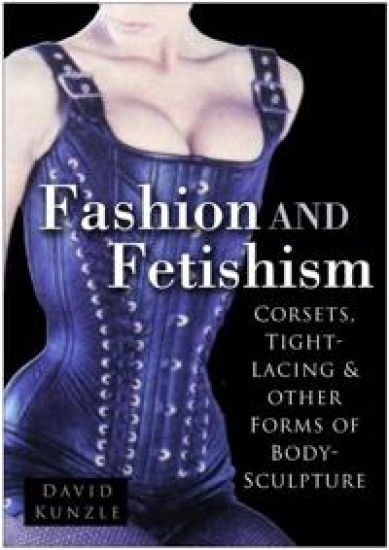
Presenting the history of corsetry and body sculpture, this edition shows how the relationship between fashion and sex is closely bound up with sexual self-expression. It demonstrates how the use of the corset rejected the role of the passive, maternal woman, so that in Victorian times it was seen as a scandalous threat to the social order.
Fashion and Fetishism

Fashion and Fetishism

David Kunzle

The History Press Ltd
2004
nidottu
Fashion and sex have always enjoyed a very close relationship. This history of corsetry and body sculpture shows how this phenomenon is closely bound up with sexual self-expression. It shows how the use of the corset rejected the role of the passive, maternal woman; in Victorian times it was seen by many as a scandalous threat to the social order.