Kirjojen hintavertailu. Mukana 12 595 353 kirjaa ja 12 kauppaa.

Kirjailija

David L. Haberman

Kirjat ja teokset yhdessä paikassa: 6 kirjaa, julkaisuja vuosilta 1994-2020, suosituimpien joukossa Thirteen Theories of Human Nature. Vertaile teosten hintoja ja tarkista saatavuus suomalaisista kirjakaupoista.

6 kirjaa

Kirjojen julkaisuhaarukka 1994-2020.

Loving Stones

Loving Stones

David L. Haberman

Oxford University Press Inc
2020
nidottu
Loving Stones is a study of devotees' conceptions of and worshipful interactions with Mount Govardhan, a sacred mountain located in the Braj region of north-central India that has for centuries been considered an embodied form of Krishna. It is often said that worship of Mount Govardhan "makes the impossible possible." In this book, David L. Haberman examines the perplexing paradox of an infinite god embodied in finite form, wherein each particular form is non-different from the unlimited. He takes on the task of interpreting the worship of a mountain and its stones for a culture in which this practice is quite alien. This challenge involves exploring the interpretive strategies that may explain what seems un-understandable, and calls for theoretical considerations of incongruity, inconceivability, and other realms of the impossible. This aspect of the book includes critical consideration of the place and history of the pejorative concept of idolatry (and its twin, anthropomorphism) in the comparative study of religions. Loving Stones uses the worship of Mount Govardhan as a site to explore ways in which scholars engaged in the difficult work of representing other cultures struggle to make "the impossible possible."
Loving Stones

Loving Stones

David L. Haberman

Oxford University Press Inc
2020
sidottu
Loving Stones is a study of devotees' conceptions of and worshipful interactions with Mount Govardhan, a sacred mountain located in the Braj region of north-central India that has for centuries been considered an embodied form of Krishna. It is often said that worship of Mount Govardhan "makes the impossible possible." In this book, David L. Haberman examines the perplexing paradox of an infinite god embodied in finite form, wherein each particular form is non-different from the unlimited. He takes on the task of interpreting the worship of a mountain and its stones for a culture in which this practice is quite alien. This challenge involves exploring the interpretive strategies that may explain what seems un-understandable, and calls for theoretical considerations of incongruity, inconceivability, and other realms of the impossible. This aspect of the book includes critical consideration of the place and history of the pejorative concept of idolatry (and its twin, anthropomorphism) in the comparative study of religions. Loving Stones uses the worship of Mount Govardhan as a site to explore ways in which scholars engaged in the difficult work of representing other cultures struggle to make "the impossible possible."

Thirteen Theories of Human Nature

Thirteen Theories of Human Nature

Leslie Stevenson; David L. Haberman; Peter Matthews Wright; Charlotte Witt

OXFORD UNIVERSITY PRESS INC
2018
nidottu
Over six previous editions, Twelve Theories of Human Nature has been a remarkably popular introduction to some of the most influential developments in Western and Eastern thought. Now titled Thirteen Theories of Human Nature, the seventh edition adds a chapter on feminist theory to those on Confucianism, Hinduism, Buddhism, Plato, Aristotle, the Bible, Islam, Kant, Marx, Freud, Sartre, and Darwinism. The authors juxtapose the ideas of these and other thinkers and traditions in a way that helps students understand how humanity has struggled to comprehend its nature. To encourage students to think critically for themselves and to underscore the similarities and differences between the many theories, the book examines each one on four points--the nature of the universe, the nature of humanity, the diagnosis of the ills of humanity, and the proposed cure for these problems. Ideal for introductory courses in human nature, introduction to philosophy, and intellectual history, this unique volume will engage and motivate students and other readers to consider how we can understand and improve both ourselves and human society.
People Trees

People Trees

David L. Haberman

Oxford University Press Inc
2013
sidottu
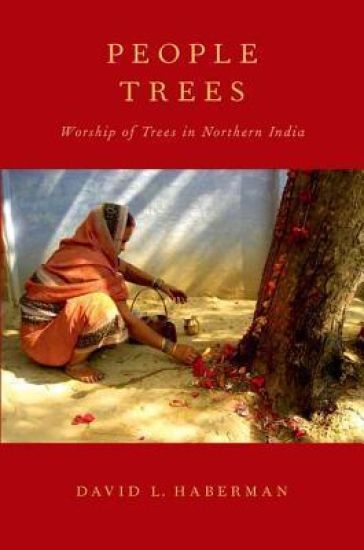
This is a book about religious conceptions of trees within the cultural world of tree worship at the tree shrines of northern India. Sacred trees have been worshipped for millennia in India and today tree worship continues there among all segments of society. In the past, tree worship was regarded by many Western anthropologists and scholars of religion as a prime example of childish animism or decadent ''popular religion.'' More recently this aspect of world religious cultures is almost completely ignored in the theoretical concerns of the day. David Haberman hopes to demonstrate that by seriously investigating the world of Indian tree worship, we can learn much about not only this prominent feature of the landscape of South Asian religion, but also something about the cultural construction of nature as well as religion overall. The title People Trees relates to the content of this book in at least six ways. First, although other sacred trees are examined, the pipal-arguably the most sacred tree in India-receives the greatest attention in this study. The Hindi word ''pipal'' is pronounced similarly to the English word ''people.''Second, the ''personhood'' of trees is a commonly accepted notion in India. Haberman was often told: ''This tree is a person just like you and me.'' Third, this is not a study of isolated trees in some remote wilderness area, but rather a study of trees in densely populated urban environments. This is a study of trees who live with people and people who live with trees. Fourth, the trees examined in this book have been planted and nurtured by people for many centuries. They seem to have benefited from human cultivation and flourished in environments managed by humans. Fifth, the book involves an examination of the human experience of trees, of the relationship between people and trees. Haberman is interested in people's sense of trees. And finally, the trees located in the neighborhood tree shrines of northern India are not controlled by a professional or elite class of priests. Common people have direct access to them and are free to worship them in their own way. They are part of the people's religion. Haberman hopes that this book will help readers expand their sense of the possible relationships that exist between humans and trees. By broadening our understanding of this relationship, he says, we may begin to think differently of the value of trees and the impact of deforestation and other human threats to trees.
People Trees

People Trees

David L. Haberman

Oxford University Press Inc
2013
nidottu
This is a book about religious conceptions of trees within the cultural world of tree worship at the tree shrines of northern India. Sacred trees have been worshipped for millennia in India and today tree worship continues there among all segments of society. In the past, tree worship was regarded by many Western anthropologists and scholars of religion as a prime example of childish animism or decadent ''popular religion.'' More recently this aspect of world religious cultures is almost completely ignored in the theoretical concerns of the day. David Haberman hopes to demonstrate that by seriously investigating the world of Indian tree worship, we can learn much about not only this prominent feature of the landscape of South Asian religion, but also something about the cultural construction of nature as well as religion overall. The title People Trees relates to the content of this book in at least six ways. First, although other sacred trees are examined, the pipal-arguably the most sacred tree in India-receives the greatest attention in this study. The Hindi word ''pipal'' is pronounced similarly to the English word ''people.''Second, the ''personhood'' of trees is a commonly accepted notion in India. Haberman was often told: ''This tree is a person just like you and me.'' Third, this is not a study of isolated trees in some remote wilderness area, but rather a study of trees in densely populated urban environments. This is a study of trees who live with people and people who live with trees. Fourth, the trees examined in this book have been planted and nurtured by people for many centuries. They seem to have benefited from human cultivation and flourished in environments managed by humans. Fifth, the book involves an examination of the human experience of trees, of the relationship between people and trees. Haberman is interested in people's sense of trees. And finally, the trees located in the neighborhood tree shrines of northern India are not controlled by a professional or elite class of priests. Common people have direct access to them and are free to worship them in their own way. They are part of the people's religion. Haberman hopes that this book will help readers expand their sense of the possible relationships that exist between humans and trees. By broadening our understanding of this relationship, he says, we may begin to think differently of the value of trees and the impact of deforestation and other human threats to trees.