Kirjojen hintavertailu. Mukana 12 104 377 kirjaa ja 12 kauppaa.

Kirjailija

David L. Hoffmann

Kirjat ja teokset yhdessä paikassa: 8 kirjaa, julkaisuja vuosilta 2000-2026, suosituimpien joukossa Women, Gender, and Socialist Ideology in Soviet Russia. Vertaile teosten hintoja ja tarkista saatavuus suomalaisista kirjakaupoista.

8 kirjaa

Kirjojen julkaisuhaarukka 2000-2026.

Women, Gender, and Socialist Ideology in Soviet Russia
This book examines the place of women in Soviet Russia from the 1917 Revolution through the post-World War II period, discussing how the Soviet construction of gender perpetuated inequality even as it dramatically expanded women’s roles in society. Chapters explore Bolshevik activists’ ideals of women’s liberation and their failure to realize these ideals; the significance of women’s labor to the Soviet economy, alongside continued workplace discrimination; state reproductive policies and essentialist understandings of femininity; women’s World War II military service and representations of gender in postwar commemorations; and the role of socialist ideology in the formation of the Soviet system and Stalinist culture. Throughout, Hoffmann places Soviet history in its international context, including comparisons of Soviet women’s social positions with those of their counterparts in other countries. The book makes clear the centrality of the Soviet gender order to the country’s social, cultural, and political history, as well as providing an important historical case for understanding the broader struggle for women’s equality. Intended for students and scholars alike, this book is a valuable resource for all those interested in gender history, Soviet history, labor history and World War II.

Before and After

Before and After

Diana Gugel; David L. Hoffmann; Julia Burnside

Independently Published
2018
nidottu
You are single, alone, and in labor when the Emergency Action Notification cuts into the regularly scheduled programming ... You are having lunch at the rest stop when your tranquility is broken. The customers at the gas station across the way begin to panic... You and your crew are beyond the orbit of the moon in a state of the art rocket when NASA radios with the news ... The World Will End Tonight What will you do with your precious final hours when there are no repercussions? Will you reconcile with family? Will you fall into the arms of a stranger? Will you take a life? What if the alerts are wrong and you wake up tomorrow to the consequences of your actions? Take a journey with the Fairfield County Creative Writers Co-Op as they explore just those questions. Nine authors, nine stories, and nine different characters who choose how their world will end, and wake up to a new world of their own making. Before and After This collaborative effort was conceived of and realized as a showcase of and fundraiser for the Fairfield County Creative Writers Co-Op, a writers group located in Fairfield County, Ohio and dedicated to providing a supportive community for all writers.
The Stalinist Era

The Stalinist Era

David L. Hoffmann

Cambridge University Press
2018
pokkari
Placing Stalinism in its international context, David L. Hoffmann presents a new interpretation of Soviet state intervention and violence. Many 'Stalinist' practices - the state-run economy, surveillance, propaganda campaigns, and the use of concentration camps - did not originate with Stalin or even in Russia, but were instead tools of governance that became widespread throughout Europe during the First World War. The Soviet system was formed at this moment of total war, and wartime practices of mobilization and state violence became building blocks of the new political order. Communist Party leaders in turn used these practices ruthlessly to pursue their ideological agenda of economic and social transformation. Synthesizing new research on Stalinist collectivization, industrialization, cultural affairs, gender roles, nationality policies, the Second World War, and the Cold War, Hoffmann provides a succinct account of this pivotal period in world history.
The Stalinist Era

The Stalinist Era

David L. Hoffmann

Cambridge University Press
2018
sidottu
Placing Stalinism in its international context, David L. Hoffmann presents a new interpretation of Soviet state intervention and violence. Many 'Stalinist' practices - the state-run economy, surveillance, propaganda campaigns, and the use of concentration camps - did not originate with Stalin or even in Russia, but were instead tools of governance that became widespread throughout Europe during the First World War. The Soviet system was formed at this moment of total war, and wartime practices of mobilization and state violence became building blocks of the new political order. Communist Party leaders in turn used these practices ruthlessly to pursue their ideological agenda of economic and social transformation. Synthesizing new research on Stalinist collectivization, industrialization, cultural affairs, gender roles, nationality policies, the Second World War, and the Cold War, Hoffmann provides a succinct account of this pivotal period in world history.
Cultivating the Masses

Cultivating the Masses

David L. Hoffmann

Cornell University Press
2014
pokkari
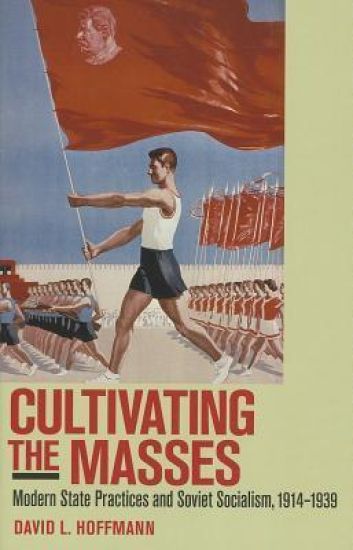
Under Stalin's leadership, the Soviet government carried out a massive number of deportations, incarcerations, and executions. Paradoxically, at the very moment that Soviet authorities were killing thousands of individuals, they were also engaged in an enormous pronatalist campaign to boost the population. Even as the number of repressions grew exponentially, Communist Party leaders enacted sweeping social welfare and public health measures to safeguard people's well-being. Extensive state surveillance of the population went hand in hand with literacy campaigns, political education, and efforts to instill in people an appreciation of high culture. In Cultivating the Masses, David L. Hoffmann examines the Party leadership's pursuit of these seemingly contradictory policies in order to grasp fully the character of the Stalinist regime, a regime intent on transforming the socioeconomic order and the very nature of its citizens. To analyze Soviet social policies, Hoffmann places them in an international comparative context. He explains Soviet technologies of social intervention as one particular constellation of modern state practices. These practices developed in conjunction with the ambitions of nineteenth-century European reformers to refashion society, and they subsequently prompted welfare programs, public health initiatives, and reproductive regulations in countries around the world. The mobilizational demands of World War I impelled political leaders to expand even further their efforts at population management, via economic controls, surveillance, propaganda, and state violence. Born at this moment of total war, the Soviet system institutionalized these wartime methods as permanent features of governance. Party leaders, whose dictatorship included no checks on state power, in turn attached interventionist practices to their ideological goal of building socialism.
Cultivating the Masses

Cultivating the Masses

David L. Hoffmann

Cornell University Press
2011
sidottu
Under Stalin's leadership, the Soviet government carried out a massive number of deportations, incarcerations, and executions. Paradoxically, at the very moment that Soviet authorities were killing thousands of individuals, they were also engaged in an enormous pronatalist campaign to boost the population. Even as the number of repressions grew exponentially, Communist Party leaders enacted sweeping social welfare and public health measures to safeguard people's well-being. Extensive state surveillance of the population went hand in hand with literacy campaigns, political education, and efforts to instill in people an appreciation of high culture. In Cultivating the Masses, David L. Hoffmann examines the Party leadership's pursuit of these seemingly contradictory policies in order to grasp fully the character of the Stalinist regime, a regime intent on transforming the socioeconomic order and the very nature of its citizens. To analyze Soviet social policies, Hoffmann places them in an international comparative context. He explains Soviet technologies of social intervention as one particular constellation of modern state practices. These practices developed in conjunction with the ambitions of nineteenth-century European reformers to refashion society, and they subsequently prompted welfare programs, public health initiatives, and reproductive regulations in countries around the world. The mobilizational demands of World War I impelled political leaders to expand even further their efforts at population management, via economic controls, surveillance, propaganda, and state violence. Born at this moment of total war, the Soviet system institutionalized these wartime methods as permanent features of governance. Party leaders, whose dictatorship included no checks on state power, in turn attached interventionist practices to their ideological goal of building socialism.
Stalinist Values

Stalinist Values

David L. Hoffmann

Cornell University Press
2003
pokkari
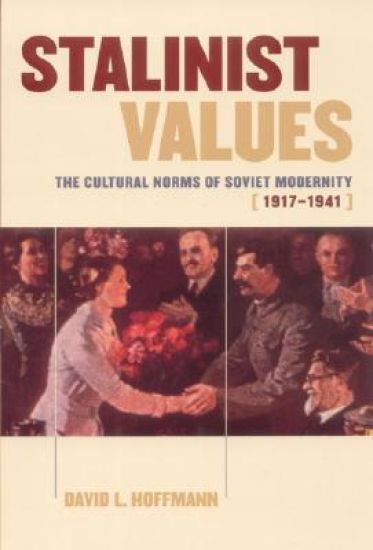
Soviet official culture underwent a dramatic shift in the mid-1930s, when Stalin and his fellow leaders began to promote conventional norms, patriarchal families, tsarist heroes, and Russian literary classics. For Leon Trotsky—and many later commentators—this apparent embrace of bourgeois values marked a betrayal of the October Revolution and a retreat from socialism. In the first book to address these developments fully, David L. Hoffmann argues that, far from reversing direction, the Stalinist leadership remained committed to remaking both individuals and society—and used selected elements of traditional culture to bolster the socialist order. Melding original archival research with new scholarship in the field, Hoffmann describes Soviet cultural and behavioral norms in such areas as leisure activities, social hygiene, family life, and sexuality. He demonstrates that the Soviet state's campaign to effect social improvement by intervening in the lives of its citizens was not unique but echoed the efforts of other European governments, both fascist and liberal, in the interwar period. Indeed, in Europe, America, and Stalin's Russia, governments sought to inculcate many of the same values—from order and efficiency to sobriety and literacy. For Hoffmann, what remains distinctive about the Soviet case is the collectivist orientation of official culture and the degree of coercion the state applied to pursue its goals.
Peasant Metropolis

Peasant Metropolis

David L. Hoffmann

Cornell University Press
2000
pokkari
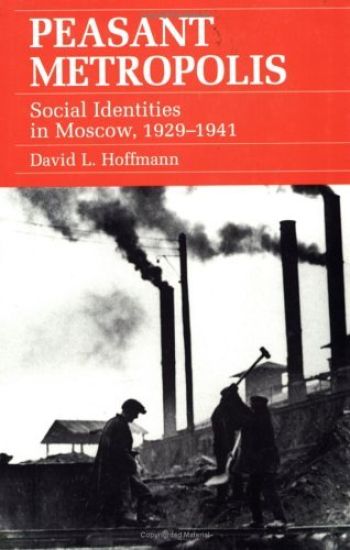
During the 1930's, 23 million peasants left their villages and moved to Soviet cities, where they comprised almost half the urban population and more than half the nation's industrial workers. Drawing on previously inaccessible archival materials, David L. Hoffmann shows how this massive migration to the cities—an influx unprecedented in world history—had major consequences for the nature of the Soviet system and the character of Russian society even today. Hoffmann focuses on events in Moscow between the launching of the industrialization drive in 1929 and the outbreak of war in 1941. He reconstructs the attempts of Party leaders to reshape the social identity and behavior of the millions of newly urbanized workers, who appeared to offer a broad base of support for the socialist regime. The former peasants, however, had brought with them their own forms of cultural expression, social organization, work habits, and attitudes toward authority. Hoffmann demonstrates that Moscow's new inhabitants established social identities and understandings of the world very different from those prescribed by Soviet authorities. Their refusal to conform to the authorities' model of a loyal proletariat thwarted Party efforts to construct a social and political order consistent with Bolshevik ideology. The conservative and coercive policies that Party leaders adopted in response, he argues, contributed to the Soviet Union's emergence as an authoritarian welfare state.