Kirjojen hintavertailu. Mukana 12 342 617 kirjaa ja 12 kauppaa.

Kirjailija

David L. Kirchman

Kirjat ja teokset yhdessä paikassa: 5 kirjaa, julkaisuja vuosilta 2018-2026, suosituimpien joukossa Processes in Microbial Ecology. Vertaile teosten hintoja ja tarkista saatavuus suomalaisista kirjakaupoista.

5 kirjaa

Kirjojen julkaisuhaarukka 2018-2026.

Processes in Microbial Ecology

Processes in Microbial Ecology

David L. Kirchman; Ashley Shade

OXFORD UNIVERSITY PRESS INC
2026
nidottu
Processes in Microbial Ecology offers a compelling look into the roles of microbes and viruses in biogeochemical and ecological processes occurring in soils, fresh water, and the ocean. Microbes such as bacteria, archaea, and fungi are the most numerous organisms on the planet and mediate nearly all steps in all elemental cycles, most importantly, the carbon cycle. The book begins by introducing the microbes, where they live, and how environmental conditions shape their complex communities. It then discusses how advances in technologies like genomics and other approaches have transformed our understanding of microbial life by uncovering the incredible diversity of microbes and viruses in natural environments. The book explores the specialized metabolic strategies that microbes have evolved to thrive in every imaginable habitat, from the deep subsurface to acidic hot springs. A chapter devoted to the carbon cycle focuses on sunlight-driven primary production by cyanobacteria and eukaryotic algae. As much as half of primary production is consumed by the microbial loop and the microbial chain, pathways for carbon that were not part of the classic food chain. The carbon from primary production is returned to carbon dioxide during organic matter degradation by bacteria and fungi in both oxygen-rich and oxygen-deficient environments. A later chapter spotlights how essential microbes are to the ecology and evolution of larger, more complex organisms, including humans. These symbioses illustrate how hosts and their microbes function as an integrated unit. Microbial ecology is vital for studying the production and consumption of greenhouse gases in the atmosphere and for addressing climate change, the largest environmental problem facing society today. In addition to the chapters focused on carbon dioxide removal and production by microbes during primary production and organic matter degradation, a chapter introducing geomicrobiology explores the contribution of microbes to the formation of carbonate rocks, which are the largest store of carbon on Earth, and to weathering reactions, which consume carbon dioxide over thousands of years. Other chapters review production and consumption of two more greenhouse gases, methane and nitrous oxide, by archaea, bacteria, and fungi. This textbook demonstrates how understanding the smallest organisms is critical for understanding our planet.
Microbes

Microbes

David L. Kirchman

OXFORD UNIVERSITY PRESS INC
2024
sidottu
For billions of years, microbes have produced and consumed greenhouse gases that regulate global temperature and in turn other aspects of our climate. The balance of these gases maintains Earth's habitability. Methane, a greenhouse gas produced only by microbes, may have kept Earth out of a deep freeze billions of years ago. Likewise, variations in carbon dioxide, another greenhouse gas released by microbes and other organisms, help to explain the comings and goings of ice ages over the last million years. Now we face a human-made climate crisis with drastic consequences. The complete story behind greenhouse gases, however, involves microbes and their role in natural ecosystems. Microscopic organisms are also part of the solution, producing biofuels and other forms of green energy which keep fossil fuels in the ground. Other microbes can be harnessed to reduce the release of methane and nitrous oxide from agriculture, and geoengineering solutions that depend on microbes could pull carbon dioxide out of the atmosphere. In this book, David L. Kirchman introduces a unique and timely contribution to the climate change conversation and the part microbes play in our past, present, and future. He takes readers into the unseen world behind the most important environmental problem facing society today and encourages us to embrace microbial solutions that are essential to mitigating climate change.
Dead Zones

Dead Zones

David L. Kirchman

Oxford University Press Inc
2021
sidottu
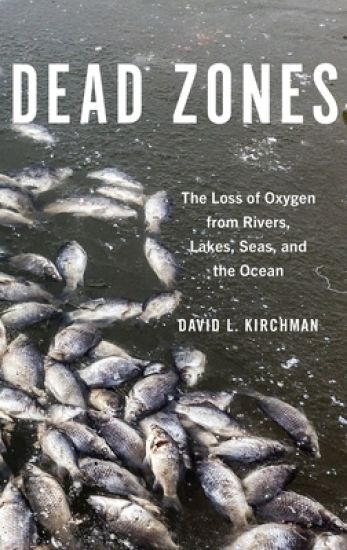
Dead zones are on the rise... Human activity has caused an increase in uninhabitable, oxygen-poor zones--also known as "dead zones"--in our waters. Oxygen is the third most abundant element in the universe, and it is a necessity for nearly all life on Earth. Yet many rivers, estuaries, coastal waters, and parts of the open ocean lack enough of it. In this book, David L. Kirchman explains the impacts of dead zones and provides an in-depth history of oxygen loss in water. He details the role the agricultural industry plays in water pollution, showcasing how fertilizers contaminate water supplies and kickstart harmful algal blooms in local lakes, reservoirs, and coastal oceans. Algae decomposition requires so much oxygen that levels drop low enough to kill fish, destroy bottom-dwelling biota, reduce biological diversity, and rearrange food webs. We can't undo the damage completely, but we can work together to reduce the size and intensity of dead zones in places like the Gulf of Mexico, Chesapeake Bay, and the Baltic Sea. Not only does Kirchman clearly outline what dead zones mean for humanity, he also supplies ways we can reduce their deadly impact on human and aquatic life. Nutrient pollution in some regions has already begun to decline because of wastewater treatment, buffer zones, cover crops, and precision agriculture. More needs to be done, though, to reduce the harmful impact of existing dead zones and to stop the thousands of new ones from cropping up in our waters. Kirchman provides insight into the ways changing our diet can reduce nutrient pollution while also lowering greenhouse gasses emitted by the agricultural industry. Individuals can do something positive for their health and the world around them. The resulting book allows readers interested in the environment--whether students, policymakers, ecosystem managers, or science buffs--to dive into these deadly zones and discover how they can help mitigate the harmful effects of oxygen-poor waters today.
Processes in Microbial Ecology

Processes in Microbial Ecology

David L. Kirchman

Oxford University Press
2018
nidottu
Microbial ecology is the study of interactions among microbes in natural environments and their roles in biogeochemical cycles, food web dynamics, and the evolution of life. Microbes are the most numerous organisms in the biosphere and mediate many critical reactions in elemental cycles and biogeochemical reactions. Because they are essential players in the carbon cycle and related processes, microbial ecology is a vital science for understanding the role of the biosphere in global warming and the response of natural ecosystems to climate change. This second edition has been fully revised, restructured, and updated while remaining concise and accessible. It discusses the major processes carried out by viruses, bacteria, fungi, protozoa and other protists - the microbes - in freshwater, marine, and terrestrial ecosystems. The focus is on biogeochemical processes, starting with primary production and the initial fixation of carbon into cellular biomass, before exploring how that carbon is degraded in both oxygen-rich (oxic) and oxygen-deficient (anoxic) environments. These processes are in turn affected by ecological interactions, including competition for limiting nutrients, viral lysis, and predation by various protists in soils and aquatic habitats. The book neatly connects processes occurring at the micron scale to events happening at the global scale, including the carbon cycle and its connection to climate change issues. A final chapter is devoted to symbiosis and other relationships between microbes and larger organisms. Microbes have huge impacts not only on biogeochemical cycles, but also on the ecology and evolution of more complex forms of life, including humans.
Processes in Microbial Ecology

Processes in Microbial Ecology

David L. Kirchman

Oxford University Press
2018
sidottu
Microbial ecology is the study of interactions among microbes in natural environments and their roles in biogeochemical cycles, food web dynamics, and the evolution of life. Microbes are the most numerous organisms in the biosphere and mediate many critical reactions in elemental cycles and biogeochemical reactions. Because they are essential players in the carbon cycle and related processes, microbial ecology is a vital science for understanding the role of the biosphere in global warming and the response of natural ecosystems to climate change. This second edition has been fully revised, restructured, and updated while remaining concise and accessible. It discusses the major processes carried out by viruses, bacteria, fungi, protozoa and other protists - the microbes - in freshwater, marine, and terrestrial ecosystems. The focus is on biogeochemical processes, starting with primary production and the initial fixation of carbon into cellular biomass, before exploring how that carbon is degraded in both oxygen-rich (oxic) and oxygen-deficient (anoxic) environments. These processes are in turn affected by ecological interactions, including competition for limiting nutrients, viral lysis, and predation by various protists in soils and aquatic habitats. The book neatly connects processes occurring at the micron scale to events happening at the global scale, including the carbon cycle and its connection to climate change issues. A final chapter is devoted to symbiosis and other relationships between microbes and larger organisms. Microbes have huge impacts not only on biogeochemical cycles, but also on the ecology and evolution of more complex forms of life, including humans.