Kirjojen hintavertailu. Mukana 12 390 323 kirjaa ja 12 kauppaa.

Kirjailija

David L. Kirp

Kirjat ja teokset yhdessä paikassa: 10 kirjaa, julkaisuja vuosilta 1997-2022, suosituimpien joukossa Improbable Scholars. Vertaile teosten hintoja ja tarkista saatavuus suomalaisista kirjakaupoista.

10 kirjaa

Kirjojen julkaisuhaarukka 1997-2022.

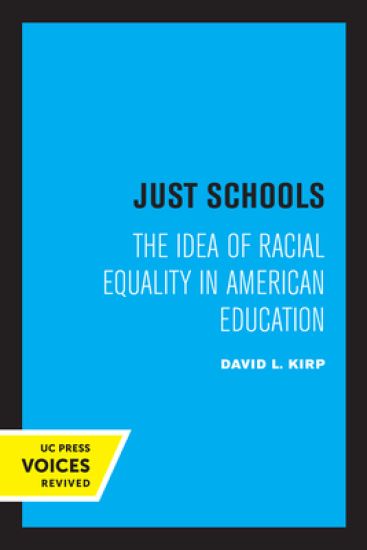
Just Schools

Just Schools

David L. Kirp

University of California Press
2022
sidottu
Examines the goals of equality in education, reviews the experiences of five communities, and recommends policy measures to improve educational opportunity in the United States.This title is part of UC Press's Voices Revived program, which commemorates University of California Press's mission to seek out and cultivate the brightest minds and give them voice, reach, and impact. Drawing on a backlist dating to 1893, Voices Revived makes high-quality, peer-reviewed scholarship accessible once again using print-on-demand technology. This title was originally published in 1982.Examines the goals of equality in education, reviews the experiences of five communities, and recommends policy measures to improve educational opportunity in the United States.This title is part of UC Press's Voices Revived program, which com
Just Schools

Just Schools

David L. Kirp

University of California Press
2022
pokkari
Examines the goals of equality in education, reviews the experiences of five communities, and recommends policy measures to improve educational opportunity in the United States.This title is part of UC Press's Voices Revived program, which commemorates University of California Press's mission to seek out and cultivate the brightest minds and give them voice, reach, and impact. Drawing on a backlist dating to 1893, Voices Revived makes high-quality, peer-reviewed scholarship accessible once again using print-on-demand technology. This title was originally published in 1982.Examines the goals of equality in education, reviews the experiences of five communities, and recommends policy measures to improve educational opportunity in the United States.This title is part of UC Press's Voices Revived program, which com
On the Road to High-Quality Early Learning

On the Road to High-Quality Early Learning

Marjorie E. Wechsler; David L. Kirp

Teachers' College Press
2018
nidottu
This timely book will help policymakers and practitioners convert their visions of high-quality early education into on-the-ground reality by examining how states, local districts, and independent providers can design, fund, and manage exemplary programs. The authors describe and analyze how four states—Michigan, West Virginia, Washington, and North Carolina—have built early education systems that positively affect student outcomes with key takeaways from each state.
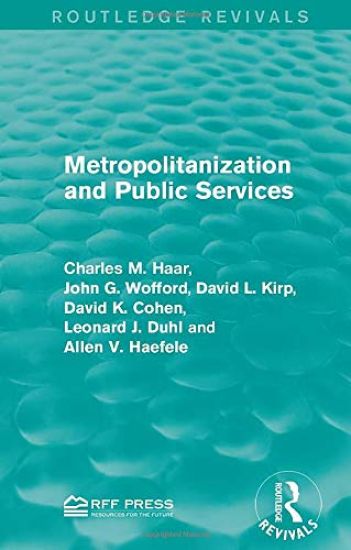
Metropolitanization and Public Services

Metropolitanization and Public Services

Charles M. Haar; John G. Wofford; David L. Kirp; David K. Cohen; Leonard J. Duhl; Allen V. Haefele

Routledge
2017
nidottu
Metropolitanization and Public Services is third in a series on the governance of metropolitan regions which aims to explore the welfare and development of Metropolitan America. Originally published in 1972, this study discusses who decides which essential public services need to be provided within a metropolitan area by looking at political reform as well as presenting ideas on functional efficiency, costs and benefits and the effectiveness of the political process. This title will be of interest to students of environmental studies.
Metropolitanization and Public Services

Metropolitanization and Public Services

Charles M. Haar; John G. Wofford; David L. Kirp; David K. Cohen; Leonard J. Duhl; Allen V. Haefele

Routledge
2015
sidottu
Metropolitanization and Public Services is third in a series on the governance of metropolitan regions which aims to explore the welfare and development of Metropolitan America. Originally published in 1972, this study discusses who decides which essential public services need to be provided within a metropolitan area by looking at political reform as well as presenting ideas on functional efficiency, costs and benefits and the effectiveness of the political process. This title will be of interest to students of environmental studies.
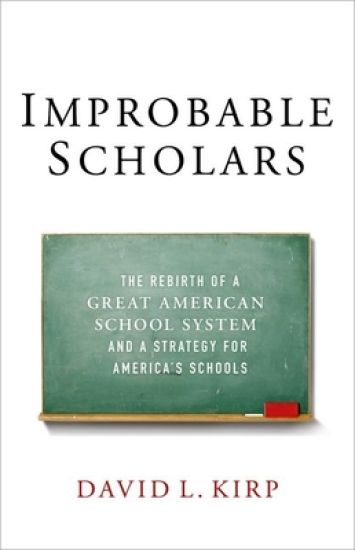
Improbable Scholars

Improbable Scholars

David L. Kirp

Oxford University Press Inc
2015
nidottu
No school district can be all charismatic leaders and super-teachers. It can't start from scratch, and it can't fire all its teachers and principals when students do poorly. Great charter schools can only serve a tiny minority of students. Whether we like it or not, most of our youngsters will continue to be educated in mainstream public schools. The good news, as David L. Kirp reveals in Improbable Scholars, is that there's a sensible way to rebuild public education and close the achievement gap for all students. Indeed, this is precisely what's happening in a most unlikely place: Union City, New Jersey, a poor, crowded Latino community just across the Hudson from Manhattan. The school district--once one of the worst in the state--has ignored trendy reforms in favor of proven game-changers like quality early education, a word-soaked curriculum, and hands-on help for teachers. When beneficial new strategies have emerged, like using sophisticated data-crunching to generate pinpoint assessments to help individual students, they have been folded into the mix. The results demand that we take notice--from third grade through high school, Union City scores on the high-stakes state tests approximate the statewide average. In other words, these inner-city kids are achieving just as much as their suburban cousins in reading, writing, and math. What's even more impressive, nearly ninety percent of high school students are earning their diplomas and sixty percent of them are going to college. Top students are winning national science awards and full rides at Ivy League universities. These schools are not just good places for poor kids. They are good places for kids, period. Improbable Scholars offers a playbook--not a prayer book--for reform that will dramatically change our approach to reviving public education.
Improbable Scholars

Improbable Scholars

David L. Kirp

Oxford University Press Inc
2013
sidottu
The conventional wisdom, voiced by everyone from Bill Gates to Education Secretary Arne Duncan, is that public schools are so terrible that simply reforming them won't do the trick. Instead, they must be "transformed," blown up and then rebuilt, if they're going to offer students a good education. We relish stories about electrifying teachers like Jaime Escalante, who made math whizzes out of no-hoper teenagers in East LA, or inner city charter schools like the KIPP academies. But success in the public schools of an entire city-a poor, crowded city, with more than its share of immigrant Latino youngsters, the kind of kids who elsewhere will likely drop out or flunk out? That sounds as elusive and improbable as the Loch Ness monster. But no school district can be all charismatic leaders and super-teachers. It can't start from scratch, and it can't fire all its teachers and principals when students do poorly. Great charter schools can only serve a tiny minority of students. Whether we like it or not, most of our youngsters will continue to be educated it is in mainstream public schools. Improbable Scholars shows that there's a sensible way to rebuild public education and close the achievement gap for all students. Miracles aren't required-instead, we need to make smart use of what we already know can work. This is precisely what's happening in a most unlikely place: Union City, New Jersey. What makes Union City so headline-worthy is its ordinariness, its lack of flash and pizzazz. The school district has ignored trendy, blow-up-and-rebuild reforms in favor of old school ideas like top-drawer early education, a word-soaked curriculum and hands-on help for teachers. When good new strategies have emerged, like using sophisticated data-crunching to generate pinpoint assessments of the help that particular students need, they have been folded into the mix. A generation ago, Union City's schools were so bad that state officials threatened to seize control of them. But the situation has entirely turned around. Here's the reason to stand up and take notice-from third grade through high school, Union City students' scores on the high-stakes state tests approximate the statewide average. In other words, these inner city kids are achieving just as much as their suburban cousins in reading, writing and math. This is no one-year wonder-year after year, from 1990 onward, the students in Union City have steadily improved. In 2011 every senior passed the state's exit exam and received a diploma, and nearly 60 percent of those graduates enrolled in college. The best students are winning national science awards, Gates Millennium Scholarships, and full rides at Ivy League universities. These schools are not just good places for poor kids. They are good places for kids, period. They pass the Golden Rule Test-- you'd be pleased if children you love were educated here. Improbable Scholars will change your mind about the possibility of reviving public education.
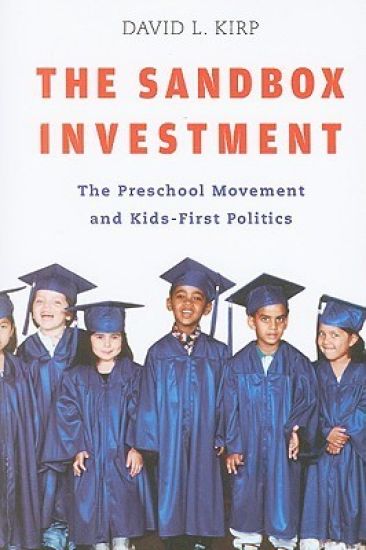
The Sandbox Investment

The Sandbox Investment

David L. Kirp

Harvard University Press
2009
nidottu
Listen to a short interview with David L. KirpHost: Chris Gondek | Producer: Heron & CraneThe rich have always valued early education, and for the past forty years, millions of poor kids have had Head Start. Now, more and more middle class parents have realized that a good preschool is the smartest investment they can make in their children's future in a competitive world. As The Sandbox Investment shows, their needs are key to the growing call for universal preschool.Writing with the verve of a magazine journalist and the authority of a scholar, David L. Kirp makes the ideal guide to this quiet movement. He crouches in classrooms where committed teachers engage lively four-year-olds, and reveals the findings of an extraordinary longitudinal study that shows the life-changing impact of preschool. He talks with cutting-edge researchers from neuroscience and genetics to economics, whose findings increasingly show how powerfully early childhood shapes the arc of children's lives.Kids-first politics is smart economics: paying for preschool now can help save us from paying for unemployment, crime, and emergency rooms later. As Kirp reports from the inside, activists and political leaders have turned this potent idea into campaigns and policies in red and blue states alike.The Sandbox Investment is the first full story of a campaign that asks Americans to endorse a vision of society that does well by doing good. For anyone who is interested in politics or the social uses of research--for anyone who's interested in the children's futures--it's a compelling read.
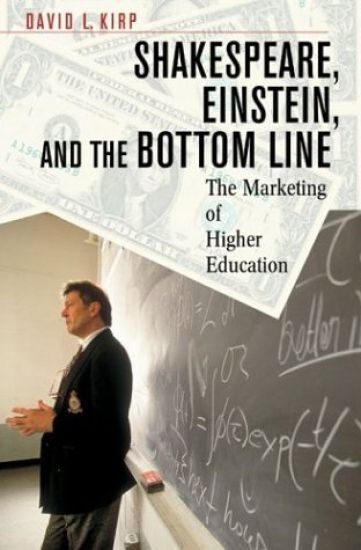
Shakespeare, Einstein, and the Bottom Line

Shakespeare, Einstein, and the Bottom Line

David L. Kirp

Harvard University Press
2004
nidottu
How can you turn an English department into a revenue center? How do you grade students if they are "customers" you must please? How do you keep industry from dictating a university's research agenda? What happens when the life of the mind meets the bottom line? Wry and insightful, Shakespeare, Einstein, and the Bottom Line takes us on a cross-country tour of the most powerful trend in academic life today--the rise of business values and the belief that efficiency, immediate practical usefulness, and marketplace triumph are the best measures of a university's success. With a shrewd eye for the telling example, David Kirp relates stories of marketing incursions into places as diverse as New York University's philosophy department and the University of Virginia's business school, the high-minded University of Chicago and for-profit DeVry University. He describes how universities "brand" themselves for greater appeal in the competition for top students; how academic super-stars are wooed at outsized salaries to boost an institution's visibility and prestige; how taxpayer-supported academic research gets turned into profitable patents and ideas get sold to the highest bidder; and how the liberal arts shrink under the pressure to be self-supporting.Far from doctrinaire, Kirp believes there's a place for the market--but the market must be kept in its place. While skewering Philistinism, he admires the entrepreneurial energy that has invigorated academe's dreary precincts. And finally, he issues a challenge to those who decry the ascent of market values: given the plight of higher education, what is the alternative?
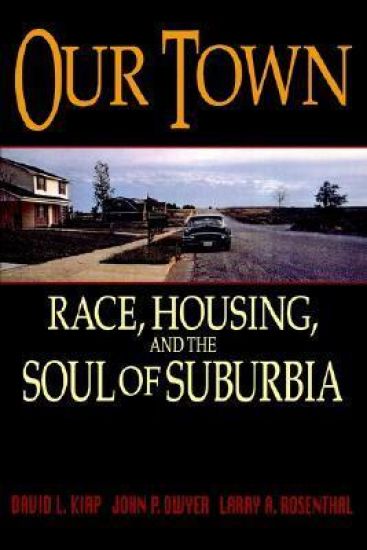
Our Town

Our Town

David L. Kirp; John P. Dwyer; Larry A. Rosenthal

Rutgers University Press
1997
nidottu
An account of the legal battle to open up New Jersey's suburbs to the poor, looking at the views of lawyers on both sides of the controversy. It is a case study of judicial activism and its consequences and an analysis of suburban attitudes regarding race, class and property.