Kirjojen hintavertailu. Mukana 12 295 730 kirjaa ja 12 kauppaa.

Kirjailija

David L. Roll

Kirjat ja teokset yhdessä paikassa: 6 kirjaa, julkaisuja vuosilta 2005-2024, suosituimpien joukossa Louis Johnson and the Arming of America. Vertaile teosten hintoja ja tarkista saatavuus suomalaisista kirjakaupoista.

6 kirjaa

Kirjojen julkaisuhaarukka 2005-2024.

Louis Johnson and the Arming of America

Louis Johnson and the Arming of America

Keith D. McFarland; David L. Roll

Indiana University Press
2005
sidottu
"Without question this is an important new addition to World War II and Cold War historiography. . . . Highly recommended." —Douglas Brinkley, author of Dean Acheson: The Cold War Years and The Unfinished Presidency: Jimmy Carter's Journey beyond the White House "A remarkably objective, yet sympathetic, study of Louis Johnson's life and career. Now only half-remembered, . . . Johnson was a major national figure. Colorful, aggressive, independent-minded, egotistical, his strong views and conflicts with Dean Acheson proved to be his undoing. All in all, a fascinating tale." —James R. Schlesinger, former Secretary of Defense "McFarland and Roll have performed a real service in rescuing from obscurity this Democratic mover and shaker. Their account of the rise and fall of Louis Johnson provides us with the fullest depiction yet of an important Washington figure employed for better or worse as a blunt instrument of policy change by both Franklin Roosevelt and Harry Truman." —Alonzo L. Hamby, author of Man of the People: A Life of Harry S. Truman and For the Survival of Democracy: Franklin Roosevelt and the World Crisis of the 1930s "[Johnson's] career is a cautionary tale of how even the most ruthlessly effective men can become pawns in the Washington power game. McFarland and Roll bring Johnson to life in this thorough and well-told history." —Evan Thomas, Newsweek, author of Robert Kennedy: His Life and The Very Best Men: The Early Years of the CIA Louis Johnson was FDR's Assistant Secretary of War and the architect of the industrial mobilization plans that put the nation on a war footing prior to its entry into World War II. Later, as Truman's Secretary of Defense, Johnson was given the difficult job of unifying the armed forces and carrying out Truman's orders to dramatically reduce defense expenditures. In both administrations, he was asked to confront and carry out extremely unpopular initiatives—massive undertakings that each president believed were vital to the nation's security and economic welfare. Johnson's conflicts with Henry Morganthau, Secretary of War Harry H. Woodring, Winston Churchill, Harry Hopkins, Dean Acheson, Averell Harriman, and Paul Nitze find contemporary parallels in the recent disagreements between the national defense establishment and the State Department.
Ascent to Power

Ascent to Power

David L. Roll

Penguin Putnam Inc
2024
sidottu
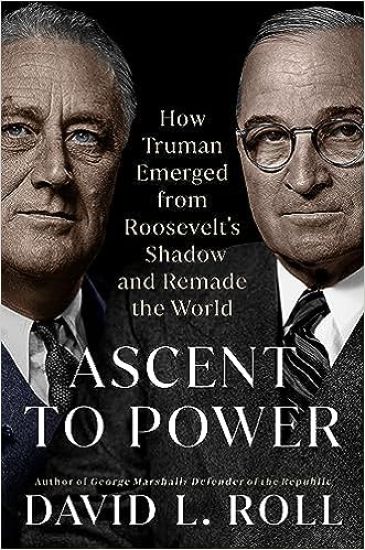
From Franklin Roosevelt's final days through Harry Truman's extraordinary transformation, this is the enthralling story behind the most consequential presidential transition in US history. When Roosevelt, in failing health, decided to run for a fourth term, he gave in to the big city Democratic bosses and reluctantly picked Senator Truman as his vice president, a man he barely knew. Upon FDR's death in April 1945, Truman, after only 82 days as VP, was thrust into the presidency. Utterly unprepared, he faced the collapse of Germany, a Europe in ruins, the organization of the UN, a summit with Stalin and Churchill, and the question of whether atomic bombs would be ready for use against Japan. Meanwhile, the Soviet Union was growing increasingly hostile towards US power. Truman inherited FDR's hope that peace could be maintained through cooperation with the Soviets, but he would soon learn that imitating his predecessor would lead only to missteps and controversy. Spanning the years of transition, 1944 to 1948, Ascent to Power illuminates Truman's struggles to emerge as president in his own right. Yet, from a relatively unknown Missouri senator to the most powerful man on Earth, Truman's legacy transcends. With his come-from-behind campaign in the fall of 1948, his courageous civil rights advocacy, and his role in liberating millions from militarist governments and brutal occupations, Truman's decisions during these pivotal years changed the course of the world in ways so significant we live with them today.
George Marshall

George Marshall

David L. Roll

E P Dutton Co Inc
2020
nidottu
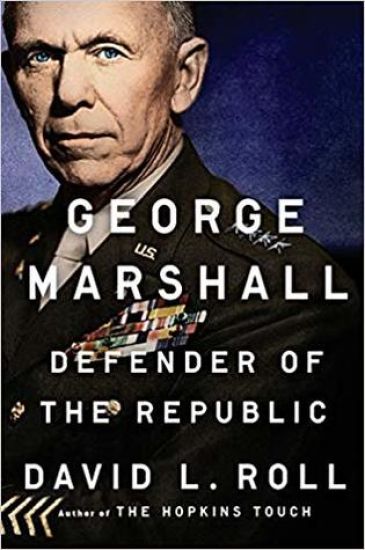
The extraordinary career of General George C. Marshall--America's most distinguished soldier-statesman since George Washington--whose selfless leadership and moral character influenced the course of two world wars and helped define the American century Winston Churchill called him World War II's "organizer of victory." Harry Truman said he was "the greatest military man that this country ever produced." Today, in our era of failed leadership, few lives are more worthy of renewed examination than Marshall and his fifty years of loyal service to the defense of his nation and its values. Even as a young officer Marshall was heralded as a genius, a reputation that grew when in WWI he planned and executed a nighttime movement of more than a half million troops from one battlefield to another that led to the armistice. Between the wars he helped modernize combat training and re-staffed the U.S. Army's officer corps with the men who would lead in the next decades. But as WWII loomed, it was the role of army chief of staff in which Marshall's intellect and backbone were put to the test, when his blind commitment to duty would run up against the realities of Washington politics. Long seen as a stoic, almost statuesque figure, he emerges in these pages as a man both remarkable and human thanks to newly discovered sources. Set against the backdrop of five major conflicts--two world wars, Palestine, Korea, and the Cold War--Marshall's education in military, diplomatic, and political power, replete with their nuances and ambiguities, runs parallel with America's emergence as a global superpower. The result is a defining account of one of our most consequential leaders.
The Hopkins Touch

The Hopkins Touch

David L. Roll

Oxford University Press Inc
2015
nidottu
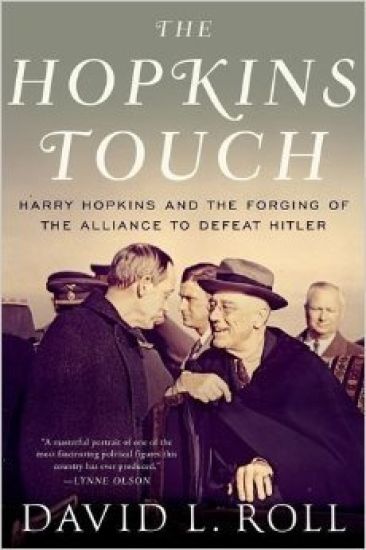
The Hopkins Touch offers the first portrait in over two decades of the most powerful man in Roosevelt's administration. In this impressive biography, David Roll shows how Harry Hopkins, an Iowa-born social worker who had been an integral part of the New Deal's implementation, became the linchpin in FDR's--and America's--relationships with Churchill and Stalin, and spoke with an authority second only to the president's. Hopkins could take the political risks his boss could not, and proved crucial to maintaining personal relations among the Big Three. Beloved by some--such as Churchill, who believed that Hopkins "always went to the root of the matter"--and trusted by most--including the paranoid Stalin--there were nevertheless those who resented the influence of "the White House Rasputin." Based on newly available sources, The Hopkins Touch is an absorbing, substantial work that offers a fresh perspective on the World War II era and the Allied leaders, through the life of the man who kept them on point until the war was won.
The Hopkins Touch

The Hopkins Touch

David L. Roll

Oxford University Press Inc
2013
sidottu
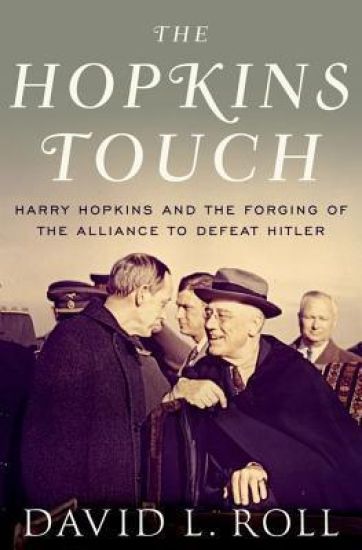
Franklin Roosevelt's friend and advisor Harry Hopkins, an Iowan social worker who became the president's political "point man" during World War II, was one of the most improbable and important political operators of the twentieth century. Having gained Roosevelt's trust assisting on campaigns and leading relief and jobs programs--including the WPA--during the 1930s, Hopkins helped the president confront the growing threat, and later the reality, of war. From the beginning, Hopkins grasped that the key to victory was the creation and maintenance of an Allied coalition of military power sustained by economic cooperation. He acted as the self-described "catalytic agent" between the Allied leaders, meeting frequently with Churchill and Stalin both before and long after Pearl Harbor and coordinating the $50 billion Lend-Lease program. David Roll's portrait of Hopkins discusses his early life and career, but emphasizes his role alongside FDR (and later Truman) in World War II, making use of previously private diaries and letters.