
Kirjailija
David L. Weimer
Kirjat ja teokset yhdessä paikassa: 16 kirjaa, julkaisuja vuosilta 1980-2025, suosituimpien joukossa Improving Prosecution. Vertaile teosten hintoja ja tarkista saatavuus suomalaisista kirjakaupoista.
Mukana myös kirjoitusasut: David L. Weimer
16 kirjaa
Kirjojen julkaisuhaarukka 1980-2025.

In the United States stakeholders make rules for the allocation of deceased-donor transplant organs. More than 110,000 Americans are currently awaiting transplants and more than 1,200 die annually before they get transplants; more than 1,700 leave the waiting list annually because they've become too sick to receive transplants. Contributing to better organ transplantation policy is thus socially valuable with life and death consequences. In Negotiating Values, David Weimer deals with this important policy issue. He considers how well stakeholder rulemaking, an example of constructed collaboration, taps relevant expertise and he exploits the unusual opportunity it provides to study the implementation of a substantial planned organizational change. He also explores the implications of “street level” responses for the operation of systemwide allocation rules. Most broadly, Weimer contributes to our understanding of complex multigoal decisionmaking by explicating the interplay between values and evidence in responding to a demand for substantial policy change.

In the United States stakeholders make rules for the allocation of deceased-donor transplant organs. More than 110,000 Americans are currently awaiting transplants and more than 1,200 die annually before they get transplants; more than 1,700 leave the waiting list annually because they've become too sick to receive transplants. Contributing to better organ transplantation policy is thus socially valuable with life and death consequences. In Negotiating Values, David Weimer deals with this important policy issue. He considers how well stakeholder rulemaking, an example of constructed collaboration, taps relevant expertise and he exploits the unusual opportunity it provides to study the implementation of a substantial planned organizational change. He also explores the implications of “street level” responses for the operation of systemwide allocation rules. Most broadly, Weimer contributes to our understanding of complex multigoal decisionmaking by explicating the interplay between values and evidence in responding to a demand for substantial policy change.
Often described as a public policy "bible," Weimer and Vining remains the essential primer it ever was. Now in a thoroughly revised seventh edition, Policy Analysis provides a strong conceptual foundation of the rationales for and the limitations to public policy. It offers practical advice about how to do policy analysis, and goes a bit deeper to demonstrate the application of advanced analytical techniques through the use of case studies. Updates to this edition include:An all-new introductory case on corporate taxation;Consideration of addiction as a rationale for public policy;Discussion of public policy issues related to platforms and intermediation, especially to digital service delivery;Updated discussion of information gathering from the perspectives of internal and external validity;An updated British Columbia salmon fishery case.The textbook is supported by online materials for instructors, including suggestions for and examples of course policy projects, a project assessment template, sample instructions to students for preparing policy reports, as well as discussion questions and answers for each chapter. Cases that have been removed from the seventh edition remain available on the book’s webpage. Policy Analysis: Concepts and Practices remains a comprehensive, serious, and rich introduction to policy analysis for students in public policy, public administration, and business programs.
Often described as a public policy "bible," Weimer and Vining remains the essential primer it ever was. Now in a thoroughly revised seventh edition, Policy Analysis provides a strong conceptual foundation of the rationales for and the limitations to public policy. It offers practical advice about how to do policy analysis, and goes a bit deeper to demonstrate the application of advanced analytical techniques through the use of case studies. Updates to this edition include:An all-new introductory case on corporate taxation;Consideration of addiction as a rationale for public policy;Discussion of public policy issues related to platforms and intermediation, especially to digital service delivery;Updated discussion of information gathering from the perspectives of internal and external validity;An updated British Columbia salmon fishery case.The textbook is supported by online materials for instructors, including suggestions for and examples of course policy projects, a project assessment template, sample instructions to students for preparing policy reports, as well as discussion questions and answers for each chapter. Cases that have been removed from the seventh edition remain available on the book’s webpage. Policy Analysis: Concepts and Practices remains a comprehensive, serious, and rich introduction to policy analysis for students in public policy, public administration, and business programs.
Archaeologists, anthropologists, and evolutionary biologists study the origins of our relationship with dogs and how it has evolved over time. Sociologists and legal scholars study the roles of dogs in the modern family. Veterinarian researchers address the relationship in the context of professional practice, yet economists have produced scant scholarship on the relationship between humans and dogs. Dog Economics applies economic concepts to relationships between people and dogs to inform our understanding of their domestication. It interprets their contemporary role as both property and family members and explores factors that affect the demand for dogs as well as market failures of the American puppy market. Offering economic perspectives on our varied relationships with dogs, this book assesses mortality risks and addresses end-of-life issues that commonly arise. It develops a framework for classifying canine occupations, considers the impact of pet insurance on euthanasia, and assesses the social value of guide dogs.
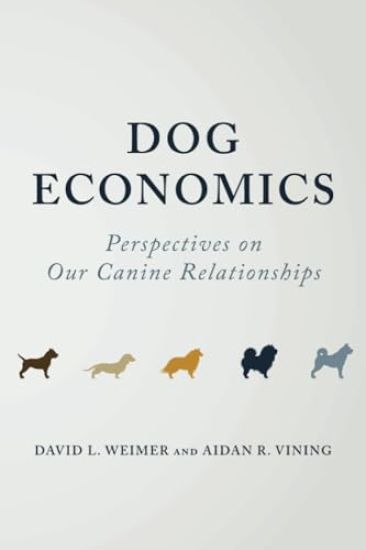
Archaeologists, anthropologists, and evolutionary biologists study the origins of our relationship with dogs and how it has evolved over time. Sociologists and legal scholars study the roles of dogs in the modern family. Veterinarian researchers address the relationship in the context of professional practice, yet economists have produced scant scholarship on the relationship between humans and dogs. Dog Economics applies economic concepts to relationships between people and dogs to inform our understanding of their domestication. It interprets their contemporary role as both property and family members and explores factors that affect the demand for dogs as well as market failures of the American puppy market. Offering economic perspectives on our varied relationships with dogs, this book assesses mortality risks and addresses end-of-life issues that commonly arise. It develops a framework for classifying canine occupations, considers the impact of pet insurance on euthanasia, and assesses the social value of guide dogs.
Cost-Benefit Analysis
Anthony E. Boardman; David H. Greenberg; Aidan R. Vining; David L. Weimer
Cambridge University Press
2018
sidottu
Cost-Benefit Analysis provides accessible, comprehensive, authoritative, and practical treatments of the protocols for assessing the relative efficiency of public policies. Its review of essential concepts from microeconomics, and its sophisticated treatment of important topics with minimal use of mathematics helps students from a variety of backgrounds build solid conceptual foundations. It provides thorough treatments of time discounting, dealing with contingent uncertainty using expected surpluses and option prices, taking account of parameter uncertainties using Monte Carlo simulation and other types of sensitivity analyses, revealed preference approaches, stated preference methods including contingent valuation, and other related methods. Updated to cover contemporary research, this edition is considerably reorganized to aid in student and practitioner understanding, and includes eight new cases to demonstrate the actual practice of cost-benefit analysis. Widely cited, it is recognized as an authoritative source on cost-benefit analysis. Illustrations, exhibits, chapter exercises, and case studies help students master concepts and develop craft skills.
Cost-Benefit Analysis
Anthony E. Boardman; David H. Greenberg; Aidan R. Vining; David L. Weimer
Cambridge University Press
2018
pokkari
Cost-Benefit Analysis provides accessible, comprehensive, authoritative, and practical treatments of the protocols for assessing the relative efficiency of public policies. Its review of essential concepts from microeconomics, and its sophisticated treatment of important topics with minimal use of mathematics helps students from a variety of backgrounds build solid conceptual foundations. It provides thorough treatments of time discounting, dealing with contingent uncertainty using expected surpluses and option prices, taking account of parameter uncertainties using Monte Carlo simulation and other types of sensitivity analyses, revealed preference approaches, stated preference methods including contingent valuation, and other related methods. Updated to cover contemporary research, this edition is considerably reorganized to aid in student and practitioner understanding, and includes eight new cases to demonstrate the actual practice of cost-benefit analysis. Widely cited, it is recognized as an authoritative source on cost-benefit analysis. Illustrations, exhibits, chapter exercises, and case studies help students master concepts and develop craft skills.
Behavioral Economics for Cost-Benefit Analysis
David L. Weimer
Cambridge University Press
2017
sidottu
How should policy analysts assess 'benefit validity' when behavioral anomalies appear relevant? David L. Weimer provides thoughtful answers through practical guidelines. Behavioral economists have identified a number of situations in which people appear not to behave according to the neoclassical assumptions underpinning welfare economics and its application to the assessment of the efficiency of proposed public policies through cost-benefit analysis. This book introduces the concept of benefit validity as a criterion for estimating benefits from observed or stated preference studies, and provides practical guidelines to help analysts accommodate behavioral findings. It considers benefit validity in four areas: violations of expected utility theory, unexpectedly large differences between willingness to pay and willingness to accept, non-exponential discounting, and harmful addiction. In addition to its immediate value to practicing policy analysts, it helps behavioral economists identify issues where their research programs can make practical contributions to better policy analysis.
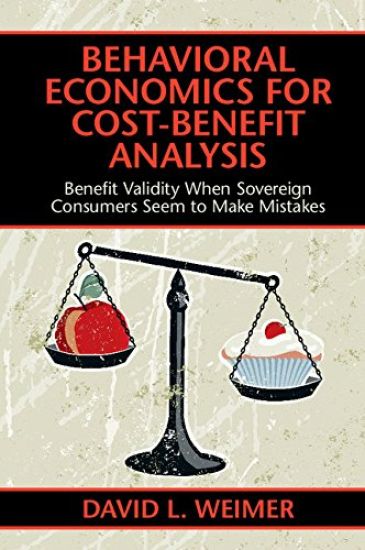
Behavioral Economics for Cost-Benefit Analysis
David L. Weimer
Cambridge University Press
2017
pokkari
How should policy analysts assess 'benefit validity' when behavioral anomalies appear relevant? David L. Weimer provides thoughtful answers through practical guidelines. Behavioral economists have identified a number of situations in which people appear not to behave according to the neoclassical assumptions underpinning welfare economics and its application to the assessment of the efficiency of proposed public policies through cost-benefit analysis. This book introduces the concept of benefit validity as a criterion for estimating benefits from observed or stated preference studies, and provides practical guidelines to help analysts accommodate behavioral findings. It considers benefit validity in four areas: violations of expected utility theory, unexpectedly large differences between willingness to pay and willingness to accept, non-exponential discounting, and harmful addiction. In addition to its immediate value to practicing policy analysts, it helps behavioral economists identify issues where their research programs can make practical contributions to better policy analysis.
Often described as a public policy “bible,” Weimer and Vining remains the essential primer it ever was. Now in its sixth edition, Policy Analysis provides a strong conceptual foundation of the rationales for and the limitations to public policy. It offers practical advice about how to do policy analysis, but goes a bit deeper to demonstrate the application of advanced analytical techniques through the use of case studies. Updates to this edition include:A chapter dedicated to distinguishing between policy analysis, policy research, stakeholder analysis, and research about the policy processAn extensively updated chapter on policy problems as market and governmental failure that explores the popularity of Uber and its consequencesThe presentation of a property rights perspective in the chapter on government supply to help show the goal tensions that arise from mixed ownershipAn entirely new chapter on performing analysis from the perspective of a public agency and a particular program within the agency’s portfolio: public agency strategic analysis (PASA)A substantially rewritten chapter on cost–benefit analysis, to better prepare students to become producers and consumers of the types of cost–benefit analyses they will encounter in regulatory analysis and social policy careersA new introductory case with a debriefing that provides advice to help students immediately begin work on their own projectsPolicy Analysis: Concepts and Practices remains a comprehensive, serious, and rich introduction to policy analysis for students in public policy, public administration, and business programs.
Often described as a public policy “bible,” Weimer and Vining remains the essential primer it ever was. Now in its sixth edition, Policy Analysis provides a strong conceptual foundation of the rationales for and the limitations to public policy. It offers practical advice about how to do policy analysis, but goes a bit deeper to demonstrate the application of advanced analytical techniques through the use of case studies. Updates to this edition include:A chapter dedicated to distinguishing between policy analysis, policy research, stakeholder analysis, and research about the policy processAn extensively updated chapter on policy problems as market and governmental failure that explores the popularity of Uber and its consequencesThe presentation of a property rights perspective in the chapter on government supply to help show the goal tensions that arise from mixed ownershipAn entirely new chapter on performing analysis from the perspective of a public agency and a particular program within the agency’s portfolio: public agency strategic analysis (PASA)A substantially rewritten chapter on cost–benefit analysis, to better prepare students to become producers and consumers of the types of cost–benefit analyses they will encounter in regulatory analysis and social policy careersA new introductory case with a debriefing that provides advice to help students immediately begin work on their own projectsPolicy Analysis: Concepts and Practices remains a comprehensive, serious, and rich introduction to policy analysis for students in public policy, public administration, and business programs.
Governments throughout the industrialized world make decisions that fundamentally affect the quality and accessibility of medical care. In the United States, despite the absence of universal health insurance, these decisions have great influence on the practice of medicine. In "Medical Governance", David Weimer explores an alternative regulatory approach to medical care based on the delegation of decisions about the allocation of scarce medical resources to private nonprofit organizations. He investigates the specific development of rules for the U.S. organ transplant system and details the conversion of a voluntary network of transplant centers to one private rulemaker: the Organ Procurement and Transplantation Network (OPTN). As the case unfolds, Weimer demonstrates that the OPTN is more efficient, nimble, and better at making evidence-based decisions than a public agency; and, the OPTN also protects accountability and the public interest more than private for-profit organizations. Weimer addresses similar governance arrangements as they could apply to other areas of medicine, including medical records and the control of Medicare expenditures, making this timely and useful case study a valuable resource for debates over restructuring the U.S. health care system.
Organizational Report Cards
William T. Gormley; David L. Weimer
Harvard University Press
1999
sidottu
In recent years, consumers, professional organizations, government officials, and third-party payers have become increasingly concerned about how to assess the quality of the services provided by organizations in both the private and the public sectors. One new approach is the organizational report card, which compares the performance of organizations such as public schools, colleges, hospitals, and HMOs.This book offers the first comprehensive study of such instruments. It discusses the circumstances under which they are desirable alternatives to other policy instruments, such as regulation; how they should be designed; who is likely to use them and for what purpose; and what role, if any, government should have in their creation. Informed by cases drawn from education, health, and other policy areas, this book develops a conceptual framework for analyzing these issues. It explores the tradeoffs in measuring performance, the methods of communicating results effectively to mass and elite audiences, and the ways in which organizations respond to the data gathered.
