Kirjailija
David Lambert
Kirjat ja teokset yhdessä paikassa: 24 kirjaa, julkaisuja vuosilta 1994-2025, suosituimpien joukossa Jumper Fables. Vertaile teosten hintoja ja tarkista saatavuus suomalaisista kirjakaupoista.
24 kirjaa
Kirjojen julkaisuhaarukka 1994-2025.
This book will teach you things you didn't know you didn't know! Such as: The difference between a dead gopher and a loaf of bread, Why Ken wore a little set of bronze lips on his letter jacket in high school, Why Ken's dog Ralph was a better Christian than Ken was, Why Ken almost ate his wife's glasses, How to turn a bus driver into an armadillo. And that's just a little of what you'll learn in Jumper Fables, a most unusual devotional book by Ken Davis and David Lambert. Jumper Fables is a collection of strange-but-true stories that'll make you laugh -- and leave you thinking about the things that really matter. Such as how to know God's will, where sex fits into your life, whether death is the worst thing that can happen, how to talk about Christ with your friends, why parents say no, and why we can trust God to do what he says. Jumper Fables was written with teenagers in mind. Ken and Dave talk about things that have happened to them and to other people, and then they suggest some Bible verses that'll help you understand those stories, as well as some things you can do that'll help you not make the same mistakes yourself. So -- want to jump-start your day? Read a Jumper Fable first thing in the morning. They're strange-but true!
White British couple Hugh and Julia Pennington buy an old church to convert on a former cocoa plantation on a Caribbean island. When their estate agent fails to meet them at the airport, they accept a lift in a large American car by a charismatic local, Horatio. The couple are to become increasingly dependent on Horatio who ends up moving into their ‘servants’ quarters’ but remains an enigma.Hugh and Julia want to ‘get involved’ in the life of their adopted island home. But they little suspect how much the horrors past of slavery, and their best intentions, will impact their lives.This tense psychological drama examines the delicate master-servant relationship against a Caribbean island's colonial background and a still simmering history of slavery. An intimate portrait of a marriage, the novel also explores the difficulties of human communication and how these are compounded when race, sex and culture-bound assumptions are added to the mix.
Administration Of Police Organization
Stephen Morreale; David Lambert
Jones and Bartlett Publishers, Inc
2025
sidottu
A&P Binding: HC Saleable
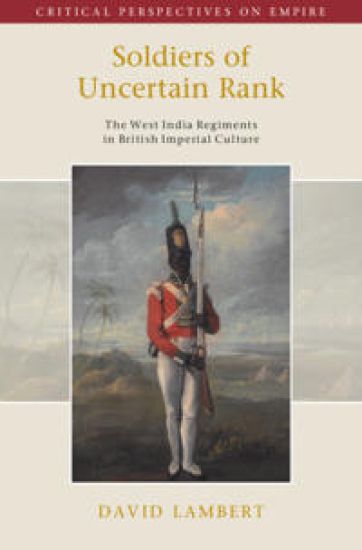
The West India Regiments were an anomalous presence in the British Army. Raised in the late eighteenth-century Caribbean in an act of military desperation, their rank-and-file were overwhelmingly men of African descent, initially enslaved. As such, the regiments held a unique but ambiguous place in the British Army and British Empire until their disbandment in 1927. Soldiers of Uncertain Rank brings together the approaches of cultural, imperial and military history in new and illuminating ways to show how the image of these regiments really mattered. This image shaped perceptions in the Caribbean societies in which they were raised and impacted on how they were deployed there and in Africa. By examining the visual and textual representation of these soldiers, this book uncovers a complex, under-explored and illuminating figure that sat at the intersection of nineteenth-century debates about slavery and freedom; racial difference; Britishness; savagery and civilisation; military service and heroism.
David Eller and his wife, Christie, work to help rescue impoverished children in Caracas, Venezuela. But for David that isn't enough. The supply of homeless children is endless because of massive poverty and the oppressive policies of the Venezuelan government. When he is given the opportunity to do something more--to heal the disease rather than working on the symptoms--David decides to go for it. But little by little, he falls into an unimaginable nightmare of espionage, ending in a desperate, life-or-death gamble to flee the country with his wife and son.
Des visions terrifiantes.Un adversaire impitoyable.Et si l' quilibre de votre monde s' croulait? Meladriel, lev e parmi les humains, est impulsive et fougueuse. Impopulaire aupr s des elfes purs, elle trouve refuge dans la s r nit de la for t, son havre. Toutefois, de terribles visions de corruption et de mort viennent la hanter, r v lant un danger insaisissable qui perturbe l' quilibre naturel. Horrifi e, Meladriel d couvre qu'un poison d vastateur se propage, mais le Grand Conseil reste indiff rent. De plus, une conspiration meurtri re, alors que Vektor attaque la cit de Valentoise, met en p ril l'existence de l'Alliance, dernier bastion du pouvoir. Ces deux menaces sont-elles li es? Myst res, trahisons et rencontres inattendues fa onnent le destin de cet univers o fantasy et science-fiction s'entrem lent, o cr atures mythiques et machines coexistent. La saga commence. La magie, l'aventure et les secrets profond ment enfouis vous appellent. Ne laissez pas cette opportunit vous chapper. Procurez-vous le premier tome de La chute de l'Alliance - La deuxi me corruption aujourd'hui
Race, Racism and the Geography Curriculum
John Morgan; David Lambert
BLOOMSBURY PUBLISHING PLC
2023
sidottu
Changes in the nature of knowledge production, plus rapid social and cultural change, have meant that the ‘curriculum question’ – what is to be taught, and by extension, ‘whose knowledge’ – has been hotly contested. The question of what to teach has become more and more controversial. This book asks: what is an appropriate curriculum response to the acute, renewed interest in issues of race and racism? How does a school subject like geography respond?The struggle over the school curriculum has frequently been portrayed as being between educational ‘traditionalists’ and ‘progressives’. This book suggests a way out of this impasse. Drawing upon and extending insights from ‘social realism’, it explores what a Future 3 geography curriculum might look like - one that recognizes the importance of the academic discipline as a source of curriculum-making but at the same time avoids geographical knowledge becoming set in stone. The book focuses very sharply on issues of race and racism, enabling teachers to engage in curriculum making in geography that is racially literate.The Foreword is written by Julian Agyeman, a former geography teacher in the UK and now Professor of Urban and Environmental Policy and Planning at Tufts University, USA.
Race, Racism and the Geography Curriculum
John Morgan; David Lambert
BLOOMSBURY PUBLISHING PLC
2023
nidottu
Changes in the nature of knowledge production, plus rapid social and cultural change, have meant that the ‘curriculum question’ – what is to be taught, and by extension, ‘whose knowledge’ – has been hotly contested. The question of what to teach has become more and more controversial. This book asks: what is an appropriate curriculum response to the acute, renewed interest in issues of race and racism? How does a school subject like geography respond?The struggle over the school curriculum has frequently been portrayed as being between educational ‘traditionalists’ and ‘progressives’. This book suggests a way out of this impasse. Drawing upon and extending insights from ‘social realism’, it explores what a Future 3 geography curriculum might look like - one that recognizes the importance of the academic discipline as a source of curriculum-making but at the same time avoids geographical knowledge becoming set in stone. The book focuses very sharply on issues of race and racism, enabling teachers to engage in curriculum making in geography that is racially literate.The Foreword is written by Julian Agyeman, a former geography teacher in the UK and now Professor of Urban and Environmental Policy and Planning at Tufts University, USA.
Learning to Teach Geography in the Secondary School
Mary Biddulph; David Lambert; David Balderstone
Routledge
2020
sidottu
Learning to Teach Geography in the Secondary School has become the widely recommended textbook for student and new teachers of geography. It helps you acquire a deeper understanding of the role, purpose and potential of geography within the secondary curriculum, and provides the practical skills needed to design, teach and evaluate stimulating and challenging lessons.It is grounded in the notion of social justice and the idea that all students are entitled to a high-quality geography education. The very practical dimension provides you with support structures through which you can begin to develop your own philosophy of teaching and debate key questions about the nature and purpose of the subject in school.Thoroughly updated to take account of the latest research, evidence and policy, this new edition reflects new developments in technology as well as current thinking on curriculum, pedagogy and assessment. Exploring the fundamentals of teaching and learning geography in school, chapters cover: Why we teach geography – its purposes and intent Understanding and planning the curriculum – what to teach Effective pedagogy – how to teach Inclusion Assessment Developing and using resources Fieldwork and outdoor learning Values and school geography’s contribution to ‘citizenship’ Professional developmentIntended as a core textbook and written with both university and school-based initial teacher education in mind, Learning to Teach Geography is essential reading for all those who aspire to become able, effective and above all, thoughtful and reflective teachers.
Learning to Teach Geography in the Secondary School
Mary Biddulph; David Lambert; David Balderstone
Routledge
2020
nidottu
Learning to Teach Geography in the Secondary School has become the widely recommended textbook for student and new teachers of geography. It helps you acquire a deeper understanding of the role, purpose and potential of geography within the secondary curriculum, and provides the practical skills needed to design, teach and evaluate stimulating and challenging lessons.It is grounded in the notion of social justice and the idea that all students are entitled to a high-quality geography education. The very practical dimension provides you with support structures through which you can begin to develop your own philosophy of teaching and debate key questions about the nature and purpose of the subject in school.Thoroughly updated to take account of the latest research, evidence and policy, this new edition reflects new developments in technology as well as current thinking on curriculum, pedagogy and assessment. Exploring the fundamentals of teaching and learning geography in school, chapters cover: Why we teach geography – its purposes and intent Understanding and planning the curriculum – what to teach Effective pedagogy – how to teach Inclusion Assessment Developing and using resources Fieldwork and outdoor learning Values and school geography’s contribution to ‘citizenship’ Professional developmentIntended as a core textbook and written with both university and school-based initial teacher education in mind, Learning to Teach Geography is essential reading for all those who aspire to become able, effective and above all, thoughtful and reflective teachers.
Staying Power
Carol Kent; Gene Kent; David Lambert; Cindy Lambert
Revell, a division of Baker Publishing Group
2020
nidottu
Too often, when a life crisis hits, a marriage suffers--even a healthy one--and all the personality profiles and couples' therapy in the world won't keep your marriage from experiencing the tough stuff. So how do you and your spouse face the stresses put on your marriage and not only stay together but come out on the other side even more loving and committed? In Staying Power, two longtime couples offer insights, skills, and clear direction so that you can respond to trials in a way that strengthens rather than weakens your marriage. They show you how to - handle anger creatively, forgive freely, and persevere together - nurture one another in powerful ways - learn new techniques for connecting both verbally and nonverbally in the midst of crisis - and much more Don't let financial trouble, infertility, health challenges, parenting cares, addiction of a loved one, or heartbreaking loss destroy your marriage. Instead, learn how through your strong relationship you can overcome all of life's curveballs--together.
This is the first title in this new series, which is aimed principally at secondary PGCE and BAEd students and school- and HEI-based tutors. Each book provides a digest of the central issues around a particular topic or issues, grounded in or supported by examples of good practice, with suggestions for further reading, study and investigation. The books are not intended as 'how to' books, but rather as books which will help students and teachers to explore and understand critical theoretical issues in ways that are challenging, that invite critical reappraisals of taken-for-granted practices and perceptions, and that provide appropriate links between theory and practice. Issues related to equal opportunities and special needs are included in each separate volume . There are boxes of questions, 'think abouts' , further reading, and bulleted summary lists for the reader. This book is written specifically for teachers-in-training which will clarify the 'big picture' of monitoring and assessment and makes the crucial distinctions in this large (and still taken-for-granted) field. The authors have written widely on assessment matters and have also worked in various capacities for the QCA (and its former manifestations). They are also engagerd in initial teacher education and so know the level and market extremely well.
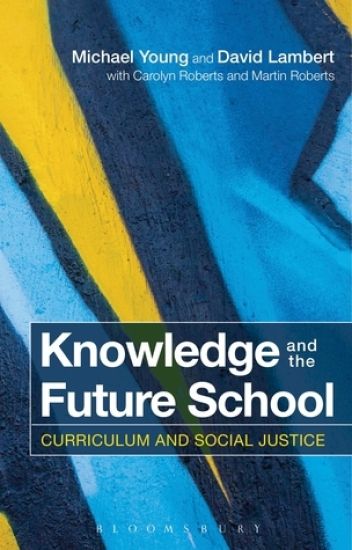
Knowledge and the Future School
Michael Young; David Lambert; Carolyn Roberts; Martin Roberts
Bloomsbury Academic
2014
nidottu
Written at a time of uncertainty about the implications of the English government’s curriculum policies, Knowledge and the Future School engages with the debate between the government and large sections of the educational community. It provides a forward-looking framework for head teachers, their staff and those involved in training teachers to use when developing the curriculum of individual schools in the context of a national curriculum. While explaining recent ideas in the sociology of educational knowledge, the authors draw on Michael Young’s earlier research with Johan Muller to distinguish three models of the curriculum in terms of their assumptions about knowledge, referred to in this book as Future 1, Future 2 and Future 3. They link Future 3 to the idea of 'powerful knowledge' for all pupils as a curriculum principle for any school, arguing that the question of knowledge is intimately linked to the issue of social justice and that access to 'powerful knowledge' is a necessary component of the education of all pupils. Knowledge and the Future School offers a new way of thinking about the problems that head teachers, their staff and curriculum designers face. In charting a course for schools that goes beyond current debates, it also provides a perspective that policy makers should not avoid.
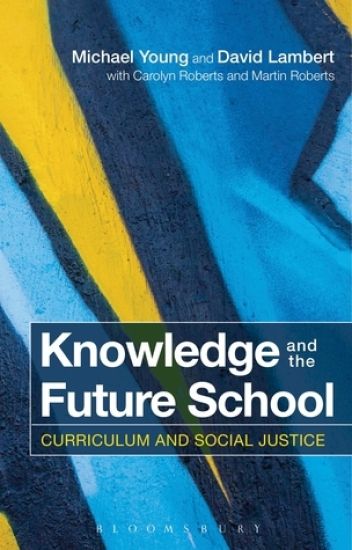
Knowledge and the Future School
Michael Young; David Lambert; Carolyn Roberts; Martin Roberts
Bloomsbury Academic
2014
sidottu
Written at a time of uncertainty about the implications of the English government’s curriculum policies, Knowledge and the Future School engages with the debate between the government and large sections of the educational community. It provides a forward-looking framework for head teachers, their staff and those involved in training teachers to use when developing the curriculum of individual schools in the context of a national curriculum. While explaining recent ideas in the sociology of educational knowledge, the authors draw on Michael Young’s earlier research with Johan Muller to distinguish three models of the curriculum in terms of their assumptions about knowledge, referred to in this book as Future 1, Future 2 and Future 3. They link Future 3 to the idea of 'powerful knowledge' for all pupils as a curriculum principle for any school, arguing that the question of knowledge is intimately linked to the issue of social justice and that access to 'powerful knowledge' is a necessary component of the education of all pupils. Knowledge and the Future School offers a new way of thinking about the problems that head teachers, their staff and curriculum designers face. In charting a course for schools that goes beyond current debates, it also provides a perspective that policy makers should not avoid.
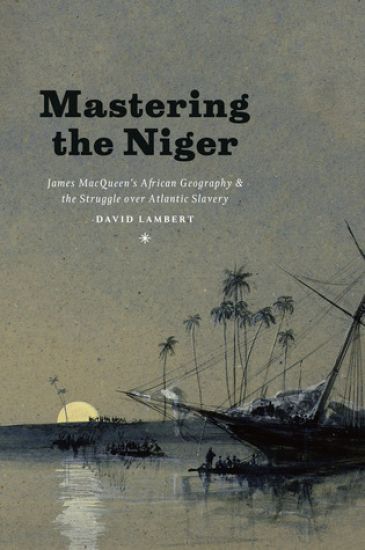
In Mastering the Niger, David Lambert recalls Scotsman James MacQueen (1778-1870) and his publication of A New Map of Africa in 1841 to show that Atlantic slavery - as a practice of subjugation, a source of wealth, and a focus of political struggle - was entangled with the production, circulation, and reception of geographical knowledge. Without ever setting foot on the continent, MacQueen took on the task of solving the "Niger problem," that is, to successfully map the course of the river and its tributaries, and thus breathe life into his scheme for the exploration, colonization, and commercial exploitation of West Africa. Lambert illustrates how MacQueen's geographical research began, four decades before the publication of the New Map, when he was managing a sugar estate on the West Indian colony of Grenada. There MacQueen encountered slaves with firsthand knowledge of West Africa, whose accounts would form the basis of his geographical claims. Lambert examines the inspirations and foundations for MacQueen's geographical theory as well as its reception, arguing that Atlantic slavery and ideas for alternatives to it helped produce geographical knowledge, while geographical discourse informed the struggle over slavery.
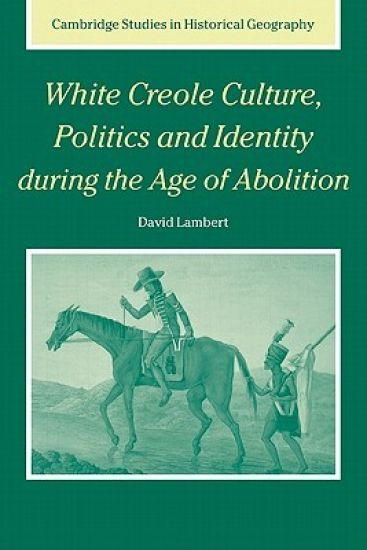
White Creole Culture, Politics and Identity during the Age of Abolition
David Lambert
Cambridge University Press
2010
pokkari
David Lambert explores the political and cultural articulation of white creole identity in the British Caribbean colony of Barbados during the age of abolitionism (c.1780–1833), the period in which the British antislavery movement emerged, first to attack the slave trade and then the institution of chattel slavery itself. Supporters of slavery in Barbados and beyond responded with their own campaigning, resulting in a series of debates and moments of controversy, both localised and transatlantic in significance. They exposed tensions between Britain and its West Indian colonies, and raised questions about whether white slaveholders could be classed as fully 'British' and if slavery was compatible with 'English' conceptions of liberty and morality. David Lambert considers what it meant to be a white colonial subject in a place viewed as a vital and loyal part of the empire but subject to increasing metropolitan attack because of the existence of slavery.
Teaching Geography 11-18: A Conceptual Approach
David Lambert; John Morgan
Open University Press
2010
nidottu
"This is a must read for all 11-18 geography educators. It argues for a new geography curriculum founded on a set of major concepts that are profoundly relevant to 21st century life. For years, books on 11-18 geography education have focussed on classroom techniques, new pedagogic technologies and alternative modes of student assessment. Not this one. 'Teaching Geography 11-18' digs deep. It asks not only what geography is for, but bases its answer on a set of key concepts able to sustain an exciting and relevant curriculum. It also grounds its many arguments in the latest geographical research, thus re-establishing the broken connection between geography teaching in schools and that in higher education".Professor Noel Castree, University of Manchester, UKThis engaging and stimulating book aims to radically re-shape and sharpen debates in geography education by taking an entirely fresh approach to both the subject and its place in secondary education.Key questions addressed in this book include:What is the place of geography within the secondary school curriculum?To what extent does school geography reflect and engage with contemporary issues and theories from the wider subject?What are the issues, challenges and opportunities of a concept-led approach to teaching geography?What are the implications of ICT, media and technology for the future of geography teaching in schools?Influenced by the revised national curriculum for geography which has reduced the prescribed content to be covered, this book offers an objective view of the concept-led approach.The new focus on concepts represents a significant shift in how geography is to be taught in schools, yet there has been little extended discussion of what a 'concept-led' approach to teaching and learning would entail. This book fills that void by examining geography's key concepts, and providing teachers with a theoretically robust and practical approach to curriculum planning using a concept-led approach. This is essential reading for all secondary geography teachers, trainee teachers and anyone involved with education and curriculum planning.
This is an essential field guide for geology lovers. Written by a team of eminent geologists and educators, ""The Field Guide to Geology, New Edition"" features clear graphics and simple field-guide procedures to guide hikers through the great outdoors. A revised and updated edition of a best-seller, this helpful resource offers readers ready access to the subject. This new edition features 200 new, two-color illustrations (more than 750 in all), updated graphs and tables, as well as two new chapters titled ""Monitoring the Earth's Changes"" and ""Geologists of Note."" This volume's lucid, easy-to-follow text covers all the key rudiments of geology and will provide nature lovers with a useful reference to various geological phenomena. The topics covered include: Air currents; Composition; Desertification; Greenhouse effect; Ice changes; Seafloor profiling; Seismic activity; Submersibles; Tides; Waterflow; and more.