Kirjailija
David Lester
Kirjat ja teokset yhdessä paikassa: 32 kirjaa, julkaisuja vuosilta 1977-2026, suosituimpien joukossa Under the Banner of King Death. Vertaile teosten hintoja ja tarkista saatavuus suomalaisista kirjakaupoista.
32 kirjaa
Kirjojen julkaisuhaarukka 1977-2026.
Under the Banner of King Death is a tale of mutiny, bloody battle, and social revolution, bringing to life an itinerant community of outsiders behind today's legends. This graphic novel breaks new ground in our understanding of piracy and pirate culture, giving us real reasons to love the rebellious and stouthearted marauders of the seas.At the pinnacle of the Golden Age of Atlantic piracy, three unlikely companions are sold into servitude on a merchant ship and thrust into a voyage of rebellion. They are John Gwin, an African American fugitive from bondage in South Carolina; Ruben Dekker, a common seaman from Amsterdam; and Mark (a.k.a. Mary) Reed, an American woman who dresses as a man.When the crew turn to mutiny, they and the freed slaves establish democracy aboard The Night Rambler. This new dispensation provides radical social benefits, all based on the documented practices of real pirate ships of the era: democratic decision-making, a social security net, health and disability insurance, and an equal distribution of spoils taken from prize ships. But before long the London elites enlist a war-hungry captain to take down The Night Rambler in a war that pitches high society against high-seas freebooters.Adapted from the scholarship and research of celebrated historian Marcus Rediker, Under the Banner of King Death is an inspiring story of the oppressed steering a course against adversity and injustice.

The Black Schooner: Rebellion on the Amistad, a Graphic Novel
David Lester; Marcus Rediker
BEACON PRESS
2026
nidottu
A stunning graphic history of how enslaved Africans on board the Amistad rebelled and captured the slave ship in 1839, challenging a whitewashed version of history and putting the Africans back at the center of their own freedom story From the trio of Rediker, Lester, and Buhle comes another graphic "history from below" about the Amistad rebellion of 1839 when 53 enslaved Africans on the slave ship Amistad slipped out of their restraints and overpowered their enslavers and ship's crew. Sold into slavery in their homeland of Sierra Leone and later bound for Puerto Pr ncipe, Cuba, from Havana, these Africans, led by the charismatic warrior Cinqu , forced the ship's remaining crew to sail homeward. Divided into 3 parts, The Black Schooner begins with the intense night of the uprising and takes readers on a reconstructed journey: from sailing on the open ocean to a New Haven, Connecticut, jail, where the captured Africans awaited trial for mutiny and murder; to the Supreme courtroom that found that the rebels had been illegally enslaved and would now be free to return to their native land. Through it all, artist David Lester chronicles their story using striking imagery, showing how they achieved an unexpected and powerful international victory for the abolitionist movement and forced some of the most powerful people in the world to confront the issue of human bondage. Based on Rediker's book The Amistad Rebellion: An Atlantic Odyssey of Slavery and Freedom, The Black Schooner challenges a whitewashed history and instead, puts the Africans back at the center of their own freedom story--where they belong.
Integrating the role of culture is critical in preventing suicide: - Written by leading suicide researchers- Explores suicide in different cultural contexts- Highlights how to conduct culturally sensitive studiesThe increasing domination of individual approaches in suicide research and prevention, at the expense of socio-cultural factors, is severely harming our ability to prevent people dying by suicide. This is the clearly set out arguments and evidence in this lucid book by leading social scientists and suicide researchers.In the first section, the authors review and examine the fundamental issues of why "culture" is of vital importance in understanding and preventing suicidal behavior, what the "cultural meaning" of suicide is, and where current research and theory are leading us. This section ends with a thought-provoking perspective of suicide as a staged performance impacted by the suicide's culture.The second section then presents the results of a mixed-methods cross-cultural study on the cultural meanings of suicide in three contexts: Australian, Indian, and Italian. There follows an essay on a culturally specific form of suicide (sati in India), and a discussion of suicide among Roma and Irish Travellers. A further chapter describes a community-based suicide prevention strategy that has been developed for different populations, including people from migrant and refugee backgrounds and from low-and-middle-income Asian countries.In the concluding section, the authors highlight both the necessity and the challenges of conducting good culturally sensitive and meaningful studies, as well as suggesting ways to address these challenges. This book volume is essential reading for anyone involved in suicide research and prevention.
Based on the little known real life "Slave Insurrection" of 1741, this book imagines outlaw fugitive John Gwin and an eclectic crew of renegades as they attempt to disrupt and overthrow the colonial social order Rebel fugitive John Gwin was previously introduced in Under the Banner of King Death and this graphic novel continues his adventures. Revolution by Fire is a hypothetical look at the inner workings of the so called "New York Conspiracy" or "Slave Rebellion" of 1741, following the figures who were considered the real-life masterminds of the plot. Featuring an eclectic crew of African-American, Irish, and mixed race Hispanic sailors, soldiers, and renegades, Gwin and his band are determined to capture New York City in their own names and fight the higher class "wigs and ruffles" wearing white people. Unfortunately for the conspirators, suspicions about an uprising were already in the minds of the Governor and his fellow elites, and the events that followed change the course of everyone's lives forever. Based on the chapter titled "Outcasts of the Nations of the Earth" in Rediker's and Peter Linebaugh's The Many-Headed Hydra: Sailors, Slaves, Commoners, and the Hidden History of the Revolutionary Atlantic, the book provides a fly-on-the-wall view of a historical event reimagined, highlighting cooperation among races and classes that transcends the social order of its time--and inspire us today.
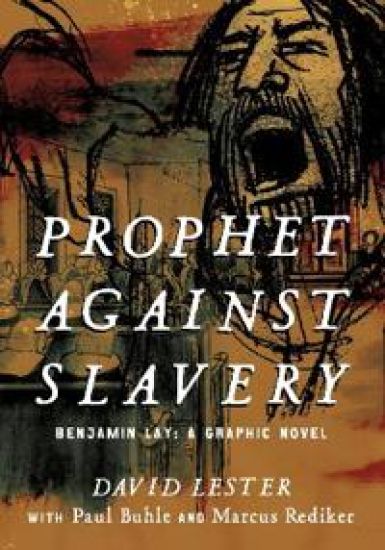
Prophet against Slavery is an action-packed chronicle of a remarkable and radical individual. It is based on the award-winning biography by Marcus Rediker, which prompted the Quaker community that once disowned Lay to embrace him again after 280 years. Graphic novelist David Lester brings the full scope of Lay's activism and ideas to life.Born in 1682 to a humble Quaker family in Essex, England, Lay was a forceful and prescient visionary. Understanding the fundamental evil that slavery represented, he employed guerrilla theatre tactics and direct action to shame slave owners and traders. The prejudice Lay suffered as a dwarf and a hunchback, as well as his devout faith, informed his passion for human and animal liberation. Exhibiting stamina, fortitude, and integrity in the face of the cruelties practiced against his 'fellow creatures', he was frequently a solitary voice speaking truth to power.Lester's beautiful imagery and storytelling, accompanied by afterwords from Rediker and Paul Buhle, capture the radicalism, the humour, and the humanity of this uncannily modern figure. A testament to the impact each of us can make, Prophet against Slavery brings Lay'' prophetic vision to a new generation of young activists who today echo his call of 300 years ago: 'No justice, no peace!'
Featuring an African American fugitive from bondage, an undercover woman, and 'outcasts of all nations, ' an arresting graphic exploration of the resistance and radical vision of18th century pirates A tale of mutiny, bloody battle, and social revolution, Under the Banner of King Death novelizes for the first time the real pirates, an itinerant community of outsiders, behind our legends. This graphic novel breaks new ground in our understanding of piracy and pirate culture, giving us more reasons to love the rebellious and stouthearted marauders of the high seas. Set at the pinnacle of the "Golden Age" of Atlantic piracy, this novel follows three unlikely companions, who are sold into servitude on a merchant ship and unwittingly thrust into a voyage of rebellion. They are John Gwin, an African American fugitive from bondage in South Carolina-- Ruben Dekker, a common seaman from Amsterdam-- And Mark/Mary Reed, an American woman who defies stereotypes by dressing as a man. Mutiny ensues against the tyrannical Captain Skinner, who is thrown overboard to make way for democracy aboard The Night Rambler. The crew's new order provides radical social benefits, all based on real, documented practices of contemporary pirate ships: democratic decision-making, a social security net, health and disability insurance, and equal distribution of spoils taken from prize ships. It's not long before the London elites enlist a war-hungry captain to take down The Night Rambler and start a war of high society versus high-seas pirates. Adapted from the scholarship and research of historian Marcus Rediker, Under the Banner of King Death will inspire readers with its tale of those on the bottom fighting back and achieving, against all odds, a democratic and egalitarian social order, if only for a short time.
The revolutionary life of an 18th-century dwarf activist who was among the first to fight against slavery and animal cruelty. Prophet Against Slavery is an action-packed chronicle of the remarkable and radical Benjamin Lay, based on the award-winning biography by Marcus Rediker that sparked the Quaker community to re-embrace Lay after 280 years of disownment. Graphic novelist David Lester brings the full scope of Lay's activism and ideas to life. Born in 1682 to a humble Quaker family in Essex, England, Lay was a forceful and prescient visionary. Understanding the fundamental evil that slavery represented, he would unflinchingly use guerrilla theatre tactics and direct action to shame slave owners and traders in his community. The prejudice that Lay suffered as a dwarf and a hunchback, as well as his devout faith, informed his passion for human and animal liberation. Exhibiting stamina, fortitude, and integrity in the face of the cruelties practiced against what he called his "fellow creatures," he was often a lonely voice that spoke truth to power. Lester's beautiful imagery and storytelling, accompanied by afterwords from Rediker and Paul Buhle, capture the radicalism, the humor, and the humanity of this truly modern figure. A testament to the impact each of us can make, Prophet Against Slavery brings Lay's prophetic vision to a new generation of young activists who today echo his call of 300 years ago: "No justice, no peace "
Designed as a text for both graduate and undergraduate students, this book, originally published in 1995, presents an intrapsychic explanation of human behaviour – concepts based on psychological processes and ‘structures’ within the mind. In this context, a unique treatment of personality theory is introduced. It focuses on Freud, Kelly and Angyal: Freud’s psychoanalytic theory of personality based on desires, Kelly’s personal construct theory for thinking, and Angyal’s holistic concepts of personality.Each theory is given a detailed analysis in separate chapters. Freud’s psychoanalytic theory is cast as a theory of motivation, Kelly’s personal construct theory as a theory of cognition, and then it is noted that there is no comprehensive theory of personality based on emotion. Although Angyal’s holistic theory is rarely described in modern textbooks, Lester includes this because none of the other holistic theorists rival Angyal in their range of hypothetical constructs or descriptive terms. Then, in sections dealing with alternative viewpoints, the author shows how other personality theorists actually endorse and expand upon the ideas expressed by the aforementioned three, albeit with different terminology.Recognizing the diversity of holistic views in theories of personality, several counterpoint chapters are devoted to the holistic ideas. Lester separates these into three major areas: theorists who have focused on the split in the mind between the real and ideal self; recent theorists who explore the possibility that the mind is a ‘multiplicity of selves’; and theorists who, though not having their viewpoints sufficiently articulated in the literature, are still well established in the history of psychology. Other features include a presentation of the material in modern viewpoints, instead of the precise and perhaps outdated style as written by the individual theorists, and boxed highlights in each section, providing students with practical capsule information for easy reading.
There has never been a thorough review of the research and speculation on suicide terrorism. I read roughly 600 articles on suicide terrorism for this book. 250 are cited because they had something to offer. 350 are listed separately as a reference source for others. There have been almost no experts on suicide writing on the topic. I found only three articles on suicide terrorism in suicidology or death journals. Those writing on suicide terrorism have little or no expertise in the field of suicidology. This review is written by a suicidologist. For example, writers on suicide terrorism never cite work on suicide in the oppressed, imitation and contagion effects in suicide, typologies of suicidal behavior, or mass murder. (The present author has written a book on mass murder and published research on mass murder in addition to his extensive work on suicide.) The book starts with introductory chapters on suicide and mass murder to provide a setting for the review. The book is a critical review and so will be provocative. All the speculations are mentioned, and the research is reviewed and, if appropriate, critiqued.
Designed as a text for both graduate and undergraduate students, this book, originally published in 1995, presents an intrapsychic explanation of human behaviour – concepts based on psychological processes and ‘structures’ within the mind. In this context, a unique treatment of personality theory is introduced. It focuses on Freud, Kelly and Angyal: Freud’s psychoanalytic theory of personality based on desires, Kelly’s personal construct theory for thinking, and Angyal’s holistic concepts of personality.Each theory is given a detailed analysis in separate chapters. Freud’s psychoanalytic theory is cast as a theory of motivation, Kelly’s personal construct theory as a theory of cognition, and then it is noted that there is no comprehensive theory of personality based on emotion. Although Angyal’s holistic theory is rarely described in modern textbooks, Lester includes this because none of the other holistic theorists rival Angyal in their range of hypothetical constructs or descriptive terms. Then, in sections dealing with alternative viewpoints, the author shows how other personality theorists actually endorse and expand upon the ideas expressed by the aforementioned three, albeit with different terminology.Recognizing the diversity of holistic views in theories of personality, several counterpoint chapters are devoted to the holistic ideas. Lester separates these into three major areas: theorists who have focused on the split in the mind between the real and ideal self; recent theorists who explore the possibility that the mind is a ‘multiplicity of selves’; and theorists who, though not having their viewpoints sufficiently articulated in the literature, are still well established in the history of psychology. Other features include a presentation of the material in modern viewpoints, instead of the precise and perhaps outdated style as written by the individual theorists, and boxed highlights in each section, providing students with practical capsule information for easy reading.
Lots of us have ideas we think would make great businesses. Most of us never do anything with those ideas. Maybe it's because we're really happy with our jobs, maybe it's because we're not confident that our idea would really work. Or maybe it's just because we don't know where to start. This book is about thirty such people who had a good idea like you. The only difference is that they believed in it and went ahead producing successful businesses.
We cannot explain why people kill themselves. There are no necessary or sufficient causes for suicide, so rather than explaining suicide (looking for causes), perhaps we can understand suicide, at least in one individual, a phenomenological approach. This book begins by examining the diaries from eight individuals who killed themselves. Using qualitative analyses, supplemented in some cases by quantitative analyses, Lester seeks to uncover the unique thoughts and feelings that led these individuals to take their own lives. Lester has also studied suicide notes, the poems of those who died by suicide (both famous poets and unpublished poets), the letters written by suicides, blogs and twitter feeds, and one tape recording of a young man who killed himself just an hour or so after he recorded the tape. This book will give you insights into the “I” of the storm, the suicidal mind. David Lester has PhD’s from Cambridge University (UK) and Brandeis University (USA). He is a former President of the International Association for Suicide Prevention and a leading scholar on suicide, murder, the fear of death and other topics and thanatology.
It is slowly becoming accepted that people with terminal illnesses who are suffering physically and mentally from the illness have the moral and legal right to choose suicide and, in some jurisdictions, they have the ability to obtain assistance from others in accomplishing their suicide. Physician-assisted suicide is legal in Oregon and other regions of the USA and in some countries such as Switzerland. However, the presence of a psychiatric disorder in the individual usually makes it illegal for a physician to assist individuals (by prescribing a lethal dose of medication) in dying by suicide. What if the person does not have a terminal illness? Does this mean that their choice of suicide cannot be a rational decision? What if the person can be diagnosed with a psychiatric disorder? Does their psychiatric disorder eliminate the possibility of rational thought? Typically, today, the answer to both of these questions is "Yes". In this book, David Lester, a renowned scholar in the field of suicide, argues that the answer to both questions should be "No." In August 2013, Martin Manley chose to die by suicide and left a website in which he had written his thoughts for the previous year and a half. Lester analyses Manley's writing, and relevant psychological research, to argue that Manley's decision was the result of rational thinking despite the fact that Manley did not have a terminal illness. The book also examines the notion that people with a psychiatric disorder cannot think rationally or make rational decisions. Lester first criticises psychiatry for being scientifically unsound and then presents evidence that those labelled by psychiatrists as having a mental illness can make rational decisions. Lester also presents the case of Jo Roman who was suffering from terminal cancer, who refused further treatment and arranged to die by suicide supported by her husband and large circle of friends. Lester concludes that deaths by suicide may be rational more often than we commonly believe and that these deaths may be appropriate ways of dying.
Handbook of Cosmetic Materials: Their Properties, Uses, and Toxic and Dermatologic Actions
Leon Arnold Greenberg; David Lester
Literary Licensing, LLC
2013
nidottu
Handbook of Cosmetic Materials: Their Properties, Uses, and Toxic and Dermatologic Actions
Leon Arnold Greenberg; David Lester
Literary Licensing, LLC
2013
sidottu
The Handbook of Cosmetic Materials is a comprehensive guide to the various substances used in the cosmetics industry, including their properties, uses, and potential toxic and dermatologic effects. Written by renowned cosmetic chemist Leon Arnold Greenberg, this book covers a wide range of topics, from the chemistry of cosmetic ingredients to the regulatory landscape governing their use. The book begins with an overview of the cosmetic industry, including its history and current trends, and then delves into the various classes of cosmetic ingredients, such as emulsifiers, preservatives, and colorants. Each chapter provides a detailed description of the properties and functions of these ingredients, as well as their potential benefits and risks.In addition, the Handbook of Cosmetic Materials includes a section on toxicology and dermatology, which explores the potential health effects of cosmetic ingredients on the skin and body. This section covers topics such as skin irritation, sensitization, and toxicity, and provides guidance on how to assess the safety of cosmetic products.Overall, the Handbook of Cosmetic Materials is an essential resource for anyone involved in the cosmetics industry, from formulators and chemists to regulatory professionals and marketers. Its comprehensive coverage and authoritative voice make it an invaluable reference for understanding the science behind cosmetic ingredients and their effects on the human body.This scarce antiquarian book is a facsimile reprint of the old original and may contain some imperfections such as library marks and notations. Because we believe this work is culturally important, we have made it available as part of our commitment for protecting, preserving, and promoting the world's literature in affordable, high quality, modern editions, that are true to their original work.
Antidepressants Therapy & Risk of Suicide Among Patients with Major Depressive Disorders
Maurizio Pompili; Paolo Girardi; David Lester; Roberto Tatarelli
Nova Science Publishers Inc
2012
nidottu
Most cases of suicide (81%-95%) in the general population involve psychiatric illnesses, nearly half of which (48.5%) are mood disorders. Internationally, the overall average suicide rate has been rising gradually over the past half-century, with increases reported in about half of nations, mainly among men, and moderate decreases found in another half, including in Northern Europe and North America. This book reviews whether the use of antidepressants is associated with benefits in terms of completed or attempted suicide, whether the increasing use of SSRIs is associated with benefits in terms of decreased rates of suicide with the aim of generating evidence-based suggestions for clinicians.