Kirjojen hintavertailu. Mukana 12 657 676 kirjaa ja 12 kauppaa.
Kirjailija
David Lloyd
Kirjat ja teokset yhdessä paikassa: 70 kirjaa, julkaisuja vuosilta 1993-2026, suosituimpien joukossa V wie Vendetta (Neue Edition). Vertaile teosten hintoja ja tarkista saatavuus suomalaisista kirjakaupoista.
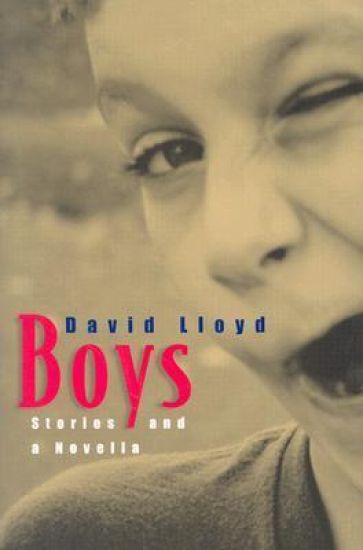
The narrator of the novella, Boys, is a thirteen-year-old Chris, a member of a small gang that includes his two friends, Frank and Joey. The novella poignantly charts Chris's involvement with a girl named Lisa, his fascination with a pornographic magazine, the building of a ""boys only"" tree house, his traumatized relationships with Frank and Joey, and the disappearance of his sister Jenny. The twelve stories in On Monday proceed chronologically from a Monday to a Tuesday morning. Each story highlights a different character's experiences with parents, friends, teachers, the expectations of others and the expectations of a culture and an era. Characters and settings present in one story reappear in other stories, building upon and heightening the experiences of all of them. In part, an indictment of how American society shapes and misshapes its children. Boys also celebrates the creativity and wonder that are a part of adolescence.
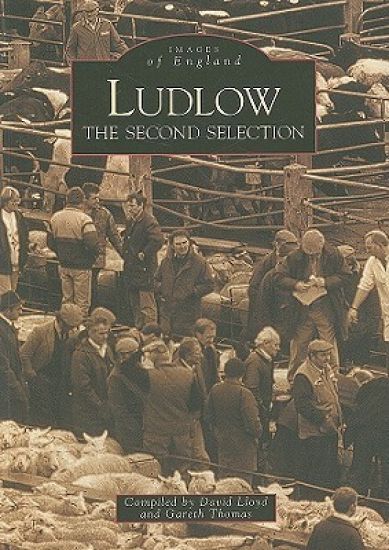
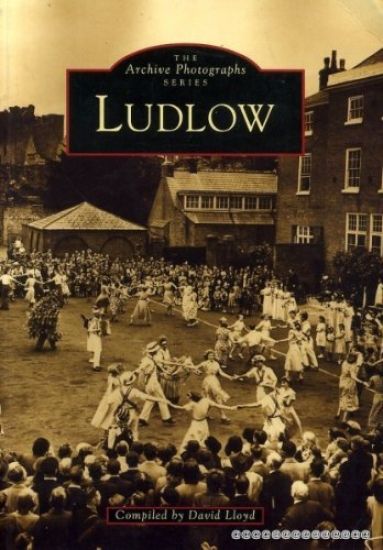
This is the second selection of old photographs of Ludlow in the Archive Photographs Series. This new collection of over 200 evocative images traces some of the changes that have taken place in and around this vibrant community over the last century. The history of Ludlow is examined throughout the decades, from the beginning of the twentieth century up until the present day.The reader can see the progression of the history of the town, the changes that have taken place in transport and industry, the shops and streets that have changed over the years, and the experiences of external events such as two world wars that have helped shape and change the nature of the town. This second selection is a collaboration by the original author, David LLoyd, and photographer Gareth Thomas. Each image is accompanied by supporting text providing a wealth of local colour and historical detail.This fascinating collection will re-awaken memories among older residents, while showing the young, the face of the area as it used to be.
Metabolic and cellular engineering, as presented in this book, is a powerful alliance of two technologies: genetics-molecular biology and fermentation technology. Both are driven by continuous refinement of the basic understanding of metabolism, physiology and cellular biology (growth, division, differentiation), as well as the development of new mathematical modeling techniques. The authors' approach is original in that it integrates several disciplines into a coordinated scheme, i.e. microbial physiology and bioenergetics, thermodynamics and enzyme kinetics, biomathematics and biochemistry, genetics and molecular biology. Thus, it is called a transdisciplinary approach (TDA). The TDA provides the basis for the rational design of microorganisms or cells in a way that has rarely been utilized to its full extent.
A must read for any advertisers. A well-designed experiment that sheds light on the critical issue of the effect of audience program involvement on advertising effectiveness. —Jerry Wind, Director, The Wharton School "Uncover the Hidden Power of Television Programming does exactly that—demonstrates that consumer involvement in a program can mean the difference between a commercial's success and it being unwept, unmourned, and unremembered. This is another tool that advertisers and their agencies can use to obtain more mileage from their campaigns." -Jack Connors, CEO, Hill, Holiday Communications "The work that Clancy and Lloyd describe in this clearly-written and definitive book could-and should-change the way advertisers and their agencies think about (and buy) media. Advertisers who take the lessons of this study to heart will never buy television and print media the same way again. Clancy and Lloyd's concept of the CPMI's (cost per thousand people involved) is to CPM's as cruise missiles are to artillery" -John Bernbach, CEO, The Bernbach "With all the hype and nonsense predicting the death of traditional media, it's refreshing and important to understand the factual intelligence Kevin J. Clancy and David W. Lloyd offer to advertisers and agencies alike." -Allen Rosenshine, Chairman/CEO, BBDO Worldwide This ground-breaking book shows that television (and print) can be much more powerful advertising vehicles than has ever been supposed—a key issue in a time of fragmenting audiences—by measuring the involvement level of viewers in television programs, newspapers, and magazines. The original research reported in this book finds that the more involved viewers are in a television programs, the greater the impact of the advertising carried by the program. Since advertisers buy programs based on audience size and composition (e.g., demographics), and since these factors have little to do with viewer involvement, advertisers are missing a significant opportunity to improve the effectiveness of their adverting. As television audiences continue to fragment and commercial costs continue to rise, the book's message grows even more important to television advertisers. Uncover the Hidden Power of Television Programming provides insight into how an advertiser can make the firm's advertising dollars work harder and smarter.
From the end of the eighteenth century to the late nineteenth century, a remarkable convergence takes place in Europe between theories of the modern state and theories of culture. Culture and the State explores that theoretical convergence in relation to the social functions of state and cultural institutions, showing how cultural education comes to play the role of forming citizens for the modern state. It critiques the way in which materialistic thinking has largely taken the concept of culture for granted and failed to grasp its relation to the idea of the state.
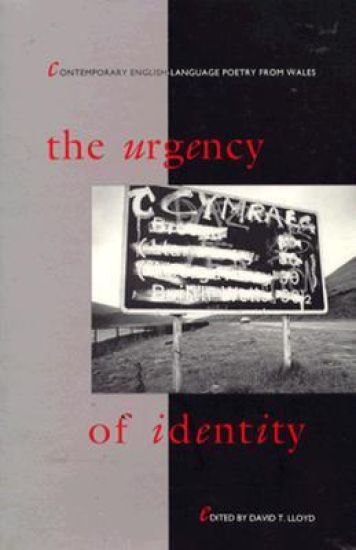
This anthology of poems and interviews is a double revelation for readers, presenting the important English-language Welsh poets of the 1980s and 1990s, and illuminating the complexity, constant flux, and political implications of the poet's sense of inherited culture. These poems have been rigorously selected to showcase the Welsh poets' skill and seriousness, and the sensuous density of their language, which, like that of contemporary Irish poets, offers the reader a striking depiction of the landscape and society. The featured poets practise their craft amid a sharp cultural and political debate: although the number of Welsh citizens who do not speak Welsh has grown substantially in recent decades, cultural nationalists view English as the language of oppression whose dominance erodes the richness and depth of local custom and history. Thus, like Latino writers working in English in the US, the English-language Welsh poets create a divided art. Included in the anthology are John Davies, Gillian Clarke, and R.S. Thomas, among others. A collection of fascinating interviews with the poets rounds out this exploration of the Welsh-English cultural divide. David Lloyd has written a lucid introduction that provides the historical background of the cultural debate over language, and alerts the reader to the virtues of each poet.
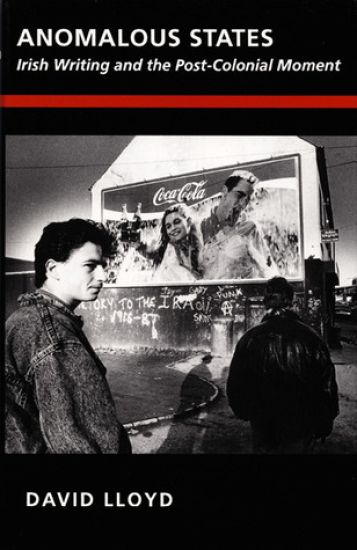
Anomalous States is an archeology of modern Irish writing. David Lloyd commences with recent questioning of Irish identity in the wake of the northern conflict and returns to the complex terrain of nineteenth-century culture in which those questions of identity were first formed. In five linked essays, he explores modern Irish literature and its political contexts through the work of four Irish writers-Heaney, Beckett, Yeats, and Joyce.Beginning with Heaney and Beckett, Lloyd shows how in these authors the question of identity connects with the dominance of conservative cultural nationalism and argues for the need to understand Irish culture in relation to the wider experience of colonized societies. A central essay reads Yeats's later works as a profound questioning of the founding of the state. Final essays examine the gradual formation of the state and nation as one element in a cultural process that involves conflict between popular cultural forms and emerging political economies of nationalism and the colonial state. Modern Ireland is thus seen as the product of a continuing process in which, Lloyd argues, the passage to national independence that defines Ireland's post-colonial status is no more than a moment in its continuing history.Anomalous States makes an important contribution to the growing body of work that connects cultural theory with post-colonial historiography, literary analysis, and issues in contemporary politics. It will interest a wide readership in literary studies, cultural studies, anthropology, and history.
Anomalous States is an archeology of modern Irish writing. David Lloyd commences with recent questioning of Irish identity in the wake of the northern conflict and returns to the complex terrain of nineteenth-century culture in which those questions of identity were first formed. In five linked essays, he explores modern Irish literature and its political contexts through the work of four Irish writers-Heaney, Beckett, Yeats, and Joyce.Beginning with Heaney and Beckett, Lloyd shows how in these authors the question of identity connects with the dominance of conservative cultural nationalism and argues for the need to understand Irish culture in relation to the wider experience of colonized societies. A central essay reads Yeats's later works as a profound questioning of the founding of the state. Final essays examine the gradual formation of the state and nation as one element in a cultural process that involves conflict between popular cultural forms and emerging political economies of nationalism and the colonial state. Modern Ireland is thus seen as the product of a continuing process in which, Lloyd argues, the passage to national independence that defines Ireland's post-colonial status is no more than a moment in its continuing history.Anomalous States makes an important contribution to the growing body of work that connects cultural theory with post-colonial historiography, literary analysis, and issues in contemporary politics. It will interest a wide readership in literary studies, cultural studies, anthropology, and history.