Kirjojen hintavertailu. Mukana 12 137 322 kirjaa ja 12 kauppaa.
Kirjailija
David Lovelock
Kirjat ja teokset yhdessä paikassa: 7 kirjaa, julkaisuja vuosilta 1998-2022, suosituimpien joukossa Applied Calculus. Vertaile teosten hintoja ja tarkista saatavuus suomalaisista kirjakaupoista.
Deborah Hughes-Hallett; Patti Frazer Lock; Andrew M. Gleason; Daniel E. Flath; Sheldon P. Gordon; David O. Lomen; David Lovelock; William G. McCallum; Brad G. Osgood; Andrew Pasquale; Jeff Tecosky-Feldman; Joseph Thrash; Karen R. Rhea; Thomas W. Tucker
Deborah Hughes-Hallett; Patti Frazer Lock; Andrew M. Gleason; Daniel E. Flath; Sheldon P. Gordon; David O. Lomen; David Lovelock; William G. McCallum; Brad G. Osgood; Andrew Pasquale; Jeff Tecosky-Feldman; Joseph Thrash; Karen R. Rhea; Thomas W. Tucker
Introduction Some people distinguish between savings and investments, where savings are monies placed in relatively risk-free accounts with modest rewards, and where investments involve more risk and the potential for greater rewards. In this book we do not distinguish between these ideas. We treat them both under the umbrella of investing. In general, income falls into two categories: earned income—which is the income derived from your everyday job—andunearnedincome—which is income derived from investing. You attend college to strengthen your prospects for earned income, so why do you need to worry about unearned income, namely, investment income? There are many reasons to invest and to learn about investing. Perhaps the primary one is to take charge of your own ?nancial future. You need money for short-term goals (such as living expenses, emergencies) and for long-term goals (such as buying a car, buying a house, educating children, paying catastrophic medical bills, funding retirement). Investing involvesborrowingandlending,andbuyingandselling. • borrowing and lending. When you put money into a bank savings account,youarelendingyourmoneyandthebankisborrowingit.Youcan lend money to a bank, a business, a government, or a person. In exchange forthis,theborrowerpromisestopayyouinterestandtoreturnyourinitial investment at a future date. Why would the borrower do this? Because the borrower anticipates using this money in a way that earns more than the interest promised to you. Examples of borrowing and lending are savings accounts, certi?cates of deposits, money-market accounts, and bonds.
Introduction Some people distinguish between savings and investments, where savings are monies placed in relatively risk-free accounts with modest rewards, and where investments involve more risk and the potential for greater rewards. In this book we do not distinguish between these ideas. We treat them both under the umbrella of investing. In general, income falls into two categories: earned income—which is the income derived from your everyday job—andunearnedincome—which is income derived from investing. You attend college to strengthen your prospects for earned income, so why do you need to worry about unearned income, namely, investment income? There are many reasons to invest and to learn about investing. Perhaps the primary one is to take charge of your own ?nancial future. You need money for short-term goals (such as living expenses, emergencies) and for long-term goals (such as buying a car, buying a house, educating children, paying catastrophic medical bills, funding retirement). Investing involvesborrowingandlending,andbuyingandselling. • borrowing and lending. When you put money into a bank savings account,youarelendingyourmoneyandthebankisborrowingit.Youcan lend money to a bank, a business, a government, or a person. In exchange forthis,theborrowerpromisestopayyouinterestandtoreturnyourinitial investment at a future date. Why would the borrower do this? Because the borrower anticipates using this money in a way that earns more than the interest promised to you. Examples of borrowing and lending are savings accounts, certi?cates of deposits, money-market accounts, and bonds.
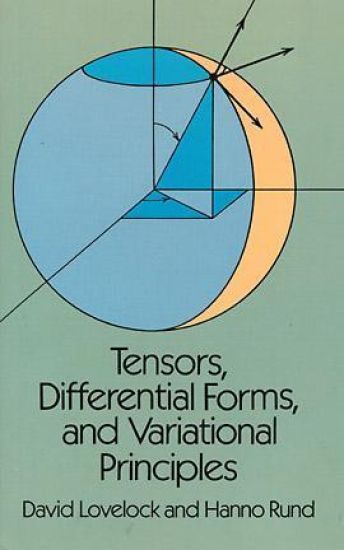
Incisive, self-contained account of tensor analysis and the calculus of exterior differential forms, interaction between the concept of invariance and the calculus of variations. Emphasis is on analytical techniques, with large number of problems, from routine manipulative exercises to technically difficult assignments.
Fully-worked solutions with clear explanations The Student Solutions Manual to accompany Differential Equations: Graphics, Models, Data provides fully-worked solutions to problems from the text. Clear explanations back step-by-step solutions to facilitate full understanding of the problem, approach, and answer, while graphs provide a visual representation of the scenario described in the problem. Common incorrect answers are noted where they exist, and references to figures in the text provide additional guidance for review. Any calculus student can benefit from extra study, and this solutions manual makes studying more effective by truly enhancing your understanding of the material.
Viewing stained glass from different angles or in various lights is necessary to discover its many qualities. Likewise, viewing solutions of differential equations from several points of view is essential to fully understand their behavior. Lomen and Lovelock provide an active environment for students to explore differential equations by using analytical, numerical, graphical, and descriptive techniques, and for students to use ODEs as a natural tool for modeling many interesting processes in science and engineering.