Kirjojen hintavertailu. Mukana 12 390 323 kirjaa ja 12 kauppaa.

Kirjailija

David M. Farrell

Kirjat ja teokset yhdessä paikassa: 7 kirjaa, julkaisuja vuosilta 2005-2024, suosituimpien joukossa Political Parties and Democratic Linkage. Vertaile teosten hintoja ja tarkista saatavuus suomalaisista kirjakaupoista.

7 kirjaa

Kirjojen julkaisuhaarukka 2005-2024.

Political Parties and Democratic Linkage

Political Parties and Democratic Linkage

Russell J. Dalton; David M. Farrell; Ian McAllister

Oxford University Press
2013
nidottu
Is the party over? Parties are the central institutions of representative democracy, but critics increasingly claim that parties are failing to perform their democratic functions. This book assembles unprecedented cross-national evidence to assess how parties link the individual citizen to the formation of governments and then to government policies. Using the Comparative Study of Electoral Systems and other recent cross-national data, the authors examine the workings of this party linkage process across established and new democracies. Political parties still dominate the electoral process in shaping the discourse of campaigns, the selection of candidates, and mobilizing citizens to vote. Equally striking, parties link citizen preferences to the choice of representatives, with strong congruence between voter and party Left/Right positions. These preferences are then translated in the formation of coalition governments and their policies. The authors argue that the critics of parties have overlooked the ability of political parties to adapt to changing conditions in order to perform their crucial linkage functions. As the context of politics and societies have changed, so too have political parties. Political Parties and Democratic Linkage argues that the process of party government is alive and well in most contemporary democracies.
Political Parties and Democratic Linkage

Political Parties and Democratic Linkage

Russell J. Dalton; David M. Farrell; Ian McAllister

Oxford University Press
2011
sidottu
Is the party over? Parties are the central institutions of representative democracy, but critics increasingly claim that parties are failing to perform their democratic functions. This book assembles unprecedented cross-national evidence to assess how parties link the individual citizen to the formation of governments and then to government policies. Using the Comparative Study of Electoral Systems and other recent cross-national data, the authors examine the workings of this party linkage process across established and new democracies. Political parties still dominate the electoral process in shaping the discourse of campaigns, the selection of candidates, and mobilizing citizens to vote. Equally striking, parties link citizen preferences to the choice of representatives, with strong congruence between voter and party Left/Right positions. These preferences are then translated in the formation of coalition governments and their policies. The authors argue that the critics of parties have overlooked the ability of political parties to adapt to changing conditions in order to perform their crucial linkage functions. As the context of politics and societies have changed, so too have political parties. Political Parties and Democratic Linkage argues that the process of party government is alive and well in most contemporary democracies.
Electoral Systems

Electoral Systems

Elisabeth Carter; David M. Farrell; Gemma Loomes

BLOOMSBURY PUBLISHING PLC
2024
sidottu
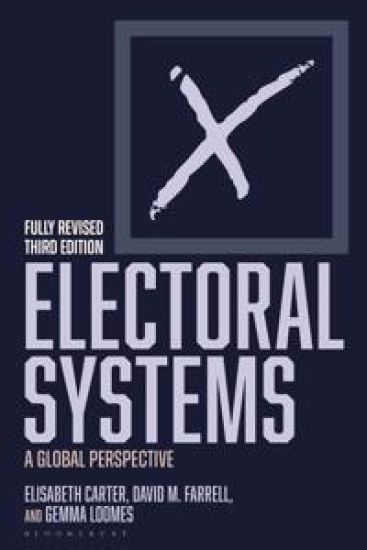
How do different electoral systems work to translate votes into seats? What effects do they have on the political system, on political actors, and on voters? Does the choice of electoral system always involve a trade-off between strong and stable government and representation? And do electoral systems matter as much as we might think? This fully revised and expanded third edition examines the principal types of electoral systems used in over 75 of the world’s democracies. It explores why countries choose the electoral systems they do and explains how the different systems function; it investigates the consequences of electoral systems, including on the party system and on government formation and stability, on representation and the quality of democracy, and on parties, politicians, and voters. Clearly structured, wide-ranging in focus, and incorporating an array of visual material – including authentic ballot papers, tables and figures – this in-depth study remains the go-to text for students and researchers seeking to understand electoral systems around the world.
Electoral Systems

Electoral Systems

Elisabeth Carter; David M. Farrell; Gemma Loomes

BLOOMSBURY PUBLISHING PLC
2024
nidottu
How do different electoral systems work to translate votes into seats? What effects do they have on the political system, on political actors, and on voters? Does the choice of electoral system always involve a trade-off between strong and stable government and representation? And do electoral systems matter as much as we might think? This fully revised and expanded third edition examines the principal types of electoral systems used in over 75 of the world’s democracies. It explores why countries choose the electoral systems they do and explains how the different systems function; it investigates the consequences of electoral systems, including on the party system and on government formation and stability, on representation and the quality of democracy, and on parties, politicians, and voters. Clearly structured, wide-ranging in focus, and incorporating an array of visual material – including authentic ballot papers, tables and figures – this in-depth study remains the go-to text for students and researchers seeking to understand electoral systems around the world.
Reimagining Democracy

Reimagining Democracy

David M. Farrell; Jane Suiter

Cornell Selects
2019
pokkari
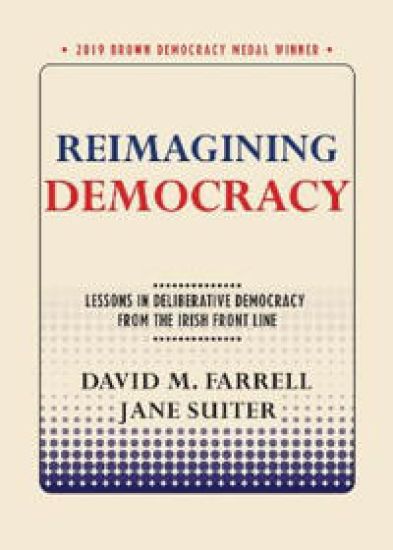
The Lawrence and Lynne Brown Democracy Medal, presented by the McCourtney Institute for Democracy at Penn State, recognizes outstanding individuals, groups, and organizations that produce innovations to further democracy in the United States or around the world. 2019 Brown Democracy Medal winners David M. Farrell and Jane Suiter are co-leads on the Irish Citizens' Assembly Project, which has transformed Irish politics over the past decade. The project started in 2011 and led to a series of significant policy decisions, including successful referenda on abortion and marriage equality. Thanks to generous funding from The Pennsylvania State University, the ebook editions of this book are available as Open Access (OA) volumes, available from Cornell Open (cornellpress.cornell.edu/cornell-open) and other Open Access repositories.
Representing Europe's Citizens?

Representing Europe's Citizens?

David M. Farrell; Roger Scully

Oxford University Press
2007
sidottu
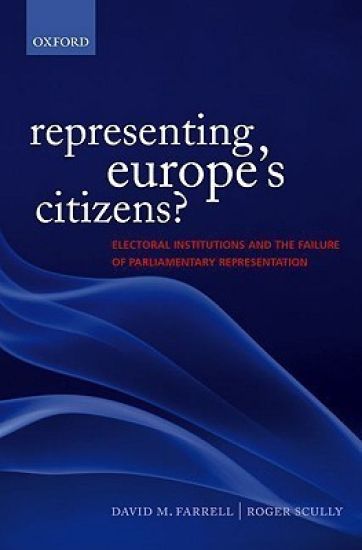
The past 15 years have seen declining public support for European integration, and widespread suggestions that a legitimacy crisis faces the European Union (EU). Many in the EU have believed that this problem could be effectively tackled by vesting greater powers in the European Parliament (EP), the Union's only directly-elected institution. The central argument of this book is that, while considerable efforts have been made to increase the status of the EP, it is in crucial respects a failure as a representative body. This failure is grounded in the manner in which the parliament is elected. The electoral systems used for EP elections in many EU countries are, we argue, actively obstructive of Europe's voters being represented in the way that they are most likely to respond positively towards. While the behaviour of EP members is shaped strongly by the electoral systems under which they are elected (which vary across the 25 member-states of the EU), the electoral systems currently in place push most of them to behave in ways contrary to what citizens desire. Drawing on public opinion data, surveys of MEPs and considerable qualitative interview evidence, we show that the failure of parliamentary representation in the EU has a strong foundation in electoral institutions.
The Australian Electoral System

The Australian Electoral System

David M. Farrell; Ian McAllister

UNSW Press
2005
nidottu
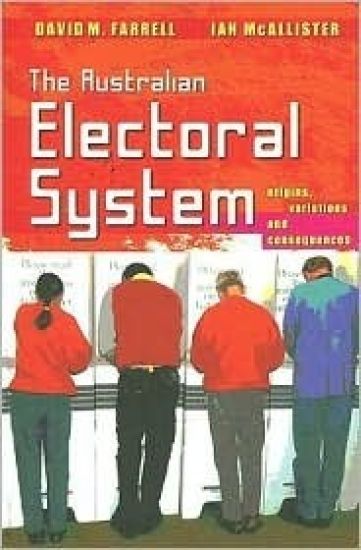
The Australian Electoral System provides the first-ever comprehensive study of the design of Australian electoral systems. It focuses on the two electoral systems, both 'preferential', that are most closely associated with Australia: namely the alternative vote and the single transferable vote. The book covers four main themes. First, it traces the origins of Australia's electoral systems, explaining how and why Australia ended up with such a relatively unique arrangement. Second, it explores the range of variation in the detail of how the various schemes operate - variations which can have significant behavioural and electoral consequences. Third, it uses aggregate and survey data to systematically analyse the consequences of electoral system design. Fourth, it examines voter reaction to these systems, both in Australia and also cross-nationally.