Kirjojen hintavertailu. Mukana 12 595 353 kirjaa ja 12 kauppaa.

Kirjailija

David M. J. Lazer

Kirjat ja teokset yhdessä paikassa: 4 kirjaa, julkaisuja vuosilta 2018-2024, suosituimpien joukossa Black Networks Matter. Vertaile teosten hintoja ja tarkista saatavuus suomalaisista kirjakaupoista.

4 kirjaa

Kirjojen julkaisuhaarukka 2018-2024.

Black Networks Matter

Black Networks Matter

Matthew David Simonson; Ray Block Jr; James N. Druckman; Katherine Ognyanova; David M. J. Lazer

Cambridge University Press
2024
pokkari
Scholars have long recognized that interpersonal networks play a role in mobilizing social movements. Yet, many questions remain. This Element addresses these questions by theorizing about three dimensions of ties: emotionally strong or weak, movement insider or outsider, and ingroup or cross-cleavage. The survey data on the 2020 Black Lives Matter protests show that weak and cross-cleavage ties among outsiders enabled the movement to evolve from a small provocation into a massive national mobilization. In particular, the authors find that Black people mobilized one another through social media and spurred their non-Black friends to protest by sharing their personal encounters with racism. These results depart from the established literature regarding the civil rights movement that emphasizes strong, movement-internal, and racially homogenous ties. The networks that mobilize appear to have changed in the social media era. This title is also available as Open Access on Cambridge Core.
Black Networks Matter

Black Networks Matter

Matthew David Simonson; Ray Block Jr; James N. Druckman; Katherine Ognyanova; David M. J. Lazer

Cambridge University Press
2024
sidottu
Scholars have long recognized that interpersonal networks play a role in mobilizing social movements. Yet, many questions remain. This Element addresses these questions by theorizing about three dimensions of ties: emotionally strong or weak, movement insider or outsider, and ingroup or cross-cleavage. The survey data on the 2020 Black Lives Matter protests show that weak and cross-cleavage ties among outsiders enabled the movement to evolve from a small provocation into a massive national mobilization. In particular, the authors find that Black people mobilized one another through social media and spurred their non-Black friends to protest by sharing their personal encounters with racism. These results depart from the established literature regarding the civil rights movement that emphasizes strong, movement-internal, and racially homogenous ties. The networks that mobilize appear to have changed in the social media era. This title is also available as Open Access on Cambridge Core.
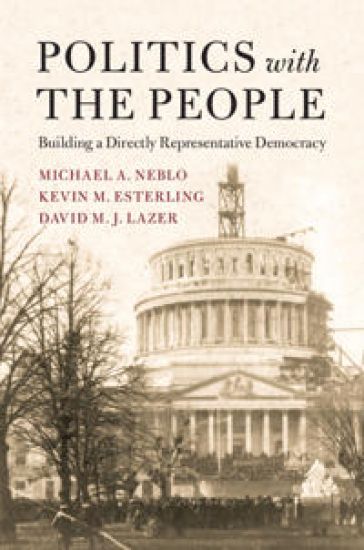
Politics with the People

Politics with the People

Michael A. Neblo; Kevin M. Esterling; David M. J. Lazer

Cambridge University Press
2019
pokkari
Many citizens in the US and abroad fear that democratic institutions have become weak, and continue to weaken. Politics with the People develops the principles and practice of 'directly representative democracy' - a new way of connecting citizens and elected officials to improve representative government. Sitting members of Congress agreed to meet with groups of their constituents via online, deliberative town hall meetings to discuss some of the most important and controversial issues of the day. The results from these experiments reveal a model of how our democracy could work, where politicians consult with and inform citizens in substantive discussions, and where otherwise marginalized citizens participate and are empowered. Moving beyond our broken system of interest group politics and partisan bloodsport, directly representative reforms will help restore citizens' faith in the institutions of democratic self-government, precisely at a time when those institutions themselves feel dysfunctional and endangered.
Politics with the People

Politics with the People

Michael A. Neblo; Kevin M. Esterling; David M. J. Lazer

Cambridge University Press
2018
sidottu
Many citizens in the US and abroad fear that democratic institutions have become weak, and continue to weaken. Politics with the People develops the principles and practice of 'directly representative democracy' - a new way of connecting citizens and elected officials to improve representative government. Sitting members of Congress agreed to meet with groups of their constituents via online, deliberative town hall meetings to discuss some of the most important and controversial issues of the day. The results from these experiments reveal a model of how our democracy could work, where politicians consult with and inform citizens in substantive discussions, and where otherwise marginalized citizens participate and are empowered. Moving beyond our broken system of interest group politics and partisan bloodsport, directly representative reforms will help restore citizens' faith in the institutions of democratic self-government, precisely at a time when those institutions themselves feel dysfunctional and endangered.