Kirjojen hintavertailu. Mukana 12 390 323 kirjaa ja 12 kauppaa.

Kirjailija

David M. Williams

Kirjat ja teokset yhdessä paikassa: 9 kirjaa, julkaisuja vuosilta 2004-2023, suosituimpien joukossa Receiving the Bible in Faith. Vertaile teosten hintoja ja tarkista saatavuus suomalaisista kirjakaupoista.

Mukana myös kirjoitusasut: David M Williams

9 kirjaa

Kirjojen julkaisuhaarukka 2004-2023.

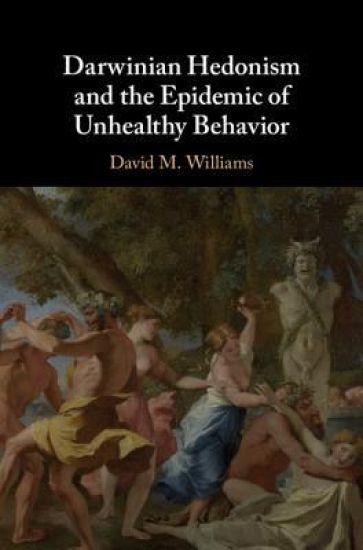
Darwinian Hedonism and the Epidemic of Unhealthy Behavior

Darwinian Hedonism and the Epidemic of Unhealthy Behavior

David M. Williams

Cambridge University Press
2023
pokkari
Psychological hedonism - the idea that people tend to act in ways that maximize pleasure and minimize displeasure - has a decidedly poor reputation among academics who study human behavior. Opinions range from outright rejection to those who believe it to be intuitively obvious, but untestable and therefore unhelpful. In this book, the author introduces an empirically testable and useful theory of psychological hedonism based on contemporary theory and research in the emerging field of affective neuroscience. He goes on to argue that people are genetically endowed with a tendency towards psychological hedonism as a function of Darwinian processes. This view of psychological hedonism in light of its Darwinian origins - thereinafter referred to as Darwinian hedonism - is essential to address the growing global epidemic of unhealthy behavior, such as poor diet, physical inactivity, and substance use.
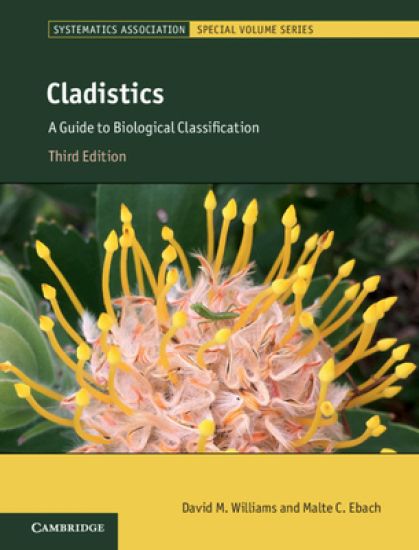
Cladistics

Cladistics

David M. Williams; Malte C. Ebach

Cambridge University Press
2020
pokkari
This new edition of a foundational text presents a contemporary review of cladistics, as applied to biological classification. It provides a comprehensive account of the past fifty years of discussion on the relationship between classification, phylogeny and evolution. It covers cladistics in the era of molecular data, detailing new advances and ideas that have emerged over the last twenty-five years. Written in an accessible style by internationally renowned authors in the field, readers are straightforwardly guided through fundamental principles and terminology. Simple worked examples and easy-to-understand diagrams also help readers navigate complex problems that have perplexed scientists for centuries. This practical guide is an essential addition for advanced undergraduates, postgraduates and researchers in taxonomy, systematics, comparative biology, evolutionary biology and molecular biology.
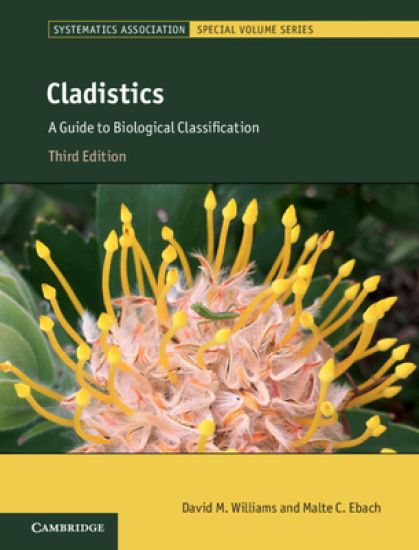
Cladistics

Cladistics

David M. Williams; Malte C. Ebach

Cambridge University Press
2020
sidottu
This new edition of a foundational text presents a contemporary review of cladistics, as applied to biological classification. It provides a comprehensive account of the past fifty years of discussion on the relationship between classification, phylogeny and evolution. It covers cladistics in the era of molecular data, detailing new advances and ideas that have emerged over the last twenty-five years. Written in an accessible style by internationally renowned authors in the field, readers are straightforwardly guided through fundamental principles and terminology. Simple worked examples and easy-to-understand diagrams also help readers navigate complex problems that have perplexed scientists for centuries. This practical guide is an essential addition for advanced undergraduates, postgraduates and researchers in taxonomy, systematics, comparative biology, evolutionary biology and molecular biology.
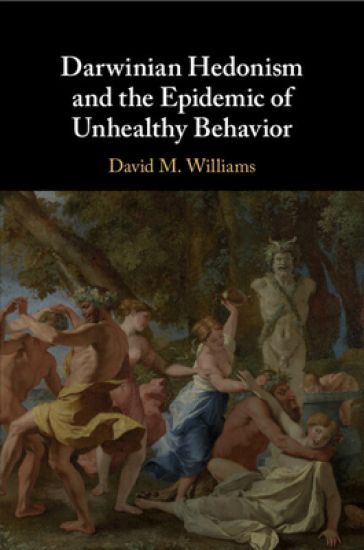
Darwinian Hedonism and the Epidemic of Unhealthy Behavior

Darwinian Hedonism and the Epidemic of Unhealthy Behavior

David M. Williams

Cambridge University Press
2019
sidottu
Psychological hedonism - the idea that people tend to act in ways that maximize pleasure and minimize displeasure - has a decidedly poor reputation among academics who study human behavior. Opinions range from outright rejection to those who believe it to be intuitively obvious, but untestable and therefore unhelpful. In this book, the author introduces an empirically testable and useful theory of psychological hedonism based on contemporary theory and research in the emerging field of affective neuroscience. He goes on to argue that people are genetically endowed with a tendency towards psychological hedonism as a function of Darwinian processes. This view of psychological hedonism in light of its Darwinian origins - thereinafter referred to as Darwinian hedonism - is essential to address the growing global epidemic of unhealthy behavior, such as poor diet, physical inactivity, and substance use.
Foundations of Systematics and Biogeography

Foundations of Systematics and Biogeography

David M. Williams; G. Nelson; Malte C. Ebach

Springer-Verlag New York Inc.
2010
nidottu
Anyone interested in comparative biology or the history of science will find this myth-busting work genuinely fascinating. It draws attention to the seminal studies and important advances that have shaped systematic and biogeographic thinking. It traces concepts in homology and classification from the 19th century to the present through the provision of a unique anthology of scientific writings from Goethe, Agassiz, Owen, Naef, Zangerl and Nelson, among others.
Foundations of Systematics and Biogeography

Foundations of Systematics and Biogeography

David M. Williams; G. Nelson; Malte C. Ebach

Springer-Verlag New York Inc.
2007
sidottu
This volume draws attention to the seminal studies and important advances that have shaped systematic and biogeographic thinking and continue to influence its direction today. It traces concepts in homology and classification from the 19th century to the present through the provision of a unique anthology of scientific writings from Goethe, Agassiz, Geoffroy St. Hilaire, Owen, Naef, Zangerl and Nelson, among others. In addition, current attitudes and practices in comparative biology are interrogated, particularly in relation to evolutionary studies leading to a re-statement of the principal aims of the discipline.In order to alert prospective students to pitfalls common in systematics and biogeography, the book highlights three principal messages: biological classifications and their explanatory mechanisms are separate notions; most, if not all, homology concepts pre-date the works of Darwin; and that the foundation of all comparative biology is the concept of relationship - neither 'similarity' nor 'genealogical hypotheses of descent' are sufficient.
Receiving the Bible in Faith

Receiving the Bible in Faith

David M. Williams

The Catholic University of America Press
2004
sidottu
There is a tension between classic and modern approaches to the Bible that continues to drive discussion today. For traditional theology, the Bible was divine revelation and a Church Father could say ""we listen to God when we read."" For critical history, the Bible was a collection of writings from the past to be read no differently than any other book. The weight of the tension falls on those who wish to combine the two approaches without being false to either. This book comes to the issues through sustained examination of contemporary writers committed to the faithful practice of both theology and history: biblical scholars Raymond Brown and Brevard Childs, and theologians Juan Luis Segundo and Henri de Lubac. Drawing especially on Brown and de Lubac, David Williams concludes that faithful reception of the Bible as Scripture involves both full application of historical studies and open acceptance of a Christological focus. Separating the biblical witness from history threatens to break contact with the communities of biblical Israel and the apostolic Church, just as failing to see that ""in these last days, God spoke to us through a Son"" threatens to reduce the Bible to a merely historical artifact. To avoid the first difficulty, Williams argues for recognition of the Bible as a complex union of human and divine intentions where historical work is necessary to distinguish and maintain the integrity of each. To avoid the second, he sets the four traditional senses of Scripture within a Christocentric framework as a means of actualizing the textual witness in the present. The book should prove helpful to students as an overview of some of the issues involved, while more advanced readers will appreciate its analysis of recent scholars as well the attempt to integrate and adapt their insights.