Kirjojen hintavertailu. Mukana 12 390 323 kirjaa ja 12 kauppaa.
Kirjailija
David MacDonald
Kirjat ja teokset yhdessä paikassa: 39 kirjaa, julkaisuja vuosilta 1998-2026, suosituimpien joukossa Canadian Stem Grade 4. Vertaile teosten hintoja ja tarkista saatavuus suomalaisista kirjakaupoista.
A comprehensive exploration of how labor unions, broadly conceived, shape party loyalties in the American mass public. How and why do labor unions matter for American mass party loyalties, specifically party identification and vote choice? Labor Unions and American Mass Politics marshals a wide range of survey data to test two different ways through which labor unions can shape mass party loyalties. The first is via people's personal affiliation with organized labor, such as a current/former member or household resident, while the second is via people's attitudes toward organized labor, such as whether they favor vs. disfavor unions in general. Overall, author David Macdonald shows that both are capable of shaping mass support for the Democratic Party and its various political candidates and that such relationships are also conditioned by whether people perceive labor unions and Democrats to be political allies, a connection that is lacking among a sizeable minority of Americans. Overall, Macdonald provides not only a timely analysis of mass labor politics in the early twenty-first-century United States but also shows that labor unions are politically consequential, even after decades of decline.

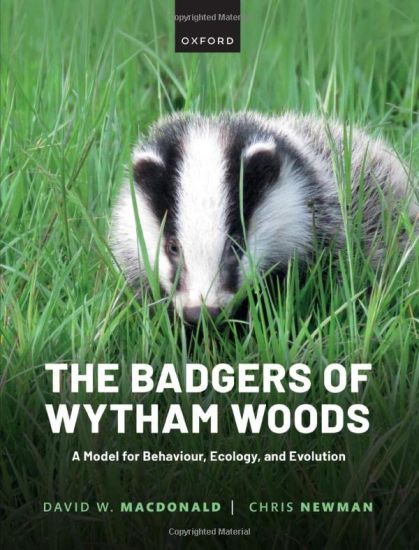
The badgers of Wytham Woods (Oxford, UK) have been studied continuously and intensively by David Macdonald for almost 50 years (25 of them with his former student and co-author Chris Newman), generating a wealth of data pertaining to every facet of their ecology and evolution. Through a mix of accessible, highly readable prose and cutting-edge science, the authors weave a riveting scientific story of the lives of these intriguing creatures, highlighting the insights offered to science more broadly through badgers as a model system. They provide a paradigm - from population down to molecule - for a deeper understanding of mammalian behaviour, ecology, epidemiology, evolutionary biology, and conservation. The real value of this long-term study is particularly apparent with current and globally relevant challenges such as climate change, disease epidemics, and senescence. This unique dataset enables us to examine these issues in a context that only a half-century experiment can reveal. The Badgers of Wytham Woods will appeal to a broad audience of professional academics (especially carnivore and mammalian biologists), researchers and students at all levels, governmental and non-governmental wildlife bodies, and to the natural historian fascinated by wild animals and the remarkable processes of nature they exemplify.
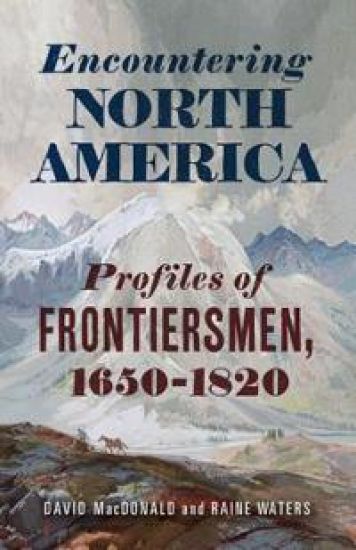
How European settlers learned of the vast North American continent was often through the accounts of men who individually or in groups trekked into the wilderness. Their chief motivation was ascertaining or obtaining natural resources for commerce, such as beaver pelts and other hides, which took them from the eastern forests, across the Great Plains, into the Rocky Mountains, or to the Pacific Ocean--years before the celebrated Lewis and Clark Expedition. Their information about Indigenous Peoples, the landscape, and the waterways influenced the course of North American history. While a few frontiersmen, such as Daniel Boone, are well known, most--predominantly Canadian and French--are forgotten, their activities recalled only by scholars. Encountering North America: Profiles of Frontiersmen, 1650-1820 by David MacDonald and Raine Waters presents men whose far-reaching explorations opened the continent to further settlements and trade routes. One was torn between the French and British, while another between Indigenous and white societies. One was Spanish. One was an administrator, a force for order in an unsettled world. Two were certainly homicidal. As with the authors' previous volumes on failed European attempts to colonize both North and South America, each narrative is supported by discursive commentary on the primary source materials available.
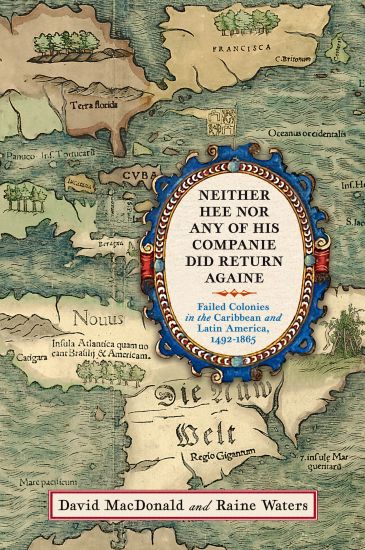
During the sixteenth and seventeenth centuries European powers vied for control of the land and resources in the Caribbean and Latin America. Colonies made Spain rich through gold, silver, and gems looted from the Native cultures, along with rare and exotic goods such as tobacco, sugar, and dyewood, and even humble products such as hides. In rapid turn, other European monarchies and merchants sent out colonizing expeditions to the region to exploit the resources of the New World, but creating permanent footholds was perilous. All European settlements founded in the New World faced a variety of challenges, including food supply, inconsistent support from Europe, leadership, ignorance of the area colonized, irrational expectations, religious discord, relations with Native peoples, and violent national rivalries. Colonies that succeeded and those that failed faced the same challenges, although in differing degrees and circumstances. The margin between survival and disaster was always small--there were few chances to succeed and the risk of failure was never far away. In Neither Hee Nor Any of His Companie Did Return Againe: Failed Colonies in the Caribbean and Latin America, 1492-1865, historians David MacDonald and Raine Waters examine the European, and later American, failures to establish permanent settlements in the region. Beginning with Columbus's ill-conceived ventures, the authors discuss the efforts, from German claims in Venezuela and Scottish attempts in Panama to defeated Confederates fleeing to Mexico, Brazil, and elsewhere. For each colony, the primary source information is contextualized and evaluated. Along the way, the authors determine commonalities across these ill-fated colonies as well as underscore the fact that while Indigenous peoples of the region often vigorously resisted predatory European colonization, their numbers were decimated by relentless warfare, slave raids, and European diseases. As Indian populations declined, colonists imported African slaves in large numbers. The brutal treatment of slaves resulted in those who escaped creating their own settlements that existed in a state of endemic warfare with European colonists. An important contribution to Atlantic World studies, this volume reveals the fine line between colonies that thrived and those that failed.
Development of the technology of warfare, and the limitations imposed on its use by its developers, allowing only peaceful uses have, for generations, protected humankind from self-destruction. But when oppressive authoritarian groups gain access to powerful new classified technology the delicate balance of world peace is suddenly at risk. (Cue the scary music) Do the scientists, psychologists, and engineers at Neurologix realize that the United States Capitol is under attack? Can they find a solution in time?
The badgers of Wytham Woods (Oxford, UK) have been studied continuously and intensively by David Macdonald for almost 50 years (25 of them with his former student and co-author Chris Newman), generating a wealth of data pertaining to every facet of their ecology and evolution. Through a mix of accessible, highly readable prose and cutting-edge science, the authors weave a riveting scientific story of the lives of these intriguing creatures, highlighting the insights offered to science more broadly through badgers as a model system. They provide a paradigm - from population down to molecule - for a deeper understanding of mammalian behaviour, ecology, epidemiology, evolutionary biology, and conservation. The real value of this long-term study is particularly apparent with current and globally relevant challenges such as climate change, disease epidemics, and senescence. This unique dataset enables us to examine these issues in a context that only a half-century experiment can reveal. The Badgers of Wytham Woods will appeal to a broad audience of professional academics (especially carnivore and mammalian biologists), researchers and students at all levels, governmental and non-governmental wildlife bodies, and to the natural historian fascinated by wild animals and the remarkable processes of nature they exemplify.
The Story of the Many Ill-Fated Attempts by Europeans to Create Permanent Settlements in the New World The nations of the modern Americas began as successful colonies, but not all colonies succeeded, and the margin between colonies that survived and those that failed was small. Both contribute to our understanding of the ordeals of the Europeans who first settled in the New World and of the Native Americans who had to interact with them, but with the exception of the famous lost Roanoke colony, the failed colonies of North America remain largely unknown except to specialists in colonial history. The Spanish and French repeatedly attempted to colonize parts of Georgia, Florida, and Virginia, while the Dutch, French, and English sought to establish permanent settlements along the northern waterways of the New World. The greatest problem faced by every colony was the specter of starvation. Native Americans gave food to newly arrived colonists, but such generosity could not endure. Indigenous people soon realized that colonists of every nationality were prepared to make war against Native peoples, conquer, subjugate, and even massacre whole communities unless they were cooperative and offered no resistance to the intrusion into their territory. In response, Native Americans withheld aid or resorted to retaliatory violence, dooming many European settlements. In We Could Perceive No Sign of Them: Failed Colonies in North America, 1526-1689, historians David MacDonald and Raine Waters tell the fascinating stories of the many attempts to establish a European foothold in the New World, from the first Spanish colony in 1526 on the coast of Georgia to the final disastrous French endeavors near the arctic. Using primary source texts, the authors synthesize the shared experiences of Europeans to better understand the very fine line between success and failure and the varieties of Native American responses.
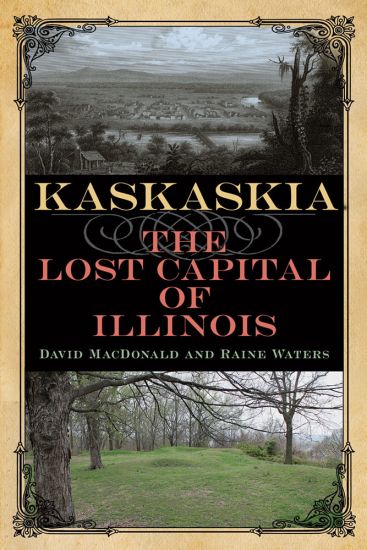
This first comprehensive account of the Illinois village of Kaskaskia covers more than two hundred years in the vast and compelling history of the state. David MacDonald and Raine Waters explore Illinois’s first capital in great detail, from its foundation in 1703 to its destruction by the Mississippi River in the latter part of the nineteenth century, as well as everything in between: successes, setbacks, and the lives of the people who inhabited the space.At the outset the Kaskaskia tribe, along with Jesuit missionaries and French traders, settled near the confluence of the Kaskaskia and Mississippi rivers, about sixty miles south of modern-day St. Louis. The town quickly became the largest French town and most prosperous settlement in the Illinois Country. After French control ended, Kaskaskia suffered under corrupt British and then inept American rule. In the 1790s the town revived and became the territorial capital, and in 1818 it became the first state capital. Along the way Kaskaskia was beset by disasters: crop failures, earthquakes, tornadoes, floods, epidemics, and the loss of the capital-city title to Vandalia. Likewise, human activity and industry eroded the river’s banks, causing the river to change course and eventually wash away the settlement. All that remains of the state’s first capital today is a village several miles from the original site.MacDonald and Waters focus on the town’s growth, struggles, prosperity, decline, and obliteration, providing an overview of its domestic architecture to reveal how its residents lived. Debunking the notion of a folklore tradition about a curse on the town, the authors instead trace those stories to late nineteenth-century journalistic inventions. The result is a vibrant, heavily illustrated, and highly readable history of Kaskaskia that sheds light on the entire early history of Illinois.
1969 onwards (all models), Written by two of British Airways' most experienced Concorde flight crew, the Concorde Manual is the latest aircraft manual from Haynes, following on from the acclaim received by the Spitfire Manual., Concentrating on the technical and engineering aspects of Concorde, this manual gives rare insights into owning, operating, servicing and flying the supersonic airliner. Although the British and French Concorde fleets were prematurely retired in 2003, interest in this marvel of design and technology remains undiminished and all who admire Concorde will relish the unique information provided in this innovative title., Authors: Captain David Leney and Senior Engineer Officer David Macdonald. Captain David Leney is a former pilot and Flight Manager (Technical) for BA's Concorde Division. Senior Engineer Officer David Macdonald is a former flight engineer and Flight Engineer Superintendent (Concorde). Between them, the two Davids have thousands of flying hours on Concorde. They live in Camberley and Marlow respectively., Icon titles were originally published in the classic, larger manual size and have now been produced in a smaller format containing the same information.
Ideal to supplement, enhance or enrich any science program In this STEM workbook, activities and projects provide a balance of core knowledge learning and investigation and application. The focus is on concepts and skills from physical, life, and earth and space Sciences, and on familiarizing students with science, technology, engineering, and math (STEM) concepts. Assessment rubrics for success criteria are also included. Features ready-to-go, reproducible activities Skills covered in this workbook: Physical, Life, Earth and Space SciencesEngineering, Technology, and Applications of ScienceInformational TextProject-based ActivitiesSTEM OccupationsAbout this workbook: Designed for teachers with parents in mind, this workbook is perfect for the classroom and for home It promotes student confidence, learning, and success and offers the ideal supplement to enhance or enrich any curriculum. This must-have STEM education workbook: Includes manageable activities that reinforce essential skills and conceptsMeets and covers curriculum efficiently and effectivelyProvides a consistent, clear approach
Canadian STEM Grade 6: Ideal to supplement, enhance or enrich any science program In this STEM workbook, activities and projects provide a balance of core knowledge learning and investigation and application. The focus is on concepts and skills from physical, life, and earth and space Sciences, and on familiarizing students with science, technology, engineering, and math (STEM) concepts. Assessment rubrics for success criteria are also included. Features ready-to-go, reproducible activities Skills covered in this workbook: Physical, Life, Earth and Space SciencesEngineering, Technology, and Applications of ScienceInformational TextProject-based ActivitiesSTEM OccupationsAbout this workbook: Designed for teachers with parents in mind, this workbook is perfect for the classroom and for home It promotes student confidence, learning, and success and offers the ideal supplement to enhance or enrich any curriculum.This must-have STEM education workbook: Includes manageable activities that reinforce essential skills and conceptsMeets and covers curriculum efficiently and effectivelyProvides a consistent, clear approach
Canadian STEM Grade 3: Ideal to supplement, enhance or enrich any science program In this STEM workbook, activities and projects provide a balance of core knowledge learning and investigation and application. The focus is on concepts and skills from physical, life, and earth and space Sciences, and on familiarizing students with science, technology, engineering, and math (STEM) concepts. Assessment rubrics for success criteria are also included. Features ready-to-go, reproducible activities Skills covered in this workbook: Physical, Life, Earth and Space SciencesEngineering, Technology, and Applications of ScienceInformational TextProject-based ActivitiesSTEM OccupationsAbout this workbook: Designed for teachers with parents in mind, this workbook is perfect for the classroom and for home It promotes student confidence, learning, and success and offers the ideal supplement to enhance or enrich any curriculum.This must-have STEM education workbook: Includes manageable activities that reinforce essential skills and conceptsMeets and covers curriculum efficiently and effectivelyProvides a consistent, clear approach
Canadian STEM Grade 5: Ideal to supplement, enhance or enrich any science program In this STEM workbook, activities and projects provide a balance of core knowledge learning and investigation and application. The focus is on concepts and skills from physical, life, and earth and space Sciences, and on familiarizing students with science, technology, engineering, and math (STEM) concepts. Assessment rubrics for success criteria are also included. Features ready-to-go, reproducible activities Skills covered in this workbook: Physical, Life, Earth and Space SciencesEngineering, Technology, and Applications of ScienceInformational TextProject-based ActivitiesSTEM OccupationsAbout this workbook: Designed for teachers with parents in mind, this workbook is perfect for the classroom and for home It promotes student confidence, learning, and success and offers the ideal supplement to enhance or enrich any curriculum.This must-have STEM education workbook: Includes manageable activities that reinforce essential skills and conceptsMeets and covers curriculum efficiently and effectivelyProvides a consistent, clear approach
Books are written. Sometimes people write the book; other times, something comes through the person. The question becomes, "what comes through?" Many writers, artists, musicians have recognized this distinction, and most have been at a loss to describe it, although they know and sense the "something." Perhaps in the reading, or the listening, we also connect to the "something," and in the connection, there is a shift in mood, awareness, and state of being. David MacDonald trusts that, in the reading of The Meeting Place, readers will connect with the "something" and that each time readers embrace it, they will leave with something more of themselves. About the Author David MacDonald was born in Scotland in 1950. A co-founder of Scotland's first organic restaurant in 1970, he moved to Lake Tahoe in 1973. After his first experience with Rolfing, he has devoted himself to the healing arts and sciences. Exploration of consciousness is a lifelong passion of his. MacDonald maintains a private Rolfing practice in Reno, Nevada, and also offers Attunement meditations. He has been married to Kathleen for thirty-seven years, and they have a twenty-seven-year-old son, Ossian, who works in the family healing center. www.renotahoerolfing.com
Canadian Grammar Practice Grade 4: Elevate your students' language proficiency with our engaging grammar workbook, specifically tailored to align with essential Canadian grammar concepts. This workbook aims to reinforce language fundamentals while cultivating advanced linguistic skills.Areas of Study Include: NounsPossessive NounsPronounsAdjectives and ArticlesAdverbsSentences and PunctuationContractions and AbbreviationsSpecial ProblemsVocabularyThis practical, curriculum-based workbook is a valuable tool for boosting grammar skills and enhancing overall language proficiency in a structured, systematic manner.
Canadian Grammar Practice Grade 3: Elevate your students' language proficiency with our engaging grammar workbook, specifically tailored to align with essential Canadian grammar concepts. This workbook aims to reinforce language fundamentals while cultivating advanced linguistic skills.Areas of Study Include: NounsPossessive NounsPronounsAdjectives and ArticlesAdverbsSentences and PunctuationContractions and AbbreviationsSpecial ProblemsVocabularyThis practical, curriculum-based workbook is a valuable tool for boosting grammar skills and enhancing overall language proficiency in a structured, systematic manner.
Canadian Grammar Practice Grade 6: Elevate your students' language proficiency with our engaging grammar workbook, specifically tailored to align with essential Canadian grammar concepts. This workbook aims to reinforce language fundamentals while cultivating advanced linguistic skills.Areas of Study Include: NounsPossessive NounsPronounsAdjectives and ArticlesAdverbsSentences and PunctuationContractions and AbbreviationsSpecial ProblemsVocabularyThis practical, curriculum-based workbook is a valuable tool for boosting grammar skills and enhancing overall language proficiency in a structured, systematic manner.
Canadian Grammar Practice Grade 5: Elevate your students' language proficiency with our engaging grammar workbook, specifically tailored to align with essential Canadian grammar concepts. This workbook aims to reinforce language fundamentals while cultivating advanced linguistic skills.Areas of Study Include: NounsPossessive NounsPronounsAdjectives and ArticlesAdverbsSentences and PunctuationContractions and AbbreviationsSpecial ProblemsVocabularyThis practical, curriculum-based workbook is a valuable tool for boosting grammar skills and enhancing overall language proficiency in a structured, systematic manner.
This must have resource is ideal to supplement, enhance or enrich any science program Focus on concepts and skills to enable students to become familiar with Science, Technology, Engineering and Math (STEM) concepts. Students will be also introduced to STEM occupations. Pages are ready-to-go, reproducible and include informational text, experiments, extension activities and teacher pages.
Students will hone essential reading comprehension skills with this must-have resource. Each selection encourages students to read with a purpose. Follow up questions emphasize making connections, inferences and synthesizing what students have read. Graphic organizers for extended learning are also included.