Kirjojen hintavertailu. Mukana 12 192 309 kirjaa ja 12 kauppaa.

Kirjailija

David MacKenzie

Kirjat ja teokset yhdessä paikassa: 20 kirjaa, julkaisuja vuosilta 1986-2025, suosituimpien joukossa Embattled Nation. Vertaile teosten hintoja ja tarkista saatavuus suomalaisista kirjakaupoista.

20 kirjaa

Kirjojen julkaisuhaarukka 1986-2025.

Embattled Nation

Embattled Nation

Patrice Dutil; David MacKenzie

Dundurn Group Ltd
2017
pokkari
Embattled Nation explores Canada’s tumultuous wartime election of 1917 and the people and issues that made it a pivotal moment in Canadian history.Embattled Nation explores the drama of Canada’s tumultuous election of 1917. In the context of the bloody battles of Vimy Ridge, Hill 70, Passchendaele, and of the Halifax explosion, Sir Robert Borden’s Conservative government introduced conscription and called for a wartime election. Most Liberals, led by Sir Wilfrid Laurier, opposed compulsory military service, while in Quebec a new movement emerged to contest the Canadian government’s attitude and policy. To survive and win the election, Prime Minister Borden resorted to unprecedented measures that tested the fabric of Canadian democracy.
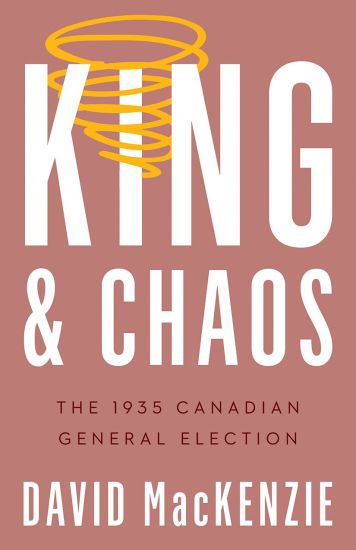
King and Chaos

King and Chaos

David MacKenzie

University of British Columbia Press
2023
pokkari
In 1935, Canadians went to the polls against the backdrop of the Great Depression and deteriorating international conditions. This election was like no other, as five major parties competed for voters who were used to a traditional slate of Liberals versus Conservatives. King and Chaos examines the significance of this turning point in political history.As the Conservative government splintered under the weight of outdated policies, the opposition Liberals watched the destruction. Meanwhile, the newly minted Co-operative Commonwealth Federation, Social Credit Party, and Reconstruction Party broadened the electoral base, bringing working-class Canadians – and working-class issues – more directly into the political process.Although Canadians ultimately swept Liberal William Lyon Mackenzie King back into power, King and Chaos demonstrates that the advent of third parties transformed the political landscape. And while other countries turned to dictators and demagogues, King delivered a less radical but equally important change: an effective electoral machine and a national coalition of French and English Canada that dominated politics for the next generation.
GNU Diffutils Reference Manual

GNU Diffutils Reference Manual

Paul Eggert; Richard Stallman; David MacKenzie

Samurai Media Limited
2015
nidottu
Computer users often find occasion to ask how two files differ. Perhaps one file is a newer version of the other file. Or maybe the two files started out as identical copies but were changed by different people. You can use the diff command to show differences between two files, or each corresponding file in two directories. diff outputs differences between files line by line in any of several formats, selectable by command line options. This set of differences is often called a diff or patch. For files that are identical, diff normally produces no output; for binary (non-text) files, diff normally reports only that they are different. You can use the cmp command to show the byte and line numbers where two files differ. cmp can also show all the bytes that differ between the two files, side by side. A way to compare two files character by character is the Emacs command M-x compare-windows. See Section "Other Window" in The GNU Emacs Manual, for more information on that command. You can use the diff3 command to show differences among three files. When two people have made independent changes to a common original, diff3 can report the differences between the original and the two changed versions, and can produce a merged file that contains both persons' changes together with warnings about conflicts. You can use the sdiff command to merge two files interactively. You can use the set of differences produced by diff to distribute updates to text files (such as program source code) to other people. This method is especially useful when the differences are small compared to the complete files. Given diff output, you can use the patch program to update, or patch, a copy of the file. If you think of diff as subtracting one file from another to produce their difference, you can think of patch as adding the difference to one file to reproduce the other. This manual first concentrates on making diffs, and later shows how to use diffs to update files.
Canada 1911

Canada 1911

David Mackenzie; Patrice Dutil

Dundurn Group Ltd
2011
pokkari
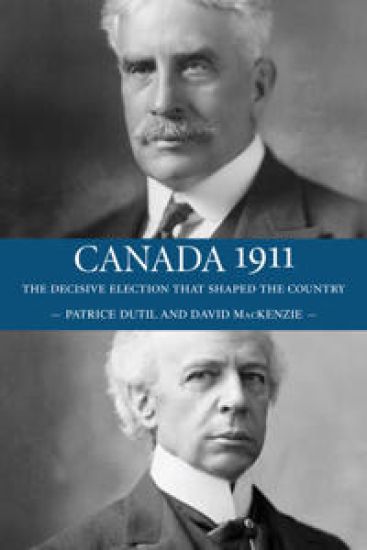
One hundred years ago, Canadians went to the polls to decide the fate of their country in an election that raised issues vital to Canada's national independence and its place in the world. Canadians faced a clear choice between free trade with the United States and fidelity to the British Empire, and the decisions they made in September 1911 helped shape Canada's political and economic history for the rest of the century. Canada 1911 revisits and re-examines this momentous turn in Canadian history, when Canadians truly found themselves at a parting of the ways. It was Canada's first great modern election and one of the first expressions of the birth of modern Canada. The poet Rudyard Kipling famously wrote at the time that this election was nothing less than a fight for Canada's soul. This book will explain why.
A World Beyond Borders

A World Beyond Borders

David Mackenzie

University of Toronto Press
2010
pokkari
This short and well-written overview provides essential information on the history of international organizations (IOs), with particular focus on the League of Nations, the development of the United Nations, and the UN system. Starting at the beginning of the twentieth century, when there were very few international organizations in existence, A World Beyond Borders traces the growth of IOs through to the close of the century, when there were literally thousands at the heart of the international system. Following this chronological order, the book examines how international organizations became the major legal, moral, and cultural forces that they are today, involved in all aspects of international relations including peacekeeping, disarmament, peace resolution, human rights, diplomacy, and environmentalism. This book is the first in the Canadian Historical Association / University of Toronto Press International Themes and Issues Series, which is dedicated to publishing concise, focused overviews of topics that are of international significance in the study of history.
ICAO

ICAO

David Mackenzie

University of Toronto Press
2010
sidottu
A United Nations specialized agency, the International Civil Aviation Organization (ICAO) oversees and encourages the development of international civil aviation. ICAO is the largest and most important organization involved with aviation safety, and its technical standards, legal regulations, and operating procedures have been essential in the development of international commercial aviation. In the first history of this important UN body, David MacKenzie touches on issues ranging from the Cold War to economic regulation and development assistance. With the rise of aviation terrorism, MacKenzie demonstrates that ICAO has assumed a leading role in the struggle to secure civil aviation against sabotage and hijacking, while providing a forum for international concerns and disputes. A broad political-diplomatic history of the organization and the role that it played in the evolution of international civil aviation, this work offers a unique perspective on modern transportation and international cooperation.
Jovan Ristic – Outstanding Serbian Statesman

Jovan Ristic – Outstanding Serbian Statesman

David Mackenzie

East European Monographs
2006
sidottu
This is the first comprehensive biography of Jovan Ristic, one of Serbia's leading political figures during the second half of the nineteenth century. Known for his diplomatic skills at the height of his career between 1868 and 1880, Ristic became one of the most successful negotiators during Serbia's dialogue with other European powers and the Ottoman Empire.
Count N. P. Ignat`ev – The Father of Lies?

Count N. P. Ignat`ev – The Father of Lies?

David Mackenzie

East European Monographs
2002
sidottu
This is the first complete biography of the outstanding Russian general and diplomat Count N. P. Ignat'ev (1832-1908) who negotiated the important treaties of Beijing and San Stefano. The book focuses on his brilliant career in Central Asia as a leading player in the "Great Game", China and especially as ambassador in Constantinople, 1864-77., where he acquired the monikers "the Vice-Sultan" for his powerful position there and "Father of Lies" for his alleged tendency to tell fibs (a reputation here reassessed).
Serbs and Russians

Serbs and Russians

David MacKenzie

East European Monographs
1997
sidottu
MacKenzie deals in general terms with the historical relationship of the two groups and describes the roles of four important Serbian leaders who contributed to Yugoslav unification and national development before the second World War.
Violent Solutions

Violent Solutions

David MacKenzie

University Press of America
1996
sidottu
This book deals with the impact of revolution, nationalism, and secret societies in modern European history from the Enlightenment to World War I. Special attention is devoted to the French Revolution, nationalism and unification of Italy, Germany, and Serbia, and the role of organizations such as "Young Italy" and the Serbian "Black Hand." Contents: List of Illustrations; List of Maps; Preface; The Enlightenment, Freemasonry and Rousseau; The French Revolution, 1789-1799; Babeuf and Buonarroti; Italian Nationalism Before 1848; The Unification of Italy, 1848-1870; German Nationalism and Revolutions of 1848; The Unification of Germany, 1850-1871; The Greek Revolution; The Russian Revolutionary Movement to 1881; The Emergence of Serbia to 1878; Serbia and the Creation of Yugoslavia, 1878-1918; The Legacy of Violence.
Violent Solutions

Violent Solutions

David MacKenzie

University Press of America
1996
nidottu
This book deals with the impact of revolution, nationalism, and secret societies in modern European history from the Enlightenment to World War I. Special attention is devoted to the French Revolution, nationalism and unification of Italy, Germany, and Serbia, and the role of organizations such as 'Young Italy' and the Serbian 'Black Hand.' Contents: List of Illustrations; List of Maps; Preface; The Enlightenment, Freemasonry and Rousseau; The French Revolution, 1789-1799; Babeuf and Buonarroti; Italian Nationalism Before 1848; The Unification of Italy, 1848-1870; German Nationalism and Revolutions of 1848; The Unification of Germany, 1850-1871; The Greek Revolution; The Russian Revolutionary Movement to 1881; The Emergence of Serbia to 1878; Serbia and the Creation of Yugoslavia, 1878-1918; The Legacy of Violence.
Arthur Irwin

Arthur Irwin

David MacKenzie

UNIVERSITY OF TORONTO PRESS
1993
pokkari
From 1925 to 1950, Arthur Irwin was the driving force behind the success of Maclean's Magazine, first as an associate editor, then managing editor, and, finally, as an editor. He had strong views on what it meant to be Canadian, and under his direction Maclean's was moulded into 'Canada's National Magazine,' mirroring the development of Canada as an independent nation in the twentieth century. In the years before the outbreak of the Second World War, he was at the centre of the Maclean Company’s investigation of the Department of National Defence's system of defence contracting, or what has become known as the 'Bren Gun Scandal.' In the 1940s Irwin actively sought out writers of talent and potential and gradually added to the magazine's staff many Canadian writers who went on to distinguished careers, including Ralph Allen, Pierre Berton, Blair Fraser, and Scott Young. After leaving Maclean's in 1950, Irwin was appointed film commissioner at the National Film Board, during a time when the board's survival was in doubt because of allegations of espionage and subversion. Irwin was the man called in to deal with the NFB's 'red scare,' and, afterwards, he reorganized the board and moved its operations from Ottawa to Montreal. Irwin subsequently went on to a career as a diplomat: he was appointed high commissioner in Australia, and ambassador to Brazil and Mexico. In his last professional position he was publisher of a Victoria newspaper. This book, in describing a man who was profoundly representative of his times, and whose presence in major Canadian institutions was influential, captures the mood of Irwin's period, and raises important questions about the roots of present-day Canadian nationalism and cultural identity.
Canada and International Civil Aviation 1932-1948

Canada and International Civil Aviation 1932-1948

David MacKenzie

UNIVERSITY OF TORONTO PRESS
1989
pokkari
Among the many twentieth-century explosions in technology that have made the world into a global village, few have had tangible or far-reaching an impact as aviation. David MacKenzie examines the efforts made to establish an international system for the regulation and operation of international air services, and the role played by Canadians in its development. MacKenzie approaches international civil aviation as an arm of government policy: the extension abroad of Canadian national policy. He also looks at the relationship between the bureaucratic and political levels of government and, in the larger context, at the relations between Canada and its major allies, the United States and Great Britain. Drawing on private papers and government documents from Canada, the United States, Great Britain, and Ireland, MacKenzie offers an international perspective on one of Canada's most important contributions to public policy in the mid-twentieth century.
Inside the Atlantic Triangle

Inside the Atlantic Triangle

David MacKenzie

UNIVERSITY OF TORONTO PRESS
1986
pokkari
This book examines the evolution of Canadian policy towards Newfoundland during the decade leading up to Confederation in 1949. The outbreak of war in 1939 produced relatively few changes in Canadian- Newfoundland relations but, in 1940, with the Allied collapse in Europe and the base-destroyer deal which introduced an American presence in Newfoundland, the Canadian government was forced to take a more active interest in that country's welfare. Over the course of the war the Canadians increasingly provided for the defence of Newfoundland, and a vigorous effort was made to preserve and enhance Canada's influence there.