
Kirjailija
David Madden
Kirjat ja teokset yhdessä paikassa: 24 kirjaa, julkaisuja vuosilta 1972-2026, suosituimpien joukossa James M. Cain. Vertaile teosten hintoja ja tarkista saatavuus suomalaisista kirjakaupoista.
24 kirjaa
Kirjojen julkaisuhaarukka 1972-2026.

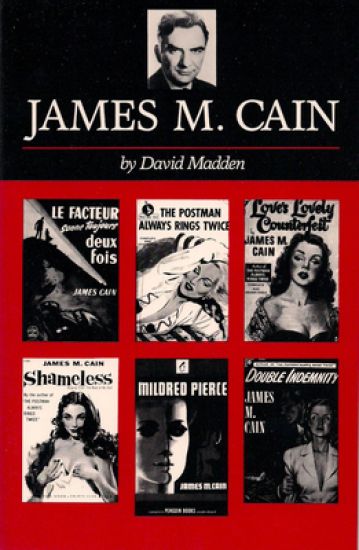
James M. Cain wrote some of the grittiest novels in American literature, including such classics as The Postman Always Rings Twice, Double Indemnity, and Mildred Pierce. James M. Cain: Hard-Boiled Mythmaker is a critical overview of the author's life, work, and legacy. An updated and expanded edition of two of David Madden's scholarly works on Cain, this new book improves upon the previous works by collecting the most essential writing on Cain by Madden into one volume. In addition to melding existing material, this work contains updated and new material, including fresh commentaries on later books, such as Rainbow's End, Cloud Nine, and The Enchanted Isle, as well as later film adaptations, including Butterfly. It also responds to 40 years' worth of criticism on Cain and reevaluates his influence. Providing an overview of all of Cain's fiction, including an analysis of the major themes of his entire literary career, the book also describes Cain's impact on and importance in 20th-century culture, film in particular. In addition to a biographical summary and thematic outline of Cain's nearly 50-year career, Madden and Mecholsky examine how Cain's works explore the nightmare consequences of the persistent American dream. Finally, Madden and Mecholsky consider Cain's technical innovations of the novel and survey the major film adaptations of Cain's novels. With its significant in-depth analysis and a foreword by Edgar-award winning author Max Allan Collins, this volume will be of interest to Cain scholars as well as anyone interested in 20th century American literature and film.

In his new memoir, My Creative Year in the Army,David Madden tells a story of creativity and conflict. In 1954 during the Korean Civil War, when nineteen-year-old Madden showed up at Fort Jackson, South Carolina, he set in motion a series of creative acts and conflicts, sometimes comic. A romantic, an idealist, an agnostic, and a liberal, he had actively attacked racism, censorship, the death penalty, and tyranny. During basic training, he befriended Rooks, a disturbed farm boy, and Jacob, the company's Jewish scapegoat. When given an order, his response frequently was to ask, "Why?" He refused to sign the loyalty oath that Senator Joseph McCarthy imposed upon the military, causing a prolonged investigation of him as a possible communist. In a free-writing hour in Clerk Typist School, he wrote an essay on Jesus that shocked the officers of his regiment. When someone stole his cartridge belt, he refused to obey a direct order to pay for another. Madden includes lively letters to and from Iva Lee, his childhood sweetheart, Vera, his intellectual friend, Hope Savage, a bizarre Greenwich Village bohemian, his teachers, his many friends, his mother, and his two convict brothers. David Madden's memoir will appeal to creative writers, veterans, and the general reader. When he entered the army, he had already created many stories, poems, plays, and nonfiction. In reading and in writing, his focus was on technique, style, and imagery. Throughout his Army ordeals, Madden worked on his first novel, Cassandra Singing.
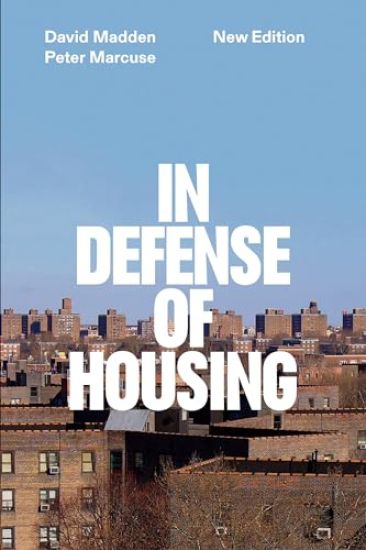
In Defense of Housing is the definitive statement on this crisis from leading urban planner Peter Marcuse and sociologist David Madden. Today our homes are being transformed into commodities, making the inequalities of the city ever more acute. Profit has become more important than social need. The poor are forced to pay more for worse housing. Communities are faced with the violence of displacement and gentrification. And the benefits of decent housing are only available for those who can afford it. The authors look at the causes and consequences of the housing problem and detail the need for progressive alternatives. The housing crisis cannot be solved by minor policy shifts, they argue. Rather, the housing crisis has deep political and economic roots-and therefore requires a radical response.
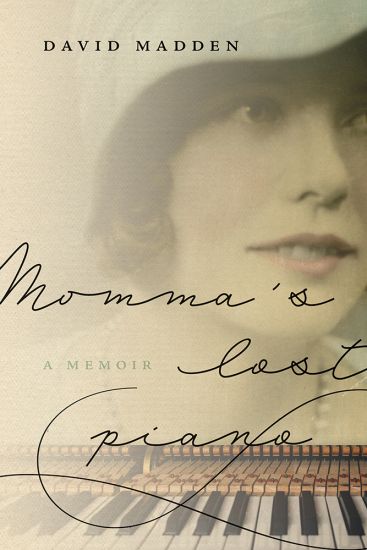
When she is seventeen, Emily Merritt’s beloved father gives her the piano she has always wanted. A few days later, having lost his job, he sells Emily’s piano and moves the family out of its two-story house in Cleveland, Ohio, to his mother’s three-room house in his hometown of Knoxville, Tennessee. The loss of her piano casts a shadow over Emily’s life in Knoxville, a city she could never love. Throughout the rest of her life, Emily longs to return to Cleveland, where she had an idyllic youth with many boyfriends and girlfriends and was, above all, a good piano student. Her life becomes like that of a nomad, moving from house to house and from job to job.Her great love of life is expressed by dancing in highway honky-tonks, along with her six beautiful girlfriends. After divorcing her lovable, alcoholic husband, Emily falls deeply in love with troubled married men. She doesn’t enjoy whiskey or smoking, but she’s not a churchgoer. She raises three boys in poverty. A fourth son dies soon after birth. Oldest Dickie becomes a life-long petty conman, but little brother John, known as “Sunshine,” becomes a legendary rescuer of wayward boys and girls. Jerry, the middle brother, becomes a merchant seaman, a soldier, and finally a professor and successful writer. Rather than a chronological narrative, Madden employs an impressionistic style that enables readers to experience Emily’s memories as he imagines them. In sharply focused scenes, Madden evokes the colorful expressions of the articulate, witty woman he has spent all his life listening to—and this memoir will inspire readers to listen eagerly, too.
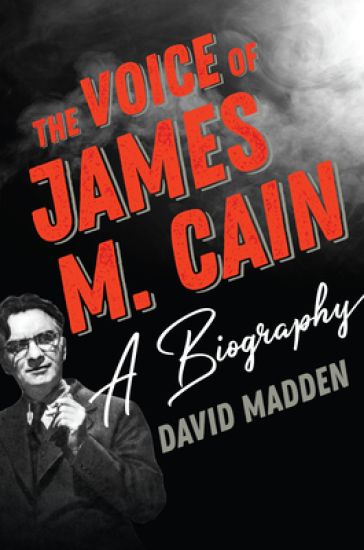
James M. Cain was among the prominent member of the "hard-boiled" school of writing that characterized the 1930s and 1940s, one of the masters of the genre that included Dashiell Hammett and Raymond Chandler. His novels became such popular film noir classics as The Postman always Rings Twice, Double Indemnity, and Mildred Pierce, and his 1937 novel Serenade boldly portrayed its hero as a bisexual. Cain also taught journalism at various colleges in Maryland, wrote editorials for the New York World, and was for a brief time managing editor at The New Yorker. This is the first biography of James M. Cain written with the full cooperation of the late novelist's family.
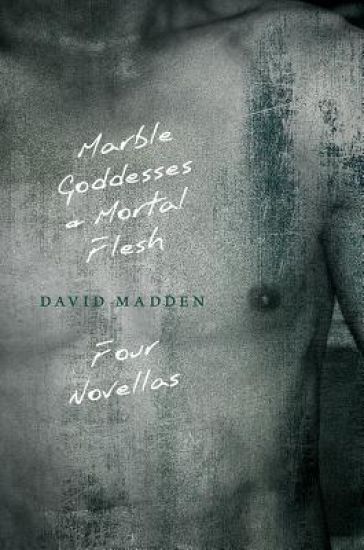
The Hero and the Witness is a harrowing and comic story of nineteen-year-old Lucius’s ordeal as a merchant seaman caught in the crossfire between an enigmatic scapegoat and a violent crew en route to Chile. In To Play the Con, Lucius, now a teacher and a first-time novelist, cons his little brother’s six small-town victims into accepting restitution for passing bad checks, a scam their older brother taught him and that may send him to the chain gang. Lucius works another con in Nothing Dies, but Something Mourns by persuading an ancient lady in a mountain town to tell him the romantic story of her brief love affair with Jesse James. In the innovative novella Marble Goddesses and Mortal Flesh, Lucius, now middle-aged and a successful novelist, buys the derelict Bijou Theater where he was a very young usher and becomes immersed to the brink of psychosis in memories of the immortal movie goddesses of the 40s and the mortal girls of his youth.The novella is the perfect medium for this wide-ranging author to explore the power of the imagination and of oral storytelling in the lives of his characters. Madden’s unmatched scope in this collection could draw comparisons to Joseph Conrad, Henry James, Thomas Wolfe, and James M. Cain equally well.

Everyone needs and deserves housing. But today our homes are being transformed into commodities, making the inequalities of the city ever more acute. Profit has become more important than social need. The poor are forced to pay more for worse housing. Communities are faced with the violence of displacement and gentrification. And the benefits of decent housing are only available for those who can afford it.In Defense of Housing is the definitive statement on this crisis from leading urban planner Peter Marcuse and sociologist David Madden. They look at the causes and consequences of the housing problem and detail the need for progressive alternatives. The housing crisis cannot be solved by minor policy shifts, they argue. Rather, the housing crisis has deep political and economic roots-and therefore requires a radical response.

“London Bridge in Plague and Fire is a brilliant cleaving of historical fact and Blakeian imagination. David Madden has written his masterpiece.” —Ron Rash, author of Serena“David Madden’s London Bridge is a the spellbinding story of the life and times of a world icon. Distinguish yourself and buy it now!”—Winston Groom, author of Forrest Gump“In London Bridge in Plague and Fire David Madden creates his own fictive historical tapestry, bringing to life the complex medieval world of Old England. But Madden filters his vision through the voice and eyes of a seventeenth-century poet-chronicler. The result is a deep, rich narrative of a particular place across the centuries, unfolding and rewarding the reader with the true romance of history.”—Robert Morgan, author of Gap Creek and Lions of the West“One of the many colorful characters in David Madden’s wild but accurate chronicle-novel says, ‘The Bridge is, after all, a thought turned to stone.’ By dint of forcible imagination, careful research, and devotion to his subject, the author has retransformed the stone to passionate thought. London Bridge in Plague and Fire is a strong book faithful to a great tradition.” —Fred Chappell, author of Dagon and Midquest

“Abducted by Circumstance is a thrilling crime story, a dark and complex psychological study, a rich contemplation on contemporary life. It is also a masterful moral drama about the centuries-old conflicts that arise from the juxtaposition of the flesh and spirit.“ —Allen Wier, author of Tehano “David Madden continues to push the envelope of literary fiction in subtle and profoundly sophisticated ways. Abducted by Circumstance is a quirky, utterly compelling novel in pieces that in its very structure speaks to the work’s twenty-first-century theme: how do we find connection in a fragmented world? In this new book Madden is at the height of his considerable power.” —Robert Olen Butler, author of the Pulitzer Prize–winning A Good Scent from A Strange Mountain
Though he has authored more than eleven novels, including Cassandra Singing, The Suicide’s Wife, Abducted by Circumstance, and the recent London Bridge in Plague and Fire, David Madden has been publishing short stories for all six decades of his active career. The Last Bizarre Tale consists of works that appeared in journals but that have not appeared together as a collection.Madden used two stories, “The Singer” and “Second Look Presents: the Rape of an Indian Brave,” as chapters in his 1980 novel On the Big Wind. “The Headless Girl’s Mother” was first published as a chapter in a serialized novel entitled Hair of the Dog. Two other stories developed out of longer versions of Madden’s novels. “A Demon in My View” is part of a sequel, not yet published, to Bijou.All of the stories in David Madden’s third collection are distinguished by variety of content and by shifting styles and often innovative techniques. They are to varying degrees and in various ways bizarre in their characters and their relationships, in the kinds of internal and external conflicts, and in locales and themes. The title story, The Last Bizarre Tale, involving a corpse that has hung on a hook in a funeral home garage for decades, is evocative of Poe and, in its dark, grotesque humor, Flannery O’Connor and Carson McCullers.“Process is as important as product to David Madden,” writes editor James Perkins, “and one can learn as much about the process of writing as about the human condition by a careful reading of these stories.”

For more than two thousand years, Old London Bridge evolved through many fragile wooden forms until it became the first bridge built of stone since the Roman invaders. With over two hundred houses and shops built directly upon the bridge, it was a wonder of the world until it was dismantled in 1832. In this stunningly original novel, Old London Bridge is as much a living, breathing character as its architect, the priest Peter de Colechurch, who began work on it in 1176, partly to honour Archbishop Thomas à Becket, murdered in Canterbury Cathedral. In 1665, the year of the Great Plague, Peter’s history is unknown, but Daryl Braintree, a poet living on the bridge, resurrects him through inspired flights of imagination. As Daryl chronicles the history of the bridge and composes poems about it, he reads his work to his witty mistress, who prefers making love. Among other key characters is Lucien Redd, who as a boy was sexually brutalised by both Puritans and Cavaliers during the English Civil War before being kidnapped off London Bridge onto a merchant ship. Thus traumatised, he aspires to become Lucifer’s most evil disciple. Twenty years later, young Morgan Wood is forced into seafaring service to pay off his father’s debts; and, compelled by obsessive nostalgia for his early life on the bridge, he keeps a journal. Joining Morgan aboard ship, Lucien “befriends” him—to devastating effect. The shops and houses on the bridge survive both the Great Plague and Great Fire, believed to be God’s wrath upon sinful London. Fearing that God may next destroy the bridge and its eight hundred denizens, seven of its merchant leaders revert to a pagan appeasement ritual by selecting one of their virgin daughters for sacrifice. To enact their plan, they hire Lucien, who has returned to the bridge to burn it out of pure meanness. But as Lucien discovers, the chosen victim may be more Lucifer’s favourite than he is.

The Mystery of Edwin Drood (Completed by David Madden)
Charles Dickens; David Madden
Unthank Books
2011
pokkari
With a gorgeous new jacket for this edition including original artwork by Gracie Carver, based on the famous Luke Fildes illustration, THE MYSTERY OF EDWIN DROOD completed by David Madden is sure to continue to offer the true Dickensian vision of this classic."David Madden's continuation must be regarded as one of the very best conclusions of the mystery to date. He magically recreates the tone and atmosphere of the original novel as he weaves together the threads Dickens left behind - producing a first-rate ending that remains faithful to both the existing fragment and its author."Professor Don Richard Cox, doyen of Droodian studies, and author of the Annotated Bibliography
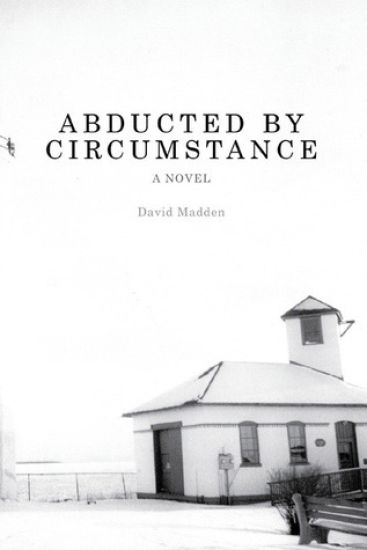
“Abducted by Circumstance is a thrilling crime story, a dark and complex psychological study, a rich contemplation on contemporary life. It is also a masterful moral drama about the centuries-old conflicts that arise from the juxtaposition of the flesh and spirit.”—Allen Wier, author of Tehano“David Madden continues to push the envelope of literary fiction in subtle and profoundly sophisticated ways. Abducted by Circumstance is a quirky, utterly compelling novel in pieces that in its very structure speaks to the work’s twenty-first-century theme: how do we find connection in a fragmented world? In this new book Madden is at the height of his considerable power.”—Robert Olen ButlerIn Abducted by Circumstance, David Madden offers his readers a unique experience simultaneously terrifying and exhilarating.Carol Seaborg makes a risky visit in zero weather to a lighthouse near her house in The Thousand Islands of New York on the Canadian border. A self-confident, attractive woman of about 55 suddenly appears on the observation deck looking out over frozen Lake Ontario. Carol admires the woman as her ideal.Suddenly, the woman disappears, apparently abducted by a serial rapist and killer, stimulating in Carol an immediate empathy that, enhanced by the power of her imagination, is so great as to make her unique. Carol projects her own emotions, imagination, and intellect into Glenda’s experience.To render that empathy and imagination, Madden channels everything that the people around her say and do through Carol’s perceptions so intimately that he shifts frequently and without transition into her thoughts, which focus mostly on the abducted woman, whose name newscasters reveal is Glenda Hamilton.As Carol imagines Glenda gradually coping with her abductor, she speaks directly, sometimes out loud, to her, encouraging her, advising her, expressing fear for her.If Carol’s external experiences are passive almost to paralysis, her memories reveal that her life has been full of more venturesome relationships and events (she once rode across Greece alone on a bicycle) than most wives and mothers in their late thirties have. Carol’s emotions and imagination are highly charged and exquisitely presented.The circumstances and relationships of her past and present predispose Carol to empathize with Glenda. Carol’s own life among a crude, remote second husband, a somewhat estranged adolescent son, a bright five-year-old daughter, a father who is a rather cold philosophy teacher, and the strong spiritual presence of her mother who committed suicide, is simple and routine. The events involving Glenda’s disappearance take place during the week before Carol’s second surgery for breast cancer.Gradually, as she takes late night drives with her little girl, visits her ex-boyfriend’s father in a nursing home, drives by her ex-lover’s house and business, and visits the campus where her father is a prominent teacher, the reader realizes, some pages before Carol herself does, that she has been abducted by the circumstances of her life.Although it is grounded in the realistic detail of everyday life, Abducted by Circumstance is unique in conception, style, and characterization. Madden immerses the reader in an extraordinarily rich and unforgettable psychological experience.Thoroughly absorbing from start to finish, Abducted by Circumstance explores Carol’s troubled psyche with the rare precision and insight that have long distinguished David Madden’s fiction.Since 1961, each of David Madden’s highly praised novels and two books of short stories has had some quality of uniqueness, among them Cassandra Singing, Sharpshooter: A Novel of the Civil War, Bijou, and The Suicide’s Wife. Twice nominated for the Pulitzer Prize, David Madden received the Robert Penn Warren Award from the Fellowship of Southern Writers.

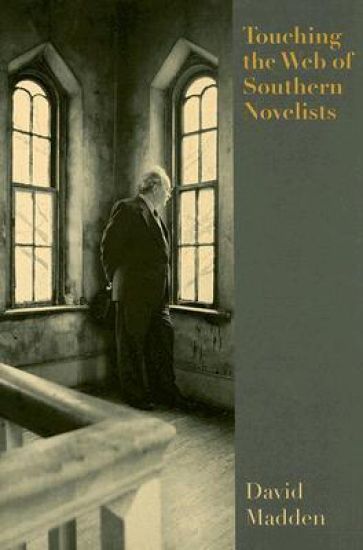
David Madden is one of the South's most notable contemporary writers. His interests are remarkably vast. He has published award-winning fiction, poetry, plays, critical works, and essays on a wide variety of subjects, ranging from history to popular culture. This collection represents Madden's essays on various other southern writers and his own struggle to come to terms with how the works and lives of these writers have influenced his own life and work.By analyzing the charged image of the spider web, as described in chapter four of Robert Penn Warren's All the King's Men, Madden shows that it is a central symbol for his involvement with the interconnected, complex tradition of contemporary southern literature. Touching the Web of Southern Novelists brings together essays on Faulkner, Warren, McCullers, Wolfe, Agee, and a new essay on Evelyn Scott. More than a collection of criticism, the book explores, in overlapping, far-reaching ways, how influence works its way through the southern literary tradition. It also includes an unusually detailed index.Two of the common elements in the essays are the dynamics and consequences of the relationship of an ostensible hero to his or her witnesses and the art of fiction, especially in the technique of using a charged image-a term that Madden invented. Another element is the overwhelming, if sometimes hidden, effect of the Civil War upon southern fiction. Madden provocatively argues that no northerner can write a “true” Civil War novel. All Southern fiction comes out of the Civil War, he argues, and that Absalom, Absalom! is the best Civil War novel because of its complex implications-not because it is overtly about the war.Perhaps most powerful because of its semi-autobiographical nature, Touching the Web of Southern Novelists will appeal to anyone with an interest in literary studies and how art and life in southern novels are entwined with each other-caught in a web.

When the first edition of David Madden's A Primer of the Novel: For Readers and Writers was published more than twenty-five years ago, there were no other books of its kind available. Since then, many authors and editors have produced works that attempt the same comprehensive coverage of the genre. However, these works tend to be either written solely for writers or solely for readers. More often than not, those written for readers tend to be aimed at advanced students or critics of the novel. In this revised edition, David Madden, Charles Bane and Sean Flory have produced an updated work that is intended for a general readership including writers, teachers, and students who are just being introduced to the genre. This unique handbook provides a definition and history of the novel, a description of early narratives, and a discussion of critical approaches to this literary form. A Primer of the Novel also identifies terms, definitions, commentary, and examples in the form of quotations for almost 50 types of novels and 15 artistic techniques. A chronology of narrative in general and of the novel in particular—from 850 B. C. to the present—is also included, along with indexes to authors, titles, novel types and techniques, as well as a selective bibliography of criticism. Although all novel types present in the first edition are still represented, many have become more clearly defined. This revised edition also cites several types of novels that did not appear in the first edition, such as the graphic novel and the novel of Magical Realism. As well as keeping all of the original examples from representative texts, the authors have added new examples of more recent works. While this book was conceived for a general audience, it will be a valuable resource for students, teachers, and libraries. It may be used in any English literature courses at any level, including graduate, and is suited for creative writing courses as well. With its clear and immediately accessible features, this handbo
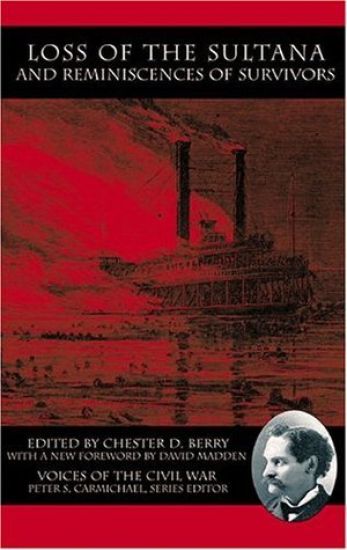
Loss of the Sultana and Reminiscences of Survivors
David Madden
University of Tennessee Press
2005
sidottu
Originally published in 1892, Loss of the Sultana and Reminiscences of Survivorsis a collection of first-hand accounts by those who lived to tell the story of perhapsthe worst maritime disaster in U.S. history.On the Mississippi River just above Memphis at two o?clock on the morning of April27, 1865, the steamboat Sultana, carrying over 2,400 passengers (it was licensed to carry only 356), exploded and sank. Over 1,700 people perished.Most of the passengers were Union soldiers recently released from Confederateprisons. Many were from East Tennessee. They had boarded at Vicksburg, where thelongest siege of the war had finally ended in Confederate surrender, ending theVicksburg campaign.The soldiers, homeward bound from Andersonville and Cahaba Confederate prisons, had survived the terrors of battle, the loss of close comrades, physical and psychological wounds, the risky confinement of hospital, the humiliation of capture andsurrender, escape and recapture, homesickness, boredom, the daily threat of death bystarvation, disease, suicide, robbery, injury, or death by raiders.Chester D. Berry?one of the survivors?compiled facts, records, and personalaccounts of other survivors, resulting in this compelling and profound testimony to thehuman spirit in the face of tragedy.

