Kirjojen hintavertailu. Mukana 12 390 323 kirjaa ja 12 kauppaa.

Kirjailija

David Maidment

Kirjat ja teokset yhdessä paikassa: 27 kirjaa, julkaisuja vuosilta 2012-2026, suosituimpien joukossa L N E R 4-6-0 Locomotives. Vertaile teosten hintoja ja tarkista saatavuus suomalaisista kirjakaupoista.

27 kirjaa

Kirjojen julkaisuhaarukka 2012-2026.

L N E R 4-6-0 Locomotives

L N E R 4-6-0 Locomotives

David Maidment

Pen Sword Transport
2021
sidottu
L N E R 4-6-0 Tender Mixed Traffic Locomotives covers the design, construction, operation and performance of all 4-6-0 locomotives that ran on the London & North Eastern Railway between 1923 and 1947 and the LNER designed engines that ran on BR's Eastern Region until the end of BR steam in 1968\. This includes the former Great Central 4-6-0s of classes B1 - B9 (the B1 and B2 later reclassified B18 & B19); the North Eastern Railway B13 - B16s; the Great Eastern B12s; and the LNER B17s, the Thompson B1s and rebuilds (B2 and B3/3). The book has over 60,000 words and 400 black and white and coloured photographs, many previously unpublished from the archives of the Manchester Locomotive Society at Stockport. It will be of particular interest to railway modellers and enthusiasts of locomotive running and performance as well as those seeking more general locomotive history. The book is designed and written in the same style as David Maidment's previous Locomotive Portfolio books on engines of the Great Western and Southern Railways, and includes where possible his own experiences, seeing and travelling behind engines of these classes in the 1950s and early 1960s, especially the B1s, B12s and B17 'Sandringhams'.
North West Railways Gallery

North West Railways Gallery

David Maidment

PEN SWORD BOOKS LTD
2025
sidottu
This book contains a selection of mainly unpublished photographs from the vast collection of railway photos and slides held in the archives of the Manchester Locomotive Society, founded in 1935, and based at their clubrooms on Stockport station. Many were taken by the original members of the club during the 1930s and in the post-war period of the early 1950s. Their locations range from Stafford in the south to Shap in the north and Shrewsbury/Llandudno in the west to Peak Forest in the east and their dates range from the Victorian era to the present day. Most of the photos are of locomotives and trains of the London & North Western and Lancashire and Yorkshire Railways and the successor LMS Company, but the range includes some Midland and Great Western subjects. The book will be of interest to railway historians and modellers of the period and timescales portrayed and to those just fascinated by the railways of the industrial north-west and the magnificent scenery of the locations in North Wales, the Peak and Lake Districts.
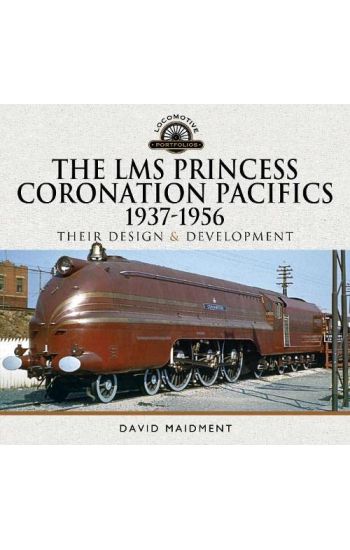
The LMS Princess Coronation Pacifics, 1937-1956

The LMS Princess Coronation Pacifics, 1937-1956

David Maidment

PEN SWORD BOOKS LTD
2023
sidottu
This book covers the design, construction, operation and performance of Sir William Stanier's masterpiece, the Princess Coronation pacific locomotives, better known as the Duchesses'. Included are pen portraits of the LMS engineers, a chapter on the express locomotives of the early LMS period that preceded their introduction and the internal rivalries and politics that Stanier was brought in to resolve. Chapters and photographs cover the streamline era, the war years and aftermath, the early years of nationalisation including the 1948 locomotive exchanges and the recovery of performance in the mid-1950s. The author includes some of his own experiences and photographs. The book includes 200 photographs including a few in colour from the LMS era, and an appendix with weight diagrams, and statistics of the locomotive construction and withdrawal, names, liveries, allocations and mileages.
British Mixed Traffic Locomotives of the 20th Century: Great Western & L M S Railway Designs
In the early days the ubiquitous 0-6-0s of both tender and tank design were 'general utility' engines performing all duties except express passenger services. By the end of the nineteenth century most railways were designing locomotives for more specific work and at the beginning of the twentieth century the need for faster freight overnight services led to the design of engines with larger wheel diameter that were not only fit for these services but for slower passenger services also, whilst the need for smaller wheeled engines for the mineral and other heavy freight services created the need for more specialist locomotives for that activity. Most railways moved from the 4-4-0 design for this 'general utility' work to the 2-6-0 or 4-6-0 wheel arrangement and the introduction of Churchward's 43XX mogul in 1911 was recognised as a truly 'mixed traffic' locomotive. Large numbers of similar locomotives were then produced by most of the pre-Grouping railways and developed by all the Big-Four from 1923. The author here describes the basic design, history, operation and performance of all the mixed traffic classes of the former Great Western and London Midland and Scottish Railways and their predecessors, engines of the LNWR, Caledonian, Highland and Glasgow & South Western Railways in particular. Mixed traffic locomotives of the LNER, SR and BR will be described in a second volume.
Large Tank Locomotive Classes of the Southern Railway
The three main constituent companies of the Southern Railway had different policies for tank engine design. The London & South Western built tank engines for suburban, branch and heavy goods work, the London, Brighton and South Coast had many designs for express passenger, mixed traffic and goods work as their main routes were short enough to be resourced by tank engines with limited water capacity and the South Eastern and Chatham ventured into a similar policy in its last days with the ‘River’ class only for the Southern Railway to be dissuaded from further development following the disastrous Sevenoaks accident in 1927. Unlike the other three post-Grouping railways, the Southern made no further effort to adopt the tank engine design for passenger or mixed traffic purposes apart from Maunsells ‘W’ and ‘Z’ for freight and shunting until Bulleid’s revolutionary (and unsuccessful) ‘Leader’ class. This book describes the design, construction, operation and performance of all these pre- and post-Grouping classes and the final adoption of the LMS and BR Standard 2-6-4 and 2-6-2 tank engines to fill the void in the Southern Region’s locomotive fleet.
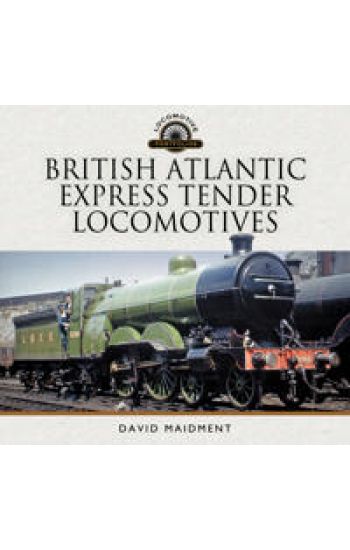
British Atlantic Express Tender Locomotives

British Atlantic Express Tender Locomotives

David Maidment

PEN SWORD BOOKS LTD
2025
sidottu
The British Atlantic locomotive flourished in the first decade of the nineteenth century especially on the relatively level stretches of the East Coast mainline. This book describes the design, construction, history, operation and performance of the Great Northern, Great Central, North Eastern and North British Atlantics and the London Brighton & South Coast engines that were developed from the GN design. More unusual were the Lancashire & Yorkshire ‘Highflyers’ which were some of the earliest and also included are the most powerful of all, Churchward’s Great Western Atlantics (converted to 4-6-0s later) and his three French Compounds. Most had been replaced by 4-6-0 and 4-6-2 designs by the 1920s and were withdrawn before the Second World War, though a few lingered to the post-war period and just reached the era of British Railways, though only the Brighton Atlantics survived longer. The last of all, 32424 Beachy Head, was withdrawn in 1958 and has been recreated for the Heritage industry. The book concludes with a brief look for comparative purposes at some of the most influential Atlantics on the rest of the world’s railways.
London & North Eastern Railway 4-4-0 Tender Locomotives - North Eastern, North British, Great North of Scotland, L N E R
This second volume on the LNER 4-4-0 locomotives describes the design, construction, history, operation and performance of the North Eastern, North British, Great North of Scotland and Gresley LNER built examples, classified by the LNER at the Grouping as classes, D17 - D24, D25 - D36, D38 - D48 and D49 respectively. It covers from their emergence in the late nineteenth century to their demise in the mid or late 1950s and early 1960s with their performance at their peak operation times, mainly in the inter-war years of LNER ownership.
London & North Eastern Railway 4-4-0 Tender Locomotives
This first volume on the LNER 4-4-0 locomotives describes the design, construction, history, operation and performance of the Great Northern, Great Central and Great Eastern examples, classified by the LNER at the Grouping as classes, D1 - D4, D5 - D12 and D13 - D16 respectively. It covers from their emergence in the late nineteenth century to their demise in the mid or late 1950s and their performance at their peak operation times, mainly in the inter-war years of LNER ownership. It also includes the former Midland & Great Northern Railway engines that were later absorbed by the LNER as classes D52 - D54.
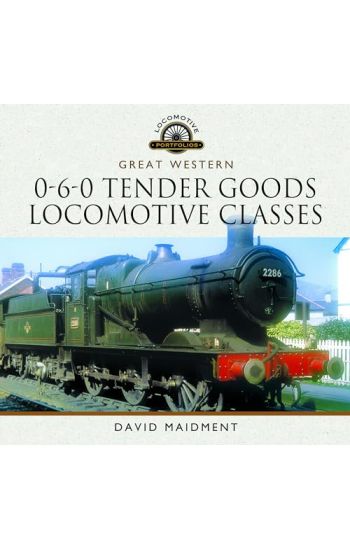
Great Western, 0-6-0 Tender Goods Locomotive Classes
This book is a comprehensive history of all the 0-6-0 tender locomotives built by the Great Western Railway or by railways absorbed by the GWR from the very earliest broad gauge engines designed by Daniel Gooch to the Collett 2251 class of the 1930s some of which were still under construction at nationalisation. It includes the Joseph Armstrong ‘Standard Goods’ and the famous Dean Goods, many of which served overseas in the two world wars. The text of 40,000 words describes the design, construction and operation of eight GW and five ‘Absorbed’ broad gauge classes, and thirteen GW and thirteen ‘Absorbed’ standard gauge classes. The book has over 250 black and white and 30 colour photos, weight diagrams and drawings.
The LMS Princess Coronation Pacifics, The Final Years & Preservation
This book follows on from the author's book on the Princess Coronation pacific locomotives from their construction in 1937 to their operation in 1956\. It picks up from the story in 1957 with their operation and performance on the Caledonian', Royal Scot' and Midday Scot' accelerated services of the late 1950s, their continuing heavy work as dieselisation of the West Coast mainline is implemented and the sudden withdrawal of the remaining examples at the end of the 1964 summer timetable. Included are the author's personal experiences and photographs and the descriptions by three Crewe men who fired these engines on the heavy overnight Crewe - Perth sleeper services in the late 1950s, two of whom, Les Jackson and Bill Andrew, drove 6229 and 6233 in the preservation era. As well as their stories of their experiences in BR days, they describe runs with the preserved locomotives and have included photographs from their personal collections. Crewe Works fitter, Keith Collier includes his experiences of their maintenance and the author in conclusion compares them with the finest steam locomotives of France, Germany and the USA.
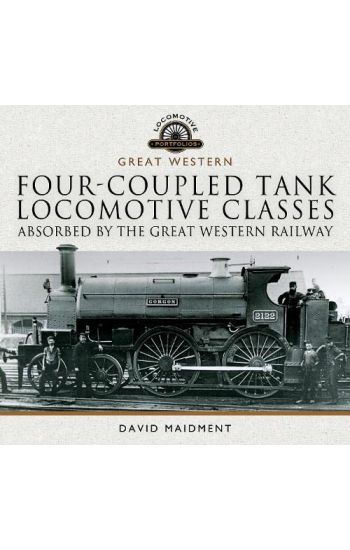
Four-coupled Tank Locomotive Classes Absorbed by the Great Western Railway
This book is a comprehensive history of the four coupled tank engines absorbed by the Great Western Railway - locomotives of nine Broad Gauge companies, nineteen Standard Gauge companies, mainly in the South West which became part of the GWR between the 1870s and 1914, and a further eighteen companies, mainly in South Wales absorbed by the GWR in 1922 and 1923 at the formation of the Big Four' Grouping. The locomotives described and illustrated range from the 4-4-0 Broad Gauge saddle tanks of the South Devon and Bristol & Exeter Railways to the large 4-4-4 tank locomotives of the Midland & South Western Junction Railway, not forgetting the numerous and varied 0-4-0 pug saddle tanks of the Swansea Harbour Trust and the Powlesland & Mason company. The book includes thirty-two weight diagrams and nearly 200 photographs, many of exotic and rare locomotives.
Great Western Castle Class  4-6-0 Locomotives in the Preservation Era
This third volume in the series on the Great Western Castle class locomotives focuses on the eight that have been preserved and goes into depth on the reconstruction of three of them, the two Tyseley ones, 5043 and 7029 described by Bob Meanley and Didcot's 4079 recounted by David Maidment from the records of the Great Western Society, including the full story of 4079's prolonged stay in Western Australia, its return to the UK and subsequent restoration. The history of all eight is covered and copiously illustrated, including over 100 colour photographs, with many during the restoration work by Bob Meanley and in operation by David Maidment. The book includes records of their operation and performance since restoration when some of the most remarkable performances of these locomotives were achieved.
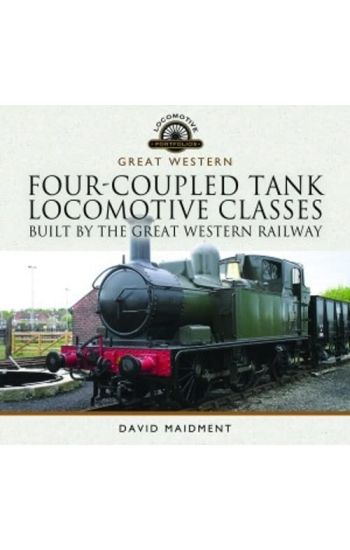
Four-Coupled Tank Locomotive Classes Built by the Great Western Railway
This book is a comprehensive history of all twenty-six classes of four coupled tank engines commissioned by the Great Western Railway or built at their Wolverhampton and Swindon Works, from the Broad Gauge 2-4-0 and 4-4-0 tanks of the 1840s and 1850s to the well known Collett 0-4-2 branch line engines of classes 48XX (later renumbered 14XX) and 58XX of the 1930s. As well as the Broad Gauge engines, the strange looking Covertibles' of William Dean, a number of experimental one-off' designs, the numerous Wolverhampton 0-4-2Ts of the 517' class and the Swindon built 2-4-0 Metro Tanks' are described with - where known - their allocation and operation. The book includes twenty weight diagrams and nearly 300 photographs, over 50 in colour. The four-coupled tank engines absorbed by the Great Western from other companies at or before 1923 will be featured in a separate volume to follow.
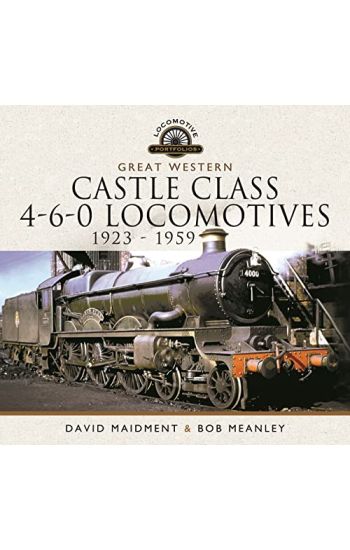
Great Western Castle Class 4-6-0 Locomotives   1923 - 1959

Great Western Castle Class 4-6-0 Locomotives 1923 - 1959

David Maidment; Bob Meanley

PEN SWORD BOOKS LTD
2022
sidottu
The Great Western Castles were one of the most successful locomotive designs of the twentieth century in terms of both performance and efficiency. Designed by Charles Collett in 1923, based on the 1907 Churchward Star' class, 155 were constructed almost continuously, apart from the war years, between 1923 and 1950, in addition to fifteen rebuilt Stars' and one rebuilt from the Great Bear pacific. Many were modernised with increased superheat and double-chimneys in the late 1950s and the class continued to be the mainstay of all Western Region express passenger services to the West Country, South Wales, Gloucestershire, Herefordshire and the West Midlands until replaced by the WR diesel hydraulic fleet in the early 1960s. This book covers their design in a chapter written by Bob Meanley, who masterminded the restoration at Tyseley Works of the Castles Earl of Mount Edgcumbe and Clun Castle, and their history, operation and performance from the high speed of the 1930s through to their rejuvenation in the 1950s, leaving experience of their last years and preservation to another volume. David Maidment had close experience of the class when working at Old Oak Common between 1957 and 1962 and includes his personal experiences there and on the road from his first encounter with one as a six-year old boy. The book includes 350 photographs, some 40 in colour, and 23 detailed Swindon technical drawings.
Great Western Castle Class 4-6-0 Locomotives - The Final Years 1960- 1965
The author's second volume about the Great Western's classic express locomotives covers their final six years in British Railways service. In 1960 the Castles, many now modernised with double chimneys and 4-row superheaters, were still in charge of most of the Western Region's expresses, but by the summer of 1963 their regular express work was limited to the London - Worcester route. Their declining numbers in the last couple of years covered special summer and relief trains, parcels and freight work, deputising for failed or unavailable diesels and a flurry of excursions and railtours where their prowess could still be demonstrated. The author worked and lived alongside them in these years and the book includes much of his own personal experience on the footplate, on their trains and on shed. The book recaps briefly their first 25 years and covers their history, operation and performance in their final years and is copiously illustrated including over 100 colour photographs.
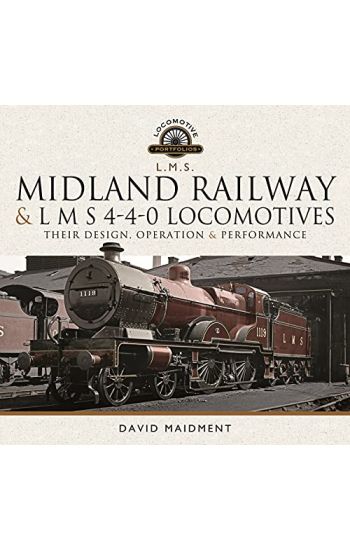
Midland Railway and L M S 4-4-0 Locomotives

Midland Railway and L M S 4-4-0 Locomotives

David Maidment

PEN SWORD BOOKS LTD
2021
sidottu
David Maidment has unravelled the complex history of the Johnson, Deeley and Fowler 4-4-0 locomotives of the Midland Railway and its LMS successor, covering their design, construction, operation and performance in this book with over 400 black and white photographs. It recounts their working on the Midland main lines from St Pancras to Derby, Manchester, Leeds and Carlisle, the latter via the celebrated Settle & Carlisle line, and the later work of the Fowler LMS engines on the West Coast main line. The book also describes the history of the Midland 4-4-0s built for the Somerset & Dorset and Midland & Great Northern Railways. The book covers the period from the first Midland 4-4-0 built in 1876 to the last LMS 2P withdrawn in 1962 and includes performance logs, weight diagrams and dimensions and statistical details of each locomotive.
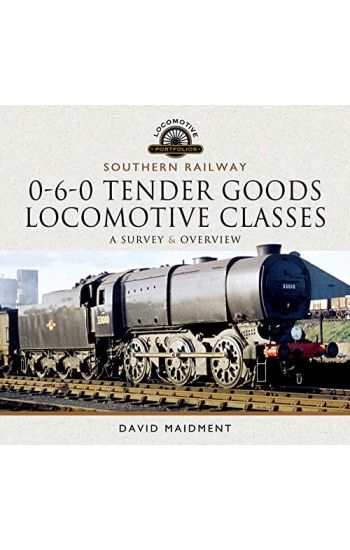
Southern Railway, 0-6-0 Tender Goods Locomotive Classes
This is a book that looks at the 0-6-0 tender goods locomotives of the Southern Railway, from the steam locomotive classes taken over at the railway grouping in 1923, through to the two classes introduced during Southern Railway days, that of the Q and Q1 classes. The Southern Railway had a rich and varied number of 0-6-0 tender goods classes, originating from all three former main line pre grouping companies, many of them lasted until the late 1950s and early 1960s. Many of the older Victorian and Edwardian classes of locomotive taken over in 1923, did not last very long with the new company, but are covered here for historical and modelling interest.