

Kirjailija
David Martin Jones
Kirjat ja teokset yhdessä paikassa: 20 kirjaa, julkaisuja vuosilta 1997-2025, suosituimpien joukossa Asian Security and the Rise of China. Vertaile teosten hintoja ja tarkista saatavuus suomalaisista kirjakaupoista.
Mukana myös kirjoitusasut: David Martin-Jones
20 kirjaa
Kirjojen julkaisuhaarukka 1997-2025.
Asian Security and the Rise of China
David Martin Jones; Nicholas Khoo; M. L.R. Smith
Edward Elgar Publishing Ltd
2014
nidottu
East Asia is without question a region of huge economic, political and security significance. Asian Security and the Rise of China offers a comprehensive overview and assessment of the international politics of the Asia-Pacific since the end of the Cold War, seeking to address the overarching question of how we can most convincingly explain the central dynamics of Asia’s international relations. Via a realist perspective on the dynamics and frictions associated with accommodating the rise of powerful states, this timely book addresses the core issue in contemporary Asian politics: the rise of China.The contributors expertly evaluate China’s rise and the impact it has had on the dynamics of regional relations in North East and South East Asia. They demonstrate that China’s economic development and its regional and international ambition increasingly conflict with the existing consensus-based regional arrangements such as the ASEAN Regional Forum and the East Asian Summit mechanism. As a consequence, smaller states in the region increasingly resort to hedging and balancing strategies in an attempt to mitigate Chinese hegemony. This leaves the region in the grip of a complex and potentially destabilizing security dilemma. The book offers a compelling analysis of the problem that China presents for its region that will enlighten undergraduate students of regional political studies and international relations. Postgraduate and Masters students on courses addressing East and South East Asia will also find plenty of information in this invaluable book.
Asian Security and the Rise of China
David Martin Jones; Nicholas Khoo; M. L.R. Smith
Edward Elgar Publishing Ltd
2013
sidottu
East Asia is without question a region of huge economic, political and security significance. Asian Security and the Rise of China offers a comprehensive overview and assessment of the international politics of the Asia-Pacific since the end of the Cold War, seeking to address the overarching question of how we can most convincingly explain the central dynamics of Asia’s international relations. Via a realist perspective on the dynamics and frictions associated with accommodating the rise of powerful states, this timely book addresses the core issue in contemporary Asian politics: the rise of China.The contributors expertly evaluate China’s rise and the impact it has had on the dynamics of regional relations in North East and South East Asia. They demonstrate that China’s economic development and its regional and international ambition increasingly conflict with the existing consensus-based regional arrangements such as the ASEAN Regional Forum and the East Asian Summit mechanism. As a consequence, smaller states in the region increasingly resort to hedging and balancing strategies in an attempt to mitigate Chinese hegemony. This leaves the region in the grip of a complex and potentially destabilizing security dilemma. The book offers a compelling analysis of the problem that China presents for its region that will enlighten undergraduate students of regional political studies and international relations. Postgraduate and Masters students on courses addressing East and South East Asia will also find plenty of information in this invaluable book.
ASEAN and East Asian International Relations
David Martin Jones; M. L.R. Smith
Edward Elgar Publishing Ltd
2006
nidottu
Academic and accepted orthodoxy maintains that Southeast Asia, and Asia generally, is evolving into a distinctive East Asian regional order. This book questions this claim and reveals instead uncertainty and incoherence at the heart of ASEAN, the region's foremost institution.The authors provide a systematic critique of ASEAN's evolution and institutional development, as well as a unified understanding of the international relations and political economy of ASEAN and the Asia-Pacific. It is the first study to provide a sceptical analysis of international relations orthodoxies regarding regionalization and institutionalism, and is based on wide-ranging and rigorous research.Students of international relations, the Asia-Pacific, Southeast Asia, regional studies, international history and security and defence studies will find this book of great interest, as will scholars, policy makers and economic forecasters with an interest in long-term Asia-Pacific trends.
ASEAN and East Asian International Relations
David Martin Jones; M. L.R. Smith
Edward Elgar Publishing Ltd
2006
sidottu
Academic and accepted orthodoxy maintains that Southeast Asia, and Asia generally, is evolving into a distinctive East Asian regional order. This book questions this claim and reveals instead uncertainty and incoherence at the heart of ASEAN, the region's foremost institution.The authors provide a systematic critique of ASEAN's evolution and institutional development, as well as a unified understanding of the international relations and political economy of ASEAN and the Asia-Pacific. It is the first study to provide a sceptical analysis of international relations orthodoxies regarding regionalization and institutionalism, and is based on wide-ranging and rigorous research.Students of international relations, the Asia-Pacific, Southeast Asia, regional studies, international history and security and defence studies will find this book of great interest, as will scholars, policy makers and economic forecasters with an interest in long-term Asia-Pacific trends.
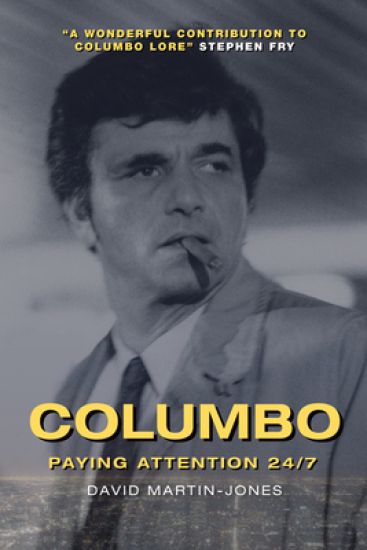
Columbo is 50 years old. A global smash in the 1970s, it is now a cult TV favourite. What is the reason for this enduring popularity? In this fascinating exploration of a television classic, David Martin-Jones argues that Columbo reveals how our current globalised world of 24/7 capital, invasive surveillance and online labour emerged in the late 20th century. Exploring everything from the influences on Peter Falk's iconic acting style to the show's depiction of Los Angeles, he illuminates how our attention is channelled, via technologies like television and computers, to influence how we perform, learn, police and locate ourselves in today's world. Columbo emerged alongside shows like Kojak and The Rockford Files, but re-viewing the series today reveals how contemporary television hits from Elementary to The Purge continue to shape how and why we pay attention 24/7.
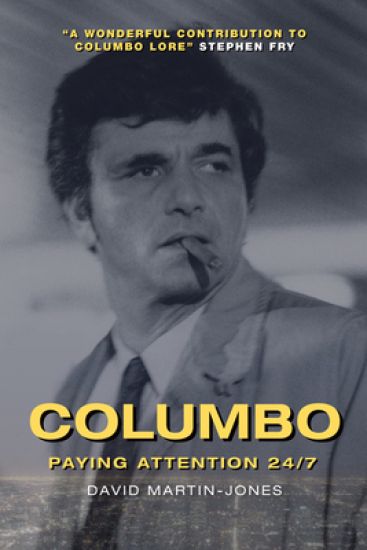
Columbo is 50 years old. A global smash in the 1970s, it is now a cult TV favourite. What is the reason for this enduring popularity? In this fascinating exploration of a television classic, David Martin-Jones argues that Columbo reveals how our current globalised world of 24/7 capital, invasive surveillance and online labour emerged in the late 20th century. Exploring everything from the influences on Peter Falk's iconic acting style to the show's depiction of Los Angeles, he illuminates how our attention is channelled, via technologies like television and computers, to influence how we perform, learn, police and locate ourselves in today's world. Columbo emerged alongside shows like Kojak and The Rockford Files, but re-viewing the series today reveals how contemporary television hits from Elementary to The Purge continue to shape how and why we pay attention 24/7.
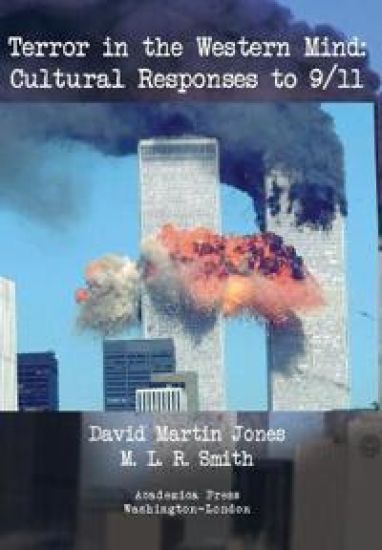
Twenty years after the terrorist attacks on the World Trade Center and Pentagon, we can now see that the War on Terror profoundly affected Western self-understanding and the secular liberal image it sought to project onto a global canvas at what was widely assumed to be the end of history. The dramatic change in awareness that 9/11 brought about was particularly vivid, this book maintains, in the media that sustained and displayed the West's self-image. In particular, fiction, film, drama, the visual arts, and popular music have all struggled to come to grips with the phenomena of terror, asymmetrical warfare, home grown jihadist activism, and the moral and political dilemmas they evoke. The book further argues that the evolving progressive response to 9/11 assumed an increasingly ideological character via the critical and normative international relations theories that came to dominate Western campuses after 2001. These perspectives gave substance to an increasingly critical depiction of the West's War on Terror and its popular promotion through works of literature, film, music, and the visual arts. Promoted through these popular genres, it combined the ingredients that formed "woke" ideology in an accessible formula that subsequently dominated both the mainstream media, academia, and, in time, government agencies.
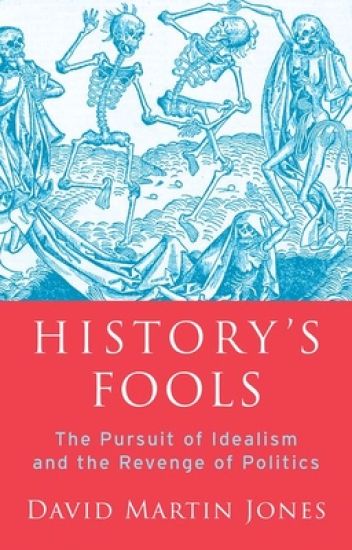
History's Fools: The Pursuit of Idealism and the Revenge of Politics
David Martin Jones
Oxford University Press
2020
sidottu
The end of the Cold War announced a new world order. Liberal democracy prevailed, ideological conflict abated, and world politics set off for the promised land of a secular, cosmopolitan, market-friendly end of history. Or so it seemed. Thirty years later, this unipolar worldview-- premised on shared values, open markets, open borders and abstract social justice--lies in tatters. What happened? David Martin Jones examines the progressive ideas behind liberal Western practice since the end of the twentieth century, at home and abroad. This mentality, he argues, took an excessively long view of the future and a short view of the past, abandoning politics in favour of ideas, and failing to address or understand rejection of liberal norms by non-Western 'others'. He explores the inevitable consequences of this liberal hubris: political and economic confusion, with the chaotic results we have seen. Finally, he advocates a return to more sceptical political thinking-- with prudent statecraft abroad, and defence of political order at home--in order to rescue the West from its widely advertised demise. History's Fools is a timely account of the failed project to shape the world in the West's image, and an incisive call for a return to 'true' politics.

The coronavirus that had been declared a pandemic by the World Health Organisation (WHO) in March 2020 has frequently been viewed in society as unique, exceptional and unprecedented. In this report, David Martin Jones and Emma Webb suggest there is nothing particularly novel about disease in the human experience – and cautions that we are desperately in need of some historical perspective. This historical recounting of past pandemics and their interpretation both at the time and by historians – from the Athenian epidemic of 430 BC to the Black Death and the Spanish influenza outbreak of 1918 – tries to set Covid-19 in context. It also reveals the extent to which the recent exaggerated pursuit of national health has resulted in a dangerous condition of ‘cultural iatrogenesis’. The authors discuss iatrogenesis as occurring when societies capitulate to professionally organised medicine that has come to function as a domineering moral enterprise and which advertise their bureaucratic expansion as a war against all suffering. Although most would agree that such suffering should be avoided, societies are in danger of coming under the control of total healthcare regimes and suffer in ways they no longer have the authority or will to manage. Jones and Webb argue that this is the predicament that post-Covid-19 democracies will have to confront. Despite individuals now being healthier and living longer, there is an exaggerated sense of our general well-being being under constant threat from the air we breathe to the food in our shops. The age of infectious disease has given way to the era of chronic disorder. Longer life means prolonged ? time in care homes and medicine becomes more open to criticism. National health, in one sense, is in danger of becoming a hollow achievement. Having viewed the outbreak as unprecedented and unique, many leading authorities embraced the epidemiological prediction of death rates of 1 per cent of the West’s population unless they locked down the economy, quarantined households and suspended all non-essential activity. The authors argue this overreaction, rather than the virus itself, captures, the way in which modern life has become ‘medicalised’. It is that development over the course of the twentieth century – which came to treat the population as subject to an increasingly all-knowing public health regime – that is one of the defining features of our contemporary condition.
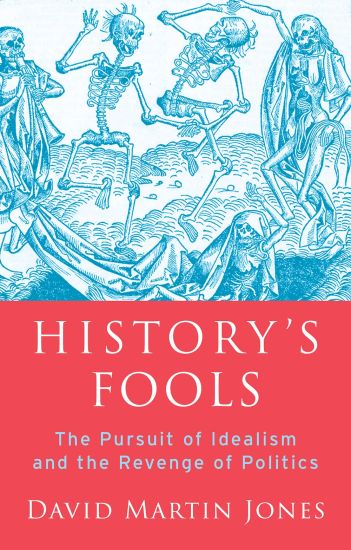
The end of the Cold War announced a new world order. Liberal democracy prevailed, ideological conflict abated, and world politics set off for the promised land of a secular, cosmopolitan, market-friendly end of history. Or so it seemed. Thirty years later, this unipolar worldview--premised on shared values, open markets, open borders and abstract social justice--lies in tatters. What happened? David Martin Jones examines the progressive ideas behind liberal Western practice since the end of the twentieth century, at home and abroad. This mentality, he argues, took an excessively long view of the future and a short view of the past, abandoning politics in favour of ideas, and failing to address or understand rejection of liberal norms by non- Western 'others'. He explores the inevitable consequences of this liberal hubris: political and economic confusion, with the chaotic results we have seen. Finally, he advocates a return to more sceptical political thinking--with prudent statecraft abroad, and defence of political order at home—in order to rescue the West from its widely advertised demise. History's Fools is a timely account of the failed project to shape the world in the West's image, and an incisive call for a return to 'true' politics.
When is it OK to lie about the past? If history is a story, then everyone knows that the 'official story' is told by the winners. No matter what we may know about how the past really happened, history is as it is recorded: this is what George Orwell called doublethink. But what happens to all the lost, forgotten, censored, and disappeared pasts of world history? Cinema Against Doublethink uncovers how a world of cinemas acts as a giant archive of these lost pasts, a vast virtual store of the world’s memories. The most enchanting and disturbing films of recent years – Uncle Boonmee Who Can Recall his Past Lives, Nostalgia for the Light, Even the Rain, The Act of Killing, Carancho, Lady Vengeance – create ethical encounters with these lost pasts, covering vast swathes of the planet and crossing huge eras of time. Analysed using the philosophies of Gilles Deleuze (the time-image) and Enrique Dussel (transmodern ethics), the multitudinous cinemas of the world are shown to speak out against doublethink, countering this biggest lie of all with their myriad 'false' versions of world history. Cinema, acting against doublethink, remains a powerful agent for reclaiming the truth of history for the 'post-truth' era.

When is it OK to lie about the past? If history is a story, then everyone knows that the 'official story' is told by the winners. No matter what we may know about how the past really happened, history is as it is recorded: this is what George Orwell called doublethink. But what happens to all the lost, forgotten, censored, and disappeared pasts of world history? Cinema Against Doublethink uncovers how a world of cinemas acts as a giant archive of these lost pasts, a vast virtual store of the world’s memories. The most enchanting and disturbing films of recent years – Uncle Boonmee Who Can Recall his Past Lives, Nostalgia for the Light, Even the Rain, The Act of Killing, Carancho, Lady Vengeance – create ethical encounters with these lost pasts, covering vast swathes of the planet and crossing huge eras of time. Analysed using the philosophies of Gilles Deleuze (the time-image) and Enrique Dussel (transmodern ethics), the multitudinous cinemas of the world are shown to speak out against doublethink, countering this biggest lie of all with their myriad 'false' versions of world history. Cinema, acting against doublethink, remains a powerful agent for reclaiming the truth of history for the 'post-truth' era.

This title brings Deleuze's writings on cinema into contact with world cinema, drawing on examples ranging from Georges Melies to Michael Mann. "Deleuze's Cinema books" continue to cause controversy. Although they offer radical new ways of understanding cinema, his conclusions often seem strikingly Eurocentric. "Deleuze and World Cinemas" explores what happens when Deleuze's ideas are brought into contact with the films he did not discuss, those from Europe and the USA (from Georges Melies to Michael Mann) and a range of world cinemas - including Bollywood blockbusters, Hong Kong action movies, Argentine melodramas and South Korean science fiction movies. These emergent encounters demonstrate the need for the constant adaptation and reinterpretation of Deleuze's findings if they are to have continued relevance, especially for cinema's contemporary engagement with the aftermath of the Cold War and the global dominance of neoliberal globalization.

This title brings Deleuze's writings on cinema into contact with world cinema, drawing on examples ranging from Georges Melies to Michael Mann. "Deleuze's Cinema books" continue to cause controversy. Although they offer radical new ways of understanding cinema, his conclusions often seem strikingly Eurocentric. "Deleuze and World Cinemas" explores what happens when Deleuze's ideas are brought into contact with the films he did not discuss, those from Europe and the USA (from Georges Melies to Michael Mann) and a range of world cinemas - including Bollywood blockbusters, Hong Kong action movies, Argentine melodramas and South Korean science fiction movies. These emergent encounters demonstrate the need for the constant adaptation and reinterpretation of Deleuze's findings if they are to have continued relevance, especially for cinema's contemporary engagement with the aftermath of the Cold War and the global dominance of neoliberal globalization.
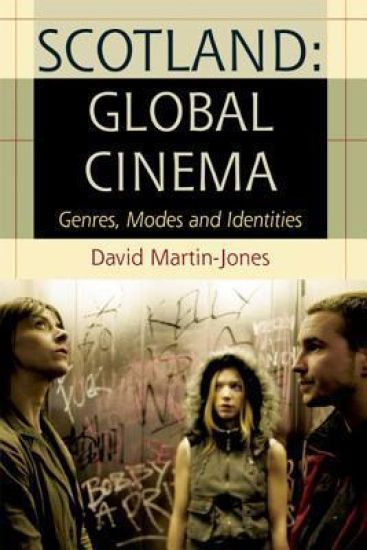
What is your favourite fantasy Scotland? Perhaps you enjoyed Whisky Galore! or Brigadoon, or maybe The Wicker Man is to your taste, Local Hero or Highlander? Yet have you also considered Kuch Kuch Hota Hai, Rob Roy, Dog Soldiers, Danny the Dog, Festival, The Water Horse, Carla's Song, Trainspotting and Red Road? Scotland: Global Cinema is the first book to focus exclusively on the unprecedented explosion of filmmaking in Scotland in the 1990s and 2000s. It explores the various cinematic fantasies of Scotland created by contemporary filmmakers from all over the world - including Scotland, England, France, the United States and India - who braved the weather to shoot in Scotland. Significantly broadening the scope of previous debates, Scotland: Global Cinema provides analysis of ten different genres and modes prevalent in the 1990s/2000s: the comedy, road movie, Bollywood extravaganza, (Loch Ness) monster movie, horror film, costume drama, gangster flick, social realist melodrama, female friendship/US indie movie, and art cinema. These various chapters suggest a wealth of different histories of cinema in Scotland, and uncover the numerous identities - national, transnational, diasporic, global/local, gendered, sexual, religious - created by these approaches. Cinema in Scotland is situated in a global context through analysis of the intersection of transversal flows of filmmaking, tourism, trade and transnational fantasy typical of globalization, as they meet and mingle against the world famous cinematic landscapes of Scotland.

What is your favourite fantasy Scotland? Perhaps you enjoyed Whisky Galore! or Brigadoon, or maybe The Wicker Man is to your taste, Local Hero or Highlander? Yet have you also considered Kuch Kuch Hota Hai, Rob Roy, Dog Soldiers, Danny the Dog, Festival, The Water Horse, Carla's Song, Trainspotting and Red Road? Scotland: Global Cinema is the first book to focus exclusively on the unprecedented explosion of filmmaking in Scotland in the 1990s and 2000s. It explores the various cinematic fantasies of Scotland created by contemporary filmmakers from all over the world - including Scotland, England, France, the United States and India - who braved the weather to shoot in Scotland. Significantly broadening the scope of previous debates, Scotland: Global Cinema provides analysis of ten different genres and modes prevalent in the 1990s/2000s: the comedy, road movie, Bollywood extravaganza, (Loch Ness) monster movie, horror film, costume drama, gangster flick, social realist melodrama, female friendship/US indie movie, and art cinema. These various chapters suggest a wealth of different histories of cinema in Scotland, and uncover the numerous identities - national, transnational, diasporic, global/local, gendered, sexual, religious - created by these approaches. Cinema in Scotland is situated in a global context through analysis of the intersection of transversal flows of filmmaking, tourism, trade and transnational fantasy typical of globalization, as they meet and mingle against the world famous cinematic landscapes of Scotland.

New in Paperback Deleuze, Cinema and National Identity challenges the traditional use of Deleuze's philosophy to examine European art cinema. It explores how Deleuze can be used to analyse national identity across a range of different cinemas. Focusing on narrative time it combines a Deleuzean approach with a vast range of non-traditional material. The films discussed are contemporary and popular (either financial or cult successes), and include Eternal Sunshine of the Spotless Mind, Terminator 3, Memento, Saving Private Ryan, Run Lola Run, Sliding Doors, Chaos and Peppermint Candy. Each film is examined in light of a major historical event - including 9/11, German reunification, and the Asian economic crisis - and the impact it has had on individual nations. This cross-cultural approach illustrates how Deleuze's work can enhance our understanding of the construction of national identity. It also enables a critique of Deleuze's conclusions by examining his work in a variety of national contexts. The book significantly broadens the field of work on Deleuze and cinema. It places equal emphasis on understanding mainstream North American genre films, American independent and European art films. It also examines Asian thrillers, gangster and art films in the light of Deleuze's work on time. With Asian films increasingly crossing over into western markets, this is a timely addition to the expanding body of work on Deleuze and film. Key Features * The first sustained analysis of Deleuze and national identity, bringing together film theory and film history * Examines how narrative time is used to construct national identity across a range of different cinemas, including Britain, Germany, North America, Hong Kong, Japan, South Korea, Italy and Poland * Uses Deleuze in conjunction with a number of different types of recent film, from Hollywood blockbusters to Asian gangster movies.

Deleuze, Cinema and National Identity challenges the traditional use of Deleuze's philosophy to examine European art cinema. It explores how Deleuze can be used to analyse national identity across a range of different cinemas. Focusing on narrative time it combines a Deleuzean approach with a vast range of non-traditional material. The films discussed are contemporary and popular (either financial or cult successes), and include Eternal Sunshine of the Spotless Mind, Terminator 3, Memento, Saving Private Ryan, Run Lola Run, Sliding Doors, Chaos and Peppermint Candy. Each film is examined in light of a major historical event - including 9/11, German reunification, and the Asian economic crisis - and the impact it has had on individual nations. This cross-cultural approach illustrates how Deleuze's work can enhance our understanding of the construction of national identity. It also enables a critique of Deleuze's conclusions by examining his work in a variety of national contexts. The book significantly broadens the field of work on Deleuze and cinema. It places equal emphasis on understanding mainstream North American genre films, American independent and European art films. It also examines Asian thrillers, gangster and art films in the light of Deleuze's work on time. With Asian films increasingly crossing over into western markets, this is a timely addition to the expanding body of work on Deleuze and film. Key Features * The first sustained analysis of Deleuze and national identity, bringing together film theory and film history * Examines how narrative time is used to construct national identity across a range of different cinemas, including Britain, Germany, North America, Hong Kong, Japan, South Korea, Italy and Poland * Uses Deleuze in conjunction with a number of different types of recent film, from Hollywood blockbusters to Asian gangster movies.
This book provides a clear and accessible account of political and economic development in Pacific Asia. Adopting a comparative and historical approach, it examines the factors behind the 'East Asian Miracle' which has transformed the economies and societies of South Korea, Taiwan, Hong Kong, Singapore, Indonesia, Thailand and Malaysia. Political Development in Pacific Asia begins by examining the traditional forms of political culture which prevailed in Pacific Asia and which affected, in various ways, post-colonial political development in the region. Subsequent chapters examine the growth strategies pursued by high-performing economies of East Asia and the implications of rapid growth for democratization and civil society. The final chapter explores the place of these economies in a rapidly changing regional and international order. While Jones gives due attention to the remarkable achievements of the high-performing economies of East Asia, he also addresses the social and political costs of this rapid, state-managed growth. The result is a balanced and nuanced account of political and economic development in Pacific Asia which will be invaluable for students and scholars alike.