

Kirjailija
David Martínez
Kirjat ja teokset yhdessä paikassa: 13 kirjaa, julkaisuja vuosilta 2009-2026, suosituimpien joukossa Honor - The Path To God's Heart. Vertaile teosten hintoja ja tarkista saatavuus suomalaisista kirjakaupoista.
Mukana myös kirjoitusasut: David Martinez
13 kirjaa
Kirjojen julkaisuhaarukka 2009-2026.
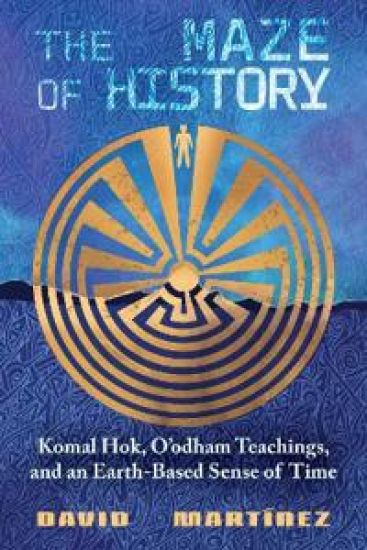
A major contribution to O’odham studies and Southwest history, Martínez offers a new perspective on the life and knowledge of Komal Hok, an important Akimel O'odham storyteller also known as “Thin Leather.” The Maze of History refers to the man-in-the-maze symbol that has adorned O’odham baskets for generations. According to O’odham oral tradition, the maze is the home to I’itoi, “our elder brother,” the sacred being that taught ancestral O’odham their way of doing things, their himdag. Moreover, I’itoi’s home is in the mountains everywhere that O’odham dwell, be it South Mountain, Baboquivari, or Sierra Pinacate. Komal Hok (born ca. 1827), also known as Thin Leather, was an Akimel O’odham elder and storyteller from Sacaton Village who shared his people’s origin narrative with anthropologist Frank Russell, archaeologist Jesse Walter Fewkes, and writer J. William Lloyd. With the help of translators Jose Lewis Brennan and Edward H. Wood (both O’odham), Komal Hok created an epic legacy that continues to inform the direction of O’odham studies to this day. However, his uniqueness in modern O’odham history has never been fully appreciated and honored until now. The culmination of David Martínez’s twenty-five years of studying, writing, and teaching about O’odham culture and history, The Maze of History at last captures the significance of Komal Hok’s work as an O’odham intellectual. Komal Hok’s recounting of O’odham origins forms the basis of an O’odham sense of history, which is based on their relationship with their jeved—the earth, soil, land—that was given them at the time of creation. Here is where I’itoi, along with Jeved mahkai (Earth medicine maker), Bán (Coyote), and Nuwi (Buzzard), shaped the first people into O’odham.
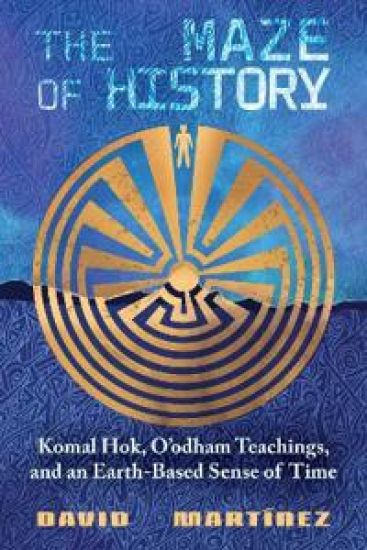
A major contribution to O’odham studies and Southwest history, Martínez offers a new perspective on the life and knowledge of Komal Hok, an important Akimel O'odham storyteller also known as “Thin Leather.” The Maze of History refers to the man-in-the-maze symbol that has adorned O’odham baskets for generations. According to O’odham oral tradition, the maze is the home to I’itoi, “our elder brother,” the sacred being that taught ancestral O’odham their way of doing things, their himdag. Moreover, I’itoi’s home is in the mountains everywhere that O’odham dwell, be it South Mountain, Baboquivari, or Sierra Pinacate. Komal Hok (born ca. 1827), also known as Thin Leather, was an Akimel O’odham elder and storyteller from Sacaton Village who shared his people’s origin narrative with anthropologist Frank Russell, archaeologist Jesse Walter Fewkes, and writer J. William Lloyd. With the help of translators Jose Lewis Brennan and Edward H. Wood (both O’odham), Komal Hok created an epic legacy that continues to inform the direction of O’odham studies to this day. However, his uniqueness in modern O’odham history has never been fully appreciated and honored until now. The culmination of David Martínez’s twenty-five years of studying, writing, and teaching about O’odham culture and history, The Maze of History at last captures the significance of Komal Hok’s work as an O’odham intellectual. Komal Hok’s recounting of O’odham origins forms the basis of an O’odham sense of history, which is based on their relationship with their jeved—the earth, soil, land—that was given them at the time of creation. Here is where I’itoi, along with Jeved mahkai (Earth medicine maker), Bán (Coyote), and Nuwi (Buzzard), shaped the first people into O’odham.

Bones Worth Breaking is a portrait of the unbreakable bond between brothers and a reckoning with the global forces that shaped them.Nobody around David Martinez saw how quickly he was breaking apart except for his younger brother, Mike. They stood out in Idaho: mixed-race in a Mormon community that, in the years before David's birth, considered Black people ineligible for salvation. The Martinez brothers were raised to be "good boys," definitely not to get high, skateboard all night, or get arrested, all of which they did with zeal. Then their paths diverged. David went on a two-year mission trip to Brazil like his father before him, and Mike stayed in the States, finding himself in and out of prison. When David returned, in the middle of the still-unnamed opioid epidemic, things had irrevocably changed, and in 2021, Mike unexpectedly died in prison. Martinez writes with a serrated edge, as viscerally felt as an exposed nerve, and transforms from a stoic boy constantly seeking escape to a vulnerable man eager to contextualize the legacies and losses that have shaped his life. With a wild, ragged velocity--flipping and soaring like a pro skater--Martinez defies a linear telling of his life and tackles topics from abuse and racism to writing and capturing the meaning of the specific nostalgia of saudade.Bones Worth Breaking is a portrait of the unbreakable bond between brothers who were robbed of the chance to grow old together, and a reckoning with the brutal global forces that let so many poor young men of color fall perilously through the cracks.
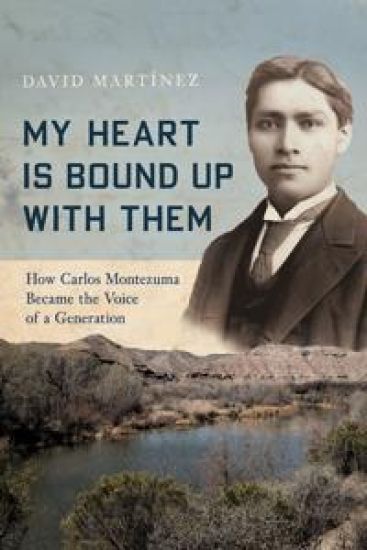
Carlos Montezuma is well known as an influential Indigenous figure of the turn of the twentieth century. While some believe he was largely interested only in enabling Indians to assimilate into mainstream white society, Montezuma’s image as a staunch assimilationist changes dramatically when viewed through the lens of his Yavapai relatives at Fort McDowell in Arizona. Through his diligent research and transcription of the letters archived in the Carlos Montezuma Collection at Arizona State University Libraries, David MartÍnez offers a critical new perspective on Montezuma’s biography and legacy. During an attempt to force the Fort McDowell Yavapai community off of their traditional homelands north of Phoenix, the Yavapai community members and leaders wrote to Montezuma pleading for help. It was these letters and personal correspondence from his Yavapai cousins George and Charles Dickens, as well as Mike Burns that sparked Montezuma’s desperate but principled desire to liberate his Yavapai family and community—and all Indigenous people—from the clutches of an oppressive Indian Bureau. Centering historically neglected Indigenous voices as its primary source material, MartÍnez elevates Montezuma’s correspondence and interactions with his family and their community and shows how it influenced his advocacy. MartÍnez argues that Montezuma’s work in Arizona directly contributed to his national projects. For his Yavapai community, Montezuma set an example as a resistance fighter and advocate on behalf of his people and other Indigenous groups. MartÍnez offers a critical exploration of history, memory, the formation of archival collections, and the art of writing biography.
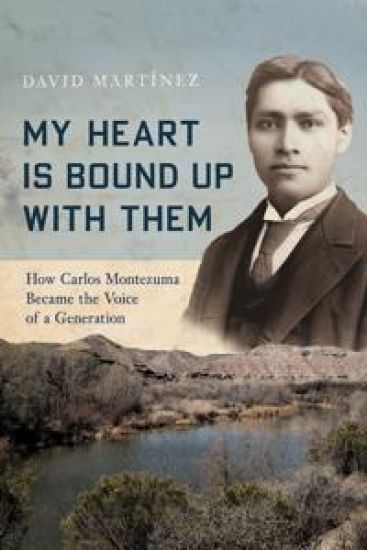
Carlos Montezuma is well known as an influential Indigenous figure of the turn of the twentieth century. While some believe he was largely interested only in enabling Indians to assimilate into mainstream white society, Montezuma’s image as a staunch assimilationist changes dramatically when viewed through the lens of his Yavapai relatives at Fort McDowell in Arizona. Through his diligent research and transcription of the letters archived in the Carlos Montezuma Collection at Arizona State University Libraries, David MartÍnez offers a critical new perspective on Montezuma’s biography and legacy. During an attempt to force the Fort McDowell Yavapai community off of their traditional homelands north of Phoenix, the Yavapai community members and leaders wrote to Montezuma pleading for help. It was these letters and personal correspondence from his Yavapai cousins George and Charles Dickens, as well as Mike Burns that sparked Montezuma’s desperate but principled desire to liberate his Yavapai family and community—and all Indigenous people—from the clutches of an oppressive Indian Bureau. Centering historically neglected Indigenous voices as his primary source material, MartÍnez elevates Montezuma’s correspondence and interactions with his family and their community and shows how it influenced his advocacy. MartÍnez argues that Montezuma’s work in Arizona directly contributed to his national projects. For his Yavapai community, Montezuma set an example as a resistance fighter and advocate on behalf of his people and other Indigenous groups. MartÍnez offers a critical exploration of history, memory, the formation of archival collections, and the art of writing biography.

2019 Choice Outstanding Academic Title In Life of the Indigenous Mind David Martínez examines the early activism, life, and writings of Vine Deloria Jr. (1933–2005), the most influential Indigenous activist and writer of the twentieth century and one of the intellectual architects of the Red Power movement. An experienced activist, administrator, and political analyst, Deloria was motivated to activism and writing by his work as executive director of the National Congress of American Indians, and he came to view discourse on tribal self-determination as the most important objective for making a viable future for tribes. In this work of both intellectual and activist history, Martínez assesses the early life and legacy of Deloria’s “Red Power Tetralogy,” his most powerful and polemical works: Custer Died for Your Sins (1969), We Talk, You Listen (1970), God Is Red (1973), and Behind the Trail of Broken Treaties (1974). Deloria’s gift for combining sharp political analysis with a cutting sense of humor rattled his adversaries as much as it delighted his growing readership.Life of the Indigenous Mind reveals how Deloria’s writings addressed Indians and non-Indians alike. It was in the spirit of protest that Deloria famously and infamously confronted the tenets of Christianity, the policies of the Bureau of Indian Affairs, and the theories of anthropology. The concept of tribal self-determination that he initiated both overturned the presumptions of the dominant society, including various “Indian experts,” and asserted that tribes were entitled to the rights of independent sovereign nations in their relationship with the United States, be it legally, politically, culturally, historically, or religiously.
From Huhugam to Hohokam
J. Brett Hill; William H. Doelle; David Martínez; Bernard Siquieros
Lexington Books
2020
nidottu
In From Huhugam to Hohokam: Heritage and Archaeology in the American Southwest, J. Brett Hill examines the history of O’odham heritage as it was recorded at the beginning of European conquest. A parallel history of scientific exploration is then traced forward to produce intricate models of the coming and going of ancient peoples. Throughout this history, Native accounts were routinely dismissed as an inferior kind of knowledge. More recently, though, a revolutionary change has taken hold in archaeology as Native insights and premises are integrated into scientific thought. Integration was once suspected of undermining basic principles of knowledge, but J. Brett Hill contends that it provides a deeper and more accurate sense of the connection between living and ancient people. Hill combines three decades of experience in archaeology with a liberal arts perspective to produce something for readers at all levels in the fields of anthropology, Native American studies, history, museum studies, and other heritage disciplines

2019 Choice Outstanding Academic Title In Life of the Indigenous Mind David Martínez examines the early activism, life, and writings of Vine Deloria Jr. (1933–2005), the most influential Indigenous activist and writer of the twentieth century and one of the intellectual architects of the Red Power movement. An experienced activist, administrator, and political analyst, Deloria was motivated to activism and writing by his work as executive director of the National Congress of American Indians, and he came to view discourse on tribal self-determination as the most important objective for making a viable future for tribes. In this work of both intellectual and activist history, Martínez assesses the early life and legacy of Deloria’s “Red Power Tetralogy,” his most powerful and polemical works: Custer Died for Your Sins (1969), We Talk, You Listen (1970), God Is Red (1973), and Behind the Trail of Broken Treaties (1974). Deloria’s gift for combining sharp political analysis with a cutting sense of humor rattled his adversaries as much as it delighted his growing readership.Life of the Indigenous Mind reveals how Deloria’s writings addressed Indians and non-Indians alike. It was in the spirit of protest that Deloria famously and infamously confronted the tenets of Christianity, the policies of the Bureau of Indian Affairs, and the theories of anthropology. The concept of tribal self-determination that he initiated both overturned the presumptions of the dominant society, including various “Indian experts,” and asserted that tribes were entitled to the rights of independent sovereign nations in their relationship with the United States, be it legally, politically, culturally, historically, or religiously.
From Huhugam to Hohokam
J. Brett Hill; William H. Doelle; David Martínez; Bernard Siquieros
Lexington Books
2018
sidottu
In From Huhugam to Hohokam: Heritage and Archaeology in the American Southwest, J. Brett Hill examines the history of O’odham heritage as it was recorded at the beginning of European conquest. A parallel history of scientific exploration is then traced forward to produce intricate models of the coming and going of ancient peoples. Throughout this history, Native accounts were routinely dismissed as an inferior kind of knowledge. More recently, though, a revolutionary change has taken hold in archaeology as Native insights and premises are integrated into scientific thought. Integration was once suspected of undermining basic principles of knowledge, but J. Brett Hill contends that it provides a deeper and more accurate sense of the connection between living and ancient people. Hill combines three decades of experience in archaeology with a liberal arts perspective to produce something for readers at all levels in the fields of anthropology, Native American studies, history, museum studies, and other heritage disciplines

100 Recreativas que hicieron historia
David Martínez; Alberto Lloret; Marcos García; José Luis Sanz; Bruno Sol; Álvaro Alonso
Edaf Antillas
2018
sidottu

A whimsical take on an old-fashioned assembly-line factory, where children take a make-believe pinata factory tour. Meet Mr. P., the owner, and all of his creative and interesting workers, who build pinatas. Learn about each step that goes into making a pinata.
Charles Eastman (1858-1939) straddled two worlds in his life and writing. The author of "Indian Boyhood" was raised in the traditional Dakota (Sioux) way after the upheaval of the 1862 U.S.-Dakota War. His father later persuaded Ohiyesa to take a white name, study Christianity, and attend medical school. But when Eastman served as a government doctor during the Wounded Knee massacre, he became disillusioned about Americans' capacity to live up to their own ideals. While Eastman's contemporaries viewed him as "a great American and a true philosopher," Indian scholars have long dismissed Eastman's work as assimilationist. Now, for the first time, his philosophy as manifested in his writing is examined in detail. David Martinez explores Eastman's views on the U.S.-Dakota War, Dakota and Ojibwe relations, Dakota sacred history, and citizenship in the Progressive Era, claiming for him a long overdue place in America's intellectual pantheon.