Kirjojen hintavertailu. Mukana 12 657 676 kirjaa ja 12 kauppaa.
Kirjailija
David McLean
Kirjat ja teokset yhdessä paikassa: 25 kirjaa, julkaisuja vuosilta 2004-2022, suosituimpien joukossa Edinburgh in the 1950s. Vertaile teosten hintoja ja tarkista saatavuus suomalaisista kirjakaupoista.
A Man of ColorBy: David McLean In the 1950s in the Deep South, after Zadok comes home after a hard day of work to find that his wife and son have been assaulted by a group of white men, he becomes determined to seek revenge. Torn between keeping himself and his family safe and enacting the justice he believes he is owed, Zadok embarks on a journey that will change his life forever. About the AuthorDavid McLean is a veteran of the United States Air Force. He has been a CNA for over 25 years. He has one daughter and two grandchildren.
It became an established practice in the 19th century for the European colonial powers - in particular, Britain and France - to exercise hegemony over large areas of the world by attempting to secure the election of governments that would favour their interests. Latin America was one such region which the colonial powers treated as their "informal empire". There has been much debate about the effectiveness of informal empire and it has generally been argued that the colonial powers found it more profitable to exercise control in this indirect manner than to administer territories directly. David McLean challenges this view, arguing that in practice there were great drawbacks to attempts to use diplomatic means to influence the domestic politics of the nations of Latin America. Attempts to secure peace and favourable trading arrangements in the Argentine and Uruguay proved extremely problematic; long-distance communications between the European governments and their diplomats in Latin America were slow and unreliable; conflicts between the European commercial classes and their governments were unavoidable; and the legitimacy of the merging nationalist movements in Latin America proved hard for the European powers to contest. This is a new study of a major aspect of colonial history and should be of interest to historians and to those with an interest in international relations.
Based on the records of the Admiralty Schools at Greenwich, this study explores both the achievements and difficulties of mid-nineteenth century English schools. With industrialization and rapid urban growth in the nineteenth century, education was forced on to the political agenda and new ideas about teaching methods, curriculum and the physical and moral care of children emerged.
Cholera was the scourge of nineteenth century Britain, with four devastating epidemics sweeping the country from the 1830s to the 1860s. David McLean provides a detailed study of the efforts of local and national government efforts to combat the disease. Based on a unique cache of documents, McLean's account exposes the struggles between local and national government as they grappled with the enormity of the problem and the conflict between policies of laissez-faire and state intervention. Describing the efforts of public health reformer Edwin Chadwick in conjunction with among others, Prime Minister Lord Russell, Admiral Lord Cochrane and local Plymouth leader Joseph Beer, McLean brings to life a vital period in British social and political history with policy consequences that reverberate today.
Exam Board: SQA Level: Higher Subject: Physics First Teaching: 2018, First Exam: 2019 The Higher Physics Student Book helps teachers and students map their route through the CfE programme, providing comprehensive and authoritative guidance for the course. Full coverage of the new Higher course specifications with list of learning intentionsAttractive layout with clear text featuresKey questions highlight crucial concepts and techniques that need to be grasped by students in order to progress to the next learning intentionWhat the examiner/assessor is looking for to help teachers & students feel secureEnd of unit material – unit assessment, exam-style questions with worked answers and examiners commentary, self-assessment Student Books give a practical, supportive approach to help deliver the new curriculum and offer a blend of sound teaching and learning with assessment guidance.
A beautiful hand grenade of a book that would probably serve as effective population control for the hysterically reactive and weak of heart. Throw it into a crowd of SJWs and watch them die.A.D. Hitchin, author of CONSENSUAL
Exam Board: SQA Level: National 5 Subject: Physics First Teaching: 2017, First Exam: 2018 The National 5 Physics Student Book helps map your route through the CfE programme and provides comprehensive and authoritative guidance for the whole course. Full coverage of National 5 course specifications with list of learning intentions Attractive layout with clear text features Key questions highlight crucial concepts and techniques that need to be grasped by students in order to progress to the next learning intention What the examiner/assessor is looking for to help teachers & students feel secure Exam-style questions with worked answers and examiners commentary, self-assessment Keep your learning on track/Stretch yourself to encourage self evaluation and provide challenge for higher ability students Student Books give a practical, supportive approach to help deliver the new curriculum and offer an appropriate blend of sound teaching and learning with exam and assessment guidance.• Active learning ideas: ‘You Should Already Know’, lists for student to check they are confident with before proceeding AND ‘Make the link’ highlights links between the topic and other areas of the course and/or across different subjects• Assessment questions, exemplar work, model answers, suggested topic work• Teacher Notes Answers online. PDF format.
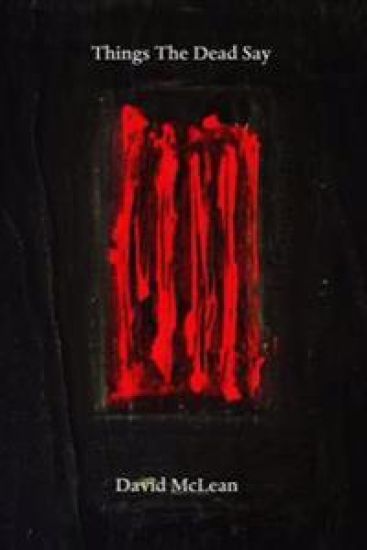
this is about the positivity & pleasure that hides at the heart of all the pain & hatred like a red rose in the murderer's heart, according to Genet. it is about the shit at the heart of all literature, everything here from Myra Hindley to Bodidharma, fuck you very much
Automotive Detailing in Detail takes the combined experience and expertise of three leading detailing commentators to provide a thorough and expansive overview of automotive detailing techniques. From the pre-wash, wash and preparation stages, through machine polishing to paint protection and maintenance, every detailing stage is covered: surface types, contaminants and products are analysed, before the actual processes are laid bare. In the age of the internet and social media, a plethora of detailing knowledge is available online, yet it is strangely difficult to discover completely, or harness usefully. This book redresses the balance.
Even more fucked up than McLean's first novel (Henrietta Remembers), which makes it well better, it abandons all pretense of plot & degenerates nicely into an inchoate prose poem.
A novel without plot about a murder rising from the emptiness that is words. David McLean's first novel demonstrates that the form is neither dead nor the exclusive province of literary establishment windbags. "A very nasty book. The repetition, rather than diminishing the effect, served rather to hammer home the innate nastiness and bleakness until it rang like a heavenly bell."(David Mitchell - author)
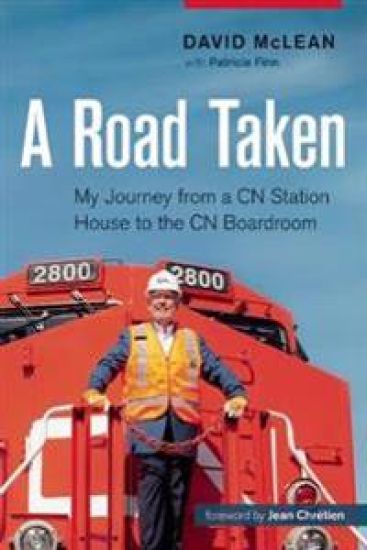
Nineteen years ago, David McLean was appointed by the prime minister of Canada to the board of directors of CN, after which he was elected chairman. McLean has been reelected each year and will retire in April 2014. In A Road Taken, the longest-serving chairman of the board in CN history explains complex business issues in very human terms. McLean's stories include his leadership role in the privatization of the company and the intrigue and egos in the behind-the-scenes race to launch the biggest IPO in Canadian history at that time. They also include the adventure and challenge of a prairie childhood, a university education fueled by team sports and ambition, and a successful career in law and business. McLean plumbs the depths and delivers a treatise on leadership in business and life that is as moving as it is honest.
Here are words to somewhat deconstruct your daily lives. McLean delivers sermons of a beautiful nothing(s) enriched by perceptions that pervasively cover the very lives you follow inanely day in, day out. He dissects the mundane and the superfluity of existence (if any) with a hacksaw and without much anaesthetic. His language is cutting, divisive, insightful, deploring, archaic but strong with a fleshy boldness that should and will be revered. David McLean seeks out the plastic and then tends to look underneath the plasticity of what man has made; the absurdity of god, the hilarity of societal values and the hypocritical agenda of righteous folk. The lesion of what McLean explores in this collection is indeed the nonsense that dominates us all whether aware or unaware however, after you read this blistering book, you'll be sure to be angry at something in this dying world.Craig Podmore (Author of The Origin of Manias, Oneiros Books)
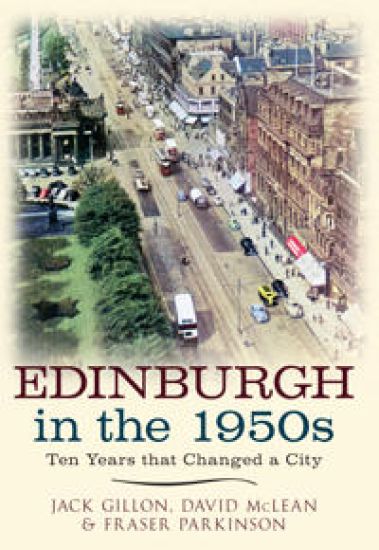
EDINBURGH in the 1950s was a very different place. After the ravages of war, the International Festival and Military Tattoo was introduced as an antidote to post-war austerity, the new Civic Survey and Plan put forward grandiose recommendations for change, and a new young Queen visited the city. This was a time when slum housing was a blight on many people's lives, but there was a real sense of community that was ultimately lost in the move to sparkling, modern homes in the new housing estates. People continued to use the trams to travel to work in the many factories or make trips to Portobello for a day of fun, but they were slowly usurped by the car. It was a glory period for the local football teams, and nights spent dancing or at the pictures were a weekly event. There was still the horse-drawn milk float and children played in streets that were lit by gas. Beautifully illustrated with many previously unpublished photographs, Edinburgh in the 1950s provides an exceptional insight into a time now acknowledged as the end of an era in Edinburgh - for good and for bad.
Love hate murder sex - the boiling down of western culture to its primitive urges, horror movies as the sublimation of our self-loathing, married to a critique of the 'society of the spectacle'. Powerful stuff.
The eviscerating negation of a pristine surgeon, this book culminates in a collection of what represents McLean's finest work to date. These are no bullshit poems, etched with a masterful control of both succinct language and piercing imagery, born of a restless intellect, at once at war with the within and the without. This book has the capacity to make you feel empowered in the face of the Nothing that is, and you will thank him for it...
Cancer and chronic disease are a rapidly increasing global health burden: according to the Milken Institute, the annual cost to the national US economy of the seven most common chronic conditions will rise to $4.2 trillion by 2023. The data are just as dramatic in Canada, Europe, Australia, and increasingly, in countries in the developing world. As communities, governments, and health organizations worldwide struggle to avoid being swamped by health care costs – not to mention the impact of suffering and poor quality of life – the only long-term, sustainable hope must be based on prevention efforts. This book presents a promising new approach to educating, engaging, empowering, and generating action within communities as part of that broader prevention agenda. The authors review representative global experiences with community based prevention educators, focusing on the prevention coordination work that can be accomplished within geographical areas ranging from local communities to broader regions. Among the findings they reveal in this book are the fundamental elements of successful Community Based Prevention programs – skilled staff, high-quality evaluation, and sustained investment in prevention efforts.