Kirjojen hintavertailu. Mukana 12 595 353 kirjaa ja 12 kauppaa.

Kirjailija

David Mepham

Kirjat ja teokset yhdessä paikassa: 4 kirjaa, julkaisuja vuosilta 2007-2023, suosituimpien joukossa Progressive Foreign Policy. Vertaile teosten hintoja ja tarkista saatavuus suomalaisista kirjakaupoista.

4 kirjaa

Kirjojen julkaisuhaarukka 2007-2023.

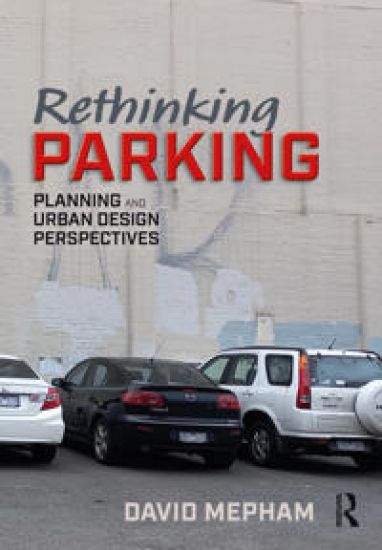
Rethinking Parking

Rethinking Parking

David Mepham

TAYLOR FRANCIS LTD
2023
nidottu
For much of the past century, we have viewed the issue of parking from the driver’s seat. It follows that key narratives about parking reaffirm the immediate needs of the driver. A consequence of this approach is a failure to understand the significant damage that parking causes to the destination. That damage is amplified by ‘cheap, easy’ parking at the expense of place and access outcomes. Viewing parking from an urban planning and design perspective highlights different issues and opportunities. Five perspectives are offered:Place – If we gave drivers all the parking they wanted, the destination would not be worth visiting.Politics – Parking is intensely territorial, emotional, and prone to populism, and this is a barrier to strategic and sustainable parking reform.Policy – Parking tends to be focused on the ‘me, here and now’ needs of the driver at the expense of bigger picture and longer term policy objectives.Price – Subsidized parking exists behind opaque pricing mechanisms. In contrast, a transparent accounting of costs is a vehicle for strategic parking reform.Professional practice – Parking is a significant land-use issue, located at the juncture of transport and urban planning and design. Improving urban parking outcomes requires an integrated and collaborative planning process.An alternative view of parking is timely as new technologies and economies fundamentally change everything we understand about parking. A potential paradigm shift is in the making. Rethinking Parking provides a pathway to a better parking/place balance and access to destinations worth visiting. It is valuable reading for students and professionals engaged in transport, planning, urban access, and design.
Rethinking Parking

Rethinking Parking

David Mepham

TAYLOR FRANCIS LTD
2023
sidottu
For much of the past century, we have viewed the issue of parking from the driver’s seat. It follows that key narratives about parking reaffirm the immediate needs of the driver. A consequence of this approach is a failure to understand the significant damage that parking causes to the destination. That damage is amplified by ‘cheap, easy’ parking at the expense of place and access outcomes. Viewing parking from an urban planning and design perspective highlights different issues and opportunities. Five perspectives are offered:Place – If we gave drivers all the parking they wanted, the destination would not be worth visiting.Politics – Parking is intensely territorial, emotional, and prone to populism, and this is a barrier to strategic and sustainable parking reform.Policy – Parking tends to be focused on the ‘me, here and now’ needs of the driver at the expense of bigger picture and longer term policy objectives.Price – Subsidized parking exists behind opaque pricing mechanisms. In contrast, a transparent accounting of costs is a vehicle for strategic parking reform.Professional practice – Parking is a significant land-use issue, located at the juncture of transport and urban planning and design. Improving urban parking outcomes requires an integrated and collaborative planning process.An alternative view of parking is timely as new technologies and economies fundamentally change everything we understand about parking. A potential paradigm shift is in the making. Rethinking Parking provides a pathway to a better parking/place balance and access to destinations worth visiting. It is valuable reading for students and professionals engaged in transport, planning, urban access, and design.

Progressive Foreign Policy

Progressive Foreign Policy

David Held; David Mepham

Polity Press
2007
sidottu
In May 1997, the then UK Foreign Secretary, Robin Cook, famously said that foreign policy should have ‘an ethical dimension’, and that the Labour Government would ‘put human rights at the heart of foreign policy’. Although not described in these terms, these assertions were an attempt to articulate a ‘progressive’ conception of foreign policy for the UK. But how does the foreign policy record of the Labour Government stand when set against these declared principles? What role have ethics really played in Labour’s foreign policy? Why has Labour been so interventionist, from Kosovo to Iraq? What does this record tell us about the limits and the possibilities of progressive foreign policy? What does it tell us about the strengths and failures of Labour’s foreign policy? This timely book, published in association with the Institute for Public Policy Research and the Centre for Global Governance at the LSE, addresses these questions and provides an appraisal of Labour’s record in power. However, the book also looks forward. It provides a novel assessment of the international trends that will shape the global context of UK foreign policy. The contributors set out new perspectives and policy options in respect of international security, democracy, justice, human rights, and sustainability. In addition, the book offers fresh thinking on the UK’s relationship with key countries and regions, from the US to Europe, from the Middle East to China. Moreover, it suggests a radical new approach to global governance and to the way in which the UK makes and implements foreign policy. At a time of real flux in UK domestic politics and of rapid change in international politics, this book is an indispensable guide to the UK’s foreign policy options and to the prospects and possibilities of a more values-driven and effective UK foreign policy.
Progressive Foreign Policy

Progressive Foreign Policy

David Held; David Mepham

Polity Press
2007
nidottu
In May 1997, the then UK Foreign Secretary, Robin Cook, famously said that foreign policy should have ‘an ethical dimension’, and that the Labour Government would ‘put human rights at the heart of foreign policy’. Although not described in these terms, these assertions were an attempt to articulate a ‘progressive’ conception of foreign policy for the UK. But how does the foreign policy record of the Labour Government stand when set against these declared principles? What role have ethics really played in Labour’s foreign policy? Why has Labour been so interventionist, from Kosovo to Iraq? What does this record tell us about the limits and the possibilities of progressive foreign policy? What does it tell us about the strengths and failures of Labour’s foreign policy? This timely book, published in association with the Institute for Public Policy Research and the Centre for Global Governance at the LSE, addresses these questions and provides an appraisal of Labour’s record in power. However, the book also looks forward. It provides a novel assessment of the international trends that will shape the global context of UK foreign policy. The contributors set out new perspectives and policy options in respect of international security, democracy, justice, human rights, and sustainability. In addition, the book offers fresh thinking on the UK’s relationship with key countries and regions, from the US to Europe, from the Middle East to China. Moreover, it suggests a radical new approach to global governance and to the way in which the UK makes and implements foreign policy. At a time of real flux in UK domestic politics and of rapid change in international politics, this book is an indispensable guide to the UK’s foreign policy options and to the prospects and possibilities of a more values-driven and effective UK foreign policy.