

Kirjailija
David Moore
Kirjat ja teokset yhdessä paikassa: 74 kirjaa, julkaisuja vuosilta 1998-2026, suosituimpien joukossa Contributions towards a Cybele Hibernica. Vertaile teosten hintoja ja tarkista saatavuus suomalaisista kirjakaupoista.
74 kirjaa
Kirjojen julkaisuhaarukka 1998-2026.

Designers' Guide to EN 1991-1-2, EN 1992-1-2, EN 1993-1-2 and EN 1994-1-2
Tom Lennon; David Moore; Yong Wang; Colin Bailey; Haig Gulvanessian
Thomas Telford Ltd
2007
sidottu
The nature of the loading must first be understood before applying the structural engineering principles set out in the Eurocodes. For this reason this book is meant as a guide to four separate documents, EN1991 Part 1.2, EN1992 Part 1.2, EN1993 Part 1.2 and EN1994 Part 1.2 with reference where appropriate to the Eurocode covering the basis of design, EC06. The fire design procedures for reinforced and prestressed concrete structures are contained in the relevant parts of the code, BS81104,5. However, the structural Eurocodes consider steel, composite and concrete construction in isolation and each material therefore has its own corresponding fire part. In this case, a clause-by-clause examination of the fire parts of the material codes would not be sufficient to allow designers to use these documents. The guide takes the form of an introduction to the procedures required to achieve design solutions for a typical range of structural elements and assemblies. Worked examples are included along with appropriate text to illustrate the use of the Eurocodes for specific design scenarios. As a way of setting the scene for those unfamiliar with the basic principles of structural fire engineering design the next section provides an overview of the regulatory framework and a description of the commonly used methods for ensuring compliance with the regulations.

Independent Wales was defined in the centuries after the Romans withdrew from Britain in AD 410. The wars of Welsh independence encompassed centuries of raids, expeditions, battles and sieges, but they were more than a series of military encounters: they were a political process.

This is the inside story of how Jeb Bush persuaded the Fox network to call the presidential election for his brother George W. Bush on Election Night 2000. It was one phone call to Fox , the details of which are revealed in this book for the first time , that propelled George W. Bush into leading position for 43rd president of the United States. Even though the erroneous statement had to be retracted within two hours, the damage done by this false call to Al Gore's chances of winning the election were incalculable. David Moore, at the time senior editor for the Gallup Poll, makes the plausible and alarming case that, had Fox not made this miscall, the resulting political environment would have been less biased in favour of Bush, and that Al Gore could have won. On Election Night in 2000, Moore was with the exit poll "decision team" of CBS and CNN, taking notes on how election races were called, and miscalled, around the country , including the two miscalls and two rescissions in Florida. Prior to joining Gallup in 1993, Moore was founder and director of the Survey centre at the University of New Hampshire.
Communication within project-based environments presents special challenges. This is especially true within the construction industry, where interaction tends to be characterised by unfamiliar groups of people coming together for short periods before disbanding to work on other endeavours. This book examines communication at a number of levels ranging from interpersonal interactions between project participants to corporate communication between organizations. Several non-typical perspectives on the process of communication are introduced to encourage the reader to think about communication in a more innovative manner. The combination of differing perspectives illustrates the diversity of communication problems facing those working within project-based environments. Practical guidance is provided on possible solutions to communication problems, and a number of examples and case studies are presented.
Communication within project-based environments presents special challenges. This is especially true within the construction industry, where interaction tends to be characterised by unfamiliar groups of people coming together for short periods before disbanding to work on other endeavours. This book examines communication at a number of levels ranging from interpersonal interactions between project participants to corporate communication between organizations. Several non-typical perspectives on the process of communication are introduced to encourage the reader to think about communication in a more innovative manner. The combination of differing perspectives illustrates the diversity of communication problems facing those working within project-based environments. Practical guidance is provided on possible solutions to communication problems, and a number of examples and case studies are presented.
A history of the Welsh Wars of Independence.
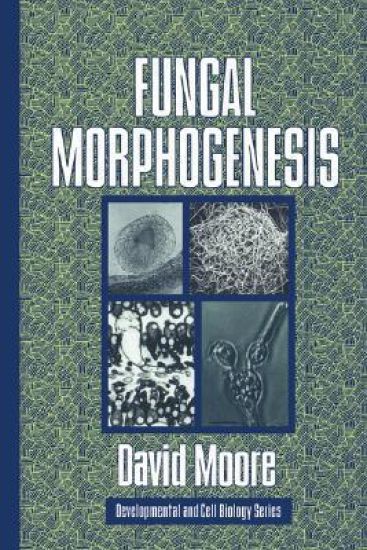
Fungal Morphogenesis brings together in one book, for the first time, the full scope of fungal developmental biology. It provides a coherent account of the subject and puts forward ideas that can provide the basis of future research. Throughout, the author blends together physiological, biochemical, structural and molecular descriptions within an evolutionary framework. Sufficient information is provided about fungal biology to give the reader a rounded view of the mycological context within which fungal morphogenesis is played out, without obscuring the broader biological significance. Readers with a background in basic biology should not need to bring any other knowledge with them, nor should it be necessary to refer elsewhere, in order to appreciate fungal morphogenesis. Written by one of the few people with the necessary breadth of research expertise to deal authoritatively with the wide range of topics, this book will appeal to developmental and cell biologists, microbiologists, and geneticists.

Essential Fungal Genetics
David Moore; LilyAnn Novak Frazer
Springer-Verlag New York Inc.
2002
sidottu
Most genetics textbooks deal adequately with plant and animal genetics, but tend to neglect fungi except for two areas. Firstly, the ascus segregations which, in the 1960s, contributed so much to developing an understanding of the mechanism of recombination and secondly, the contribution that work on yeast (as a model eukaryote) is currently making to understanding cell cycle control and its genetic regulation. Consequently, most introductory genetics texts will leave the reader/student with the impression that fungi are of use when peculiarities of their structure or life style suit them to particular experimental approaches, but are not worth mentioning otherwise. The authors have produced a book that will compensate for this imbalance. This book discusses the genetics of fungi, or mycology, in a way that is attractive and challenging, succinct yet comprehensive, sensitive to commercial and applied aspects, yet also theoretical, dealing with their genetics from molecules to individuals to population.This short text will be an ideal supplement to the established basic textbooks in genetics or can be used as the sole text for an advanced course devoted to fungal genetics.
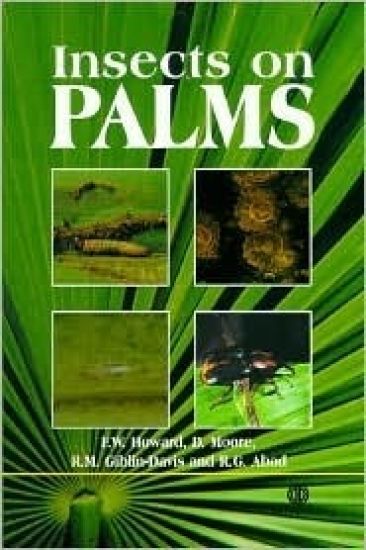
Insects on Palms
Forrest Howard; Robin Giblin-Davis; David Moore; Reynaldo Abad
CABI Publishing
2001
sidottu
Palms constitute one of the largest botanical families, and include some of the world’s most important economic plants. They are also unequalled as outdoor and indoor ornamental plants, and include many species that are essential components of the ecosystems of tropical and other warm regions. This book reviews the inter-relationships between palms and insects, emphasising the similarities in different world regions. The host plants, distribution, and bionomics of representative insects are discussed according to their feeding sites on palms (foliage, flowers, fruits, and stems) and their taxonomic groups. Host and distribution records for the most extensively represented insect families on palms are tabulated. Pest management and field techniques are also covered. This book is recommended reading for tropical biologists and agriculturalists, including entomologists, horticulturists and tropical ecologists as well as palm nursery growers, managers and enthusiasts.
This is a book for the general reader about the world of fungi. We should know more about fungi. They have killed us, saved us and served us since before written records began. We have been making bread, brewing ale, and fermenting wine for millennia. Our crops have been at the mercy of fungal diseases since we became farmers, and they still are. Fungal diseases have caused large demographic changes - from the great plague of 'St. Anthony's Fire' of the Middle Ages (caused by a fungal toxin) to the Irish mass migration to the Americas during the famine (caused by a fungal disease of the potato crop).We can also thank fungi for antibiotics, but do we fully appreciate the revolution in life style (and life expectancy) that these taken-for-granted treatments permit? One of the first people to receive penicillin treatment in England in the 1940s was a policeman in Oxford. He died of septicemia when the supplies of the antibiotic ran out after he had been scratched by a rose thorn.Fungi enabled plants (by a mutualistic combination that persists today) to invade the land during the evolution of life on Earth. Higher fungi are almost unique in their ability to decay the chemical components of timber. Without the wood-rotting fungi we would be up to our eyes in dead trees. Fungi give us the opportunity of treating plant diseases and killing specific weeds, as well as being very useful for cleaning up polluted environments and for producing chemicals. In short, this book will show you why it is wise to look again at fungi and appreciate these extraordinary organisms for what they are: a vital component of our lives and of the Earth's ecosystem.
This is a book for the general reader about the world of fungi. We should know more about fungi. They have killed us, saved us and served us since before written records began. We have been making bread, brewing ale, and fermenting wine for millennia. Our crops have been at the mercy of fungal diseases since we became farmers, and they still are. Fungal diseases have caused large demographic changes - from the great plague of 'St. Anthony's Fire' of the Middle Ages (caused by a fungal toxin) to the Irish mass migration to the Americas during the famine (caused by a fungal disease of the potato crop).We can also thank fungi for antibiotics, but do we fully appreciate the revolution in life style (and life expectancy) that these taken-for-granted treatments permit? One of the first people to receive penicillin treatment in England in the 1940s was a policeman in Oxford. He died of septicemia when the supplies of the antibiotic ran out after he had been scratched by a rose thorn.Fungi enabled plants (by a mutualistic combination that persists today) to invade the land during the evolution of life on Earth. Higher fungi are almost unique in their ability to decay the chemical components of timber. Without the wood-rotting fungi we would be up to our eyes in dead trees. Fungi give us the opportunity of treating plant diseases and killing specific weeds, as well as being very useful for cleaning up polluted environments and for producing chemicals. In short, this book will show you why it is wise to look again at fungi and appreciate these extraordinary organisms for what they are: a vital component of our lives and of the Earth's ecosystem.

Child-Free Zone: Why More People Are Choosing Not To Be Parents
David Moore; Susan Moore
Chequered Gecko Pty, Limited
2000
nidottu
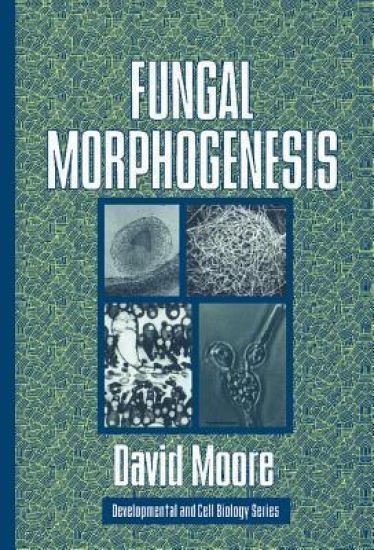
Fungal Morphogenesis brings together in one book, for the first time, the full scope of fungal developmental biology. It provides a coherent account of the subject and puts forward ideas that can provide the basis of future research. Throughout, the author blends together physiological, biochemical, structural and molecular descriptions within an evolutionary framework. Sufficient information is provided about fungal biology to give the reader a rounded view of the mycological context within which fungal morphogenesis is played out, without obscuring the broader biological significance. Readers with a background in basic biology should not need to bring any other knowledge with them, nor should it be necessary to refer elsewhere, in order to appreciate fungal morphogenesis. Written by one of the few people with the necessary breadth of research expertise to deal authoritatively with the wide range of topics, this book will appeal to developmental and cell biologists, microbiologists, and geneticists.