Kirjojen hintavertailu. Mukana 12 315 302 kirjaa ja 12 kauppaa.
Kirjailija
David Morris
Kirjat ja teokset yhdessä paikassa: 40 kirjaa, julkaisuja vuosilta 1996-2025, suosituimpien joukossa Seeing and Knowing. Vertaile teosten hintoja ja tarkista saatavuus suomalaisista kirjakaupoista.
Blundell Geoffrey; Christopher Chippindale; Clottes Jean; Conkey Margaret W.; Edward B. Eastwood; Francis Julie E.; Helskog Knut; Imogene L. Lim; Loendorf Lawrence L.; Johannes Loubser; David Morris; Sven Ouzman; Neil Price; Saetersdal Tore; Benjamin Smith; Patricia Vinnicombe; Eva Walderhaug; Walker Nick; Whitley David S.
This collection focuses on David Lewis-Williams and the extent of his personal impact on the field of rock art research. It is largely through his work that San rock art has come to be understood so well, as a complex symbolic and metaphoric representation of San religious beliefs and practices. The purpose of this volume is to demonstrate the depth and wide geographical impact of Lewis-Williams' contribution, with particular emphasis on the use of theory and methodology drawn from ethnography that he has used with inspirational effect in understanding the meaning and context of rock art in various parts of the world. Seeing and Knowing explores how best archaeologists study rock art when there exist ethnographic or ethno - historic bases of insight, and how they study rock art when there do not appear to exist ethnographic or ethnohistoric bases of insight - in short, how to understand and learn from rock art with and without ethnography. Because many of the chapters are based on solid fieldwork and ethnographic research, they offer a new body of work that provides the evidence for differentiation between knowing and simply seeing.

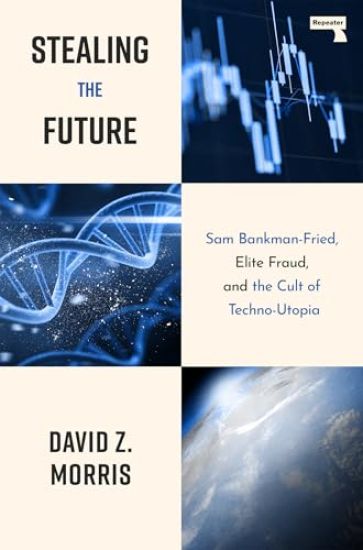
When does a philosophy become a conspiracy? Stealing the Future is the first book to tell the true and full story of Sam Bankman-Fried and his historic crimes. It chronicles the $11 billion FTX fraud with the detail and nuance of a financial fraud expert and cryptocurrency insider - but unlike any book before it, it also traces the ideas that enabled the crime. "Effective Altruism" and related tendencies, such as longtermism and transhumanism, remain dangerously influential in today's Silicon Valley. Despite Bankman-Fried's pose as a cuddly liberal philanthropist, they are now center stage in the global rise of the far right, and also lie at the heart of OpenAI, the tech darling that took FTX's place as the face of the future.
AI Life is your new go-to guide to demystifying the tools and tricks that quietly shape modern life. We’re not here to overwhelm you with technical jargon or predict robot uprisings. Instead, we show you exactly how Artificial Intelligence (AI) already works in your world—and how to make it work better for you. Brought to you by AI experts with real-world experience, this first issue maps the AI landscape from your kitchen to your workplace, and hands you practical activities to try today. We test the tools, decode the hype, and translate complex concepts into weekend projects you’ll actually want to tackle. Think less ”science fiction”, more ”supercharged life hacks”. Every article delivers something you can use immediately, whether you’re a student cramming for exams, a professional drowning in emails, or a retiree exploring new hobbies. Covers topics including: What is AI? Smart homes – see how AI quietly powers the home assistants, appliances, and systems you already use. Voice assistants – make Siri, Alexa, and Google Assistant work for you. Smart photography – learn how AI makes your photos look professional. Generative AI: ChatGPT, Claude, & Perplexity (includes real projects you can complete in 15-30 minutes). AI at work – supercharge your emails and meetings (includes a project). AI for family – meal planning, shared calendars, co-parenting tools, and more (includes a project). AI for students – how students use AI, and the fine line between help and dishonesty (includes a project). AI for seniors – tools for independence and companionship (includes a project). AI myths – exploring and debunking the major myths surrounding AI. Let’s make AI work for us, not the other way around. This isn’t about replacing human creativity or judgment—it’s about amplifying what you already do well and reclaiming time for what matters most.
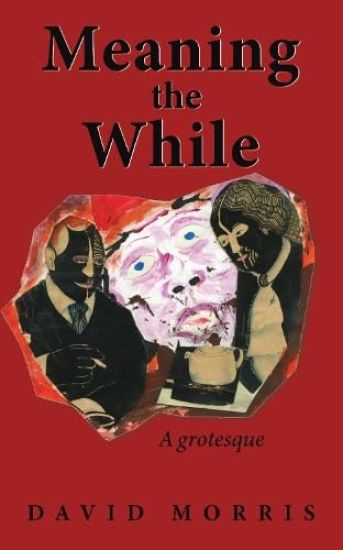
Meaning the While is a work of social fantasy in which bureaucratic norms are developed and distorted to create a terrifying new world order. As a counter weight, mundane daily experiences of ignorance and indifference to a growing calamity, are heightened to a curious intensity of avoidance. It is the tension between these two narratives that drives the novel to its conclusion.
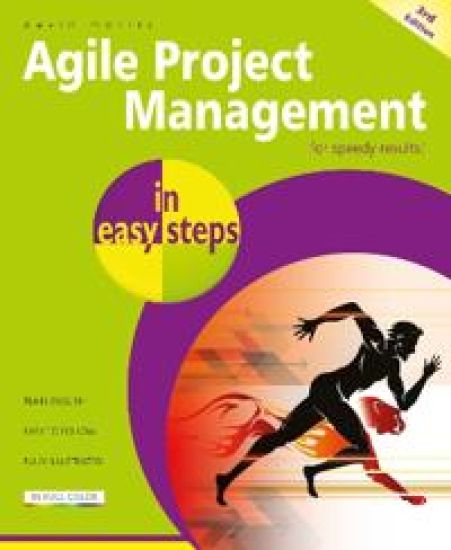
This third edition of Agile Project Management in easy steps has been updated to reflect its ongoing evolution. It explains the principles, practices, and processes of agile project management, by following an entire project, step-by-step, and covering the main activities and deliverables, including: Pre-project start-up and terms of reference. Feasibility assessment and the business case. Establishing strong foundations for success. Iterative and incremental development . Continual as well as post-project retrospectives. Now with two new chapters: The first addresses how to apply agile approaches to projects in more controlled environments. The second looks at how the role of project management changes in organizations moving from projects to products, where stable long-standing teams work long-term on the same product or service. An essential guide for anyone new to agile projects and a valuable source of inspiration for the more experienced. It also includes downloadable templates to get you started.
A deeper look at the religious identity crisis of our time that shows a way past our debates and toward a healthier spirituality.Americans are obsessed with religion. You're either in or your out; you're this or you're that, and you had better figure it out. Except now, so of us just want to forget the whole thing. We often feel angry, hurt, and alone, while knowing there's a better way. Lost Faith and Wandering Souls helps readers get at those important feelings of disillusionment and shows that within them they will find the keys to rediscovering hope. Taking an evocative approach, David Morris puts theological arguments aside and holds up our humanity as equally important. He treats the loss of faith as if it were any other kind of loss, and asks, what if we learned to mourn? He turns to psychoanalytic psychology for its interpretive power. With the concepts of mourning, pining, and play, he shines a light on a restorative path. Applying these ideas to contemporary spiritual memoirs, Morris discovers a back-and-forth movement in overcoming faith loss, going between feelings of numbness, self-recrimination, and wandering to playfulness, self-agency, and belonging. If we can feel our loss, he argues, then we rediscover a new imagination for meaning making.Lost Faith and Wandering Souls acknowledges the religious identity crisis of our time and the full power of the psychological journey. By looking beneath the surface at deep, lifelong dynamics, it shows a way past our losses individually and socially toward a healthier, inclusive spirituality.
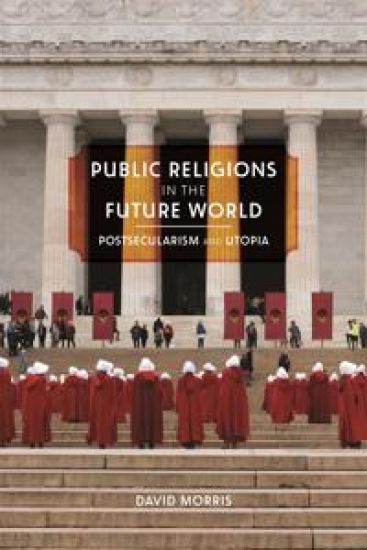
Public Religions in the Future World is the first book to map the utopian terrain of the political-religious movements of the past four decades. Examining a politically diverse set of utopian fictions, this book cuts across the usual Right/Left political divisions to show a surprising convergence: each political-religious vision imagines a revived world of care and community over and against the economization and fragmentation of neoliberalism. Understanding these religions as utopian movements in reaction to neoliberalism, Public Religions invites us to rethink the bases of religious identification and practice. Offering new insights on texts from the Left Behind series to the novels of Octavia Butler, Public Religions shows that the utopian energy of the present opens new opportunities for political organizing and genuine, lasting community building. Public Religions in the Future World presents a literary history of the political-religious present, arguing that the power of public religion lies in the utopian visions that underlie religious beliefs. It shows that contemporary literary utopianism is deeply inflected with religious ideas, with the visions, values, and ambitions of Christianity, Islam, nature mysticism, and other traditions. Further, Public Religions demonstrates that this utopianism’s religiosity is in turn politically inflected, that it resonates with and underwrites a range of competing political projects: those of imperialism, globalization, neoliberal capitalism, deep ecology, and the pro-migration movement. David Morris constructs a working theory of how religion makes large-scale interventions in political debates. The novels in his study draw on religious traditions to articulate visions, programs, or missions for achieving some version of an improved world. In doing so, they undertake the work of literary postmodernism: to represent globality, to recover the voices of the underrepresented, and to imagine a future that escapes the destructiveness of global capitalism.
Family Hiking in the Smokies is specifically geared toward taking children on excursions into the Great Smoky Mountains National Park—the most visited national park in the United States. The park offers much to its nearly ten million annual visitors. For families who seek fun along with educational recreation, the park boasts splendid views and enormous biological diversity.While the guidebook concentrates on shorter day hikes, the book also presents longer trails for overnight or weekend camping. Organized by regions of the park, the forty-two concise trail descriptions include many of the most popular destinations, such as Ramsey Cascades, Grotto Falls, and Clingmans Dome Tower, as well as overlooked gems such as Midnight Hole, Lynn Camp Prong, and Juney Whank Falls. This fifth edition includes new trails not found in the book’s previous editions, and all are presented in a user-friendly format.This delightful volume also includes specific advice regarding safety, trail difficulty, and keeping children’s attention. In addition, Family Hiking in the Smokies provides interesting educational sidebars about fauna, folklore, and material culture along the way. This book, based on the experiences of three expert hikers who have walked with their own children and grandchildren in the park, will provide parents and grandparents with a perfect guide for establishing an adult/child bond with the natural world.HAL HUBBS, CHARLES MAYNARD, AND DAVID MORRIS are longtime East Tennessee residents who have hiked together and with their families for many years. The three friends formed Panther Press, which originally published Waterfalls and Cascades of the Great Smoky Mountains, along with many other titles on natural history, particularly in the Smokies. Hal, Charles, and David have worked as volunteers in the Smokies and have hiked in many national parks throughout the country.
When David Morris collapsed after a stroke, he lay unconscious on the floor of his flat for more than two days and was not discovered until he was close to death. Unable at first to walk and eat unaided, he was confined to a hospital for months, but he was determined to get his life back as soon as he could. In this book he tells how he managed it - and found a new life in the sunshine of Cyprus.
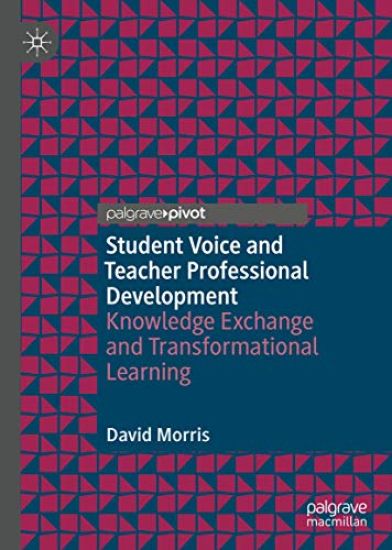
This book explores the role of students’ involvement in teacher professional development. Building upon a research study whereby pupils instruct their teachers in the use of Information and Communication Technology (ICT), the author argues that using student voice in this way can result in transformational learning for all those involved. The author presents the processes and experiences of pupils taking on the role of educators as well as the experiences of the teachers receiving such professional development from their students. In doing so, he promotes the innovative use of a student voice initiative to support teaching and learning, with the overarching purpose of improving and transforming teacher-pupil relationships. This book will be of interest and value to students and scholars of pupil voice, teacher professional development and transformational learning.
In 2000, the Fleet Air Arm Museum conservation team embarked on an ambitious project to explore what remained of any original paintwork and markings on its Second World War Corsair fighter aircraft. The painstaking, inch-by-inch removal of a 1960s paint layer from the whole aircraft slowly revealed that the entire aircraft remained authentic and original in its 1940s wartime condition. The detailed forensic approach allowed the valuable and many unique details to be studied and preserved, enabling the team to chart the aircraft’s history from factory to end of Royal Navy service.Thanks to new research, this updated edition of Corsair KD431 contains new images and findings concerning the story of how Lt Cdr Godfrey Woodbine-Parish returned from Ceylon in the Second World War, and also the use of Brewster Aircraft components on Goodyear factory-built aircraft.
Only six years after man had successfully flown for the first time with controlled, powered flight in 1903, the Royal Navy could already see the potential of taking flying machines to sea. Initially used to extend the view from the ship’s crow’s nest, the aircraft at sea would become one of the most influential strides forward in the history of the Royal Navy. From aircraft and technology to training, language and recreation, the flying branch of the Royal Navy has long had its own specific set of objects, rules and traditions. Delving in to the official archives of the Fleet Air Arm Museum and the wider National Museum of the Royal Navy, David Morris tells this incredible story through a selection of 100 significant objects.
Academic Literacy in the Social Sciences is a practical introductory guide that supports students through the process of understanding and critically evaluating research in the Social Sciences. This essential text develops and strengthens students’ ability to develop research paper topics, conduct thorough literature searches, critically evaluate research, and effectively summarize and share information. The textbook is broken down into ten chapters, focusing on topics such as theory and research methods in the social sciences, citing APA style, ethics and integrity, and statistics. This is an ideal resource for all students in undergraduate courses based in the social sciences.