

Kirjailija
David Murray
Kirjat ja teokset yhdessä paikassa: 73 kirjaa, julkaisuja vuosilta 2000-2026, suosituimpien joukossa Armies of Peace. Vertaile teosten hintoja ja tarkista saatavuus suomalaisista kirjakaupoista.
73 kirjaa
Kirjojen julkaisuhaarukka 2000-2026.

An Archaeological Survey Of The United Kingdom (1896)
David Murray
KESSINGER PUBLISHING, LLC
2008
pokkari




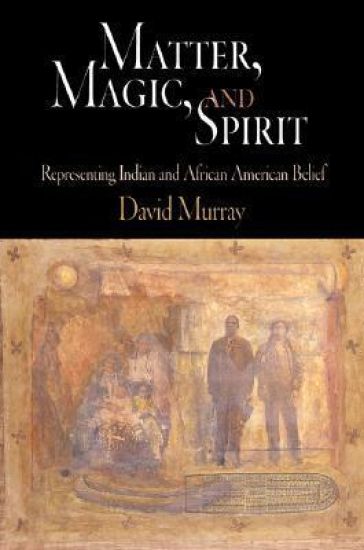
The spiritual and religious beliefs and practices of Native Americans and African Americans have long been sources of fascination and curiosity, owing to their marked difference from the religious traditions of white writers and researchers. Matter, Magic, and Spirit explores the ways religious and magical beliefs of Native Americans and African Americans have been represented in a range of discourses including anthropology, comparative religion, and literature. Though these beliefs were widely dismissed as primitive superstition and inferior to "higher" religions like Christianity, distinctions were still made between the supposed spiritual capacities of the different groups. David Murray's analysis is unique in bringing together Indian and African beliefs and their representations. First tracing the development of European ideas about both African fetishism and Native American "primitive belief," he goes on to explore the ways in which the hierarchies of race created by white Europeans coincided with hierarchies of religion as expressed in the developing study of comparative religion and folklore through the nineteenth century. Crucially this comparative approach to practices that were dismissed as conjure or black magic or Indian "medicine" points as well to the importance of their cultural and political roles in their own communities at times of destructive change. Murray also explores the ways in which Indian and African writers later reformulated the models developed by white observers, as demonstrated through the work of Charles Chesnutt and Simon Pokagon and then in the later conjunctions of modernism and ethnography in the 1920s and 1930s, through the work of Zora Neale Hurston, Zitkala Sa, and others. Later sections demonstrate how contemporary writers including Ishmael Reed and Leslie Silko deal with the revaluation of traditional beliefs as spiritual resources against a background of New Age spirituality and postmodern conceptions of racial and ethnic identity.

This book makes a significant contribution to the debate about the applications and implications of gene technology from the perspective of a plant biologist. It is written in an accessible way and therefore will be appropriate for non-specialists and the more general reader, as well as students and others in plant breeding and biotechnology. The author is a well-known Australian botanist, who has written or edited several previous books on both academic and popular topics in plant science. In this book he addresses questions such as:How are genetically modified plants producedWhich breeding goals are worthwhile?Can the escape of transferred genes be controlled?Who is monitoring the unexpected effects of gene transfer?Will GM plants ever be acceptable to organic growers?
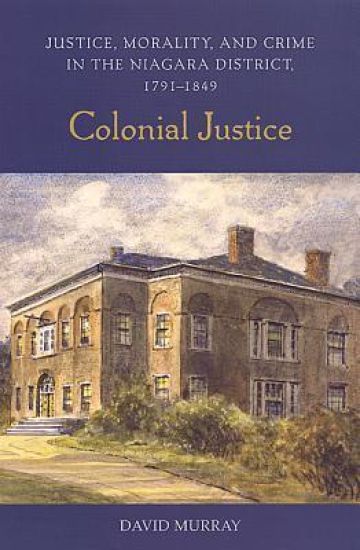
In 1791 when the Constitutional Act created a legislative assembly for Upper Canada, the colonists and their British rulers decreed that the operating criminal justice system in the area be adopted from England, to avoid any undue influence from the nearby United States. In this new study of early Canadian law, David Murray has delved into the court records of the Niagara District, one of the richest sets of criminal court records surviving from Upper Canada, to analyze the criminal justice system in the district during the first half of the nineteenth century. Murray explores how far local characteristics affected the operation of a criminal justice system transplanted from England; his analysis includes how legal processes affected Upper Canadian morality, the treatment of the insane, welfare cases, crimes committed in the district, and an examination of the roles of the Niagara magistrates, constables, and juries. Murray concludes by arguing that while the principles and culture of British justice were firmly implanted in the Niagara district, this did not prevent justice from being unequal, especially for women and visible minorities. Integrating the stories of the individuals caught up in the legal system, Murray explores law from a local perspective, and illuminates how the Niagara region's criminal justice system operated under hybrid influences from both Britain and the United States.

It Ain't Necessarily So: How the Media Remake Our Picture of Reality
David Murray; Joel Schwartz; S. Robert Lichter
PENGUIN BOOKS
2002
nidottu
Anthrax scares. Airplane crashes. The AIDS epidemic. Presidential election polls and voting results. Global warming. All these news stories require scientific savvy, first to report, and then-for the average person-to understand. It Ain't Necessarily So cuts through the confusion and inaccuracies surrounding media reporting of scientific studies, surveys, and statistics. Whether the problem is bad science, media politics, or a simple lack of information or knowledge, this book gives news consumers the tools to penetrate the hype and dig out the facts. "Whether it's a scientific study on day care or health care, hunger in America or the environment, once it gets into the hands of journalists - look out You may think you're getting the straight story - but it ain't necessarily so, as this aptly named book makes clear. But beware: It Ain't Necessarily So may confirm your worst fears about the media. Which is precisely why it's such an important contribution to our understanding of how things really operate inside the American newsroom." (Bernard Goldberg, author of Bias)
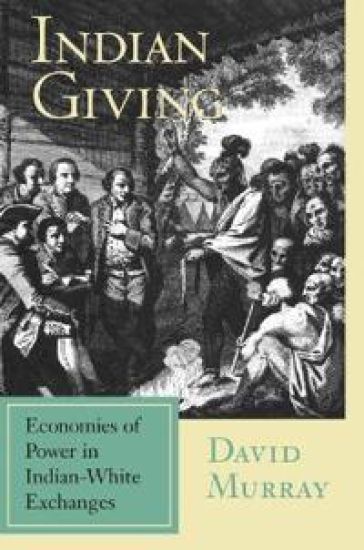
Whether they involved goods, words or ideas, acts of giving and trading were fundamental in early Indian-white contacts. But how did these transactions function across the two cultures, and what did they mean to each? In this book, David Murray explores a range of early exchanges between Europeans and Indians, showing how they operated within a set of interlocking economies - lingusitic, religious, as well as material. Murray begins by examining the crucial role of gift-giving. Like the double function of the key, which both locks and unlocks, the gift - with its simultaneous action of offering something and demanding a return - expressed the paradoxical nature of early Indian-white encounters. Because the power to give was associated with ideas of sovereignty, both sides often preferred to represent exchanges as gift-giving rather than trading or selling. To illustrate the complexities of these cross-cultural transactions, the author looks closely at the work of linguist, trader and missionary Roger Williams, whose ""A Key into the Languages of America"" at once serves the purposes of translation, conversion and trade. Murray also examines the changing meaning and representation of wampum, the quintessential medium of exchange in the early colonial period, as well as the multiple processes of conversion taking place as Christian ideas were incorporated into Indian cultures. According to the author, only by recognizing the ways in which objects and ideas circulated and took on value in interrelated economies can we understand the contested ""middle ground"" between Europeans and Indians of the colonial Northeast.