Kirjojen hintavertailu. Mukana 12 510 427 kirjaa ja 12 kauppaa.

Kirjailija

David Nelken

Kirjat ja teokset yhdessä paikassa: 5 kirjaa, julkaisuja vuosilta 2009-2019, suosituimpien joukossa Comparative Criminal Justice. Vertaile teosten hintoja ja tarkista saatavuus suomalaisista kirjakaupoista.

5 kirjaa

Kirjojen julkaisuhaarukka 2009-2019.

Italian Politics

Italian Politics

Roberto D'alimonte; David Nelken

Routledge
2019
sidottu
The year 1996 in Italian politics was a year rich in novelty. After the ?stalled transition? of 1995, the political atmosphere had begun to change. Most obvious was the end of Dini's unelected government of technocrats, supported by a heterogeneous group in Parliament, and its replacement with Romano Prodi's government, a coalition of the parties t
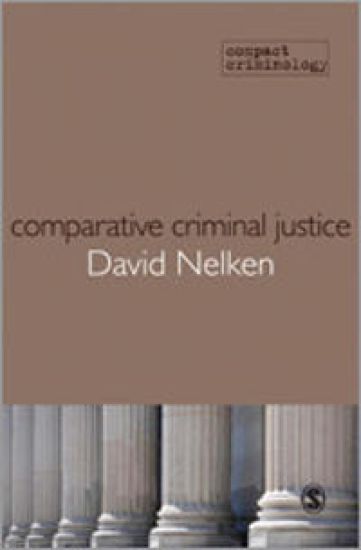
Comparative Criminal Justice

Comparative Criminal Justice

David Nelken

SAGE Publications Ltd
2010
sidottu
David Nelken is the 2013 laureate of the Association for Law and Society International Prize The increasingly important topic of comparative criminal justice is examined from an original and insightful perspective by David Nelken, one of the top scholars in the field. The author looks at why we should study crime and criminal justice in a comparative and international context, and the difficulties we encounter when we do. Drawing on experience of teaching and research in a variety of countries, the author offers multiple illustrations of striking differences in the roles of criminal justice actors and ways of handling crime problems. The book includes in-depth discussions of such key issues as how we can learn from other jurisdictions, compare 'like with like', and balance explanation with understanding – for example, in making sense of national differences in prison rates. Careful attention is given to the question of how far globalisation challenges traditional ways of comparing units. The book also offers a number of helpful tips on methodology, showing why method and substance cannot and should not be separated when it comes to understanding other people's systems of justice. Students and academics in criminology and criminal justice will find this book an invaluable resource. Compact Criminology is an exciting series that invigorates and challenges the international field of criminology. Books in the series are short, authoritative, innovative assessments of emerging issues in criminology and criminal justice – offering critical, accessible introductions to important topics. They take a global rather than a narrowly national approach. Eminently readable and first-rate in quality, each book is written by a leading specialist. Compact Criminology provides a new type of tool for teaching, learning and research, one that is flexible and light on its feet. The series addresses fundamental needs in the growing and increasingly differentiated field of criminology.
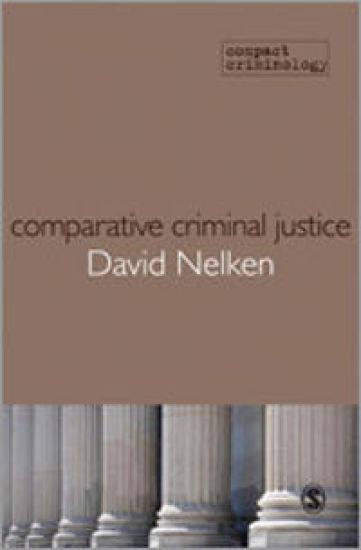
Comparative Criminal Justice

Comparative Criminal Justice

David Nelken

SAGE Publications Ltd
2010
nidottu
David Nelken is the 2013 laureate of the Association for Law and Society International Prize The increasingly important topic of comparative criminal justice is examined from an original and insightful perspective by David Nelken, one of the top scholars in the field. The author looks at why we should study crime and criminal justice in a comparative and international context, and the difficulties we encounter when we do. Drawing on experience of teaching and research in a variety of countries, the author offers multiple illustrations of striking differences in the roles of criminal justice actors and ways of handling crime problems. The book includes in-depth discussions of such key issues as how we can learn from other jurisdictions, compare 'like with like', and balance explanation with understanding – for example, in making sense of national differences in prison rates. Careful attention is given to the question of how far globalisation challenges traditional ways of comparing units. The book also offers a number of helpful tips on methodology, showing why method and substance cannot and should not be separated when it comes to understanding other people's systems of justice. Students and academics in criminology and criminal justice will find this book an invaluable resource. Compact Criminology is an exciting series that invigorates and challenges the international field of criminology. Books in the series are short, authoritative, innovative assessments of emerging issues in criminology and criminal justice – offering critical, accessible introductions to important topics. They take a global rather than a narrowly national approach. Eminently readable and first-rate in quality, each book is written by a leading specialist. Compact Criminology provides a new type of tool for teaching, learning and research, one that is flexible and light on its feet. The series addresses fundamental needs in the growing and increasingly differentiated field of criminology.
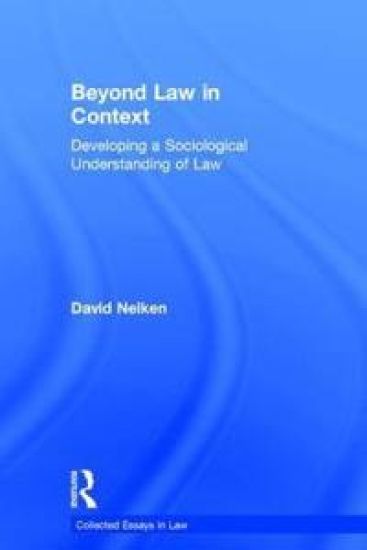
Beyond Law in Context

Beyond Law in Context

David Nelken

Ashgate Publishing Limited
2009
sidottu
This intriguing collection of essays by David Nelken examines the relationship between law, society and social theory and the various ideas social theorists have had about the actual and ideal 'fit' between law and its social context. It also asks how far it is possible to get beyond this mainstream paradigm. The value of social theorising for studying law is illustrated by specific developments in substantive areas such as housing law, tort law, the law of evidence and criminal law. Throughout the chapters the focus is on the following questions. What is gained (and what may be lost) by putting law in context? What attempts have been made to go beyond this approach? What are their (necessary) limits? Can law be seen as anything other than in some way both separate from and relating to 'the social'? The distinctiveness of this approach lies in its effort to keep in tension two claims. Firstly, that social theorising about legal practices is vitally important for understanding the connections between legal and social structures and revealing what law means and does for (and to) various social actors. The second point is that it does not follow that what we learn in this way can be assumed to be necessarily relevant to (re)shaping legal practices without further argument that pays heed to law's specificity.