Kirjojen hintavertailu. Mukana 12 595 353 kirjaa ja 12 kauppaa.

Kirjailija

David Newheiser

Kirjat ja teokset yhdessä paikassa: 2 kirjaa, julkaisuja vuosilta 2019-2022, suosituimpien joukossa Hope in a Secular Age. Vertaile teosten hintoja ja tarkista saatavuus suomalaisista kirjakaupoista.

2 kirjaa

Kirjojen julkaisuhaarukka 2019-2022.

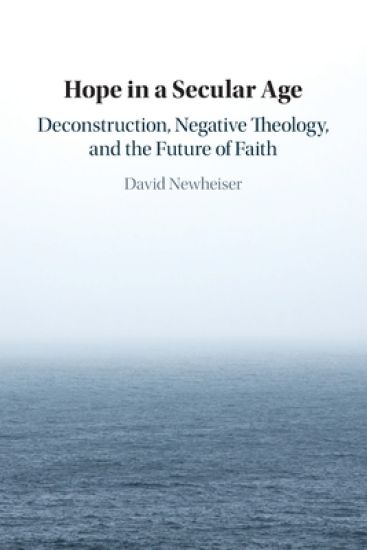
Hope in a Secular Age

Hope in a Secular Age

David Newheiser

Cambridge University Press
2022
pokkari
This book argues that hope is the indispensable precondition of religious practice and secular politics. Against dogmatic complacency and despairing resignation, David Newheiser argues that hope sustains commitments that remain vulnerable to disappointment. Since the discipline of hope is shared by believers and unbelievers alike, its persistence indicates that faith has a future in a secular age. Drawing on premodern theology and postmodern theory, Newheiser shows that atheism and Christianity have more in common than they often acknowledge. Writing in a clear and engaging style, he develops a new reading of deconstruction and negative theology, arguing that (despite their differences) they share a self-critical hope. By retrieving texts and traditions that are rarely read together, this book offers a major intervention in debates over the place of religion in public life.
Hope in a Secular Age

Hope in a Secular Age

David Newheiser

Cambridge University Press
2019
sidottu
This book argues that hope is the indispensable precondition of religious practice and secular politics. Against dogmatic complacency and despairing resignation, David Newheiser argues that hope sustains commitments that remain vulnerable to disappointment. Since the discipline of hope is shared by believers and unbelievers alike, its persistence indicates that faith has a future in a secular age. Drawing on premodern theology and postmodern theory, Newheiser shows that atheism and Christianity have more in common than they often acknowledge. Writing in a clear and engaging style, he develops a new reading of deconstruction and negative theology, arguing that (despite their differences) they share a self-critical hope. By retrieving texts and traditions that are rarely read together, this book offers a major intervention in debates over the place of religion in public life.