Kirjojen hintavertailu. Mukana 12 595 353 kirjaa ja 12 kauppaa.

Kirjailija

David Nicolle

Kirjat ja teokset yhdessä paikassa: 94 kirjaa, julkaisuja vuosilta 1982-2025, suosituimpien joukossa The Moors. Vertaile teosten hintoja ja tarkista saatavuus suomalaisista kirjakaupoista.

94 kirjaa

Kirjojen julkaisuhaarukka 1982-2025.

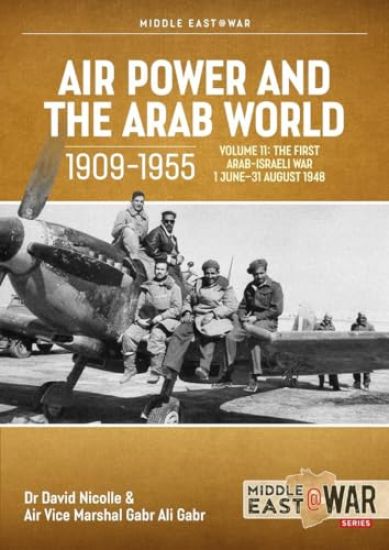
Air Power and the Arab World 1909-1955 Volume 11

Air Power and the Arab World 1909-1955 Volume 11

David Nicolle; Gabr Ali Gabr

HELION COMPANY
2025
nidottu
Volume 11 of the Air Power and the Arab World, 1909-1955 mini-series continues the story of the men and machines of the first half century of military aviation in the Arab world. It focuses upon combat operations during the period of the Palestine War from 1 June to 31 August 1948.By that time, in Egypt, Iraq, Transjordan and newly-independent Syria and Lebanon, major efforts had already been made to strengthen these countries' armed forces. Egypt, Iraq, and Syria launched all-out efforts to bolster their air forces, and threw these into combat. While most subsequent commentators and historians stress they had failed to perform, if appearing at all, closer investigation and the removal many of layers of propaganda that have obscured the realities of this first Arab-Israeli War, show that the Arab air forces performed much better than previously thought.Arguably, available aircraft, armament, spares, and personnel had their limitations and weaknesses, and these had also become apparent as the fighting intensified and losses began to mouth. However, information from both official and unofficial Arab sources - published and unpublished - leaves no doubt about the commitment and courageous efforts of almost everybody involved.Volume 11 of Air Power and the Arab World focusses on day-to-day events in the First Arab-Israeli War, in the air, at sea, and on the ground. It does so in remarkable detail thanks to access to previously unpublished official military documentation, supplemented by translations from publications in Arabic, containing both official and personal accounts by those involved. The most remarkable of these is the Operational Diary of the REAF's Tactical Air Force based at el-Arish, in north-eastern Sinai.Air Power and the Arab World Volume 11 is illustrated by a rich collection of original period photographs - many of these never published before - and specially commissioned color illustrations.
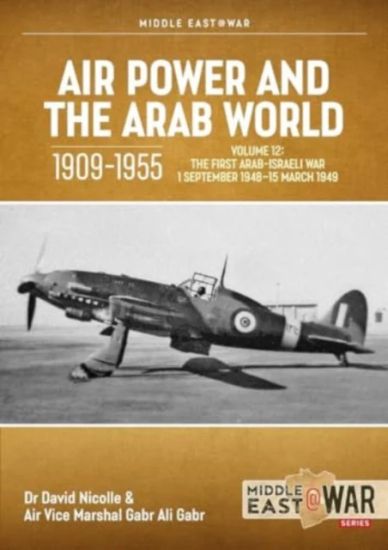
Air Power and the Arab World 1909-1955 Volume 12

Air Power and the Arab World 1909-1955 Volume 12

David Nicolle; Gabr Ali Gabr

HELION COMPANY
2025
nidottu
Volume 12 of the Air Power and the Arab World, 1909-1955 mini-series continues the story of the men and machines of the first half century of military aviation in the Arab world. It focuses upon combat operations during the period of the Palestine War from 1 September to 10 March 1949.By that time, in Egypt, Iraq, Transjordan and newly-independent Syria and Lebanon, major efforts had already been made to strengthen these countries' armed forces. Egypt, Iraq, and Syria launched all-out efforts to bolster their air forces, and threw these into combat. While most subsequent commentators and historians stress they had failed to perform, if appearing at all, closer investigation and the removal many of layers of propaganda that have obscured the realities of this first Arab-Israeli War, show that the Arab air forces performed much better than previously thought.Arguably, available aircraft, armament, spares, and personnel had their limitations and weaknesses, and these had also become apparent as the fighting intensified and losses began to mouth. However, information from both official and unofficial Arab sources - published and unpublished - leaves no doubt about the commitment and courageous efforts of almost everybody involved.Volume 12 of Air Power and the Arab World focusses on day-to-day events in the First Arab-Israeli War, in the air, at sea, and on the ground. It does so in remarkable detail thanks to access to previously unpublished official military documentation, supplemented by translations from publications in Arabic, containing both official and personal accounts by those involved. The most remarkable of these is the Operational Diary of the REAF's Tactical Air Force based at el-Arish, in north-eastern Sinai.Air Power and the Arab World Volume 12 is illustrated by a rich collection of original period photographs - many of these never published before - and specially commissioned color illustrations.

???? ?????:  ??????? - ???????????? - ??????
??????? ???? ??????? ?? ???? ?????????? ????????? ???? ????? – ??? ???? ???? - ????? ??????? ???? ?? ????? ?????? ?????: ???????? ??????? ????????? ????? ??????? ?? ????????? ????????? ?????? ???? ?? ????? ????????? ??? ??????? ???????! ??? ????? ????? ???????? ?? ????????? ????????? ?? ??????? ??????? Saladin lived at a time when the Islamic world was going through profound changes. Since the later 11th century, the Turkish ruling elites had dominated most of the Islamic Middle East.
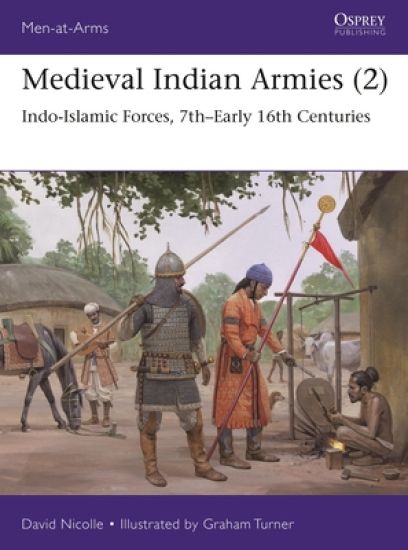
Medieval Indian Armies (2)

Medieval Indian Armies (2)

David Nicolle

BLOOMSBURY PUBLISHING PLC
2023
nidottu
This illustrated study investigates the Indo-Islamic fighting men of South Asia from the 7th century AD to the Mughal conquest of the 16th century.From 1206, much of what is now India as well as parts of Pakistan, Bangladesh and Nepal were ruled by a succession of Islamic dynasties that had their origins in the Ghurid forces that conquered parts of northern India in the 12th century. Although it was never complete, the Islamic domination of this huge region also had a profound impact upon Islamic civilization as a whole, not least in military terms, being felt as far west as Africa. Within South Asia, the war-torn medieval centuries laid the foundations for the subsequent even more brilliant Mughal Empire.Featuring eight plates of superb artwork alongside carefully chosen photographs and illustrations, this study complements the same author's Medieval Indian Armies (1): Hindu, Buddhist and Jain. It describes and illustrates the Indo-Islamic forces operating in South Asia, from the Umayyad Caliphate’s frontier in north-western India and Afghanistan in the late 7th century through to the Delhi Sultanate, the Sultanate of Bengal and the Bahmani Sultanate in the 15th and 16th centuries.David Nicolle explains how, with respect to arms, armour, fortification and transport both on land and at sea, the widely successful Muslim armies learned a great deal from their more numerous Hindu, Jain and Buddhist opponents. This was especially evident in developments such as the use of war-elephants and the adoption of lighter, often textile-based forms of protection such as ‘soft armour’ made of cotton. On the other side, there would be widespread adoption of more potent weapons such as the composite bow, and considerably more sophisticated systems of cavalry warfare, among the non-Islamic forces of the Indian sub-continent. Fully illustrated, this absorbing account casts light on many centuries of warfare in South Asia.
Air Power and Arab World 1909-1955

Air Power and Arab World 1909-1955

David Nicolle; Gabr Ali Gabr

HELION COMPANY
2023
pokkari
Volume 8 of the Air Power and the Arab World, 1909-1955 mini-series continues the story of the men and machines involved in the first half century of military aviation in the Arab World. These years opened with the Arab countries and their military forces still caught up in the final years of the Second World War. This was followed by a brief period of soaring hopes and often unrealistic ambitions. Meanwhile, the crisis in Palestine was deepening. During the immediate post-war years Arab popular opinion grew increasingly angry, fearing that the Zionist settler community was determined to establish a specifically Jewish state in Palestine at the expense of the indigenous Arab population. Furthermore, it was also becoming clear that the so-called Great Powers which dominated the newly established United Nations Organization were unlikely to stand in the way. Following the Second World War, French influence in the Middle East had collapsed, though this was not as yet the case in North Africa. American influence was growing in the region, though the USA was emerging as pro-Zionist in its policy. The Soviet Union, though nominally also pro-Zionist, still remained a distant and largely insignificant player in Middle Eastern affairs; its only interest being to cause problems for its "Western Power" rivals. This left the British almost literally holding the ring as the dominant imperial power in the Arab Middle East, both in military and political terms. At the same time the British government, the British military establishment and indeed the British public, were showing themselves to be desperately eager to get rid of what was perceived as the burden of the Palestine Problem.
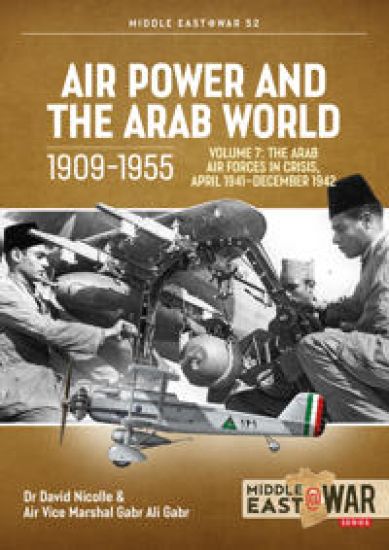
Air Power and Arab World 1909-1955

Air Power and Arab World 1909-1955

David Nicolle; Gabr Ali Gabr

HELION COMPANY
2023
pokkari
Volume 7 of the Air Power and the Arab World, 1909-1955 mini-series continues the story of the men and machines of the first half century of military aviation in the Arab world. These years saw the Arab countries and their military forces already caught up in the events of the Second World War. For those Arab nations which had some degree of independence, the resulting political, cultural and economic strains had a profound impact upon their military forces. In Egypt the Army generally remained quiet, continuing with its mostly unglamorous and little appreciated duties. Within the Royal Egyptian Air Force (REAF), however, there were a significant number of men who wanted to take action in expectation of what they, and many around the world, expected to be the defeat of the British Empire. The result was division, widespread mistrust, humiliation, and for a while the grounding of the entire REAF. In Iraq the strains of the early war years led to a political coup, military conflict with the British Empire, and the virtual destruction of the Royal Iraqi Air Force (RirqAF). Volume 7 of Air Power and the Arab World then looks at the first efforts to revive both the REAF and the RIrqAF, along with events in the air and on the ground elsewhere in the Arab world until the end of 1942.
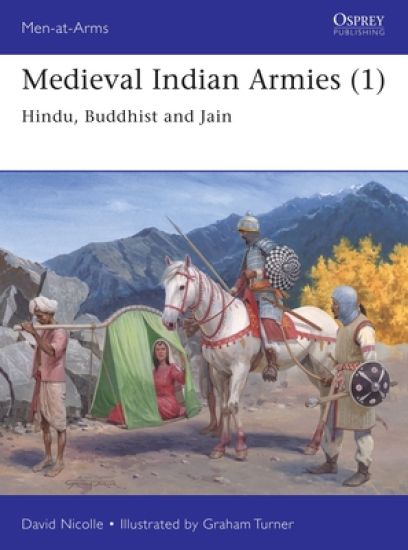
Medieval Indian Armies (1)

Medieval Indian Armies (1)

David Nicolle

BLOOMSBURY PUBLISHING PLC
2022
nidottu
This fully illustrated study explores the armies of the Hindu, Buddhist and Jain states within what are now India, Pakistan, Bangladesh, Sri Lanka and Nepal during the period AD 500–1500, as well as Afghanistan until the early 13th century AD.Following the emergence of a distinct ‘medieval Indian’ civilization in the Late Classical and Early Medieval periods, there was a prolonged struggle between this civilization and that of the eastern Islamic world, concluding with the rise of the Mughal Empire at the start of the 16th century. In this fully illustrated study, David Nicolle investigates the traditions and enduring conservatism of non-Islamic medieval Indian warfare, notably evident in recruitment patterns and the significance of archery and cavalry. The role and impact of war-elephants, both positive and negative, are also considered, as well as the influence of climate and weather (notably the seasonal monsoon) on warfare in this region. As well as assessing arms and armour – contrasting the advanced technology and high status of Indian weapons (especially swords) with the remarkable lack of metallic armour in the region during this period – the author also explores siege warfare and riverine and naval warfare in South Asia. This book assesses the contributing factors identified by those who have sought to explain why the huge wealth and substantial populations of the traditional non-Islamic Indian states did not prevent their persistent failure in the face of Islamic invasion and conquest.
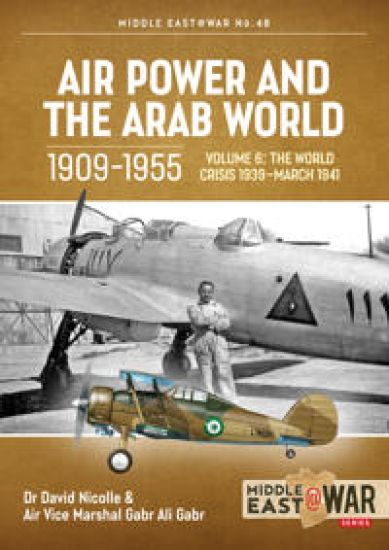
Air Power and the Arab World, 1909-1955

Air Power and the Arab World, 1909-1955

David Nicolle; Air Vice Marshal Gabr Ali Gabr

HELION COMPANY
2021
nidottu
This seemingly idyllic and glamourous pre-war age of air travel within the British Empire would be rudely overturned by the outbreak of the Second World War. Even before this, however, Germany's Nazi government made considerable efforts to convince the Arab peoples and their governments – where such government existed beyond direct French and British control – that Germany had no territorial ambitions in the Middle East and North Africa. After hostilities began the Nazis continued to proclaim that they and Italy would ensure Arab independence once they won the war, an unconvincing claim given Italy's recent behaviour in Libya and in the Arab world's southern neighbour Ethiopia, then known as Abyssinia. Amongst the primary targets of Nazi and to a lesser extent Fascist propaganda was King Faruq of Egypt and those members of Egypt's armed forces who still believed that their King could bring true independence and dignity to Egypt. How far such propaganda succeeded remains a matter of intense debate. From the outbreak of the Second World War until the close of 1940 the only Arab air forces which existed in anything more than name, those of Egypt and Iraq, contributed towards the Allied war effort. Once Italy entered the war in June 1940 the conflict entered Egyptian territory and, although the Egyptian government remained nominally neutral, the Royal Egyptian Air Force and Egyptian Army became directly involved, though largely "behind the lines". The Royal Iraqi Air Force was also placed on alert but, being far from the zones of active operations, was not drawn into conflict. The Fall of France resulted in the French mandated territories of Syria and Lebanon passing into the control of the Vichy French government which, though officially neutral in the wider war, became increasingly collaborationist in its international affairs. Elsewhere the once all-powerful British Empire seemed to be reeling from defeat to defeat. Thus, by the end of 1940, the majority of people in the Arab World – including in British-dominated Egypt and Iraq – believed that Germany and Italy would win the war. This growing opinion was also present in the Arab militaries, including the REAF and RIrqAF. It would result in tensions, disaffection and even defections in Egypt during 1941. In Iraq it resulted in the First Anglo-Iraq War of May 1941, also known to the British as the Rashid Ali Rebellion. These events will form the core of Volume Six of Air Power and the Arab World.
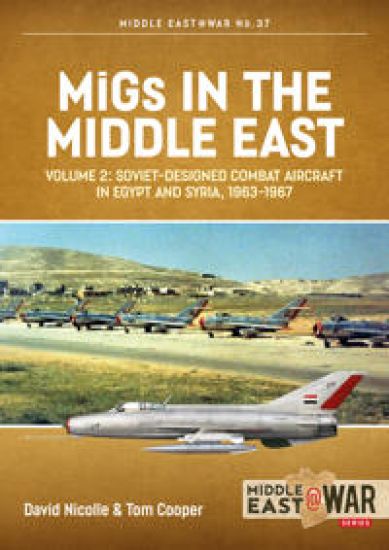
Migs in the Middle East, Volume 2

Migs in the Middle East, Volume 2

David Nicolle; Tom Cooper

Helion Company
2021
nidottu
During and after the June 1967 Arab-Israeli War, fighter-bombers of Soviet-design and manufacture served in the air forces of two frontline Arab states facing Israel: Egypt and Syria. While Algeria and Iraq also deployed contingents flying Soviet-made fighter jets, only the latter saw any significant action. Immediately after, and in reaction to losses and negative experiences from the war with Israel, unprecedented numbers of MiGs were delivered to air forces in the Middle East. The USSR replaced all Egyptian and Syrian losses on 1-for-1 basis, while Iraq and Algeria placed huge orders. Moreover, the USSR replaced Egypt as the main supporter of the republican government in what was then Northern Yemen, and Sudan appeared on the scene to place orders for its own air force. Subsequently, the British Protectorate of Aden achieved independence, quickly established friendly ties to the Soviet Union and Cuba, and began acquiring jet fighters of Soviet origin. Unsurprisingly, by the early 1970s, not only older MiG-15s and MiG-17s but also newer types like MiG-21s served in huge numbers with at least half a dozen air forces around the Middle East. They wore a wide range of very different, and often very colourful unit insignia and other markings, and were flown by many pilots who would subsequently play crucial roles in the future of their nations.##Based on original documentation and extensive interviews with veterans, and richly illustrated, MiGs in the Middle East, Volume 2 is a unique source of reference on the operational history of MiG-15, MiG-17, MiG-19 and MiG-21 fighter jets in Algeria, Egypt, Iraq, Morocco, Syria, North and South Yemen from 1967 until 1975.
Air Power and the Arab World, Volume 4

Air Power and the Arab World, Volume 4

David Nicolle; Gabr Ali Gabr

Helion Company
2021
nidottu
Volume 4 of Air Power and the Arab World continues the story of the men and machines of the first half century of military aviation in the Arab world. The earliest of the Arab air forces to be established trace their histories back to the 1920s and 1930s when the overwhelming majority of Arab countries, and an even larger majority of the Arabic-speaking people, were ruled or dominated by four European powers. This volume continues with the story of the period from 1936-1941. The role, organisational structure and activities of the first Arab air forces are described based on decades of consistent research, newly available sources in Arabic and various European languages, and is richly illustrated with a wide range of authentic photography. These air forces ranged from dreams which never got off the ground, to small forces which existed for a limited time then virtually disappeared, to forces which started very small then grew into something more significant. Even so, the successful air forces of Iraq and Egypt would only have a localised impact within the frontiers of their own states. It was not until the next stage of the story of Air Power and the Arab World that Arab warplanes and Arab airmen would attempt to play a role on the world stage.Volume 4 of Air Power and the Arab World includes over 100 photos, 5 maps, and 12 colour profiles.
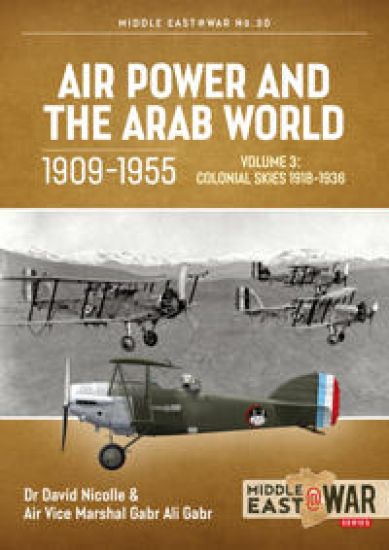
Air Power and the Arab World, 1909-1955

Air Power and the Arab World, 1909-1955

David Nicolle

Helion Company
2021
nidottu
Much of the Arab World remains ravaged by war or threatened by war. Meanwhile the decades old Arab-Israeli conflict remains fundamentally unresolved. Consequently, even the Arab air forces and other Arab armed forces remain either at war or on a virtual war footing, or at least in a state of continuous vigilance. The earliest of the Arab air forces to be established trace their histories back to the 1920s and ‘30s when the overwhelming majority of Arab countries, and an even larger majority of the Arabic-speaking people, were ruled or dominated by four European powers. Based on decades of consistent research and newly available sources in both Arabic and various European languages, richly illustrated with a wide range of authentic photography, Volume 3 of the ‘Air Power and the Arab World, 1909-1955’ mini-series continues the story of the men and machines of the first half century of military aviation in the Arab World. It describes the role, organizational structure and activities of the air forces of Britain, France, Italy, and Spain which were sent to the Arab countries. It also looks at the early years of two neighbouring air forces, those of the Persian (Iranian) and Ethiopian Empires whose early emergence was viewed jealousy in some Arab capitals. Volume 3 continues this story by describing operations of the British, French, Italian and Spanish air forces in the Arab world after the First World War, but also the emergence of the first Arab air forces in the shadow of the substantial European air force units stationed in that area.
Air Power and the Arab World 1909-1955

Air Power and the Arab World 1909-1955

David Nicolle

Helion Company
2020
nidottu
At a time when multiple wars are raging across much of the Middle East, it is almost forgotten that it was Abu al-Qasim Abbas ibn Firnas ibn Wirdas at-Takurni – an Andalusian inventor, physician and engineer – who was the first person to undertake experiments in flying with any degree of success. That was back in the 9th Century A.D. Nigh on a thousand years later the Arab World's critical strategic location made it almost inevitable that these regions would be drawn into the imperial rivalries of the leading European powers, while the Ottoman Empire struggled to maintain its existing position in the area. This in turn meant that the first bombs to be dropped by military aircraft fell on Arab soil. Not surprisingly, as the Arab countries slowly achieved their independence, they too wanted to have air forces. In 1948 the first such Arab air forces were thrown into battle in an ill-fated attempt to keep Palestine as a primarily Arab country. Based on decades of consistent research, but also newly available sources in both Arabic and various European languages, and richly illustrated with a wide range of authentic photography, Volume 2 of the ‘Air Power and the Arab World, 1909-1955’ mini-series continues the story of the men and machines of the first half century of military aviation in the Arab World.
Cross & Crescent in the Balkans

Cross & Crescent in the Balkans

David Nicolle

Pen Sword Military
2019
nidottu
This is NOT just another retelling of the Fall of Constantinople, though it does include a very fine account of that momentous event. It is the history of a quite extraordinary century and a bit which began when a tiny of force of Ottoman Turkish warriors was invited by the Christian Byzantine Emperor to cross the Dardanelles from Asia into Europe to assist him in one of the civil wars which were tearing the fast-declining Byzantine Empire apart. One hundred and eight years later the Byzantine capital of Constantinople fell to what was by then a hugely powerful and expanding empire of the Islamic Ottoman Turks, whose rulers came to see themselves as the natural and legitimate heirs of their Byzantine and indeed Roman predecessors. The book sets the scene, explains the background and tells the story, both military, political, cultural and personal, of the winners and the losers, plus those 'outsiders' who were increasingly being drawn into the dramatic story of the rise of the Ottoman Empire.
The Khazars

The Khazars

Mikhail Zhirohov; David Nicolle

Osprey Publishing
2019
nidottu
The Khazars were one of the most important Turkic peoples in European history, dominating vast areas of southeastern Europe and the western reaches of the Central Asian steppes from the 4th to the 11th centuries AD. They were also unique in that their aristocratic and military elites converted to Judaism, creating what would be territorially the largest Jewish-ruled state in world history. They became significant allies of the Byzantine Empire, blocking the advance of Islam north of the Caucasus Mountains for several hundred years.They also achieved a remarkable level of metal-working technology, and their military elite wore forms of iron plate armour that would not be seen in Western Europe until the 14th century. The Khazar state provided the foundations upon which medieval Russia and modern Ukraine were built. Fully illustrated with detailed colour plates, this is a fascinating study into the armies, organisation, armour, weapons and fortifications of the Khazars.
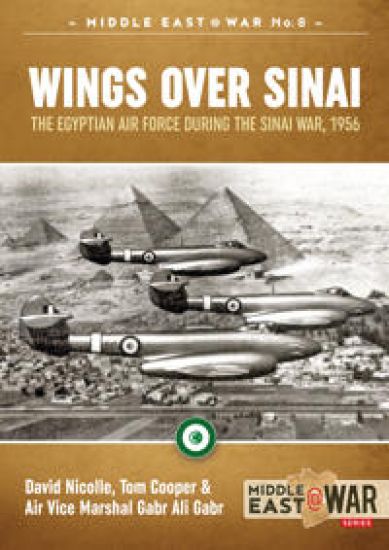
Wings Over Sinai

Wings Over Sinai

David Nicolle; Air Vice Marshal Gabr Ali Gabr; Tom Cooper

Helion Company
2017
nidottu
Sixty years since the tripartite aggression of France, Great Britain and Israel against Egypt, this is the first account about Egyptian military operations during the Suez War of 1956 (or `Suez Crisis’, as it is known in the West). Based on research with the help of official Egyptian documentation and recollections of crucial participants, this book provides an unique and exclusive insight into the `other side’ of a war that many consider has marked `the end of the British Empire’. From the Western point of view, the situation is usually explained in quite simple terms: in retaliation for President Gamal Abdel Nasser’s nationalisation of the Universal Suez Canal Company - and thus the strategically important waterway of the Suez Canal - France and Great Britan (operating in concert with Israel) launched the operation codenamed 'Musketeer'. Divided into three phases, each shaded into the other; this aimed at obliterating the Egyptian Air Force, occupying the whole of the Suez Canal and toppling Nasser’s government. From the Egyptian point of view, backgrounds were much more complex than this. Striving to modernize the country, a new and inexperienced government in Cairo launched a number of major projects, including one for the construction of a gigantic Asswan Dam on the Nile. The only Western power ready to help finance this project, the USA conditioned its support with basing rights for its military. With the last British soldiers still about to leave the country - and thus end Egypt’s occupation by foreign powers for the first time in 2,000 years - Nasser found this unacceptable. Around the same time, Egypt found itself under pressure from Israeli raids against border posts on the Sinai. Left without a solution, Cairo decided to nationalize the Suez Canal in order to finance the Aswan Dam project, but also to start purchasing arms from the Soviet Union. In an attempt to bolster Egyptian defenses without antagonizing Western powers, Nasser concluded the so-called `Czech Arms deal’ with Moscow - resulting in the acquisition of Soviet arms via Czechoslovakia. Little known in Cairo at the time, such moves tripped several `red lines’ in Israel and in the West - in turn prompting aggression that culminated in a war. Wings over Sinai is, first and foremost, an account of the battle for survival of the Egyptian Air Force (EAF). Caught in the middle of conversion to Soviet-types, this proved more than a match for Israel, but were hopelessly ill-prepared to face the military might of Great Britain and France too. Sustained, days-long air strikes on Egyptian air bases caused heavy damage, but were nowhere near as crippling as the losses usually claimed and assessed by the British, French and Israelis. The EAF not only survived that conflict in quite a good order, but also quickly recovered. This story is told against the backdrop of the fighting on the ground and the air and naval invasion by British and French forces. Richly illustrated with plenty of new and previously unpublished photographs, maps (and 15 color profiles), this action-packed volume is illustrates all aspects of camouflage, markings and various equipment of British and Soviet origin in Egyptian military service as of 1956.
Mamluk ‘Askari 1250–1517

Mamluk ‘Askari 1250–1517

David Nicolle

Osprey Publishing
2014
nidottu
New archaeological material and research underpins this extensive, detailed and beautifully illustrated account of the famous Mamluk Askars who are credited with finally defeating and expelling the Crusaders, halting the Mongol invasion of the Islamic Middle East, and facing down Tamerlane. Probably the ultimate professional soldiers of the medieval period they were supposedly recruited as adolescent slaves, though recent research has begun to undermine this oversimplified interpretation of what has been called the "Mamluk phenomenon".
The Conquest of Saxony AD 782–785

The Conquest of Saxony AD 782–785

David Nicolle

Osprey Publishing
2014
nidottu
A detailed account of the key years that saw Charlemagne take personal command and finally subjugate the Saxons - one of the most epic campaigns of his long reign.Charlemagne's conquest of the Saxons was the hardest fought and most protracted of his wars; it involved 18 campaigns spread across 33 years, a great deal of lower-level fighting and the harshest final peace settlement that Charlemagne ever imposed upon a defeated foe. Rapidly taking on the character of a religious conquest from its outset, it also became the most important of all Charlemagne's wars for the future direction and character of European history and began the long process of uniting the German-speaking peoples.With extensive photographs, full colour artworks, maps and bird’s-eye-views, this volume unravels the initial stages of a convoluted sequence of events that led to the conquest of the Saxons and ultimately Charlemagne’s consolidation of Saxony into the greater Carolingian Empire.
Forces of the Hanseatic League

Forces of the Hanseatic League

David Nicolle

Osprey Publishing
2014
nidottu
A commercial and defensive federation of merchant guilds based in harbour towns along the North Sea and Baltic coasts, the Hanseatic League eventually dominated maritime trade in Northern Europe and spread its influence much further afield.The League was formed to protect the economic and political interests of member cities throughout a vast and complex trading network. During its 300 years of dominance the League’s large ships – called ‘cogs’ – were at the forefront of maritime technology, were early users of cannon, and were manned by strong fighting crews to defend them from pirates in both open-sea and river warfare. David Nicolle explores these approaches, as well as the fortifications and gunpowder weapons they invested in, to protect them from the sieges they were subjected to.Featuring specially commissioned artwork, this is first detailed, illustrated study in English of the fighting men, weapons and ships of the greatest mercantile and naval power of medieval northern Europe.
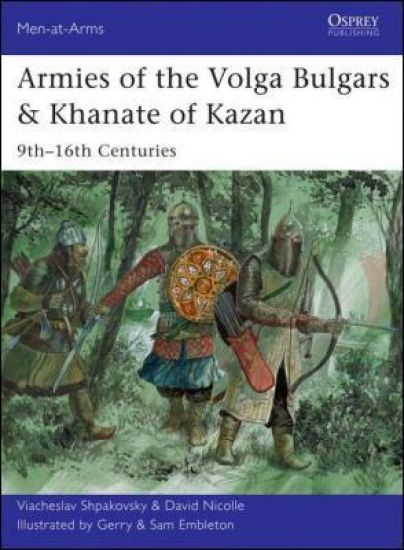
Armies of the Volga Bulgars & Khanate of Kazan

Armies of the Volga Bulgars & Khanate of Kazan

Viacheslav Shpakovsky; David Nicolle

Osprey Publishing
2013
nidottu
The Bulgars were a Turkic people who established a state north of the Black Sea.In the late 500s and early 600s AD their state fragmented under pressure from the Khazars; one group moved south into what became Bulgaria, but the rest moved north during the 7th and 8th centuries to the basin of the Volga river. There they remained under Khazar domination until the Khazar Khanate was defeated by Kievan Russia in 965.In the 1220s they managed to maul Genghis Khan’s Mongols, who returned to devastate their towns in revenge. By the 1350s and onwards, they were caught in the middle between the Tatar Golden Horde and the Christian Russian principalities. A new city then rose from the ashes – Kazan, originally called New Bulgar – and the successor Islamic Khanate of Kazan resisted the Russians until falling to Ivan the Terrible in 1552.The dress, armament, armour and fighting methods of the Volga Bulgars during this momentous period are explored in this fully illustrated study.