Kirjojen hintavertailu. Mukana 12 282 235 kirjaa ja 12 kauppaa.
Kirjailija
David Oliver
Kirjat ja teokset yhdessä paikassa: 26 kirjaa, julkaisuja vuosilta 1988-2026, suosituimpien joukossa The Harrier. Vertaile teosten hintoja ja tarkista saatavuus suomalaisista kirjakaupoista.
How to Negotiate Effectively provides tips, tools and techniques for getting it right. It explores and advises on every aspect of the negotiation process, including: tactics and counter-measures, handling deadlock, making concessions, enhancing your authority and getting the best deal. This new edition also contains material on identifying true decision makers, and how to spot buying signals in negotiations. An essential step-by-step guide, How to Negotiate Effectively will help anyone achieve a balanced 'win-win' outcome every time.
This book attempts to unpack the gift of prophecy providing practical tools in the area of supernatural hearing, seeing, and speaking. The evangelical and charismatic world is increasingly encouraging its members to prophesy and many emerging prophets are apperearing. Some churches are frightened of the gift while others have experienced great benefit. Many individuals are desprate to grow in their gift but unsure how. This book attempts to practically unpack this gift - dealing with some of the common problems that crop up - and to help with practical tools in the world of supernatural hearing, seeing, and speaking.
Folk Voiceworks is an outstanding collection of folk songs in the Voiceworks model, including songs from centuries past alongside pieces by celebrated folk musicians. You'll find pieces in a range of genres and styles, including shanties, protest songs, songs about the land, lullabies, love songs, and much more - scored flexibly for unison and part-singing. With excellent practical rehearsal notes, simple accompanying instrumental parts, and a CD with performances of all the songs, this is a fabulous and accessible resource for all choirs.
I have taken the occasion of a second edition for enhancements and re?- ments that preserve the spirit of the original. I have more fully portrayed the remarkable relationships between symmetry group generators and their Lie bracket and the dynamical invariants of those symmetries and their Poisson bracket in Chapter 3. The radical departure of quantum waves from classical waves is more sharply drawn in Chapter 5. The spectacular way in which the states of the hydrogen atom unfold from its symmetries is the centerpiece of qu- tum Kepler motion. I now lead readers more deliberately through this unfolding by showing how the master quantum number orchestrating fo- dimensional rotational symmetry orchestrates the hydrogen atom states. I o?er readers in Chapter 7 a more descriptive portrait of the break-up of regular Kepler motion on tori into periodic resonant points when the motion becomes chaotic. And I now include a sketch of KAM Theory— thegreatestachievementincelestialmechanicsofthetwentiethcentury—in properly?llingoutthestoryofchaoticKeplermotion. Lastly,anewedition has given me the opportunity to correct errors. The Fields of Michael and Gabriel David Oliver Meadows of Dan, Virginia, USA Autumn 2002 ix Preface to the First Edition The universe embraces with sensual presence. No thought, no word is needed to behold sky, sun, moon, stars. It is not in re?ection but in expe- encethatoneinhalestheearthysmellsofdampwoods,becomesdizzyunder the sweep of the starry night sky, basks in the sun’s warmth, rolls in ocean breakers, tastes salt. The sensual universe is open, available, immediate.
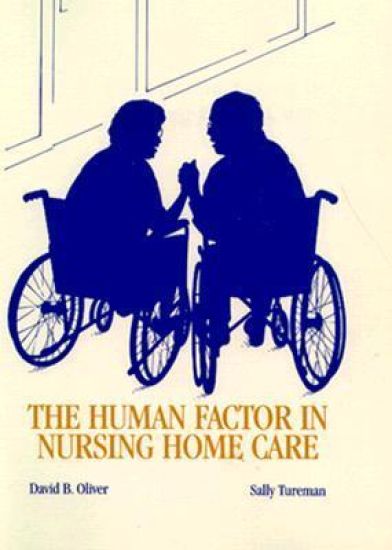
In an attempt to challenge the prevailing attitudes and images of nursing homes in America, the authors have written a touching book about the people and the relationships that are a part of nursing home care. Their extensive study of and experience with nursing home residents and caregivers reveal that our negative and often painful thoughts about nursing homes are not always well-founded. The authors effectively use monologue and dialogue to take the reader into the world of the nursing home to observe the work of the nursing home staffs, from administrators to housekeepers, as they become surrogate families and friends of the patients. Most moving are the thoughts and words of the residents themselves, especially as they describe their initial horror and anger at being in the nursing home, and their feelings of abandonment and loss of self-esteem. Valuable for both undergraduate and graduate courses in nursing, social work, psychology, death and dying, pastoral care and counseling, this comprehensive volume is useful as a primary or supplementary text.BACKCOVER COPY In an attempt to challenge the prevailing attitudes and images of nursing homes in America, David Oliver and Sally Tureman have written a touching book about the people and the relationships that are a part of nursing home care. Their extensive study of and experience with nursing home residents and caregivers reveal that our negative and often painful thoughts about nursing homes are not always well-founded. The authors effectively use monologue and dialogue to take the reader into the world of the nursing home to observe the work of the nursing home staffs, from administrators to housekeepers, as they become surrogate families and friends of the patients. Most moving are the thoughts and words of the residents themselves, especially as they describe their initial horror and anger at being in the nursing home, and their feelings of abandonment and loss of self-esteem. The Human Factor in Nursing Home Care provides a new and refreshing perspective of those who provide care in nursing homes and those who receive it. And, in the end, it challenges the reader to consider his or her own images of aging and of dying.
In an attempt to challenge the prevailing attitudes and images of nursing homes in America, the authors have written a touching book about the people and the relationships that are a part of nursing home care. Their extensive study of and experience with nursing home residents and caregivers reveal that our negative and often painful thoughts about nursing homes are not always well-founded. The authors effectively use monologue and dialogue to take the reader into the world of the nursing home to observe the work of the nursing home staffs, from administrators to housekeepers, as they become surrogate families and friends of the patients. Most moving are the thoughts and words of the residents themselves, especially as they describe their initial horror and anger at being in the nursing home, and their feelings of abandonment and loss of self-esteem. Valuable for both undergraduate and graduate courses in nursing, social work, psychology, death and dying, pastoral care and counseling, this comprehensive volume is useful as a primary or supplementary text.BACKCOVER COPY In an attempt to challenge the prevailing attitudes and images of nursing homes in America, David Oliver and Sally Tureman have written a touching book about the people and the relationships that are a part of nursing home care. Their extensive study of and experience with nursing home residents and caregivers reveal that our negative and often painful thoughts about nursing homes are not always well-founded. The authors effectively use monologue and dialogue to take the reader into the world of the nursing home to observe the work of the nursing home staffs, from administrators to housekeepers, as they become surrogate families and friends of the patients. Most moving are the thoughts and words of the residents themselves, especially as they describe their initial horror and anger at being in the nursing home, and their feelings of abandonment and loss of self-esteem. The Human Factor in Nursing Home Care provides a new and refreshing perspective of those who provide care in nursing homes and those who receive it. And, in the end, it challenges the reader to consider his or her own images of aging and of dying.